Showing posts with label energy. Show all posts

Sunday, June 3, 2018

Waiting for Korowicz – Albert Bates

Waiting for Korowicz – Albert Bates – Medium

Even though the coming of the Korowicz singularity cannot be Post-It’d to a particular date on the calendar, it’s wise to keep a foot in the prepper camp. A wall calendar, for instance.
Know where your water comes from. Have an anti-fragile supply of food — like the shiitake mushrooms that come after a big storm. They are a complete protein. Have back-up power that does not involve fossil fuels. Be able to cook. Keep your tools sharp and well-oiled. And have a good idea what you will do with your time when the internet goes away suddenly and permanently.
In the meantime, we are at the pinnacle of a gilded age. Be sure to enjoy it while it lasts.


(https://medium.com/@albertbates/waiting-for-korowicz-4e26cec88f)

Friday, March 23, 2018

Coral Reef Building and Energy Generation Protect Coast Lines

CCell - Turning waves into rock

We use energy from the waves to power underwater electrolysis to form limestone rock around steel mesh placed on the seabed. This technique was pioneered by BioRock to create artificial reefs, accelerating the accretion of limestone from 100s of years to less than 5.

CCell is an innovative technology that moves with the waves to simultaneously harness and dampen energy within the waves.

CCell and BioRock together, form a natural synergy, with an independent renewable energy source that enables large scale application of the BioRock technique. Read More

Saturday, February 17, 2018

Ibiza and Majorca plan for 100 per cent renewable energy by 2050


Ibiza and Majorca could be running on 100 per cent renewable energy by 2050, under plans unveiled by the islands’ government yesterday.

The proposed climate change law would make the islands some of the greenest in the world but could also pave the way for clashes with Madrid.

The Balearics generate less than 3 per cent of their electricity from renewable sources at present, primarily from solar panels. Coal-fired power plants, diesel generators and gas plants account for more than 70 per cent of supply, while most of the rest is imported from the mainland.

The plan would involve a phased shutdown of the islands’ main coal plant, at Alcúdia on Majorca, between 2020 and 2025, a proposal that has been rejected by the Spanish energy ministry. Joan Groizard, the Balearic islands’ energy director, said the target to move to entirely renewable energy would mean the islands needed to achieve “100 per cent renewable electricity long before 2050”.

Large car parks would have to install solar panels by 2025. By 2035, car hire companies would be forced to electrify their entire fleets and new non-electric vehicles would be banned from entering the islands.

Mr Groizard said he hoped that the law would help the islands “be recognised as a low-carbon destination, where the rest of Europe can not only enjoy a holiday but also learn something they can then apply to their own energy transitions”.

Sam Fankhauser, director of the Grantham Research Institute at the London School of Economics, said: “Going 100 per cent renewable by 2050 is a much more aggressive target for the power sector than most other countries have.”

Britain is aiming to cut its greenhouse gas emissions by 80 per cent compared with 1990 levels by 2050.


https://www.thetimes.co.uk/article/ibiza-and-majorca-plan-for-100-per-cent-renewable-energy-by-2050-gp6dpzptl

Friday, January 26, 2018

Building a resilient future: One drop at a time - By Robert C.Brears


To prepare Singapore for future weather changes and the impacts of dimate change on its water services, the Public Utilities Board (PUB)has initiated a series of adaptation measures.

With climate change likely to lead to prolonged dry periods, PUB has developed a robust, diversified, and sustainable water supply that includes NEWater and desalination, both of which are not dependent on rainfall and therefore boost the city-state’s resilience to dry weather.

NEWater

NEWater is a process involving the treating of used water into ultra-clean, high-grade reclaimed water that provides up to 40% of Singapore’s current water needs. NEWater is mainly used for industrial and air-con cooling purposes and is delivered via a dedicated pipe network. During dry periods, NEWater is added to PUB’s reservoirs to blend with raw water, which is then treated at the waterworks before becoming potable water. By 2060, NEWater is expected to meet up to 55% of the country’s future water demand.

Desalination

Because Singapore is surrounded by sea, PUB already has two operational desalination plants with a combined capacity of 100 mgd, which can meet up to 25% of current water demand. By 2020, PUB will have three new 30 mgd desalination plants. By 2060, desalinated water is projected to meet up to 30% of total water demand. With desalination being energy-intensive — Singapore currently uses reverse osmosis, which uses around 3.5 kWh/m³ — PUB is exploring low-energy desalination options to reduce in half the desalination energy used in the future. Options include electrodeionization (an electric field pulls dissolved salts from the water) and biomimicry (mangrove plants and euryhaline fish extract freshwater from seawater using minimal amounts of energy). Read More

Monday, July 3, 2017

Our Oceans, Our Islands, Our Future


With the leadership of H.E. Tommy E. Remengesau Jr., President of Palau, H.E. Vincent Meriton, Vice-President of Seychelles, The Hon. Kedrick Pickering, Deputy Premier of the British Virgin Islands, Ambassador Spencer Thomas of Grenada, alongside Global Island Partnership members and friends, the Partnership coordinated a series of events that demonstrated the leadership of islands united in strong partnerships to implement Sustainable Development Goal 14 and support strong outcomes for the UN Oceans Conference held in New York at the United Nations.

Download the GLISPA Event Spotlight: Our Oceans, Our Islands, Our Future here.

Since its launch in 2006, the Global Island Partnership has engaged high-level leaders to catalyze US$150 million for island action and assisted 35+ countries to launch or strengthen major sustainable island commitments. The Partnership now has more than 25 members and 30 friends working together to build resilient and sustainable island communities. We welcome entities interested in supporting its mission to apply for membership. Learn more: http://www.glispa.org/participate

Our postal address: IUCN (GLISPA), 1630 Connecticut Ave NW #300, Washington, DC 20009, USA

Thursday, May 4, 2017

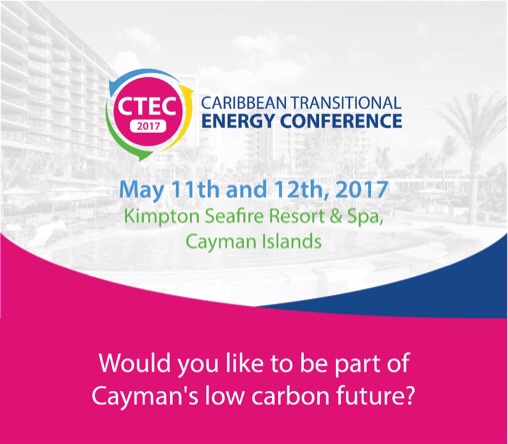
The Caribbean Transitional Energy Conference (CTEC)


Caribbean economies suffer from some of the highest electricity prices in the world.

Despite their abundance of renewable energy sources, Cayman has a relatively low level of renewable energy penetration; the economy continues to spend a large proportion of its GDP on imported fossil fuels and residents and businesses continue to pay some of the highest electricity bills in the region. This is a common situation among island nations.

There is a clear opportunity for Cayman to emerge as a regional leader in developing solutions to address climate change through the adoption of renewable energy which will reduce the dependency on fossil fuels and provide key environmental, social and economic benefits.

With the Cayman Islands National Energy Policy now in place, a framework for transition is complete and seizing upon that vision will be critical to affecting positive change for the Cayman Islands and all those who follow.

The recent achievements for islands at COP21 provide a strong driver for action focused on carbon reduction goals. Given that Cayman ranks highly among islands as carbon emitters, it is critical that we position ourselves as leaders in carbon reduction and meet the goals set out in the National Energy Policy and the Paris agreement.

Cayman seeks to stand with other islands in the region and across the world to embrace a low carbon future and to stand on the front line of demonstrating solutions to climate change while delivering cheaper, secure, reliable and economically feasible energy solutions.
Who should attend?

Be part of Cayman’s low carbon future by joining an event which seeks to set out our vision, renewable road-map and opportunities.

The event will bring together delegates from public, private and non-profit sectors, underlining our collaborative approach to a sustainable future- government officials, project developers, manufacturers, investors and key players across the non-profit landscape.

Join government official and industry leads and participate in interactive panel discussions that seek to establish what the journey ahead looks like and how we address the challenges and maximise the opportunities.

Make the most of key networking opportunities, bringing together local, regional and global participation.
For More Information and Register

Tuesday, April 25, 2017

The Climate War Room now has new .eco domain

The Climate War Room, an initiative of The Cayman Institute is committed to using a .eco domain, which is a new web address ending for anyone committed to positive change for the planet.


.eco is a new web address ending—known as a top-level domain—for anyone committed to positive change for the planet. .eco web addresses are available to any business, government, non-profit or individual working toward a sustainable future.

The .eco domain is backed by more than 50 environmental organizations including Conservation International, United Nations Global Compact and WWF and is a trusted symbol for the environmental community. www.climatewarroom.org

Monday, April 24, 2017

The Caribbean Transitionary Energy Conference (CTEC2017) was officially launched

The Caribbean Transitionary Energy Conference (CTEC2017) was officially launched this morning with a press conference at The Cayman Islands Government building this morning.

Remarks were given by Hon. D. Kurt Tibbetts OBE, JP, MLA - Cayman Islands Minister for Planning, Lands, Agriculture, Housing and Infrastructure, event organiser James Whittaker - CEO, GreenTech Group and President, Cayman Renewable Energy Association (CREA), and sponsor Pilar Bush, Executive Vice President of Marketing, Dart Enterprises Ltd. Visit our website to register

Tuesday, April 11, 2017

Caribbean Transitional Energy Conference

WHY CAYMAN? WHY NOW?

Caribbean economies suffer from some of the highest electricity prices in the world. Despite their abundance of renewable energy sources, Cayman has a relatively low level of renewable energy penetration; the economy continues to spend a large proportion of its GDP on imported fossil fuels.

The Caribbean Transitional Energy Conference (CTEC) is about building our resilience as a small nation, about diversifying our energy sector and the way that we do business.

It is about ensuring sustainable social and economic growth through strong leadership, recognising the threat of climate change and the vulnerability of islands across the world and voicing our commitment to take the measures that we can take now. More

Tuesday, March 22, 2016

CARICOM's Commercialization of energy efficiency programs and projects in the Caribbean.

As part of its mandate to promote resilient energy matrices region-wide, CARICOM has identified the promotion of investment into energy efficiency programs and projects as a priority action item.

On April 5th at 10.00am EST, the Caribbean Community (CARICOM) Secretariat and New Energy Events will co-host a webinar focused on new approaches to the commercialization of energy efficiency programs and projects in the Caribbean.

Confirmed panelists:

Jacob Corvidae, Manager, Rocky Mountain Institute

Kelly Tomblin, President & CEO, Jamaica Public Service Co.

Dr. Devon Gardner, Programme Manager, Energy, CARICOM

Joseph Williams, Sustainable Energy Advisor, Caribbean Development Bank

Despite the obvious potential for investment in energy efficiency across the Caribbean, the markets are yet to take off in any meaningful way. The unavailability of sustainable and affordable financing is widely recognized as the most significant hurdle to commercialization. The webinar will explore an emerging alignment of stakeholders around energy efficiency investments, and examine a number of innovative approaches to financing.

Topics will include:

• How do we introduce investment in energy efficiency into the mainstream?

• How do regional utilities look at investment in EE initiatives from a long-term ROI perspective? How can we align economic incentives to motivate utilities to invest in EE?

• What can we learn from the experience of other markets and other utilities? Hawaii, for example?

• What is the Integrated Utility Service (IUS) model? What can we learn from the initial experience in Fort Collins?

• How might utility-centric EE programs align with public sector and multilateral objectives and with what implication for the financing of EE programs?

• How do we de-risk EE investment?

• What are the opportunity costs associated with the inability of the current "market will deliver" philosophy to tap the regional EE potential?

• What are the key stakeholders - utilities, utility regulators, governments, multilaterals and private investors - prepared to do in order to deliver clean, efficient, reliable and cost-effective energy services to end-users? More

Register Now!


Wednesday, November 25, 2015

Bahamas, Saint Lucia, Saint Vincent and the Grenadines Submit INDCs

18 November 2015: The UNFCCC Secretariat has reported that the Bahamas, Saint Lucia, and Saint Vincent and the Grenadines have formally submitted their intended nationally determined contributions (INDCs), bringing the total number of Parties that have made their submissions to 168.


The submission from the Bahamas covers the energy and forestry sectors; that from Saint Lucia covers energy, electricity generation and transport; and Saint Vincent's INDC focuses on energy (including domestic transport), industrial processes and product use, agriculture, land use, land-use change and forestry (LULUCF), and waste.


Noting that fossil fuels are primarily consumed in the transport and electricity sectors of the country, the mitigation contribution from the Bahamas is based on the country's National Energy Policy, which sets a target of reaching 30% renewables in the energy mix by 2030. A 10% Residential Energy Self Generation Programme will also be implemented, which focuses on efficiency improvement and energy diversification. The INDC outlines a number of energy efficiency measures planned for the transport sector, such as efficient traffic management, and states that the construction industry will be subject to energy efficiency standards as laid out in a building code. The INDC also addresses adaptation options in the agriculture, tourism, health, financial and insurance, coastal and marine resources/fisheries, energy, forestry, human settlement, transportation and water resources sectors.


Saint Lucia's INDC contains conditional targets of reducing economy-wide emissions by 16% relative to a business-as-usual (BAU) scenario by 2025 and reaching a 23% reduction compared to BAU by 2030. Among the proposed interventions to reach these targets are: energy-efficient buildings; energy-efficient appliances; water distribution and network efficiency; an increase in renewable sources of power in the electricity generation mix; improvements to grid distribution and transmission efficiency; efficient vehicles; and expanded and improved public transit. The costs, as estimated in the INDC, of reaching the 2030 mitigation targets are approximately US$218 million. On adaptation, the Party notes the recently approved Saint Lucia Climate Change Adaptation Policy (CCAP) (2015).


In the INDC submitted by Saint Vincent and the Grenadines, the Party communicates its intention to achieve an unconditional, economy-wide reduction in greenhouse gas (GHG) emissions of 22% compared to its BAU scenario by 2025. The INDC explains that the energy sector is the focus of its mitigation activity, with plans to build a geothermal power plant by 2018 and to achieve a 15% reduction in national electricity consumption compared to a BAU scenario by 2025 through, inter alia, street light retrofitting and energy labeling for appliances. The submission also outlines mitigation measures for the transport and LULUCF sectors. On adaptation, the contribution includes examples of Saint Vincent's efforts to adapt to climate change, such as the national climate change adaptation programmes.


All Parties to the UNFCCC are expected to submit INDCs in advance of the Paris Climate Change Conference, which will take place from 30 November - 11 December 2015. At the Conference, Parties are anticipated to agree on a global climate change agreement to take effect in 2020. More


[UNFCCC Press Release, Bahamas] [Bahamas' INDC] [UNFCCC Press Release, Saint Lucia] [Saint Lucia's INDC] [UNFCCC Press Release, Saint Vincent and the Grenadines] [Saint Vincent and the Grenadines's INDC] [UNFCCC INDC Portal]


UNFCCC18 November 2015: The UNFCCC Secretariat has reported that the Bahamas, Saint Lucia, and Saint Vincent and the Grenadines have formally submitted their intended nationally determined contributions (INDCs), bringing the total number of Parties that have made their submissions to 168. The submission from the Bahamas covers the energy and forestry sectors; that from Saint Lucia covers energy, electricity generation and transport; and Saint Vincent's INDC focuses on energy (including domestic transport), industrial processes and product use, agriculture, land use, land-use change and forestry (LULUCF), and waste.


Noting that fossil fuels are primarily consumed in the transport and electricity sectors of the country, the mitigation contribution from the Bahamas is based on the country's National Energy Policy, which sets a target of reaching 30% renewables in the energy mix by 2030. A 10% Residential Energy Self Generation Programme will also be implemented, which focuses on efficiency improvement and energy diversification. The INDC outlines a number of energy efficiency measures planned for the transport sector, such as efficient traffic management, and states that the construction industry will be subject to energy efficiency standards as laid out in a building code. The INDC also addresses adaptation options in the agriculture, tourism, health, financial and insurance, coastal and marine resources/fisheries, energy, forestry, human settlement, transportation and water resources sectors.


Saint Lucia's INDC contains conditional targets of reducing economy-wide emissions by 16% relative to a business-as-usual (BAU) scenario by 2025 and reaching a 23% reduction compared to BAU by 2030. Among the proposed interventions to reach these targets are: energy-efficient buildings; energy-efficient appliances; water distribution and network efficiency; an increase in renewable sources of power in the electricity generation mix; improvements to grid distribution and transmission efficiency; efficient vehicles; and expanded and improved public transit. The costs, as estimated in the INDC, of reaching the 2030 mitigation targets are approximately US$218 million. On adaptation, the Party notes the recently approved Saint Lucia Climate Change Adaptation Policy (CCAP) (2015).


In the INDC submitted by Saint Vincent and the Grenadines, the Party communicates its intention to achieve an unconditional, economy-wide reduction in greenhouse gas (GHG) emissions of 22% compared to its BAU scenario by 2025. The INDC explains that the energy sector is the focus of its mitigation activity, with plans to build a geothermal power plant by 2018 and to achieve a 15% reduction in national electricity consumption compared to a BAU scenario by 2025 through, inter alia, street light retrofitting and energy labeling for appliances. The submission also outlines mitigation measures for the transport and LULUCF sectors. On adaptation, the contribution includes examples of Saint Vincent's efforts to adapt to climate change, such as the national climate change adaptation programmes.


All Parties to the UNFCCC are expected to submit INDCs in advance of the Paris Climate Change Conference, which will take place from 30 November - 11 December 2015. At the Conference, Parties are anticipated to agree on a global climate change agreement to take effect in 2020. [UNFCCC Press Release, Bahamas] [Bahamas' INDC] [UNFCCC Press Release, Saint Lucia] [Saint Lucia's INDC] [UNFCCC Press Release, Saint Vincent and the Grenadines] [Saint Vincent and the Grenadines's INDC] [UNFCCC INDC Portal]


read more: http://sids-l.iisd.org/news/bahamas-saint-lucia-saint-vincent-and-the-grenadines-submit-indcs/


Wednesday, November 18, 2015

CARICOM Celebrates Energy Week, Energy Centre Inauguration


CARICOM14 November 2015: The Caribbean Community (CARICOM) hosted the fifth CARICOM Energy Week (CEW) under the theme 'EmPOWERING Our Sustainable Development.'


The annual awareness-raising event highlights the importance of energy for economic development in the region. To mark CEW, the Caribbean Centre for Renewable Energy and Energy Efficiency (CCREEE) was inaugurated, and a baseline report for the Caribbean Sustainable Energy Roadmap and Strategy (C-SERMS) was released.


CEW was held 8-14 November 2015, with CARICOM member States hosting events, such as panel discussions, site visits to renewable energy projects, the Electric Mobility Show and Conference, and activities with local schools. The Week also featured contests, such as a radio pop quiz with prizes, kilo-walk, energy app competition, video competition, and photo and art competition.


In anticipation of CEW, CCREEE was established in Barbados on 28 October 2015, per a decision of the 36th Regular Meeting of the Heads of Government of CARICOM. As a regional think tank and implementation hub, CCREEE is part of a worldwide network of regional sustainable energy centers for small island developing States (SIDS) that are working to promote sustainable development. CCREEE will primarily focus on implementing C-SERMS and helping member States fulfill their intended contributions under the UNFCCC, in addition to facilitating the achievement of the Sustainable Energy for All (SE4All) initiative goals.


Pradeep Monga, Special Representative of the Director General on Energy at the UN Industrial Development Organization (UNIDO), which helped develop the Centre, explained that CCREEE is "a critical mechanism for up-scaling national efforts, particularly in the areas of project execution, capacity development, and knowledge and data management, as well as investment and business promotion, within the sustainable energy sector."


In conjunction with the Centre's inauguration, the Worldwatch Institute launched the C-SERMS Baseline Report and Assessment, which analyzes the region's current energy policy framework, evaluates renewable energy and energy efficiency potential, and suggests regional short-, medium- and long-term targets for the energy sector. Among the recommended targets are achieving 48% of electricity generation from renewable energy by 2027 and a 33% reduction in the region's energy intensity. [CEW Website] [CARICOM Secretariat Website] [UNIDO Press Release] [Worldwatch Institute Press Release] [Worldwatch Institute Publication Webpage] [Caribbean Sustainable Energy Roadmap and Strategy (C-SERMS) Baseline Report and Assessment]


read more: http://sids-l.iisd.org/news/caricom-celebrates-energy-week-energy-centre-inauguration/


Friday, August 14, 2015

Op-Ed: The Challenge of Small Island Developing States

The United Nations Office of the High Representative for the Least Developed Countries, Landlocked Developing Countries and Small Island Developing States defines small island developing states, or SIDS, as "a distinct group of developing countries facing specific social, economic and environmental vulnerabilities."

These countries are across the globe in the Caribbean, the Pacific, Atlantic and Indian Oceans, and the Mediterranean and South China Sea.

In addition to common difficulties faced by developing countries, SIDS have an additional series of challenges to cope with that require special assistance from the international community.

These challenges were highlighted in the 1994 Barbados Programme of Action (BPOA) and the Mauritius Strategy of Implementation (MSI) of 2005, both of which stated that the difficulties SIDS face in the pursuit of sustainable development are particularly severe and complex.

Recognition of these issues was reinforced in September of 2014 when Member States of the United Nations officially adopted the Small Island Developing States Accelerated Modalities of Action, known as the SAMOA Pathway.

The challenges that SIDSs face are varied, but all conspire to constrain their development processes.

They typically do not have a wide base of resources available to them, and thus do not benefit from cost advantages that this could potentially generate.

Coupled with small domestic markets, they experience difficulties in profiting from globalisation and trade liberalisation and are cripplingly reliant on external and remote markets with limited opportunities for the private sectors.

The cost of provision of energy, infrastructure, transport and communication are high, and along with high population densities, creates increased pressure on these already limited markets.

These developing countries generally have a heavy reliance on tourism and services; however, as a consequence of their low resilience and location, they are also heavily affected by disasters due to frequent natural hazards.

The unique characteristics and vulnerabilities facing SIDS were first addressed by the international community at the Earth Summit (United Nations (UN) Conference on Environment and Development) in Brazil in 1992.

The SIDS case was the focus of Agenda 21, a non-binding, voluntarily implemented plan of action of the Summit, committed to addressing the problems of sustainable development of SIDS.

This plan involved adopting methods to enable SIDS to function and cope effectively with environmental change, and to mitigate the impacts and reduce the threats posed to their marine and coastal resources.

Following Agenda 21, the Barbados Programme of Action was introduced in 1994, in an effort to provide further aid and support to SIDS. Similarly, its ultimate aim was to improve sustainable development.

It highlighted the challenges of converting Agenda 21 into precise strategies, movements and procedures at the national, regional and international level and listed fifteen areas of priority for specific action.

Five further areas were selected by the UN General Assembly in 1999, recognising their urgency. These five were: climate change, as the rising sea level could render some low-lying SIDS submerged; natural and environmental disasters and climate variability, with an emphasis of improving disaster preparedness and recovery; freshwater resources, preventing water shortages as demand increases; coastal and marine resources, promoting the protection of coastal ecosystems and coral reefs; energy, developing solar and renewable energy in order to lessen dependence on imported oil; and finally tourism, focusing on the management of the growth of the tourism industry and the protection of the environment and cultural integrity.

The 2005 Mauritius Strategy of Implementation further complemented the BPOA.

It gave recognition to the challenges that are unique to SIDS, and proposed further action towards their sustainable development.

The MSI emphasised the location of SIDS in the most vulnerable regions of the world with respect to natural and environmental disasters and their rapidly increasing impact.

It made call for a global early warning system covering threats such as tsunamis, storm surges and cyclones, and stressed that some major adverse effects of climate change are already being observed.

Further, the MSI recognised the importance of international trade for building resilience and sustainable development in SIDS, and established the necessity for international institutions, including financial ones, to pay more specific attention to the structural drawbacks of SIDS.

The MSI went further on matters of trade, stating that "most small island developing states, as a result of their smallness, persistent structural disadvantages and vulnerabilities, face specific difficulties in integrating into the global economy".

More recently, in September 2014, the Small Island Developing States Accelerated Modalities of Action, also known as the SAMOA Pathway, was adopted. As in the case of the previous adoptions, the strategy recognises the need to support and invest in SIDS so that they can achieve sustainable development. Distinguishing the Samoa Pathway slightly from the BPOA and the MSI is the idea of investing in the education and training of the people of SIDS.

The aim of this idea was to create "resilient societies and economies, with full and productive employment, social protection and decent work for all", and to provide "full and equal access to quality education at all levels", the latter which is a vital ingredient for achieving sustainable development.

The promotion of education for sustainable development is especially crucial for SIDS that are under direct threat from climate change, as it will "empower communities to make informed decisions for sustainable living rooted in both science and traditional knowledge". Finally, the SAMOA Pathway supports efforts "to promote and preserve cultural diversity and intercultural dialogue, which provide a mechanism for social cohesion and, thus, are essential in building blocks for addressing the challenges of social development".

Many SIDS have recognized the need to embrace sustainability through their own internal processes, however, without external aid from the international community, the required change will not come quickly enough. Following on the adoption of the Samoa Pathway, 2015 is rapidly becoming a watershed year for global processes of importance to SIDS.

Convergence is occurring across a broad spectrum of activities as this year has seen the international community deliberate on the Post 2015 framework for disaster risk reduction which culminated in the adoption of the Sendai Framework, new expected agreements in the post 2015 development agenda with Sustainable Development Goals replacing the Millennium Development Goals. New agreements are also expected on how development is financed and there remains expectation of a new international agreement on climate change.

Given their far reaching impact, these developments are critical, particularly when viewed from the perspective of the small island developing state.

Notwithstanding the global consensus, serious challenges remain for SIDS and for the foreseeable future; they will remain a special case for sustainable development.

However, with a global consensus and an avid commitment to the advancement of sustainable development in these countries, positive change is most certainly on the horizon.

George Nicholson is the Director of Transport and Disaster Risk Reduction and Anastasia Ramjag is the Research Assistant of the Directorate of Transport and Disaster Risk Reduction of the Association of Caribbean States.

Note: the opinions expressed in Caribbean Journal Op-Eds are those of the author and do not necessarily reflect the views of the Caribbean Journal. More


Wednesday, August 5, 2015

July 2015 Sustainable Energy Finance Update


1 August 2015: During the month of July, the African Development Bank (AfDB), the Caribbean Development Bank (CDB), the European Bank for Reconstruction and Development (EBRD), the European Investment Bank (EIB), the Global Environment Facility (GEF), the Inter-American Development Bank (IDB) and the World Bank announced sustainable energy project funding and initiatives.


The Asian Development Bank (ADB), AfDB, the European Commission, EIB and the World Bank also released publications on financing and deploying clean energy

The announced sustainable energy initiatives are being implemented in Anguilla, Argentina, Burkina Faso, Cambodia, Chile, Denmark, France, Georgia, Guinea-Bissau, Kenya, Mali, Montenegro, Spain, Turkey, the UK, Ukraine, Uruguay, Zambia and the Middle East and North Africa (MENA) region.


In Argentina, IDB approved US$14.4 million in financing from the GEF for a housing project that integrates energy efficiency and renewable energy to improve the quality of life of residents and reduce greenhouse gas (GHG) emissions. Using renewable energy schemes adapted for each of Argentina's eight bio-climactic zones, 128 prototypes will be built and monitored for a year. US$70.7 million in local funds and a US$1 million IDB technical cooperation grant will also support the project. [IDB Press Release]


In Burkina Faso, AfDB granted €25.35 million from the African Development Fund (ADF) to support the programme for budget support in the energy sector (PASE). The funds will be largely directed to improving the electricity supply for basic social sectors, public services, the private sector and households. The funds are intended to increase reliability and energy access, as just 17.6% of the population currently has access to electricity. [AfDB Press Release]


In Cambodia, the UN Industrial Development Organization (UNIDO) launched a project promoting commercial biogas plants with US$1.5 million in funding from the GEF. The project aims to increase rural electrification and energy access by installing plants with 1.5 MW in cumulative generation capacity and mitigate climate change by avoiding 1.3 megatons carbon dioxide equivalent (MtCO2e) in emissions directly and 3.3 MtCO2e indirectly over 15 years. [UNIDO Press Release]


In Chile, the World Bank Group's International Finance Corporation (IFC) signed an agreement with Banco Consorcio in support of non-conventional renewable energy projects. Under the agreement, IFC will provide a US$60 million credit line to finance, inter alia, small hydropower, biomass, solar, geothermal and wind. [IFC Press Release]


In Denmark, EIB announced the first transaction in the country under the Investment Plan for Europe: up to €75 million in equity-like financing to Copenhagen Infrastructure Partners (CIP) for the Copenhagen Infrastructure II fund. The fund is an “innovative” renewable energy infrastructure fund focusing primarily on newly established greenfield energy-related investments, such as large-scale offshore wind, biomass and transmission projects, in Western and Northern Europe. [EIB Press Release]


In France, EIB undertook its first equity participation under the Investment Plan for Europe, providing €50 million for Capenergie 3, an investment fund dedicated to renewables and managed by Omnes Capital. It is anticipated that the investment will finance 500 MW of generating capacity. [EIB Press Release]


In Georgia, EBRD facilitated the sale of over 400,000 carbon credits from the Enguri Hydro Power Plant to Statkraft, a Norwegian electricity company. EBRD's Carbon Project and Asset Development Facility (CPADF) provided technical assistance for the sales strategy and emissions reductions verification. The project, registered under the Kyoto Protocol's Clean Development Mechanism (CDM), was able to partially recover costs associated with carbon project development through the sale of the credits. [EBRD Press Release]


In Guinea-Bissau, AfDB announced the approval of a €9 million loan and a €7.7 million grant for a three-year programme aimed at reducing daily power outages and increasing electricity access in the capital, Bissau. The funding will connect 10,500 new subscribers to electricity, rehabilitate facilities for 31,000 existing subscribers, improve the efficiency of the system's infrastructure and improve management and governance of the National Electricity and Water Corporation. [AfDB Press Release]


In Kenya, the World Bank's Climate Investment Funds (CIF) approved US$218,000 for the second tranche of the Electricity Modernization Project under the Scaling Up Renewable Energy in Low-Income Countries Program (SREP). The funds are for implementation and supervision services for the project, which is aimed at increasing electricity access and reliability in the country. [CIF Document Page] [Project Proposal]


In Mali, IFC and Scatec Solar announced a partnership to develop the US$55 million Scatec Segou solar power project in cooperation with Africa Power 1. IFC is investing US$12.5 million in the 33-MW plant, in addition to taking on a 20% equity stake in the project company for US$2.5 million. The project will support Mali's goals of increasing the share of electricity generated from renewables and enhancing energy supply and access. [IFC Press Release]


In Montenegro, EBRD is providing a senior secured loan of up to €48.5 million to Krnovo Green Energy, a subsidiary of the French company, Akuo Energy, to develop the country's first commercial wind farm. KfW Development Bank is providing an equivalent loan for the 72-MW plant through its subsidiary, KfW IPEX-Bank. [EBRD Press Release]


In Spain, EIB granted the Spanish company Abengoa a €125 million loan for research, development and innovation (RDI) activities related to, inter alia, advanced electrical systems and renewable energies. The company's RDI programme is focused on clean/green energy and environmental technology breakthroughs that significantly benefit the environment. [EIB Press Release]


In Turkey, EBRD announced US$180 million in financing for mid-sized renewable energy projects, including solar, hydropower, wind, geothermal, waste-to-energy and energy efficiency. The funds, sourced from the Turkey Mid-Size Sustainable Energy Financing Facility (MidSEFF), will be on-lent by Turkey's Garanti Bank and Yapi Kredi Bank to private sector companies. [EBRD Press Release]


Also in Turkey, IFC approved a US$75 million long-term financing package for energy efficiency investments by the Turkish flat glass manufacturer, Trakya Cam. The company will use the funds for improving waste heat recovery and rehabilitating furnaces in plants located in both Turkey and Bulgaria. In addition to significantly reducing costs, the project is expected to cut GHG emissions by over 60,000 tons annually. [IFC Press Release]


In the UK, the National Trust, a conservation charity, revealed plans to invest £30 million in renewable energy projects, including a 200-kilowatt (kW) lake source heating project, two biomass boilers and a 250-kW hydropower project. [National Trust Press Release]


In Ukraine, the Nordic Environment Finance Corporation (NEFCO) signed five grant agreements for five cities in the eastern part of the country to implement energy efficiency measures. The funding is sourced from the NEFCO-administered Nordic Energy Efficiency and Humanitarian Support Initiative (NIU), which focuses on refurbishing municipal buildings and social infrastructure, especially schools, day care centers and health centers, in vulnerable areas of eastern and southern Ukraine. [NEFCO Press Release]


Also in Ukraine, medium and large municipalities will benefit from EIB loans totaling €400 million for 25-40 public infrastructure energy efficiency projects. The funds will be directed to central, regional or local government agencies, public utilities and municipalities by the Ministry of Regional Development, Construction, Housing and Communal Services of Ukraine. EIB's financing will cover up to 50% of total costs, with supplementary financing coming from other international financial institutions (IFIs). [EIB Press Release]


In Uruguay, US$55.7 million in loans from IDB will finance six solar PV plants, totaling 69.9 MW in generating capacity. The IDB-administered China Co-Financing Fund and the Canadian Climate Fund for the Private Sector are co-financing the project with additional loans of US$19.3 million and US$10 million, respectively. Producing an estimated 154.4 gigawatt-hours (GWh) per year, the plants will reduce CO2 emissions by approximately 74,000 tons annually. [IDB Press Release]


In Zambia, IFC signed a memorandum of understanding (MoU) with the Industrial Development Corporation (IDC) of Zambia to explore development of the country's first utility scale PV projects as part of IFC's Scaling Solar programme. The two 50-MW projects would help address a hydropower shortfall caused by low rainfall. [IFC Press Release]


In the MENA region, IFC announced a US$25 million investment for renewable energy projects, especially wind and solar plants. The investment takes the form of equity in Alcazar Energy, which will develop and operate the projects in Africa, the Middle East and Turkey. [IFC Press Release]


On publications, ADB released three volumes in a series on power planning as part of the ADB project ‘Ensuring Sustainability of the Greater Mekong Subregion (GMS) Regional Power Development.' The series explains how strategic environmental assessment contributes to better policymaking in the power sector, how indicators are used to analyze power development plans, and how sustainability assessment and the consideration of wider impacts can affect decisions in power planning. [ADB Press Release, Vol 1] [Integrating Strategic Environmental Assessment into Power Planning] [ADB Press Release, Vol 2] [Identifying Sustainability Indicators of Strategic Environmental Assessment for Power Planning] [ADB Press Release, Vol 3] [How Strategic Environmental Assessment Can Influence Power Development Plans: Comparing Alternative Energy Scenarios for Power Planning in the GMS]


ADB also published a series of three reports on the potential of renewable energy and energy efficiency in the GMS. The publications are part of a study under the ADB project ‘Promoting Renewable Energy, Clean Fuels, and Energy Efficiency in the GMS.' [ADB Press Release, Report 1] [Renewable Energy Developments and Potential for the GMS] [ADB Press Release, Report 2] [Energy Efficiency Developments and Potential Energy Savings in the GMS] [ADB Press Release, Report 3] [Business Models to Realize the Potential of Renewable Energy and Energy Efficiency in the GMS]


AfDB released the Sustainable Energy Fund for Africa (SEFA) annual report, highlighting that it reached US$6.5 million in commitments in its project portfolio in 2014. The report also underscores achievements such as launching the Africa Renewable Energy Fund, distributing enabling environment grants to help attract private sector investment and co-sponsoring the Second West Africa Forum for Clean Energy Financing (WAFCEF-2) business plan competition. [AfDB Press Release] [SEFA 2014 Annual Report]


The European Commission's Joint Research Centre (JRC) issued its 2014 wind status report, finding that wind meets 8% of Europe's electricity demand and predicting a 12% electricity share by 2020. With a focus on the EU, the report outlines the state of the economics, market and technology in the wind sector, with relevant comparisons to other regions. [JRC Press Release] [2014 JRC Wind Status Report]


EIB released an information brief on Africa's energy challenges, describing EIB's financial and technical support for the continent's efforts to build accessible and efficient power generation from sustainable sources. According to the brief, almost 25% of EIB operations in Sub-Saharan Africa and more than 33% in North Africa are dedicated to the renewable energy sector. [EIB Press Release] [Tackling the Energy Challenge in Africa]


EIB also released the annual report of the EU-Africa Infrastructure Trust Fund, which highlights the significant renewable energy investments of the Fund, including €33 million for the Sustainable Energy for All (SE4All) initiative. [EIB Press Release] [EU-Africa Infrastructure Trust Fund 2014 Annual Report]


The World Bank, in partnership with Bank of America Merrill Lynch, the Brazilian Development Bank (BNDES) and the SE4All Finance Committee, published recommendations for increasing the world's investment in clean energy. The report suggests four thematic areas that could collectively mobilize US$120 billion. [World Bank Press Release] [SE4All Press Release] [UN Press Release] [Scaling Up Finance for Sustainable Energy Investments] [IISD RS Story]


The World Bank's Energy Sector Management Assistance Program (ESMAP) conducted wind resource mapping in Tanzania and published the interim results. [Wind Resource Mapping in Tanzania: Candidate Site Identification Report]


The World Bank also released a study highlighting the positive energy access outcomes that can be achieved through energy efficiency measures. The report recommends factoring energy efficiency into development projects, based on an examination of eight recent World Bank projects. [World Bank Press Release] [EA + EE: Enhancing the World Bank's Energy Access Investments Through Energy Efficiency]


On events, IDB hosted an event, titled ‘LAC2025: Water Energy Food and Mining Nexus,' on 6 July 2015. The event considered how resource-related policy decisions today will affect future generations in Latin America and the Caribbean (LAC). Topics ranged from the depletion of aquifers and water pollution to resource rights. [IDB Event Announcement]


The World Bank sponsored an Indian delegation's visit to Brazil to learn about the country's experience in scaling up renewable energy to meet growing demand. As a result of the exchange, the two countries are working toward an MoU to cooperate on matters related to integrating variable renewable energy into the grid. [World Bank Press Release]


Climate finance news and developments outside of the sustainable energy sector are published in IISD RS's monthly Climate Finance Update, available via the Climate Change Policy & Practice portal. [IISD RS Climate Finance Updates]


read more: http://larc.iisd.org/news/july-2015-sustainable-energy-finance-update/