Monday, April 20, 2015

WARNING: Handle With Care!

Our oceans are home to the discarded munitions of wars past!

In 1987, hundreds of dead dolphins washed up onto the shores of Virginia and New Jersey. Following an investigation, one marine-mammal expert stated that the dolphins showed wounds that resembled chemical burns. It is now believed that these dolphins were exposed to chemical weapons that had been discarded in the ocean. Since World War I, the oceans have been the dumping ground of enormous quantities of captured, damaged, and obsolete chemical, biological, conventional and radiological munitions.

In many cases, these munitions are resting quietly at the bottom of our oceans. However, in other places, these discarded munitions are causing a myriad of problems. There are risks to both humans and marine ecosystems. Let’s first take a look at the some of the potential risks to humans – explosive or chemically dangerous munitions washing up on beaches, munitions being disturbed/activated by fishing vessels, and the leakage of deadly chemicals into the water contaminating the water and the fish that digest these toxins. As the casings on some of these munitions erode and others detonate, poisonous materials are entering the food chain via plankton.

So, what is being done? In 2004, a Canadian by the name of Terrence Long founded a non-profit organization called the International Dialogue on Underwater Munitions (IDUM). Today, the IDUM is an internationally recognized body where all stakeholders (diplomats, government departments including external affairs, environmental protection and fishery departments, industry, fishermen, salvage divers, oil and gas, militaries and others) can come together in an open and transparent forum to discuss underwater munitions, seek solutions, and promote international teamwork on their issues related to underwater munitions.

In many cases, these munitions are resting quietly at the bottom of our oceans. However, in other places, these discarded munitions are causing a myriad of problems. There are risks to both humans and marine ecosystems. Let’s first take a look at the some of the potential risks to humans – explosive or chemically dangerous munitions washing up on beaches, munitions being disturbed/activated by fishing vessels, and the leakage of deadly chemicals into the water contaminating the water and the fish that digest these toxins. As the casings on some of these munitions erode and others detonate, poisonous materials are entering the food chain via plankton.

So, what is being done? In 2004, a Canadian by the name of Terrence Long founded a non-profit organization called the International Dialogue on Underwater Munitions (IDUM). Today, the IDUM is an internationally recognized body where all stakeholders (diplomats, government departments including external affairs, environmental protection and fishery departments, industry, fishermen, salvage divers, oil and gas, militaries and others) can come together in an open and transparent forum to discuss underwater munitions, seek solutions, and promote international teamwork on their issues related to underwater munitions.

In most cases, once an underwater munition has been removed, the problem is removed. That being said, the removal of these munitions can be incredibly dangerous and must be conducted by specialized teams trained in the handling of explosives and hazardous materials. In 2013, tourists visiting the Assateague Island National Seashore, a U.S. National Park on the Maryland coast discovered an unexploded ordnance on the beach. Fortunately they reported the find and the beach was closed while an Army bomb squad exploded the World War II-era munitions.

Between 1941 and 2003, the U.S. Navy occupied about 2/3rds of an Island in Puerto Rico called Vieques. The land was used both as a naval ammunition depot and for live training exercises. Operations included not only the storage and processing of supplies, but also the disposal of wastes and munitions of all types. As of 2004, the EPA had listed the presence of contaminants, such as mercury, lead, copper, magnesium, lithium, napalm, and depleted uranium, as well as unexploded ordnance and remnants of exploded ordnance.

As of 2014, the Navy has spent about $220 million since 2003, to investigate and clean contaminated lands on Vieques. For the remainder of Fiscal Year 2015 Congress appropriated $17 million for the cleanup of Vieques. While it is fantastic that there is forward momentum on the clean-up up this particular area, the effects are showing themselves in many very visible ways. The cancer rate in Vieques is 27% higher than mainland Puerto Rico and the infant mortality rate is much higher than other areas in Puerto Rico. These staggering numbers have turned Vieques into the poster child example of this issue. Unfortunately, the subject of underwater munitions isn’t sexy and doesn’t get the attention that is needs and deserves.

Things YOU can do to make a difference! Educate yourself on this issue, research where you live and locations you make be visiting, talk to others about this issue so more people know, write to your government representatives to let them know you care about this issue, and if possible, make a donation to organizations like the IDUM so they can advocate for all of us. Underwater munitions might be "out of sight" but they have the capacity to make a huge impact on your health and the health of our future generations. More

Thanks to the Marine & Oceanic Sustainability Foundation (MOSF) for collaborating with IDUM and who wrote and posted this blog.


VII Summit of the Americas - Panama - 2015

"I can say with all sincerity that the essence of my policy is to do whatever I can to make sure that the people of Cuba are able to prosper and live in freedom and security, and enjoy a connection with the world where their incredible talents and ingenuity and hard work can thrive." — President Obama with President Castro


Saturday, April 18, 2015

Engineers purify sea and wastewater in 2.5 minutes

A group of engineers have created technology to recover and purify, either seawater or wastewater from households, hotels, hospitals, commercial and industrial facilities, regardless of the content of pollutants and microorganisms in, incredibly, just 2.5 minutes, experts say.

A group of Mexican engineers from the Jhostoblak Corporate created technology to recover and purify, either seawater or wastewater from households, hotels, hospitals, commercial and industrial facilities, regardless of the content of pollutants and microorganisms in, incredibly, just 2.5 minutes, researchers say.

The System PQUA, works with a mixture of dissociating elements, capable of separating and removing all contaminants, as well as organic and inorganic pollutants. “The methodology is founded on molecularly dissociating water pollutants to recover the minerals necessary and sufficient in order for the human body to function properly nourished,” technical staff explained.

Notably, the engineers developed eight dissociating elements, and after extensive testing on different types of contaminated water, implemented a unique methodology that indicates what and how much of each element should be combined.

“During the purification process no gases, odors nor toxic elements that may damage or alter the environment, human health or quality of life are generated,” said the Mexican firm.

The corporation has a pilot plant in their offices that was used to demonstrate the purification process, which uses gravity to save energy. We observed that the residual water in the container was pumped to reactor tank, where it received a dosing of the dissociating elements in predetermined amounts.

In this phase solid, organic and inorganic matter as well as heavy metals are removed by precipitation and gravity; and a sludge settles at the bottom of the reactor. The latter is removed and examined to determine if it is suitable to use as fertilizer or manufacture construction materials.

Subsequently, the water is conducted to a clarifier tank, to sediment the excess charge of dissolved elements; then the liquid reaches a filter to remove turbidity and is finally passed by polishing tank that eliminates odors, colors and flavors. The treated water is transported to a container where ozone is added to ensure its purity, and finally is ready to drink. Indeed, the resulting liquid is fresh, odorless and has a neutral taste.

“We have done over 50 tests on different types of wastewater and all have been certified and authorized by the laboratories of the Mexican Accreditation Agency (EMA). Also, the Monterrey Institute of Technology and Higher Education (ITESM), the College of Mexico and the National Polytechnic Institute (IPN) have given their validation that the water treated with our technology meets the SSA NOM 127 standard, which indicates the parameters and quality characteristics for vital liquid to be used for human consumption,” says the Corporate Jhostoblak.

Moreover, they report that this development is protected under trade secret in America and soon will get the same record in Switzerland. Its implementation in the market will depend on the needs of users and the issue of new laws regarding use, consumption and water discharge. More


Friday, April 17, 2015

The Banyan Tree Leadership Forum with Tony de Brum, Foreign Minister of the Marshall Islands

The Banyan Tree Leadership Forum with Tony de Brum, Foreign Minister of the Marshall Islands Center for Strategic and International Studies,

1616 Rhode Island Avenue, NW, Washington, DC 20036

10am, Tuesday 21 April 2015

The CSIS Pacific Partners Initiative is pleased to invite you to a discussion with His Excellency Tony de Brum, Minister of Foreign Affairs of the Republic of the Marshall Islands. As the chief diplomat of one of the world’s lowest lying atoll nations, Minister de Brum will discuss the security implications of climate change and progress in negotiations towards a new global agreement, scheduled to be adopted at the UN Climate Change Conference in Paris later this year.

Minister de Brum resumed his position as the Minister of Foreign Affairs on March 17, 2014, after having previously served in the position from 1983 to 1985, and again from 2008 to 2009. He has also served as Minister-in-Assistance to the President, Minister of Finance, and Minister of Health and the Environment during his distinguished career with the Marshallese Government. Minister de Brum has led international calls for more urgent action to address climate change. In February 2013, Senator de Brum addressed the UN Security Council on climate change and security issues, and later that year coordinated the Marshall Islands’ hosting of the Pacific Islands Forum Leaders’ Meeting, which produced the Majuro Declaration for Climate Leadership.

The CSIS Sumitro Djojohadikusumo Banyan Tree Leadership Forum is the premier Washington venue for Asian, Pacific, and American leaders to share their vision and articulate views on vital issues impacting regional and bilateral relations. The Banyan Tree is a symbol expressing the power of many standing as one, and a harbinger of hope for strong and enduring U.S. ties with Southeast Asia and the Asia-Pacific. The CSIS Sumitro Djojohadikusumo Banyan Tree Leadership Forum is sponsored by the Arsari Djojohadikusumo Foundation of Indonesia.

REGISTER NOW (IMPORTANT):

http://my.csis.org/csis/CSIS1700/CSISEventRegistration.aspx?eventcode=2015_156

Follow the event on Twitter @MinisterTdB | @PacPartnersDC | @CSIS | #CSISLive


Wednesday, April 15, 2015

Clean Energy Initiatives Announced at US-CARICOM Summit

9 April 2015: US President Barack Obama and leaders from the Caribbean Community (CARICOM) met in Kingston, Jamaica, for a US-CARICOM Summit that focused largely on energy security, affordable energy and climate change mitigation. In conjunction with the Summit, the US announced increased support for the Caribbean through a number of energy and climate initiatives.


In his remarks to the Summit, held 9 April 2015, Obama noted Caribbean countries' particular vulnerability to climate change and especially high costs of energy. Caribbean States, which rely greatly on imported fuel, will take part in an Energy Security Task Force alongside the US and Central American countries to work on energy sector reform, regional integration and clean energy development, according to the White House.


To aid in the goal of developing clean sources of energy, the US announced it will launch a Clean Energy Finance Facility for the Caribbean and Central America (CEFF-CCA). The US$20 million facility will provide early stage financing, in hopes of catalyzing additional sources of public and private sector investment. The US Overseas Private Investment Corporation (OPIC) and US Trade and Development Agency (USTDA) will coordinate the Facility, with the support of the US Agency for International Development (USAID) and the US Department of State. According to OPIC, the CEFF-CCA mirrors a similar programme designed for Africa - the US-Africa Clean Energy Finance Initiative (ACEF).


OPIC, which formed a dedicated financing and insurance team for the Caribbean renewable energy sector in January 2015, is financing a 36-megawatt (MW) wind farm and is planning to finance a 20-MW solar farm, both in Jamaica. OPIC is also focusing on greening tourism, the region's largest energy user. The Caribbean Hotel Energy Efficiency and Renewables (CHEER) initiative, in partnership with the US Department of Energy's Pacific Northwest National Laboratory, looks to improve energy and water efficiency and share best practices in the hotel and tourism industry. USAID will complement the project with energy efficiency and renewables financial tools for the Eastern Caribbean.


USAID is also undertaking a Clean Energy Program with the Government of Jamaica and the private sector "to establish the pre-conditions for clean energy development, optimize renewable energy integration, and accelerate private-sector clean energy investment." The Department of Energy is releasing the 'Energy Scenario Planning Tool,' a publication intended to help all island communities reach similar goals. The Tool builds on the Department's earlier 'Energy Transitions: Island Playbook.'


Leaders at the Summit also addressed the underlying technology needed to advance renewables and energy efficiency, with the US Department of Energy and Jamaican Ministry of Science, Technology, Energy, and Mining signing a statement of intent to cooperate on sustainable energy innovation, in such areas as: energy conservation, energy infrastructure, micro grids and energy storage, fuel diversification, and energy policy. [White House Fact Sheet] [CARICOM Press Release] [OPIC Press Release] More


UNEP Report Proposes Pooling Facilities as Solution to Micro-grid Financing

April 2015: The UN Environment Programme (UNEP) has launched a study on mini-grids that proposes ‘Mini-grid Pooling Facilities (MPFs)' as a solution to overcoming key investment barriers. Presenting mini-grids as a critical solution for improving energy access globally, the study examines the challenges of associated investment risks and transaction costs, and proposes addressing these through project and capital pooling.

The report, titled ‘Increasing Private Capital Investment into Energy Access: The Case for Mini-grid Pooling Facilities': provides an overview of mini-grids, including ownership models; identifies and examines two key investment barriers, namely risks to investment in emerging markets and project costs in developing economies; assesses the benefits and drawbacks of project pooling facilities; and explores MPF structures and stakeholders.


On risks, the study notes that mini-grids in emerging markets present a complex risk profile. In addition to discussing perceived risks, such as political or fuel cost volatility, the study examines risks to investment in mini-grids during the development, construction and operation phases, as well as across phases. The study also identifies high transaction costs in developing countries in the areas of project identification, evaluation and diligence, and platform development.


According to some estimates, achieving universal electricity access by 2030 will require mini-grids to serve over 65% of off-grid populations globally. Arguing for the need to develop new financing models to reach such levels of deployment, the report presents MPF as conceptual framework for private-sector financing that pools projects and capital to support the development of mini-grids internationally. According to the study, MPFs can diversify risk and increase capital requirements by strategic selection of projects into portfolios.


The report suggests that MPFs can also help: lower transaction costs through centralizing fixed expenses; decrease technology costs; attract previously unavailable capital; and leverage philanthropic investment, among others. The study stresses the need for developers, investors and researchers to work jointly, conducting proper analyses and determining the appropriate structures for each working context. [UNEP Publications Webpage] [Publication: Increasing Private Capital Investment into Energy Access] More


Friday, March 27, 2015

Growing a future – Coral restoration in Bluefields Bay, Jamaica

Originally posted on caribbeanclimate:

Fishers of Bluefields Bay tell stories of a time when the coral grew so high parts of the reef were impassable, when boats had to navigate around the coral tips emerging out of the Caribbean’s blue waters. Four decades later a trip underwater will show you a seafloor still covered with the skeletons of these same corals. Due to the effects of hurricanes, decline of algae grazers and climate change, the once lush thicket is only a story told around a bottle of Red Stripe beer and a cup of fish soup (since the fish is too scarce to cook any other way).

Until now. The climate isn’t the only thing changing for some communities around the Caribbean. In Bluefields Bay, Jamaica, the community has come together with the Government to establish one of the fourteen (14) fish sanctuaries island wide. Since 2009, the community based organisation, Bluefields Bay Fishermen’s…

View original 580 more words

Share this:


Wednesday, March 25, 2015

Why has 'microhydro' been neglected as a solution to energy poverty?

We live in a world of growing resource scarcity. The oft-quoted statistic is that by 2050 two thirds of the world’s population will live in areas of water stress or scarcity.

Currently, agriculture is the largest user of water, but as the World Bank’s Thirsty Energyinitiative points out, increasing demands for energy will also require increasing use of freshwater. And as populations rise, so will the need for more water and energy for food production.

Many say we need greater efficiency in order to help manage some of these difficult trade-offs between water, energy and food. Much of this debate is focused on macro-level solutions. However, the International Energy Agency has calculated that 55% of all new electricity supply will need to come from decentralised systems if we are to reach the goal of universal energy access by 2030.

So could decentralised, off-grid solutions hold the key? For many years, influencers have debated whether community-based, off-grid schemes can deliver energy sustainably. But this battle has not yet been won. Recently new lines have been drawn by Bill Gates, who called for centralised, fossil-fuel based electrification to solve energy poverty and SunEdison founder Jigar Shah who responded by putting forward the case for distributed renewable solutions.

While this debates goes on at the policy level, what do experiences on the ground tell us? At Practical Action, we have found that micro hydropower (or microhydro) systems, which produce power from streams and small rivers, provide huge potential for sustainable energy.

For example in Peru, microhydro systems installed in the mid- to late-1990s are still running today. Not only do they provide electricity for light bulbs and other small appliances, they can also supply continuous power for local clinics, allow people to use fridges and run small businesses. We found they reduced household energy expenditure by more than half, and 60% of families said their incomes had increased.

However, there is still unexplored potential for decentralised hydropower. In both Peru and Nepal (where micro-hydro schemes are widespread), there was rarely any deliberate attempt to connect the electricity generated to agricultural systems, or to make use of the channelled water for irrigation. This means missing out on a set of potentially transformational opportunities. Decentralised energy systems can not only improve energy access, but also help to maximise the relationships between water, energy and food, both now and in the future.

More recently, and learning from our experiences, we have been making the connection between agriculture and energy more directly. Together with Oxfam we have been working in Zimbabwe, for example in the Himalaya scheme which uses the electricity generated by the microhydro plant, as well as the channelled water, for much-needed irrigation.

The approach does of course have it’s challenges. Across the schemes we’ve developed in Zimbabwe familiar challenges and trade-offs emerge, particularly with a recent severe two-year drought followed by heavy rains. For example, in Chipendeke in Zimbabwe, initial planning for hydropower failed to fully accommodate existing irrigation needs. As a result during the dry season, there was insufficient water to run both the irrigation and the hydro simultaneously. Eventually the villagers reached a compromise where the microhydro plant was switched off for short periods to allow more water for irrigation.

In Ngarura, there were delays in construction of the microhydro project and farmers lost trust. They continued cultivating the steep river banks, and when the rains came there was heavy siltation of the system. The lesson there was that farmers have to be convinced of the benefit of the scheme in order to preserve the river banks.

Despite these problems, in both cases solutions were reached through dialogue and the community balancing their priorities. It is important not only to focus on the infrastructure for hydropower but also the institutions to support it and that is as much part of increasing resilience as the energy or water itself.

Development organisations can sometimes be rightly accused of being starry-eyed about the potential of community ownership and management. In the case of a microhydro plant this can impose unrealistic burdens, and in the absence of support structures from local technicians, spare parts, and a clear sense of ownership infrastructure can quickly fall into disuse. But the sector has been learning, as research shows. The right systems for decentralised energy production can be created and it can provide a sustainable solution to energy poverty. More


Sunday, March 22, 2015

Could Cayman Become The Singapore Of The West?

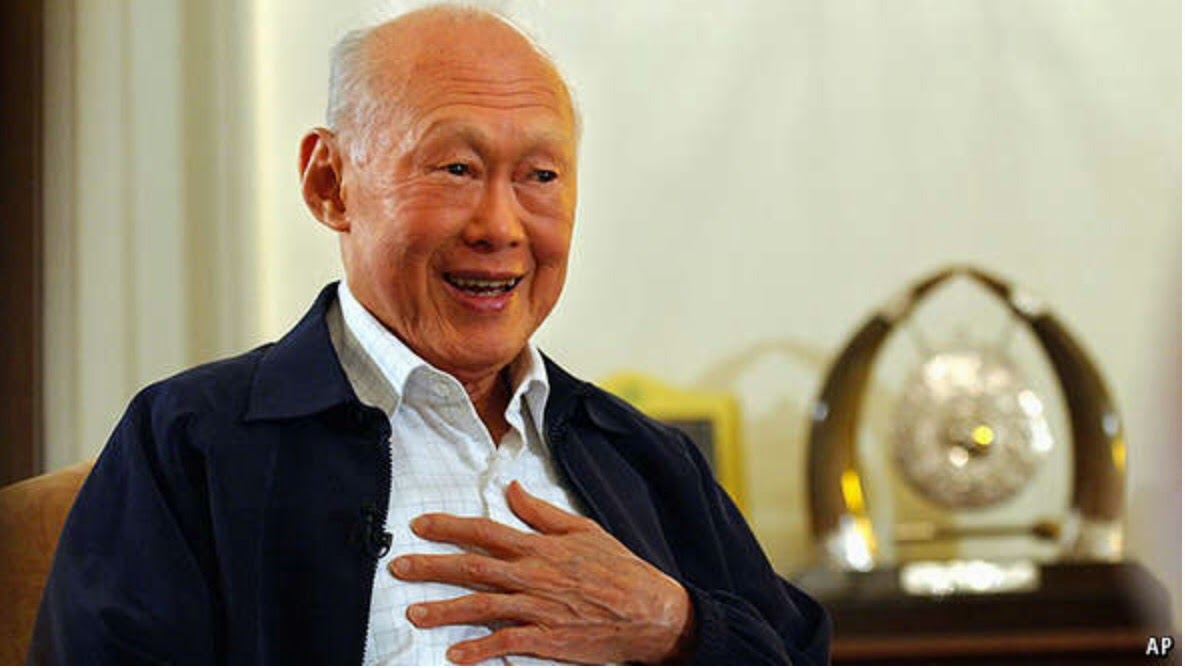
Lee Kuan Yew - Father of Singapore

Lee Kuan Yew - The wise man of the East

IF YOU seek his monument: look around Singapore. Prosperous, orderly, clean, efficient and honestly governed, it is not the work of Lee Kuan Yew alone. But even his severest critics would agree that Mr Lee, who died early on March 23rd (Singapore time) at the age of 91, played an enormous part. Singapore’s leader from before "self-government" from Britain in 1959, he was prime minister until 1990, and retired in stages, leaving the cabinet only in 2011, and remaining a member of parliament until his death. Under him Singapore, with no natural resources, has become one of the world’s richest countries. Many admirers look to it as a model, and Mr Lee as a sage. He did indeed have much to teach the world; but some, especially in China, draw the wrong lesson: that authoritarianism works.

Part of Mr Lee’s influence stemmed from his role as a clear-eyed, blunt-speaking geostrategist. He was an astute observer of the defining contest of our era—China’s emergence and how America reacts to it. He was also a respected interpreter of each to the other, and an important voice, with unique access in both countries, arguing for continued American engagement in Asia and for Chinese tolerance of it.

Critics mock Singapore for being like North Korea or as "Disneyland with the death penalty", as William Gibson described it in 1993. However, Mr Lee’s defenders argue that the restrictions are a small price to pay for stability and prosperity. GDP figures do not lie: Mr Lee’s policies have worked. Singapore is a thriving city-state. Unlike North Korea or Disneyland, it offers a real challenge to the liberal notion that growth, prosperity and freedom should and do go together.

China’s leaders, especially, are fascinated by Singapore’s style of one-party rule. They see flaws in "Western-style democracy": its short-termism; its disregard for non-voters such as children and foreigners; and its habit of throwing up unqualified leaders. Mr Lee’s "meritocracy" promises a solution.

But four peculiarities of Singapore make it look like an anomaly. First is its size. It is a city with a foreign policy, which means it has a cohesion that vast, diverse countries cannot match. Second, this cohesion is reinforced by the turbulent circumstances of its birth. After a painful divorce from Malaysia in 1965, the government has never let Singaporeans forget that a Chinese-majority island, surrounded by Muslim-majority Indonesia and Malaysia, would always be vulnerable. Geography is third. Singapore has flourished in part because of the failings of the rest of its region. Rather as Hong Kong’s prosperity was based on being Chinese but not entirely part of China, so Singapore is in South-East Asia, but not of it.

Only one Lee Kuan Yew
However, the most important reason for Singapore’s singular experience is Mr Lee himself. Incorruptible himself, he kept government unusually clean. He ensured that Singapore pays its ministers and civil servants high salaries. Under today’s prime minister, his son Lee Hsien Loong, the bureaucracy has remained orderly and clean. Unlike many other independence leaders, Mr Lee designed a system to outlast him. Singapore’s government claims it has faced enough electoral competition to keep it honest but not so much that there was a high risk of losing power. So it has been able to eschew populism and take decisions in the country’s long-term interests.

But in most countries, probity requires checks, balances and an opposition that is not always condemned as unpatriotic. In China, for example, Xi Jinping, two years into an anti-corruption campaign, shows no sign of winning the battle. Across much of the developing world, those in opposition are treated as traitors whether their criticisms make sense or not.

Even in Singapore the model may not outlast its creator for long. Singaporeans are having few children and ageing fast, so the government faces demands for more generous social-welfare provisions. And growth has become dependent on high levels of immigration, angering natives who feel the influx is suppressing their wages and making it impossible to get a seat on the tube. That balance between competition and inevitable re-election is shifting uncomfortably. The Singapore model may prove unsustainable even in Singapore. More


Thursday, March 19, 2015

ECMMAN project – This is who we are


The Eastern Caribbean Marine Managed Areas Network (ECMMAN) Project produced a local music video: This Is Who WE ARE by Ambi, J Mouse, Famus and Bridget Barkan for respecting Marine Life across 6 Caribbean Islands. Dominica, Grenada, St. Vincent and the Grenadines, St. Kitts and Nevis, Antigua and Barbuda and St. Lucia. More


Tuesday, March 17, 2015

FAO Reports Address Disaster Risk Management in Fisheries and Aquaculture

March 2015: The Fisheries and Aquaculture Department of the Food and Agriculture Organization of the UN (FAO) has published a number of reports addressing climate change vulnerability in fisheries and aquaculture based on six regional studies, and disaster risk management (DRM) in fisheries and aquaculture in the Caribbean Community (CARICOM) and the wider Caribbean region.


The report titled ‘Climate Change Vulnerability in Fisheries and Aquaculture: A Synthesis of Six Regional Studies' came about due to the scarcity of information on climate impacts on the sector, with FAO launching six regional case studies to fill the information gaps and provide guidance towards adaptation planning. The case studies, which were undertaken in the Lake Chad Basin, the Caribbean, the Mekong Delta, the Benguela Current, the Pacific Island countries and territories, and Latin America, aimed to: define vulnerability to climate change by understanding potential impacts, sensitivities to such changes and adaptive capacity; identify knowledge gaps in assessing vulnerability; and identify strategies for, and provide policy guidance in reducing vulnerability to climate change.


The other publications focus specifically on DRM and adaptation in the Caribbean. A regional report from a workshop held in Kingston, Jamaica, from 10-12 December 2012, on formulating a strategy, action plan and programme for fisheries and aquaculture, addresses: resilience building and the reduction of vulnerabilities; the regional trend towards adaptation; the development of a regional DRM framework; and regional initiatives in advancing DRM and adaptation. The workshop recommended finalizing and implementing a strategy, action plan and programme proposal in order to strengthen regional and national cooperation, and develop capacity in addressing climate change impacts and disasters in fisheries and aquaculture.


Another document describes a series of local, national and regional programme proposals for the Caribbean. The strategy and action plan publication discusses: mainstreaming climate change adaptation strategies into sustainable development; promoting the implementation of specific adaptation measures to address regional vulnerabilities; promoting actions to reduce emissions through fossil fuel reduction and conservation, and transitioning to renewable and cleaner energy sources; promoting actions to reduce the vulnerability to the impacts of climate change in CARICOM countries; and promoting efforts to gain social, economic and environmental benefits from managing forests in the Caribbean. More


[Publication: Climate Change Vulnerability in Fisheries and Aquaculture: A Synthesis of Six Regional Studies] [Publication: DRM and Climate Change Adaptation in the CARICOM and Wider Caribbean Region: Formulating a Strategy, Action Plan and Programme for Fisheries and Aquaculture] [Publication: DRM and Climate Change Adaptation in the CARICOM and Wider Caribbean Region: Programme Proposals] [Publication: DRM and Climate Change Adaptation in the CARICOM and Wider Caribbean Region: Strategy and Action Plan]


Monday, March 16, 2015

Seychelles Warns of ‘Catastrophic’ Climate Change

Samuel walks through through the ruins of his family home with his father Phillip, on March 16, 2015 in Port Vila, Vanuatu.

March 16, 2015 12:01PM ET

The president of the Seychelles on Monday called on the international community to "wake up" to climate change after a massive tropical cyclone devastated the Pacific island nation of Vanuatu.

"The cyclone, which has just struck Vanuatu — a sister Small Island State — with such catastrophic effects and the tragic loss of lives is a clear manifestation of climate change, which some persist to deny," Seychelles President James Michel said in a statement.

"Today it is the South Pacific, tomorrow it could be us," he added.

His comments echoed those of Vanuatu President Baldwin Lonsdale. "Climate change is contributing to the disaster in Vanuatu," he said Monday, as relief agencies surveyed the scale of damage caused by Super Cyclone Pam.

Reports from the outer islands of Vanuatu on Monday painted a picture of utter destruction after the monster storm tore through the South Pacific island nation, flattening buildings and killing at least 24 people.

Disaster management officials and relief workers were struggling to establish contact with the islands that bore the brunt of Cyclone Pam’s winds of more than 185 mph, which destroyed homes, smashed boats and washed away roads and bridges as it struck late on Friday and into Saturday.

The official toll of 24 killed looked certain to rise as reports began to trickle from the hardest hit parts of the scattered archipelago.

"Many of the buildings and houses have been completely destroyed," Lonsdale told Reuters. "More than 90 percent of the buildings have been destroyed."

President James Michel blames devastating Cyclone Pam on global warming, issues warning to world

Military flights from New Zealand and Australia were bringing in water, sanitation kits, medicines and temporary shelters for the estimated 10,000 made homeless on the main island, with supplies being unloaded late into the evening at the airport. France and the United States were also sending aid.

Commercial flights resumed on Monday, bringing in more aid and taking out tourists.

Formerly known as the New Hebrides, Vanuatu is a sprawling cluster of more than 80 islands home to 260,000 people, about 1,250 miles northeast of the Australian city of Brisbane.

Perched on the geologically active Ring of Fire, Vanuatu of the world’s poorest nations suffers from frequent earthquakes and tsunamis and has several active volcanoes, in addition to threats from storms and rising sea levels.

Low-lying island nations, some of which are little more than three feet above sea level, are regarded as some of the most vulnerable to rising seas blamed on climate change.

"When will the international community wake up to reality and put our efforts and resources to get a binding agreement to reduce global warming and sustain the survival of our planet?" Michel said.

In November last year, Michel urged the planet’s small island nations to unite for an unprecedented campaign against climate change or else be treated as global "bystanders" and be allowed to drown. The Alliance of Small Island States, a group of 44 coastal and low-lying countries, repeated that goal and presented measures to keep the global temperature from rising even further at the climate change summit in Lima, Peru in December. More


Saturday, March 14, 2015

Building Resilience to Disasters and Climate Change in the Pacific for Sustainable Developmen

Should you be in Sendai attending the UN World Conference on Disaster Risk Reduction we would like to cordially invite you to attend our Pacific side event “Building Resilience to Disasters and Climate Change in the Pacific for Sustainable Development” on Monday, 16 March from 9.45am – 12pm at B104 Kawauchi-Kita Camps, Tohoku University.


If you have any queries, please do not hesitate to contact me at nanettew@sprep.org.


Tuesday, March 10, 2015

Climate change threatens human rights, Kiribati president tells UN

Pacific leaders tell Human Rights Council they fear for the future of their civilisations as climate impacts intensify

Just three weeks after the conclusion of the most recent climate negotiations, Geneva has once again offered a space for governments to consider how to address the human rights implications of climate change.

President Anote Tong

As the issue recently emerged as one of the elements that many countries wish to see integrated to the Paris climate agreement, these discussions provided insights on opportunities for states and UN bodies to better address this issue in the coming months.

Last Friday, the Human Rights Council hosted two high-level panels dedicated to the issue of human rights and climate change, with specific focus on the importance of international cooperation and on the impacts of climate change on the exercise of the right to food.

Representatives from small islands states called for urgent action to mitigate climate change, pointing at the fact that climate change threatens the progress made with the promotion of human rights.

The prime minister of Tuvalu Enele Sopoaga warned that climate change will worsen existing inequities in world already riven with inequality, poverty and conflict. Tuvalu, the prime minister warned, has neither the resources nor the capacity to cope with these impacts.

Kiribati’s President Anote Tong reminded the Human Rights Council that, despite all the efforts by his government, climate change remains an existential threat to his people.

“Who do we appeal and turn to for our people’s right to survive?” president Tong asked the Council. “If there is a major challenge on human rights that deserves global commitment, leadership and collaboration, this is the one: the moral responsibility to act now against climate change.”

Both Sopoaga and Tong challenged the Council to consider how the international community should respond to the climate crisis and to urge more strongly for climate action in order to protect the rights of the most vulnerable people.

Other speakers discussed in their interventions the benefits of integrating human rights into climate policies. UN Special Envoy on Climate Change (and former UN High Commissioner for Human Rights) Mary Robinson emphasized that a “human rights framing to our development and climate responses can maximize the potential for inclusion, participation and equality”.

Victoria Tauli-Corpuz, UN Special Rapporteur on the Rights of Indigenous Peoples, insisted more specifically on the importance to respect the rights of indigenous peoples, in particular land rights and participatory rights, when designing climate policies.

Quoting the fifth assessment report from the UN’s IPCC climate science panel, Victoria Tauli-Corpuz also highlighted that “indigenous, local, and traditional knowledge systems and practices, including indigenous peoples’ holistic view of community and environment, are a major resource for adapting to climate change, but these have not been used consistently in existing adaptation efforts”.

The panels were followed by an interactive dialogue with representatives from governments and civil society.

Several common threads emerged from this discussion, including the importance to fully implement the right of the public to take part in decision-making related to climate change, the recognition of the impacts of climate change on economic and social rights, and the importance to consider the linkages between the need to address climate change while protecting the right to development.

Several speakers also spoke in favor of two specific proposals for UN institutions: the importance to include strong references to human rights in the Paris 2015 climate agreement and the opportunity for the Human Rights Council to nominate a UN special rapporteur on human rights and climate change.

Germany also announced during the panels that the country would join the “Geneva Pledge on Human Rights and Climate Action” signed by 18 countries during the most recent round of climate negotiations.

However, the impact of the high political stakes related to the preparation of the Paris Climate Agreement could also be felt throughout the panels.

The interventions by most countries reflected mainly well-entrenched positions in the Council and at the climate negotiations.

The United States in particular suggested that attempts to push for the inclusion in the climate negotiations of references to the work of the Human Rights Council could lead to the “sabotage of the 2015 climate agreement”, a statement that many participants to the session considered out of tone with the discussions.

The panels were followed by the presentation, on Monday, of the report of the UN Independent Expert on Human Rights and the Environment John Knox.

In his presentation, Prof. Knox emphasized that climate change is likely the most serious threat to the enjoyment of human rights.

Referring to the Geneva Pledge as an example of a good practice to better integrate human rights and climate policies, he challenged relevant UN bodies, such as the Office of the High Commissioner for Human Rights, UNEP and UNDP, to establish focal points for human rights and climate change.

The ongoing discussions in Geneva this week are not expected to lead to immediate concrete results. These exchanges could nevertheless provide additional momentum when related sessions will resume in June, both in Geneva and in Bonn.

For the first half of the month, UN climate negotiations will continue to advance work towards the Paris climate agreement.

Momentum

Several governments having insisted last month on the need to insert human rights language in the negotiating text, the June meeting of the climate talks will be crucial to determine whether this proposals are retained in the draft agreement.

Upon the closing of the climate negotiations in Bonn, the Human Rights Council will gather once again in Geneva to consider, among other matters, the adoption of a new resolution on human rights and climate change.

Over the past two months, Geneva offered two opportunities for governments to deepen their understanding of the interplay between human rights and climate action.

The coming months will now be critical to determine whether, through the UN climate body and the Human Rights Council, states are willing to commit to take steps towards ensuring that climate policies address climate change in a way that promotes human rights at the same time. More