Showing posts with label earthquake. Show all posts

Wednesday, May 2, 2018

Get the science right

The Earthquake That Will Devastate the Pacific Northwest | The New Yorker

In 2005, however, at a conference in Hokudan, a Japanese geologist named Yasutaka Ikeda had argued that the nation should expect a magnitude 9.0 in the near future—with catastrophic consequences, because Japan’s famous earthquake-and-tsunami preparedness, including the height of its sea walls, was based on incorrect science. The presentation was met with polite applause and thereafter largely ignored. Now, Goldfinger realized as the shaking hit the four-minute mark, the planet was proving the Japanese Cassandra right.
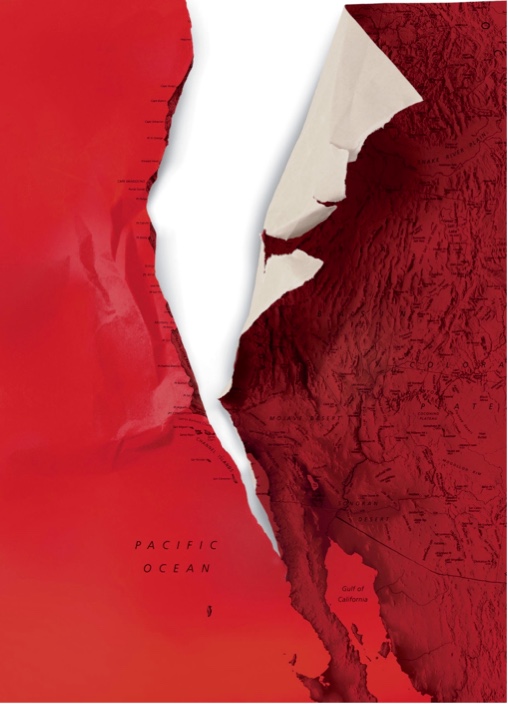
The next full-margin rupture of the Cascadia subduction zone will spell the worst natural disaster in the history of the continent.

For a moment, that was pretty cool: a real-time revolution in earthquake science. Almost immediately, though, it became extremely uncool, because Goldfinger and every other seismologist standing outside in Kashiwa knew what was coming. One of them pulled out a cell phone and started streaming videos from the Japanese broadcasting station NHK, shot by helicopters that had flown out to sea soon after the shaking started. Thirty minutes after Goldfinger first stepped outside, he watched the tsunami roll in, in real time, on a two-inch screen.

In the end, the magnitude-9.0 Tohoku earthquake and subsequent tsunami killed more than eighteen thousand people, devastated northeast Japan, triggered the meltdown at the Fukushima power plant, and cost an estimated two hundred and twenty billion dollars. The shaking earlier in the week turned out to be the foreshocks of the largest earthquake in the nation’s recorded history. But for Chris Goldfinger, a paleoseismologist at Oregon State University and one of the world’s leading experts on a little-known fault line, the main quake was itself a kind of foreshock: a preview of another earthquake still to come. Read More

Sunday, February 10, 2013

Tsunami highlights small island vulnerability

Bangkok - At least five people are reported to have died in a tsunami which struck a remote part of the Solomon Islands earlier today.

More than 5,000 people could have been seriously affected by the one meter wave that hit the town of Lata on Santa Cruz island swamping some villages and the town’s main airport but early warning systems worked and most people had fled the town for higher ground.

Initial information provided by OCHA suggests that the tsunami wave travelled 500 meters inland and flattened many traditional houses but the extent of the damage is still unknown especially in remote areas which may not have received the alert.

Some fifty people died in 2007 when the Solomon Islands was last hit by a tsunami following an 8.1 magnitude quake.

A tsunami warning was issued earlier today by The Pacific Tsunami Warning Centre (PTWC) within four minutes of the earthquake and covered the Solomon Islands and many other surrounding islands such as Vanuatu, Nauru, Papua New Guinea, Tuvalu, New Caledonia, Kosrae, Fiji, Kiribati, Wallis and Futuna. The regional warning was cancelled 2.5 hours later.

In New Zealand, tsunami sirens were set off late in the afternoon, and people in coastal areas were being told to stay off beaches and out of the sea, rivers and estuaries. The Bureau of Meteorology said there was no tsunami threat to Australia however a tsunami watch was issued for Australia, New Zealand, and all the way to Indonesia.

More than 500,000 people are living in Solomon Islands which forms part of the Ring of Fire, a zone of tectonic activity around the Pacific Ocean that is subject to earthquakes and volcanic eruptions.

“This lastest disaster event underlines the vulnerability of all these small low-lying islands to sea level rise. Many islands such as Vanuatu and Kiribati are already suffering from recurrent flooding. More action needs to be taken at the international level to increase their capacities to deal with what is now seen as inevitable,” said Jerry Velasquez from the UN office of Disaster Risk Reduction. More