Showing posts with label united states. Show all posts

Wednesday, May 2, 2018

Get the science right

The Earthquake That Will Devastate the Pacific Northwest | The New Yorker

In 2005, however, at a conference in Hokudan, a Japanese geologist named Yasutaka Ikeda had argued that the nation should expect a magnitude 9.0 in the near future—with catastrophic consequences, because Japan’s famous earthquake-and-tsunami preparedness, including the height of its sea walls, was based on incorrect science. The presentation was met with polite applause and thereafter largely ignored. Now, Goldfinger realized as the shaking hit the four-minute mark, the planet was proving the Japanese Cassandra right.

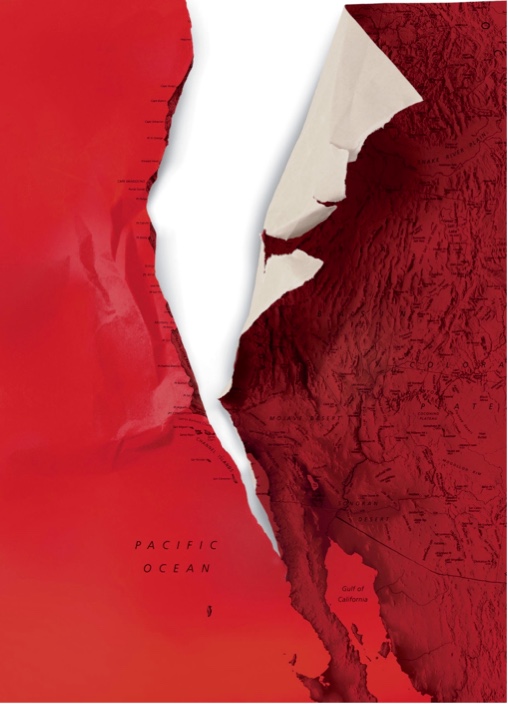
The next full-margin rupture of the Cascadia subduction zone will spell the worst natural disaster in the history of the continent.

For a moment, that was pretty cool: a real-time revolution in earthquake science. Almost immediately, though, it became extremely uncool, because Goldfinger and every other seismologist standing outside in Kashiwa knew what was coming. One of them pulled out a cell phone and started streaming videos from the Japanese broadcasting station NHK, shot by helicopters that had flown out to sea soon after the shaking started. Thirty minutes after Goldfinger first stepped outside, he watched the tsunami roll in, in real time, on a two-inch screen.

In the end, the magnitude-9.0 Tohoku earthquake and subsequent tsunami killed more than eighteen thousand people, devastated northeast Japan, triggered the meltdown at the Fukushima power plant, and cost an estimated two hundred and twenty billion dollars. The shaking earlier in the week turned out to be the foreshocks of the largest earthquake in the nation’s recorded history. But for Chris Goldfinger, a paleoseismologist at Oregon State University and one of the world’s leading experts on a little-known fault line, the main quake was itself a kind of foreshock: a preview of another earthquake still to come. Read More

Tuesday, January 23, 2018

2018 Hurricane Prediction – Strongest Cycle in 70 Years


Global Weather Oscillations (GWO) was cited by news media as the only major hurricane prediction organization that correctly predicted the hyperactive 2017 Atlantic hurricane season from beginning to end, and the destructive United States hurricane landfalls.

The media also noted that when the hurricane season began last year, “nearly every major weather agency predicted a normal 2017 hurricane season – but only Global Weather Oscillations Inc. (GWO) had an accurate forecast” – with a prediction for a destructive hurricane season with 16 named storms, eight hurricanes, four major hurricanes – and 2 major impact hurricanes for the United States.

GWO also predicted the United States would have 6 named storms and 3 hurricanes making landfall in 2017 – and where they would occur. Just as predicted, the U.S. ended up with six named storms and 3 hurricanes. GWO predicted that the Florida Peninsula would break out of their 12-year hurricane drought with a major category 3-4 hurricane making landfall on the south tip of Florida. GWO also predicted that Texas could break out of their 8-year hurricane drought with a landfalling hurricane just above Corpus Christi – and a Category 1 hurricane striking the upper Gulf Coast. The 2017 landfalling hurricanes ended up being – Harvey, Irma and Nate. Read More

Friday, October 30, 2015

The long-term petroleum price outlook - When will it escalate?

For the last few years, the Saudi kingdom’s insistence on pumping oil at high capacity has dramatically depressed oil prices. The result has undermined Saudi’s major oil rivals in OPEC – like Iran and Venezuela.

It has also hit Russia, hard.

Rating agency Standard & Poor forecasts that Russia’s budget deficit is set to swell to 4.4 per cent of GDP this year. Russia’s own finance ministry concedes that if expenditures continue at this rate, within sixteen months – by around the end of next year – its oil reserve funds will be exhausted.

Meanwhile, over the last year real incomes have dropped by 9.8 per cent, and food prices have spiked by 17 per cent, heightening the risk of civil unrest.

System failureh

Rumbling along beneath the surface of such financial woes are deeper systemic issues.

A report from the Swedish Defence Research Agency notes that “prolonged dry periods in southern Russia are having the effect of reducing the level of food production”.

Most of Russia’s wheat imports come from Kazakhstan, “where climate change is expected to exacerbate droughts. These impacts would make farming harder and food more expensive,” observe Dr. Marina Sharmina and Dr. Christopher Jones of the Tyndall Centre for Climate Change Research.

Russia’s looming energy crisis is the other elephant in the room. In 2013, HSBC forecasted that Russia would hit peak oil between 2018 and 2019, experiencing a brief plateau before declining by 30 per cent from 2020 to 2025.

That year, Fitch Ratings came to pretty much the same conclusion. And last year, Leonid Fedun, vice-president of Russia’s second largest oil producer, Lukoil, predicted that the production could peak earlier due to falling oil prices and US-EU sanctions.

Faced with overlapping economic, food and energy crises, Russia is well and truly on the brink. More

Furthermore, According to a recent report from the IMF, Saudi Arabia’s public debt is estimated to rise from below 2 percent of its GDP in 2014 up to 33 percent by the end of 2020. The report also shows that in the past three years, Saudi Arabia’s budget surplus was turned into a deficit reaching 21.6 percent of GDP in 2015. More


Friday, August 28, 2015

Methane Leaks in Natural-Gas Supply Chain Far Exceed Estimates, Study Says

A little-noted portion of the chain of pipelines and equipment that brings natural gas from the field into power plants and homes is responsible for a surprising amount of methane emissions, according to a study published on Tuesday.

Natural-gas gathering facilities, which collect from multiple wells, lose about 100 billion cubic feet of natural gas a year, about eight times as much as estimates used by the Environmental Protection Agency, according to the study, which appeared in the journal Environmental Science & Technology.

The newly discovered leaks, if counted in the E.P.A. inventory, would increase its entire systemwide estimate by about 25 percent, said the Environmental Defense Fund, which sponsored the research as part of methane emissions studies it organized.

“The gathering and processing sector, a piece of the supply chain that most people don’t even know exists, may be the biggest single fraction of emissions coming from natural gas,” said Mark Brownstein, who leads the Environmental Defense Fund’s work on methane emissions.

Methane is the main component of natural gas and has a more potent short-term effect on climate change than carbon dioxide. The effect that the newfound emissions would have on climate change over 20 years, the Environmental Defense Fund said, would be similar to that of 37 coal-fired power plants.

The new study, led by researchers at Colorado State University, involves measurements of 114 natural-gas gathering facilities and 16 processing plants in 13 states.

Many gathering facilities use puffs of natural gas in valves that open and close to regulate gas or liquid flow, releasing a bit of methane into the air with every cycle. Anthony J. Marchese, a professor of mechanical engineering at Colorado State and the lead author of the new study, said that this practice surprised him. “I was: ‘Really? That’s what they do?’ ” he said.

Companies can substitute other relatively inexpensive technologies for the methane-leaking systems, he said, but “they’re so used to using gas pneumatic, and they think it’s so reliable, they are reluctant to change.”

The recognition of gathering facilities as a major source of methane leaks is an opportunity to look harder and fix them, and to upgrade to equipment that does not emit natural gas, Mr. Brownstein said. “None of this is rocket science,” he said. “Most of it is auto mechanics.”

The Obama administration, while promoting a boom in natural gas, has pushed for businesses to reduce leaks. The E.P.A. proposed new standards on methane emissions on Tuesday. Those rules, however, would apply only to new and modified equipment. “That clearly doesn’t begin to address the majority of the problem — the stuff that is already in the field and operating,” Mr. Brownstein said.

The agency has not closely tracked emissions from gathering facilities before. A statement by the agency in response to questions about the study said that the “E.P.A. looks forward to reviewing the upcoming E.D.F. study on methane emissions from natural gas systems.”

Citing the administration’s methane strategy and noting that “substantial new amounts of information” were becoming available, the statement said that the “E.P.A. will continue to refine its emission estimates to reflect the most robust and up-to-date information available.”

Professor Marchese said that the amount of gas that escapes from gathering facilities each year could heat 3.2 million homes. Wasting a potentially valuable resource, not to mention harming the environment, he said, mystified him. “Why would you ever vent it when you can use it to generate electricity?” he added.

A spokesman for one of the gas industry companies that participated in the study said that the research would be helpful. “This ultimately helps us perform better,” said John Christiansen, a spokesman for Anadarko Petroleum. The research would help the company “get that methane back in the sales line,” he added, “which is ultimately in our best interest — and everybody’s best interest.” More


Monday, April 20, 2015

VII Summit of the Americas - Panama - 2015

"I can say with all sincerity that the essence of my policy is to do whatever I can to make sure that the people of Cuba are able to prosper and live in freedom and security, and enjoy a connection with the world where their incredible talents and ingenuity and hard work can thrive." — President Obama with President Castro


Monday, June 2, 2014

The [US] House Committee Declares The IPCC Report Is Not Science

The Intergovernmental Panel on Climate Change (IPCC) report warned that more intense droughts and heat waves will cause famine and water shortages. But, don't worry! Yesterday, the GOP held a hearing to tell us the IPCC is, in fact, a global conspiracy to control our lives and "redistribute wealth among nations."

The hearing, titled "Examining the UN Intergovernmental Panel on Climate Change Process," was convened by the House Committee on Science, Space and Technology—the same folks who recently demonstrated their inability to grasp the idea that the world's climate varies across different regions and who informed us that warmer weather didn't bother the dinosaurs, so what's all the fuss about?

In principle, there's nothing wrong with assessing the methodology of such an important and influential report. But, in one of those quintessential moments of Washington double-think, Chairman Lamar Smith (R-TX)—who accuses the IPCC of creating data to serve a predetermined political agenda—summarized the hearing's conclusions a day before it even began. "The IPCC does not perform science itself and doesn't monitor the climate," Smith told a reporter, "but only reviews carefully selected scientific literature."

So, small wonder that Rep. Eddie Bernice Johnson (D-TX), the ranking Democrat on the committee, offered the opinion:

While the topic of today's hearing is a legitimate one, namely, how the IPCC process can be improved, I am concerned that the real objective of this hearing is to try to undercut the IPCC and to cast doubt on the validity of climate change research.

We aren't going to get very far if we spend our time continually revisiting a scientific debate that has already been settled. Nor will we get far if we continue a recent practice on this Committee of seeming to question the trustworthiness and integrity of this nation's scientific researchers.

Fair and Balanced

Another source of Johnson's skepticism might have been that three of the four expert witnesses testifying at the hearing either deny that humans are responsible for global warming or believe that the potential impact of climate change is grossly overstated.

The witnesses for the prosecution were:

(1) Roger Pielke,Sr.

Who is he?

Senior Research Scientist, Cooperative Institute for Research in Environmental Sciences, and Professor Emeritus of Atmospheric Science, Colorado State University

What's he known for?

Pielke says that carbon dioxide is responsible, at most, for about 28% of human-caused warming up to the present and he is among the most vocal skeptics of reports that the polar ice caps are melting and that sea levels are rising.

What did he say at the hearing?

The IPCC is "giving decision makers who face decisions at the regional and local level a false sense of certainty about the unfolding climate future."

(2) Richard Tol

Who is he?

A professor of economics at the University of Sussex

What's he known for?

He resigned his position with the IPCC team producing the working group's Summary for Policymakers, which he classified as "alarmist." Global warming creates benefits as well as harms, he believes, and in the short term, the benefits are especially pronounced. He's also expressed doubt that climate change will play any role in exacerbating conflicts.

Tol has been criticized by other scientists who have raised questions about his methodology and who have noted that he has a history of making contradictory statements. For instance, in a widely cited 2009 paper, he wrote of "considerable uncertainty about the economic impact of climate change … negative surprises are more likely than positive ones. … The policy implication is that reduction of greenhouse gas emissions should err on the ambitious side."

What did he say at the hearing?

"Academics who research climate change out of curiosity but find less than alarming things are ignored, unless they rise to prominence in which case they are harassed and smeared….The IPCC should therefore investigate the attitudes of its authors and their academic performance and make sure that, in the future, they are more representative of their peers."

(3) Daniel Botkin

Who is he?

Professor Emeritus, Department of Ecology, Evolution, and Marine Biology, University of California, Santa Barbara.

What's he known for?

He has long argued that life has had to deal with environmental change, especially climate change, since the beginning of its existence on Earth—and that we underestimate the ability of species, including humans, to find ways to adapt to the problem.

Botkin wrote a controversial editorial for the Wall Street Journal (Oct 17, 2007) arguing that global warming will not have much impact on life on Earth, and noted that: "the reality is that almost none of the millions of species have disappeared during the past 2.5 million years — with all of its various warming and cooling periods."

The editorial prompted several responses from within the scientific community, including this:

For the past 2.5 million years the climate has oscillated between interglacials which were (at most) a little warmer than today and glacials which were considerably colder than today. There is no precedent in the past 2.5 million years for so much warming so fast. The ecosystem has had 2.5 million years to adapt to glacial-interglacial swings, but we are asking it to adapt to a completely new climate in just a few centuries. The past is not a very good analog for the future in this case. And anyway, the human species can suffer quite a bit before we start talking extinction.

What did he say at the hearing?

"I want to state up front that we have been living through a warming trend driven by a variety of influences. However, it is my view that this is not unusual, and contrary to the characterizations by the IPCC….these environmental changes are not apocalyptic nor irreversible…..Yes, we have been living through a warming trend, no doubt about that. The rate of change we are experiencing is also not unprecedented, and the "mystery" of the warming "plateau" simply indicates the inherent complexity of our global biosphere. Change is normal, life on Earth is inherently risky; it always has been."

The Q & A

The lone witness for the defense was Michael Oppenheimer, the Albert G. Milbank Professor of Geosciences and International Affairs at Princeton University. He was selected by the Democrats, "because he's one of the foremost experts in the world and has been involved with the IPCC," a spokesperson for the Democratic contingent of the committee told Motherboard reporter Jason Koebler.

Koebler describes how things went down at the hearing after the experts presented their statements:

For two hours, climate change deniers interrupted, berated, and cut off Oppenheimer, while the other three other witnesses fielded softball questions from conservative lawmakers and dodged tougher ones from Democratic ones.

In fact, at one point, Rep. Larry Buchson (R-Ind.), who, seconds before had interrupted Oppenheimer and said he wasn't interested in hearing his views, wanted to "apologize on behalf of Congress" to Pielke for the aforementioned "juvenile and insulting questions trying to disparage the credibility" of witnesses who didn't take climate change seriously…..

Dana Rohrabacher [R-CA] pulled out the air quotes when he said "global warming," and took offense to Oppenheimer not being able to "capsulize" all the reasons why he believes that climate change is a big deal in 10 seconds. Smith suggested that the "only thing we know about [climate change models] is that they will be wrong" and suggested that "even if the US was completely eliminated, it's not going to have any discernible impact on global temperatures in the near or far future."

Paul Broun [R-GA] and Buchson noted their belief in the "scientific process" and suggested that they knew more about it because they are doctors (Broun is a dentist; Buchson is a surgeon).

So predictable, and such a waste of time. As I noted earlier, in principle, there is nothing wrong with assessing the methodology of such an important and influential report. But there are far better ways to do it than this. More
 

Wednesday, May 15, 2013

Climate, Environment, and Conservation: Remarks at the Arctic Council Ministerial Session

Remarks at the Arctic Council Ministerial Session

05/15/2013 08:08 AM EDT


Remarks

John Kerry
Secretary of State

Kiruna City Hall

Kiruna, Sweden

May 15, 2013


Thank you very much, Minister Bildt, and thank you for hosting this important event. I’m pleased to be joined at the table by our senior Arctic official Julia Gourley and I’m pleased also to have Senator from Alaska, Senator Lisa Murkowski, a good friend of mine from the Senate, who cares about these issues enormously.

It’s an honor to be here in Kiruna, and I begin by saying that there are many areas where the eight Arctic states’ interests overlap significantly. And despite our different sizes and our different cultures, and many of the varied interests that we’ve heard today from permanent participants, we share many values and priorities. But there is nothing that should unite us quite like our concern for both the promise and the challenges of the northern-most reaches of the earth.
What makes this organization so important is that the consequences of our nations’ decisions don’t stop at the 66th parallel. And that’s especially true today, when the threat of climate change is as ominous as ever, its effects are as tangible as ever, and the courage – literally, the courage – that we summon in the coming months and years is as crucial as ever. This is one of the most obvious shared challenges on the face of the planet today. I don't think there’s any one of us here who hasn’t visibly noticed with our own eyes or experienced the changes in fragile ecosystems.

When I was a senator, I worked with the late Senator Ted Stevens of Alaska in order to end driftnet fishing on the high seas. And more than once I rewrote America’s fisheries laws, the Magnuson-Stevens Act, to try to protect our fisheries. But the truth is that today fisheries all across the planet are challenged with too much money chasing too few fish. Today, as Secretary of State, I come here keenly aware that the long list of challenges – acidification, pollution, ice melt, rising sea levels, disappearing species, and indiscriminate development practices – all of these carry even more challenges downstream, so to speak, to each of our economies, to our national security, and to international stability.

So Carl, I applaud the Arctic Council, which addresses these challenges, and your exemplary leadership of the last two years in tenure. And I’m pleased to look forward to Canada’s leadership.

I’m pleased that President Obama, just a few days ago, released the U.S. National Strategy for the Arctic Region, reaffirming that a secure and well-managed Arctic marked by international cooperation and conflict – an absence of conflict – is a key policy priority of the United States. And we look forward to filling out the details of that with all of you over the course of the next few years.

I also look forward to joining my fellow ministers in signing the oil agreement that we will reach today. That’s an important framework for cooperation in the event of an emergency. And as the United States was reminded painfully in the Gulf of Mexico three years ago, we need strong partnerships and shared operational guidelines before a disaster occurs in order to make sure that we’re able to respond. So we need to prevent crises from happening in the first place, and that frankly brings me back to climate change.

Just last week in one of the major newspapers in the United States, the New York Times, it was reported that the atmospheric levels of CO2 exceeded 400 parts per million for an entire 24-hour period for the first time in recorded history. That is the highest level of CO2 in three or four million years. Temperatures we know in the Arctic are increasing more than twice as fast as global averages, and they are endangering habitats and they are endangering ways of life.

Last September, the extent of sea ice covering the Arctic reached a record low, threatening marine mammal life and the indigenous and local communities that depend on them. As many of you – or all of you – know, warming also erodes the natural barrier of ice that shields Alaska’s coast from hostile waters, and that causes homes to fall into the sea, it causes pollution. And the thawing of the permafrost, which is increasingly releasing methane, which is 20 times more damaging than CO2 – that has led to the first Arctic wildfires in thousands of years.

So the scientific research in each of our countries is more imperative than ever in order to protect the atmosphere, the global economy, the food chain, and the air we breathe. And we need to do more – all of us – urgently. The businesses investing in the region are obviously crucial to bringing new industries, jobs, and people to the Arctic to promote, but we need to make sure that we are promoting that growth in responsible ways. And we’ve heard from our friends and the permanent participators today about the urgency of that.

So I want to confirm that in all of these efforts, and so many more that we look forward to discussing in the next years, the United States is committed to being a productive and engaged partner. And we look forward to the Canadian chairmanship that begins today. We’re also planning ahead for the U.S. chairmanship from 2015 to ’17. And I greatly respect the hundreds of generations of tradition, culture, and expertise that has been built by the indigenous communities who have called this extraordinary place home for thousands of years. They shape this council’s work and they guide our decision-making, and they should.

America became an Arctic nation only about 150 years ago, when another Secretary of State, William Seward, had the vision to purchase Alaska, dramatically changing, not only our map but our choices, our landscape, our resources, and our identity as a nation. So we’re proud to join you today in the important work of protecting and preserving our shared Arctic, not just for the nations that touch it, but for the way that what happens here, for the stewardship that we have responsibility to execute, for the way that it touches every single person around the world and our way of life.

Thank you, Mr. Chairman.


PRN: 2013/ T06-04


The Office of Website Management, Bureau of Public Affairs, manages this site as a portal for information from the U.S. State Department.
External links to other Internet sites should not be construed as an endorsement of the views or privacy policies contained therein.


Thursday, May 2, 2013

US East Coast Sea Surface Temperatures In 2012 Highest In 150 Years

02 May 2, 2013
Countercurrents.org

NOAA reports that 2012 brought the warmest recorded sea surface temperatures in 150 years for the US east coast between Cape Hatteras, N.C. and the Gulf of Maine.

Using satellite and ship-board measurements, NOAA's Northeast Fisheries Science Center (NEFSC) reported that average surface temperatures reached 57.2 F (14 C) in 2012, beating the previous record set in 1951. 2012's temperature rise also marked the largest single-year increase since records began in 1854 and one of only five times that average temperatures have jumped by more than 1.8 F (1 C).

“Changes in ocean temperatures and the timing and strength of spring and fall plankton blooms could affect the biological clocks of many marine species, which spawn at specific times of the year based on environmental cues like water temperature,” said Kevin Friedland, a scientist in the NEFSC Ecosystem Assessment Program, in a press statement.

Research has shown that rising ocean temperatures as a result of climate change may also pose a threat to the ocean's single-celled phytoplankton, such as algae. They are not only the foundation of the marine food chain, Climate Central explains. They also "consume about half of the carbon dioxide that enters the atmosphere."

Scientists aren't certain of the extent to which rising temperatures will impact these organisms, or how quickly they will be able to adapt, but slowed phytoplankton growth could mean more CO2 remaining in the atmosphere.

Atmospheric CO2 concentrations are at their highest level in human history and continue to rise.

Increased carbon dioxide in the air -- as a result of human activities like the burning of fossil fuels -- also means more CO2 dissolved in the world's oceans. NOAA chief Jane Lubchenco told the Associated Press in 2012, ocean acidification is climate change's "equally evil twin."

"It's yet another reason to be very seriously concerned about the amount of carbon dioxide that is in the atmosphere now and the additional amount we continue to put out," she told AP. "It is going to be a long time before we can stabilize and turn around the direction of change simply because it's a big atmosphere and it's a big ocean."

Rising sea level

Another report [2] from Georgetown, S.C. said:

Effects of higher sea level are very clear down a winding dirt road in Georgetown County where acres of what was once a forested wetland have morphed into a salt marsh of dead trees jutting toward the sky.

"When you go into the field, you really see a lot of trees dying. That's the first thing that catches your eye," said Alex Chow, who teaches biosystems engineering at Clemson University's Baruch Institute of Coastal Ecology and Forest Science at Hobcaw Barony, a wildlife refuge northeast of Georgetown.

Chow and two other colleagues at the institute used aerial photos to map how the salt water has advanced into freshwater Strawberry Swamp from nearby Winyah Bay.

Their study found that over the past six decades, the amount of salt marsh in the area has increased from about 4 acres to more than 16 acres. The study was published in December in "Wetland Science and Practice," the quarterly journal of the international Society of Wetland Scientists.

"Over long periods – and what we looked at is over 60 years – the maritime forest retreats at approximately the same rate sea level rises," said Tom Williams, a professor emeritus of forestry and natural resources who is a co-author.

Bo Song, assistant professor of forestry and natural resources, also contributed to the study.
The study notes that along the state's north coast, the sea level rise has average 3 to 4 millimeters a year during the past century or so.

William Conner, a professor of forestry and natural resources at the institute, said that what is happening in Strawberry Swamp is similar to what is happening throughout the Southeast, where the shorelines tend to be flattened. The dead trees along the Cape Fear River in Wilmington are an example, he said. In areas where rivers are dredged for shipping, it also makes it easier for salt water to impinge on freshwater areas.

"It's been a little more dramatic in recent years," he said.

"Based on the calculations in this study, you can see it's happening much faster in the past two decades," Chow said. More


Thursday, November 8, 2012

Will President Obama Seize the Moment for Action on Climate Change?

Superstorm Sandy changed the U.S. political zeitgeist on climate change virtually overnight.

When BusinessWeekruns a cover blazoned with "It's Global Warming Stupid" and politicians start breaking their "climate silence," you know the jig is up. President Obama acknowledged as much in his acceptance speech, when he said he wanted to "pass on a country that isn't threatened by the destructive power of a warming planet."

The question is, where we go from here. Are Americans now prepared to accelerate action to slow climate change? Or will a new fortress mentality take hold? And I mean that quite literally. One commentator recently suggested surrounding lower Manhattan with retractable walls, begging the question of where all that displaced water would go.

As the dust settles from the election, the president will come under increasing pressure to make good on his promise, through both domestic action as well as taking a more cooperative stance at the UN climate negotiations. Much will be written about this in the weeks to come.

In the meantime, he might take some inspiration from some of the many transformative solutions being put into practice elsewhere. The good news is that there are many such examples, so many that the United Nations climate agency launched an initiative to celebrate some of the most exciting, inspiring stories they could find. "Momentum for Change" is a platform for encouraging and celebrating innovative action -- designated as "lighthouse" activities -- either to reduce climate change, or to reduce its impacts.

In 2012, the initiative focused on the urban poor. To qualify as lighthouse activities, projects needed to not only address climate change, but also to improve the lives - both socially and environmentally - of the poorest and most vulnerable people in the community. They also had to demonstrate their catalytic potential for long-term transformational change, which meant that they had to be capable of being repeated elsewhere, and could be scaled up over time. More


Wednesday, October 31, 2012

Watching Sandy, Ignoring Climate Change

A couple of weeks ago, Munich Re, one of the world’s largest reinsurance firms, issued a study titled “Severe Weather in North America.”


According to the press release that accompanied the report, “Nowhere in the world is the rising number of natural catastrophes more evident than in North America.” The number of what Munich Re refers to as “weather-related loss events,” and what the rest of us would probably call weather-related disasters, has quintupled over the last three decades. While many factors have contributed to this trend, including an increase in the number of people living in flood-prone areas, the report identified global warming as one of the major culprits: “Climate change particularly affects formation of heat-waves, droughts, intense precipitation events, and in the long run most probably also tropical cyclone intensity.”


Munich Re’s report was aimed at the firm’s clients—other insurance companies—and does not make compelling reading for a general audience. But its appearance just two weeks ahead of Hurricane Sandy seems to lend it a peculiarly grisly relevance. Sandy has been called a “superstorm,” a “Frankenstorm,” a “freakish and unprecedented monster,” and possibly “unique in the annals of American weather history.” It has already killed sixty-five people in the Caribbean, and, although it’s too early to tell what its full impact will be as it churns up the East Coast, loss estimates are topping six billion dollars.


As with any particular “weather-related loss event,” it’s impossible to attribute Sandy to climate change. However, it is possible to say that the storm fits the general pattern in North America, and indeed around the world, toward more extreme weather, a pattern that, increasingly, can be attributed to climate change. Just a few weeks before the Munich Re report appeared, scientists at NASA’s Goddard Institute for Space Studies, in New York, published a study in the Proceedings of the National Academy of Sciences on the apparent increase in extreme heat waves. Extreme summertime heat, which just a few decades ago affected much less than one per cent of the earth’s surface, “now typically covers about 10% of the land area,” the paper observed. “It follows that we can state, with a high degree of confidence, that extreme anomalies”—i.e., heat waves—“such as those in Texas and Oklahoma in 2011 and Moscow in 2010 were a consequence of global warming because their likelihood in the absence of global warming was exceedingly small.” It is worth noting that one of several forces fuelling Sandy is much-higher-than-average sea-surface temperatures along the East Coast.


Coming as it is just a week before Election Day, Sandy makes the fact that climate change has been entirely ignored during this campaign seem all the more grotesque. In a year of record-breaking temperatures across the U.S., record drought conditions in the country’s corn belt, and now a record storm affecting the nation’s most populous cities, neither candidate found the issue to be worthy of discussion. Pressed about this finally the other day on MTV, President Obama called climate change a “critical issue” that he was “surprised” hadn’t come up during any of the debates, a response that was at once completely accurate and totally disingenuous. (Asone commentator pointed out, he might have brought up this “critical” issue on his own since “he is the friggin’ POTUS.”) More


Saturday, May 19, 2012

Peabody Coal buys coal from U.S. taxpayers for cheap, sells it abroad for huge profit

Yesterday, I wrote about the issue of public land in the Powder River Basin being leased to coal companies for cheap, so they can strip-mine it and sell the coal abroad at an enormous profit.

Also yesterday, the feds held a “competitive lease sale” for the South Porcupine Tract, which contains almost 402 million tons of mineable coal.

Guess how many companies bid in this “competitive auction”? One: Peabody Coal, the company that filed the original application [PDF] for the lease.

This was actually the second auction for the tract. The first ended with no sale because BLM rejected Peabody’s lowball offer of $0.90 a ton. The winning price in Thursday’s sale? $1.11 per ton.

Again: $1.11 per ton.

The price of a ton of Powder River Basin coal on U.S. spot markets?$9.15 per ton, as of May 11.

The price of a ton of coal exported to China? It averaged $97.28 per ton [PDF] in 2011. It’s now up to $123 per ton.

And exports are only likely to go up:

So, to summarize: You, the U.S. taxpayer, just leased another huge chunk of your land to Peabody Coal at $1.11 per ton of coal. Peabody will strip-mine that land and take the coal to China, where it will sell it for over $100 per ton. Peabody pockets enormous profits*, the U.S. taxpayer gets devastated land, and China accelerates global warming. More


And for the rest of the world, specially the Small Island Developing States and coastal cities, sea level rise, flooding and eventual evacuation. Will you give us a passport President Barak Hussain Obama? Editor.