Showing posts with label world. Show all posts

Friday, November 28, 2014

Laying the Foundations of a World Citizens Movement

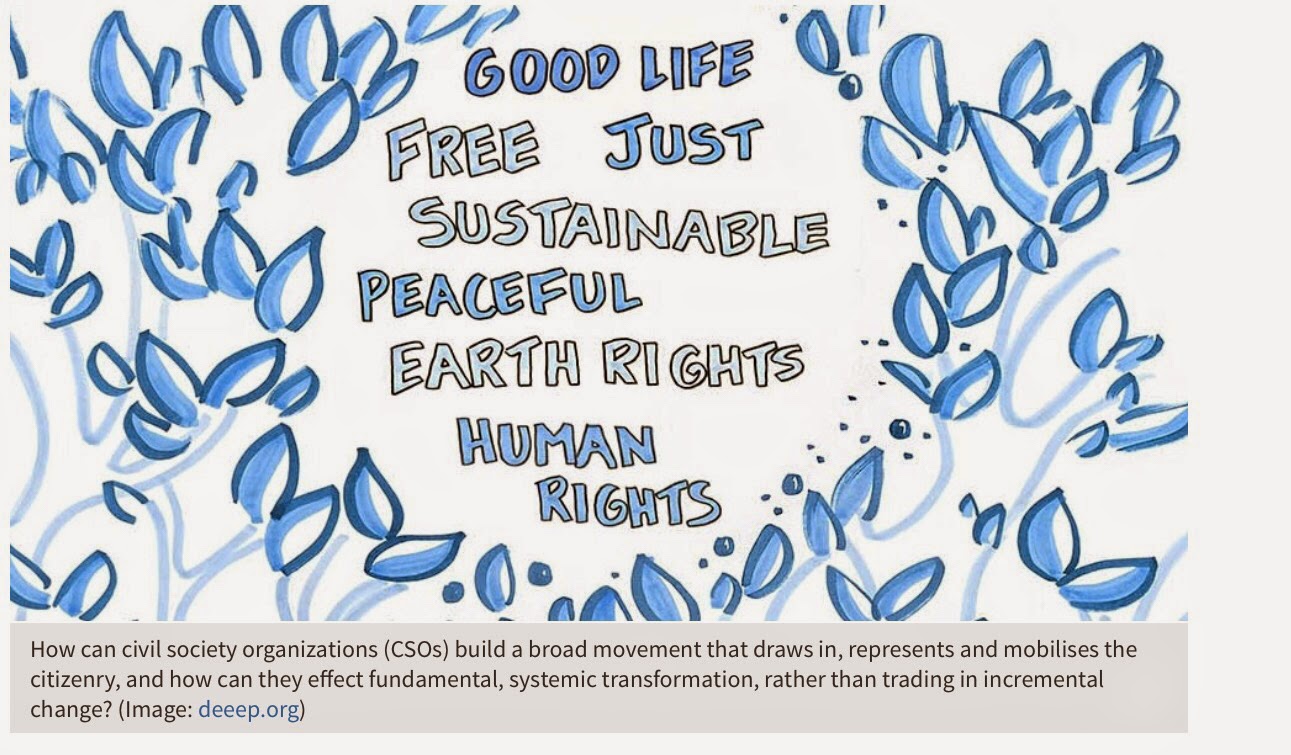
How can civil society organizations (CSOs) build a broad movement that draws in, represents and mobilises the citizenry, and how can they effect fundamental, systemic transformation, rather than trading in incremental change?
JOHANNESBURG, South Africa - Has organised civil society, bound up in internal bureaucracy, in slow, tired processes and donor accountability, become simply another layer of a global system that perpetuates injustice and inequality?

How can civil society organizations (CSOs) build a broad movement that draws in, represents and mobilises the citizenry, and how can they effect fundamental, systemic transformation, rather than trading in incremental change?

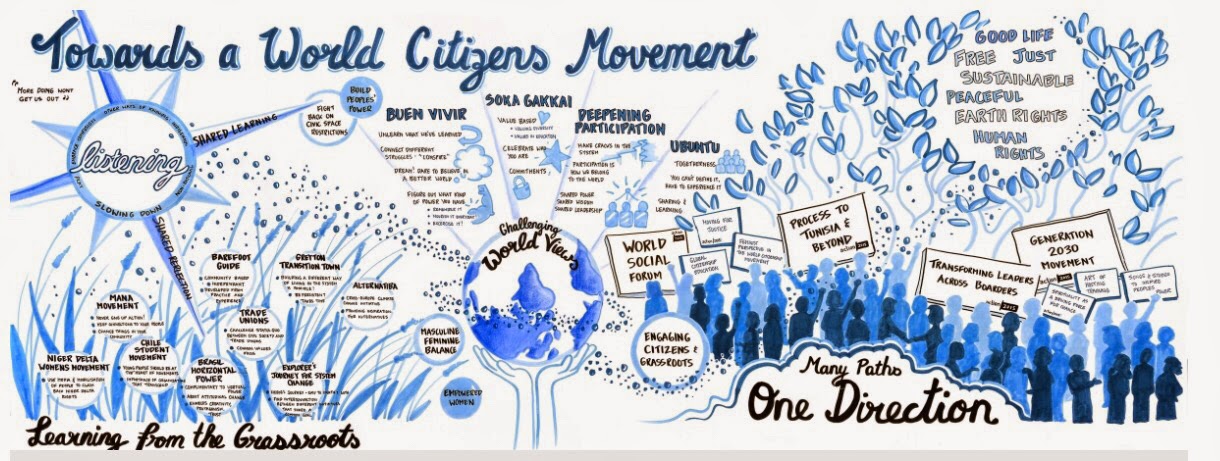
This kind of introspective reflection was at the heart of a process of engagement among CSOs from around the world that gathered in Johannesburg from Nov. 19 to 21 for the “Toward a World Citizens Movement: Learning from the Grassroots” conference.

Organised by DEEEP, a project within the European civil society umbrella organisation CONCORD which builds capacity among CSOs and carries out advocacy around global citizenship and global citizenship education, the conference brought together 200 participants.

“It is important that people understand the inter-linkages at the global level; that they understand that they are part of the system and can act, based on their rights, to influence the system in order to bring about change and make life better – so it’s no longer someone else deciding things on behalf of the citizens”
– Rilli Lappalainen, Secretary-General of the Finnish NGDO PlatformKey partners were CIVICUS (the World Alliance for Citizen Participation, which is one of the largest and most diverse global civil society networks) and GCAP (Global Call to Action Against Poverty).
The three-day gathering was part of a larger series of conferences and activities that were arranged to coincide during the 2014 International Civil Society Week organised by CIVICUS, which closed Nov. 24.

Global citizenship is a concept that is gaining currency within the United Nations system, to the delight of people like Rilli Lappalainen, Secretary-General of the Finnish NGDO Platform and a key advocate for global citizenship education.

At the heart of this concept is people’s empowerment, explains Lappalainen. “It is important that people understand the inter-linkages at the global level; that they understand that they are part of the system and can act, based on their rights, to influence the system in order to bring about change and make life better – so it’s no longer someone else deciding things on behalf of the citizens.”

The process of introspection around building an effective civil society movement that can lead to such change began a year ago at the first Global Conference, also held in Johannesburg.

The discourse there highlighted the need for new ways of thinking and working – for the humility to linger in the uncomfortable spaces of not knowing, for processes of mutual learning, sharing and questioning.

This new spirit of inquiry and engagement, very much evident in the creative, interactive format of this year’s conference, is encapsulated in an aphorism introduced by thought-leader Bayo Akomolafe from Nigeria: “The time is very urgent – let us slow down”.

Akomolafe’s keynote address explored the need for a shift in process: “We are realising our theories of change need to change,” he said. “We must slow down today because running faster in a dark maze will not help us find our way out.”

“We must slow down today,” he continued, “because if we have to travel far, we must find comfort in each other – in all the glorious ambiguity that being in community brings … We must slow down because that is the only way we will see … the contours of new possibilities urgently seeking to open to us.”

A key opportunity for mutual learning and questioning was provided on the second day by a panel on ‘Challenging World Views’.

Prof Rob O’Donoghue from the Environmental Learning Research Centre at South Africa’s Rhodes University explored the philosophy of ubuntu, Brazilian activist and community organiser Eduardo Rombauer spoke about the principles of horizontal organising, and Hiro Sakurai, representative of the Buddhist network Soka Gakkai International (SGI) to the United Nations in New York, discussed the network’s core philosophy of soka, or value creation.

A female activist from Bhutan who was to join the panel was unable to do so because of difficulties in acquiring a visa – a situation that highlighted a troubling observation made by Danny Sriskandarajah, head of CIVICUS, about the ways in which the space for CSOs to work is being shrunk around the world.

The absence of women on the panel was noted as problematic. How is it possible to effectively question a global system that is so deeply patriarchal without the voices of women, asked a male participant. This prompted the spontaneous inclusion of a female member of the audience.

In the spirit of embracing not-knowing, the panellists were asked to pose the questions they think we should be asking. How do we understand and access our power? How do we foster people’s engagement and break out of our own particular interests to engage in more systems-based thinking? How can multiple worldviews meet and share a moral compass?

Ubuntu philosophy, explained O’Donoghue, can be defined by the statement: “A person is a person through other people.”

The implications of this perspective for the issues at hand are that answers to the problems affecting people on the margins cannot be pre-defined from the outside, but must be worked out through solidarity and through a process of struggle. You cannot come with answers; you can only come into the company of others and share the problems, so that solutions begin to emerge from the margins.

The core perspective of soka philosophy is that each person has the innate ability to create value – to create a positive change – in whatever circumstances they find themselves. Millions of people, Sakurai pointed out, are proving the validity of this idea in their own contexts. This is the essence of the Soka movement.

His point was echoed the following evening in the address of Graca Machel, wife of the late Nelson Mandela, at a CIVICUS reception, in which she spoke of the profound challenges confronting civil society as poverty and inequality deepen and global leaders seem increasingly dismissive of the voices of the people.

Then, toward the end of her speech, she softly recalled “my friend Madiba” (Mandela’s clan name) in the final years of his life, and his consistent message at that time that things are now in our hands.

What he showed us by his example, she said, is that each person has immense resources of good within them. Our task is to draw these out each day and exercise them in the world, wherever we are and in whatever ways we can.

Those listening to Machel saw Mandela’s message as a sign of encouragement in their efforts to create the World Citizens Movement of tomorrow. More


Thursday, June 5, 2014

On World Environment Day

Sea-Level Rise in Small Island Nations - Up to Four Times the Global Average - to Cost US$ Trillions in Annual Economic Loss and Impede Future Development: Shift to Green Policies and Investment Critical

Global Net Loss of Coral Reef Cover - Worth US$11.9 Trillion - to Severely Compound Vulnerability of SIDS

Halving Fossil Fuel Dependence by 2035 a Must and SIDS Electricity Prices Soar 500 per cent Higher than US

Bridgetown, 5 June 2014 – Climate change-induced sea-level rise in the world's 52 small island nations – estimated to be up to four times the global average – continues to be the most pressing threat to their environment and socio-economic development; with annual losses at the trillions of dollars due to increased vulnerability. An immediate shift in policies and investment towards renewable energy and green economic growth is required to avoid exacerbating these impacts, says a new report by the United Nations Environment Programme (UNEP).

In all SIDS regions, coral reefs, the frontline for adaptation, are already severely impacted by rising sea surface temperatures. The global net loss of the coral reef cover - around 34 million hectares over two decades – will cost the international economy an estimated US$11.9 trillion, with Small Island Developing States (SIDS) especially impacted by the loss.

In the insular Caribbean, for example, up to 100 per cent of coral reefs in some areas have been affected by bleaching due to thermal stress linked to global warming. Climate threats are projected to push the proportion of reefs at risk in the Caribbean to 90 per cent by 2030 and up to 100 per cent by 2050.

The SIDS Foresight Report identifies climate change impacts and related sea-level rise as the chief concern among twenty emerging issues impacting the environmental resilience and sustainable development prospects of SIDS– including coastal squeeze, land capacity, invasive alien species and threats from chemicals and waste.

"Rio+20 emphasized that SIDS have unique vulnerabilities and require special attention during the evolution of the sustainable development agenda in order to achieve the gains required to lift people out of poverty, create green jobs and provide sustainable energy for all," said UN Under-Secretary-General and UNEP Executive Director Achim Steiner.

"For example, these 52 nations, home to over 62 million people, emit less than one per cent of global greenhouse gases, yet they suffer disproportionately from the climate change that global emissions cause."

"Fortunately, studies demonstrate that we have the tools and capabilities to head off future developmental setbacks. It is up to the international community to supports SIDS—not least through building momentum towards a robust climate agreement — to be agreed in 2015, which will cut emissions and minimize the threat of climate change for these nations," he added.

The report – launched in Bridgetown on World Environment Day – warns that the magnitude and frequency of many weather and climate-related hazards will increase as climate warming accelerates, especially in small islands. This will lead to disproportionate and compounded climate change impacts, which will adversely affect multiple sectors - from tourism, agriculture and fisheries to energy, freshwater, healthand infrastructure, unless ocean-based green economy approaches and policy options are put into action.

However, it also demonstrates that SIDS can transition to an inclusive green economy and ensure a sustainable prosperous future by taking advantage of opportunities in areas such as renewable energy, sustainable exploration of unexploited resources, developing an ocean-based green economy and leading the world in the development of inclusive indicators that go beyond Gross Domestic Product to include natural resources.

A second report, the Barbados Green Economy Scoping Study – also launched by UNEP on World Environment Day – provides a practical roadmap for policymakers and businesses on the greening of tourism, agriculture, fisheries, building/housing and transportation in Barbados—lessons that can also be applied in other SIDS.

"The issue of the Green Economy is of particular importance to Barbados given our national commitment to advance an inclusive sustainable development paradigm—in the process creating a Barbados that is socially balanced, economically viable and environmentally sound," said Freundel Stuart, Prime Minister of Barbados.

"The policy, investment and research proposals contained in the Green Economy Scoping Study will not be confined to a shelf," he added. "This can be witnessed in the integration of the green economic policy proposals into the new Barbados Growth and Development Strategy, and the mobilization of major investments that harmonize with the green economy in areas such as agriculture, tourism, waste, and water."

Disproportionate Climate Change Impacts

SIDS’ vulnerability to climate change and sea-level rise is magnified due to their relatively small land masses, population concentrations, and high dependence on coastal ecosystems for food, livelihood, security and protection against extreme events.

While the global average of sea-level rise is 3.2 mm per year, the island of Kosrae, in the Federated States of Micronesia, is experiencing a sea-level that is rising at a rate of 10 mm per year. The tropical Western Pacific, where a large number of small islands are located, experienced sea-level rise at a rate of 12 mm per year between 1993 and 2009—about four times the global average.

Among the threats are increased flooding, shoreline erosion, ocean acidification, warmer sea and land temperature, and damage to infrastructure from extreme weather events.

Apart from its direct impacts, climate change will have a compounding effect on several socio-economic sectors in SIDS.

For example, fisheries play a significant role in the economy, livelihoods and food security of SIDS, estimated at up 12 per cent of total Gross Domestic Product (GDP) in some nations. In Pacific SIDS, fish accounts for up to 90 per cent of animal protein in the diet of coastal communities.

Yet climate change is expected to negatively impact fisheries, posing a clear challenge to meeting the nutritional needs of growing populations, damaging livelihoods and hampering efforts to lift people out of poverty.

Climate change will also impact tourism, which represents more than 30 per cent of SIDS total exports. For example, a 50-centimeter rise in sea-level would result in Grenada losing 60 per cent of its beaches.

Then there is the financial cost of adaptation to climate change: under business-as-usual models, the capital cost of sea-level rise in the Caribbean Community Countries alone is estimated at US$187 billion by 2080.

The report calls on the international community to gear up actions towards reducing climate change impacts, especially in SIDS, and to adopt a legally binding agreement that includes clear ambitious targets for reduction of greenhouse gas emissions.

In parallel to the global process, a comprehensive package that outlines agreed mitigation, adaptive, technological and cooperative measures - to implement at the earliest possible time - should be developed, the report says.

Developing Appropriate Indicators

A cross-cutting issue identified in the report is the need to develop appropriate growth indicators that take into account climate change, poverty, natural resource depletion, human health, and quality of life. According to the report, GDP-based indicators do not consider many of the features of small and limited economies, like those of SIDS.

New growth indicators already exist—including the Inclusive Wealth Index, developed by UNEP and the UN University—but they are yet to enter into widespread use, even though they clearly show that current economic growth is coming at the expense of depleting natural resources.

Given the particular vulnerability of SIDS, it is imperative that sustainable development indicators are applied to track accurately the growth of these states. The report calls on SIDS to collaborate in encouraging these efforts, which require cooperation among academics, policymakers, and other stakeholders.

Other Challenges and Opportunities

The report highlights a raft of other issues and opportunities, among them:

Harnessing Renewable Energy Opportunities

On average, more than 90 per cent of the energy used by SIDS comes from oil imports, causing a severe drain on limited financial resources and pushing electricity prices to among the highest in the world—in some cases 500 per cent of prices in the United States. At the same time, a large percentage of residents in SIDS do not have access to electricity: for example, 70 per cent of the population in Pacific Islands.

SIDS have bountiful supplies of renewable energy sources such as biomass, wind, sun, ocean, wave, hydro and geothermal. Accelerated deployment of renewable energy, prompted through appropriate policy interventions and public-private partnerships, offers an opportunity to widen access to sustainable energy and reduce the crippling costs of power.

SIDS are increasingly adopting renewable energy targets and policies, although still only 3 per cent of the energy mix in the Caribbean is from renewable sources.

Unexploited Natural Resources

Many SIDS possess unexploited natural resources in terrestrial areas as well as in their Exclusive Economic Zones (EEZs) and in the deep sea. Among these are minerals, potential pharmaceutical products, hydrocarbons, renewable energy resources, and fish stocks.

The exploration of these new frontiers of natural resources presents opportunities to meet a broad range of economic and social aspirations. Some countries are already expanding into these new areas, as seen in Papua New Guinea, which has embarked on exploratory activities for mining of seabed manganese nodules and rare earth elements.

SIDS have the opportunity to set a precedent for the sustainable exploration of these resources. Embarking on these new ventures will, however, come with diverse responsibilities; it is necessary, therefore, to conduct detailed scientific resource assessments to aid the development of robust guidelines and frameworks for sustainable management.

Developing an Ocean-based Green Economy

For most SIDS, transitioning to a green economy implies an ocean-based green economy because of the socio-economic importance of the ocean to these countries.

There are many practical and political challenges in this transition, and risks and opportunities must be scientifically assessed. Approaches and solutions exist that can be adapted by SIDS and governments and have an important role to play in providing the enabling conditions for this transition.

The Foresight Report was part of a wider process, which included the input of the UN Department of Economic and Social Affairs (UN DESA). A joint session with UN DESA identified 15 linked socio-economic issues that should be addressed, including diversifying the economies of SIDS, innovation in debt relief, and the future of food security.

The Barbados Example

While the Foresight Report focused on all SIDS, the green economy study focused on Barbados—although the lessons presented can be applied to many other nations.

A synthesis of the study—carried out in conjunction with the government of Barbados and the University of the West Indies, Cave Hill Campus—was first released in 2012, and the government has already begun to act on the recommendations.

The report finds that the green economy approach offers opportunities for managing natural capital, diversifying the economy, creating green jobs, increasing resource efficiency and supporting poverty reduction and sustainable development. It shows that there is massive potential in Barbados—for example in energy, where a saving of US$280 million can be made through a 29 per cent switch to renewables by 2029.

It also finds opportunities for growth in the following areas:

Agriculture: Greening a restructured sugar cane industry and the adoption and promotion of organic agriculture.

Fisheries: An increase in the utilisation of clean technologies; the conversion of fish into fertilizer, compost and pellets for animal feed; and better collaboration on transboundary marine jurisdictions and resource-use in the region.

Building/housing: Improving resource efficiency, reducing waste and the use of toxic substances, and enhancing water efficiency and sustainable site development.

Transport: The creation of green jobs, particularly in the provision and maintenance of fuel-efficient vehicles; technology transfer and the management of an integrated public transport system.

Tourism: Marketing Barbados as a green destination, developing heritage and agro-tourism, and creating partnerships for promoting marine conservation.

Notes to Editors

To download the SIDS Foresight Report, please visit: www.unep.org

To download the Barbados Green Economy Scoping Study, please visit: www.unep.org

About the Foresight Process

The 2012 UNEP Foresight Process on Emerging Global Environmental Issues primarily identified emerging environmental issues and possible solutions on a global scale and perspective. In 2013, UNEP carried out a similar exercise to identify priority emerging environmental issues that are of concern to SIDS. The report, produced by a panel of 11 SIDS experts, presents the outcome of the Foresight exercise and is one of UNEP’s contributions to the Third International SIDS Conference, to take place in Samoa in September 2014.

About World Environment Day

For more information, please contact:

Shereen Zorba, Head of News and Media, UNEP

+254 788 526000, unepnewsdesk@unep.org

Michael Logan, Information Officer, UNEP

+254 725 939 620 (mobile), unepnewsdesk@unep.org

World Environment Day (WED) is the United Nations’ principal vehicle for encouraging worldwide awareness and action for the environment. Over the years, it has grown to be a broad, global platform for public outreach that is widely celebrated by stakeholders in over 100 countries. It also serves as the ‘people’s day’ for doing something positive for the environment, galvanizing individual actions into a collective power that generates an exponential positive impact on the planet. World Environment Day 2014 focuses on the threat to SIDS, running under the slogan Raise your voice, not the sea-level.2014 is also the International Year of SIDS. Visit the WED site at: www.unep.org/wed/