Showing posts with label richard branson. Show all posts

Thursday, December 11, 2014

Bahamas takes on renewable energy challenge - Missed Opportunity for Cayman?

The Bahamas has become the latest recruit to Richard Branson's green energy drive for Caribbean islands.

Branson's Carbon War Room NGO is aiming to help islands in the region transition from expensive fossil fuel imports to using their own renewable energy resources as part of its Ten Island Challenge programme.

This week the Bahamas joined the push, committing to developing 20MW of solar PV generation in the outer Family Islands, bringing energy efficiency and solar solutions to a local high school, and replacing streetlights across the nation with energy efficient LED lights.

Carbon War Room plans to support these goals by providing the country's government with a range of technical, project management, communications, and business advisory services.

The Bahamas joins the islands of Aruba, Grenada, San Andres and Providencia in Colombia, Saint Lucia, and Turks & Caicos in the challenge, which aims to generate how small states can decarbonise in a cost-effective manner.

"The Bahamas' entry into the Ten Island Challenge signals another step forward for the Caribbean region in the effort towards a clean energy future," Branson said in a statement. "The progress made in The Bahamas will help inspire other islands to work towards accomplishing their renewable energy objectives."

While the focus to date has been on Caribbean islands, earlier this year Peter Boyd, Carbon War Room's chief operating officer, told BusinessGreen the programme could expand into the Pacific and to isolated communities, military bases, or mines. "There are island energy economies even if the 'island' isn't surrounded by water," he said at the time.


Monday, October 20, 2014

Turks & Caicos Joins The Caribbean's Renewable Energy Race

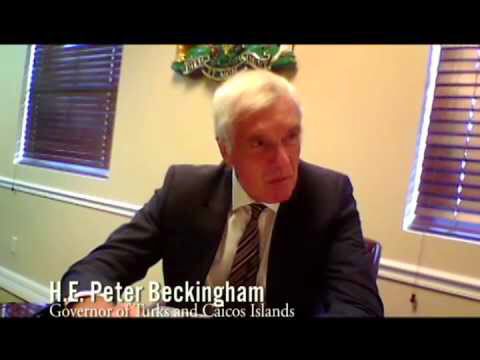
Governor Peter Beckingham

New York, October 16,2014— Tlirks & Caicos fTCI) deepened its commitment to advancing renewable energy by joining the Carbon War Room's Ten Island Challenge today.

The Premier of Turks and Caicos, the Honorable Doctor Rufus Ewing, and Carbon War Room Operation Director, Justine Locke, signed a Memorandum of Understanding, committing to work together to reduce the island's dependence on fossil fuels through increased renewable energy production and improved energy efficiency.

"With the addition of Turks & Caicos, the Ten Island Challenge continues to expand its efforts to transform Caribbean economies and help the region achieve independence from fossil fuels."Sir Richard Branson, Founder of Carbon War Room

The Ten Island Challenge, driven by partners Carbon War Room and Rocky Mountain Institute, provides the Government of TCI the opportunity and platform to define and realize its own vision of a clean economy. In order to achieve this vision, the Carbon War Room and Rocky Mountain Institute will provide a range of technical, project management, communications, and business advisory support services.

The MOU signing builds on a commitment made by the Governor of Turks and Caicos, Peter Beckingham at the Creating Climate Wealth Islands Summit in February 2014, when Turks & Caicos expressed interest in joining the Challenge

The Ten Island Challenge

The Ten Island Challenge works to accelerate the transition of Caribbean island economies from a heavy dependence on fossil fuels to renewable resources. Caribbean economies suffer from some of the highest electricity prices in the world—contributing to their national debts, and slowing efforts toward sustainable development. Despite an abundance of sun and wind, Caribbean islands have implemented relatively low amounts of renewables to date. The Ten Island Challenge is tackling this by identifying the technical and commercial solutions that can facilitate low-carbon energy use in the Caribbean.

In 2013, Sir Richard Branson committed his home of Necker Island in the British Virgin Islands to serve as a 'demo' island in the Challenge, and, in February of this year, US energy giant NRG Energy was awarded the contract to transition the island to renewables. More


Thursday, June 26, 2014

Sir Richard Branson supports Many Strong Voices

Sir Richard Branson supports Many Strong Voices

The work of MSV to help raise the profile of people in the Arctic and Small Island Developing States (SIDS) and their struggle against climate change has gained the support of one of the world’s most influential business leaders.

Sir Richard Branson

Sir Richard Branson, founder of Virgin Airlines and a champion of green energy, has offered his support to MSV, which brings together the peoples of the Arctic and SIDS to meet the challenges of climate change.

"When it comes to climate change, arctic communities and small island states share similar struggles,” Branson said. “As they feel the impacts of rising sea levels and deteriorating coastal environments, organizations like Many Strong Voices collaborate, act and innovate to achieve lasting change.

“Their critical work fills the gap between those affected by adverse climate impacts and the political and business leaders focused on creating big picture solutions."

Branson has invested considerable time and money in supporting global initiatives to reduce greenhouse gas emissions through the use of renewable resources and new technologies. Recently, he called on business leaders to take a stand against climate deniers.

MSV is coordinated by GRID-Arendal and the University College London. More

The Cayman Institute is a partner organization of Many Strong Voices


Tuesday, March 4, 2014

ENERGY DARWINISM The Evolution of the Energy Industry

The global energy industry has been transformed in the last five years in ways and to an extent that few would have thought credible.

Of the $9.7 trillion of global investment in Power Generation, 71% will be in renewables or clean technologies.

The emergence of shale gas has transformed the U.S. energy market while Germany has seen some gas-fired power stations running for less than 10 days a year due to the impact of solar leading utility owners to issue profit warnings. Developed markets now spend more on renewable capital expenditures than they do on conventional generation, largely due to uncertainty over commodity pricing and likely future utilisation rates, while the legacy of Fukushima has seen Japan burning gas at $16-17/mmbtu while the U.S. basks in $3 shale, driving the introduction of the world’s most attractive solar subsidy scheme and catapulting Japan to be the world’s second largest solar market.

Conversely, the intermittency of renewables has led to the greater demand for the flexibility of gas-fired power plants in some markets. So, fuel and technology substitution is happening – and not just in developed markets. The shift in emerging markets is less marked, but is nonetheless there. The voracious appetite for power displayed by emerging markets will engender a higher level of new conventional generation (in particular coal), though gas is gradually taking demand from coal and renewables are forecast to represent 10% of new installed power generation capacity in China over the next two years. Despite these shifts, the analysis of individual fuel and technology cost curves – a key determinant in setting the market price – has continued largely on a standalone basis, with limited emphasis on the risks of substitution.

Accordingly, in this report we have combined the work of our alternative energy oil & gas, mining (coal), utility and commodity research teams to create an integrated energy cost curve, which allows us to assess the impact and risks of this substitutional change across all fuel and technology types. Importantly, this integrated curve looks at incremental energy demand and supply, meaning relatively small changes in the mix can have a material impact on the returns of projects, particularly those at the upper end of the cost curve. More