Showing posts with label Cayman Islands. Show all posts

Monday, November 27, 2017

Protection of the Cayman Islands Exclusive Economic Zone

As a Maritime Nation it is perhaps time that the Cayman Islands / Cayman Islands Government acquires a Marine Patrol Vessel capable of patrolling our Exclusive Economic Zone [EEZ] to ensure decimation of shark and over-fishing of Pelagic and other spicies is brought under control.

Preservation of the environment is crucial and funding could be available for this purpose, as was demonstrated by the Seychelles, who was given a debt writedown in return for protecting their EEZ in their i.4 million square kilometers of the Indian Ocean. The Western Indian Ocean Coastal Challenge (WIOCC)
Key Facts
More than 30 million people in the Western Indian Ocean (WIO) islands and East African coastal communities rely on the coastal environment for goods and services and as a source of livelihoods and income
* The economic value of ecosystem goods and services is estimated to be over US$25 billion annually
* Tourism is the largest source of income directly linked to the coastal and marine environment, the region attracts over 20 million tourists that inject US$6 billion+ into economies annually
* Fisheries play an important role in WIO national economies providing from 5.0% to 99.1% of national agricultural exports as well as sources of employment, income and animal protein
* The natural resources that fuel the WIO regions economic activity are under pressure from issues such as overfishing, overdevelopment, pollution and environmental degradation.
* Climate change is exacerbating these problems and present mounting challenges to the sustainable development of the region. In 1998, coral bleaching at an unprecedented scale caused widespread coral mortality across most of the western Indian Ocean, altering the goods and services provided by these reefs .
* There is urgent need for governments and stakeholders to come together and take action to combat climate change, conserve biodiversity and promote sustainable livelihoods to build resilience.


The natural resources that fuel the WIO regions economic activity are under pressure from issues such as overfishing, overdevelopment, pollution and environmental degradation. Climate change is exacerbating these problems and present mounting challenges to the sustainable development of the region. In 1998, coral bleaching at an unprecedented scale caused widespread coral mortality across most of the western Indian Ocean, altering the goods and services provided by these reefs . There is urgent need for governments and stakeholders to come together and take action to combat climate change, conserve biodiversity and promote sustainable livelihoods to build resilience. GLISPA.ORG

Saturday, April 2, 2016

SE4All Highlights Plans for Implementing SDG 7

25 March 2016: The Special Representative of the UN Secretary-General (SRSG) for Sustainable Energy for All (SE4All), Rachel Kyte, highlighted challenges to achieving Sustainable Development Goal (SDG) 7 (Ensure access to affordable, reliable, sustainable and modern energy for all).

Briefing UN Member States and civil society, she also provided an update on the SE4All initiative's plans for supporting implementation of the Goal.

Kyte emphasized that Goal 7 has three “pillars,” addressing energy poverty, technological advancement, and investment in energy efficiency. Stressing the interlinked nature of the Goal, she said the first pillar, addressing energy poverty, is essential to leaving no one behind, noting that the electricity access gap undermines education, productivity and economic growth, while the gap in access to clean cooking fuels is detrimental to health and gender inequality. On technological advancement, Kyte noted the past decade's reductions in the cost and complexity of renewable energy, which makes on-shore wind, solar photo voltaic, and other technologies more competitive with fossil-based energy sources. On energy efficiency, she said greater investment has made it possible to provide basic electricity services using much less power.

Despite this positive progress, Kyte warned that global economic trends have slowed the momentum for electrification, renewables, efficiency and clean cooking. She said the global energy transition is not taking place at a sufficient pace to meet the temperature goal set out in the Paris Agreement on climate change, or the broader development goals expressed in the 2030 Agenda.

Kyte also stressed that the financial needs to achieve SDG 7, which are estimated at over US$1 trillion annually, will need to come from both private and public sectors. She highlighted the importance of small-scale, private investments to develop renewable energy in many African countries.

On the role of the SE4All initiative in supporting the achievement of SDG 7, Kyte said the Forum's 2017 meeting will assess progress and provide substance for the High-level Political Forum on sustainable development (HLPF) and the UN system as a whole in its review of progress towards the SDGs. In the meantime, SE4All is developing a framework for addressing challenges faced by Member States in achieving SDG 7. Member States will have opportunities to provide input on this framework throughout May 2016, Kyte said, and the SE4All Advisory Board will consider the framework at its meeting, on 15-16 June 2016. [Event Webcast] [SE4All Website]


Monday, March 28, 2016

This Caribbean Island Just Went 100% Renewable - Via Winston Connolly

Bonaire (pop. 14,500), a small island off the coast of Venezuela, is famous for its beautiful marine reefs, which are visited by 70,000 tourists every year.

Bonaire

What many of the tourists don't realize is that the majority of the electricity powering their needs comes from renewable energy. Yet for the residents of Bonaire, the switch from fossil-fueled to renewable energy systems has made a world of difference.

Like many Caribbean islands, Bonaire originally relied on diesel fuel to generate electricity for residents, with a peak demand of 11 megawatts (MW). This fuel had to be shipped in from other nations, resulting in high electricity prices for Bonaire residents, along with uncertainty about when and how much prices might increase with changing fuel costs.

In 2004, everything changed when a fire destroyed the existing diesel power plant. Although tragic, the situation provided an opportunity for Bonaire to consider what kind of new electricity system to build. Temporary diesel generators were rented to provide power for the short term. Meanwhile, the government and local utility began working together to create a plan that would allow Bonaire to reach a goal of generating 100 percent of its electricity from renewable sources.

Bonaire's Electricity System Transformation

The result is a transformed electricity system on Bonaire. The island is now home to 12 wind turbines with a total of 11 MW of wind power capacity, which contribute up to 90 percent of the island's electricity at times of peak wind, and 40-45 percent of its annual electricity on average.

Battery storage (6 MWh) is included in order to take advantage of available power in times of excess wind, and provide that stored electricity in times of low wind. The battery also boosts the reliability of the overall system—it is capable of providing 3 MW for over two minutes, allowing time for additional generation to be started when there is a sudden drop in wind.

The Bonaire system also includes 14 MW of diesel generation, five total generators, which provide the necessary power to meet the load when there is not enough wind power available. The generators are equipped to run on both traditional diesel as well as biodiesel. The next steps in the island's energy transformation involve using local algae resources, grown in the large salt flats on the island, to create biofuel, which can then be used in the existing generators. This will allow Bonaire to operate a 100 percent renewable electricity system—with on average 40–45 percent from wind and 55-60 percent from biodiesel.

The new electricity system led to more reliable electricity, more employment opportunities, reduced dependence on oil (and its fluctuating prices), and a reduction in electricity bills. Bonaire residents currently pay $0.22/kWh for electricity, much lower than prices on other nearby Caribbean islands, which are often $0.36/kWh or above.

When oil prices spiked in 2008, while Bonaire was still using temporary diesel generators before making its transition to renewables, electricity prices on the island reached $0.50/kWh. The new electricity system also created jobs for the construction and ongoing operation of the wind farm, and for research and development of algae production capabilities and conversion to biofuel. Additional employment opportunities will be created for continuing algae production and operation of the biodiesel plant.

The success of the updated electricity system on Bonaire provides an important example to other nearby islands of the opportunity to achieve high levels of renewable energy penetration.

http://www.businessinsider.com/bonaire-goes-renewable-energy-2015-1


Thursday, December 17, 2015

Paris climate deal prompts call for action in Cayman

The Cayman Islands must set more aggressive targets on increasing renewable energy and reducing carbon dioxide emissions in the light of the Paris agreement on climate change, green energy advocates have said.

The Paris climate deal, hailed as an historic feat of international diplomacy, established a commitment from 195 countries to contain planet-warming carbon emissions.

Cayman, as a British territory, was not involved in the talks and is not a direct signatory to the agreement, which set a goal of reducing global temperature rises to less than 2C. The final submissions to the agreement are not enforceable and carry no consequences.

However. James Whittaker, president of the Cayman Renewable Energy Association, said the Paris accord represents a “paradigm shift” in the international approach to climate change and suggested Cayman would have to get on board.

Tim Austin, deputy director of the Department of Environment, said the National Conservation Council is also pushing for clearer and more ambitious targets.

A draft national energy policy, published in 2013, sets a goal that 13.5 percent of electricity sold should be generated from renewable sources by 2030. It also targets a 19 percent reduction in greenhouse gas emissions compared to a “business as usual scenario.”

Mr. Whittaker said the Paris agreement, referred to as COP 21, represents an international consensus that far more radical action is needed. He said Cayman’s targets on renewable energy are among the least ambitious of any country.

While Cayman’s net contribution to climate change is negligible, the territory is among the highest producers of carbon emissions per capita in the world, according to Mr. Austin.

Mr. Whittaker, added, “I believe COP 21 sets ambitious climate change benchmarks globally and it clearly suggests that Cayman must take a more aggressive approach to adopting renewable energy and reducing our carbon emissions. This is something CREA have been telling the government for some time now. That said, it still doesn’t appear the decision-makers in government are yet paying attention to the critical issues of renewable energy and carbon reduction.”

He added, “I am cautiously optimistic that the government will finally wake up and realize that this paradigm shift is happening all over the world for a reason and will start to ensure it happens in Cayman soon.”

Mr. Austin said the Cayman Islands could request to be included in commitments coming out of the agreement.

“At the moment, the U.K. does not push out those climate agreements to its territories, but this could potentially change with Cayman’s recent request to the U.K. government to include Cayman in its second commitment period to the Kyoto Protocol (2013-2020).

“The National Conservation Council is currently working on a climate change policy and would like to see clearer, more ambitious targets, in line with what the U.K. has signed up to.”

He said the Paris summit represents a significant milestone in gaining an international consensus that something needs to be done to curb the amounts of CO2 going into the atmosphere and limit the consequences of global warming.

Mr. Austin said the ambitious targets set in Paris were driven, in part, by small-island states concerned about the consequences of climate change.

Tim Austin - DOE

In 2009, the Maldives, one of the flattest countries on Earth, held a Cabinet meeting underwater in scuba gear as a stunt to generate publicity for the consequences of not acting on the issue.

Cayman’s position is less grave, but Mr. Austin warns that with the majority of Cayman’s population and major infrastructure located a short distance from the coastline, increasing storm intensity and flood risk present a potentially significant challenge.

He said the impact of climate change is already evident on coral reefs around Cayman.

Mr. Whittaker said Cayman’s size should not stop it from doing its part.

“While our aggregate emissions are small compared to large economies, we emit a lot of carbon per capita on this little island. I believe it’s a hypocritical and shortsighted position to just let the rest of the world handle it when we are expecting others to do things we are not willing to do ourselves.

“We need to show leadership here, regionally and globally. If we expect the world to change we have to be part of that change.” More


Thursday, October 1, 2015

Cayman Islands: Will They Pave Paradise?

Around the world we are seeing evidence of coral decline due to bleaching, pollution, change in water temperature and myriad other factors.

SCUBA divers pay for special certifications to maintain perfect buoyancy lest their fin kick a sea fan or their hand make contact with a coral head.Considering such efforts are being made to protect coral, it seems the recent announcement that the Cayman Island government will soon be dredging a large portion of these reefs is a sad irony. Many islanders believe that the plan to install concrete piers for easy cruise ship guest access is short sighted and the loss of corals will actually hurt not only the marine ecosystem, but also an important part of island income, tourism.Recent scientific studies show that silt and other dredging byproducts will lower resistance and make corals 50% more vulnerable to disease.

So the corals that are not directly killed by the dredging and cruise ship traffic will be at higher risk of death.Cruise line officials claim that more goliath cruise ships will make port at Grand Cayman Island, if passengers do not have to endure the five minute tender transfer across the quaint Georgetown harbor. Keith Sahm, manager of one of the islands oldest hotels states, “Do you know that out of all the islands the cruise industry own, there is only one with a pier? Just one, because the cruise companies want to keep their islands pristine for their passengers. In addition to the paramount environmental concerns, there are economic issues.

SCUBA diving has been a constant island income source for many years. People trying to jump on the cruise ship bandwagon to make some fast money will leave a decimated marine environment in their wake. Once this is gone, there is no going back. Unless you can wait around for 2,000 years.”The environmental impact assessment indicates that dredging and the resulting silt will destroy many of the reefs ecosystems. Coral reefs are particularly slow to develop and many of these reefs are thousands of years old.While worldwide coral reef decline is a serious concern, Grand Cayman is the current home to healthy specimens of corals included on the IUCN* Red List as critically endangered.Jay Ireland, co-founder of Cayman’s “Stingray City” commented, “When you mention the Cayman Islands people think immediately of banking and coral reefs.

The 200-foot visibility, the warm water and the myriad corals, fish, turtles and flamboyant invertebrates currently thrive in the living aquarium around Cayman. To risk ruining this because transient cruise ship passengers do not want to inconvenience themselves with a short tender ride to the shore is lunacy.”Click here to sign a petition urging officials to reconsider the installation of these piers. Nosy Turtle image courtesy Cathy Church. More


Thursday, August 27, 2015

Hawaii Flips Switch on World’s Largest Ocean Harvesting Clean Energy Plant

Hawaii is definitely ahead of the curve when it comes to renewable energy.

In June, the Aloha state became the first state to mandate that all of its electricity come from renewable sources no later than 2045. Along with other islands, its charging ahead with wind, solar and smart grid systems. But now, the state is home to the first fully closed-cycle Ocean Thermal Energy Conversion (OTEC) plant in the U.S.

OTEC is “a process that can produce electricity by using the temperature difference between deep cold ocean water and warm tropical surface waters,” Makai Ocean Engineering, the company that built the plant, explains on its website. “OTEC plants pump large quantities of deep cold seawater and surface seawater to run a power cycle and produce electricity.” Makai touts OTEC as a constant, clean energy source that is “capable of providing massive levels of energy.”

Watch this short video for an explanation of how it works.

Makai staff explain in the video that the potential for OTEC is immense because the source of the energy is just sunlight.

“About 70 percent of the sunlight coming to Earth lands on the ocean. Most of that is captured in the surface layers of the ocean water in the form of heat,” says Duke Hartman, vice president of business development at Makai. “That’s beautiful because we can extract that energy 24/7 and use that power any time we want it, totally eliminating the need for an energy storage system.”

The 105-kilowatt demonstration plant on the Big Island, which cost about $5 million to build, only generates enough electricity to power 120 homes. But to date, it’s the largest such plant in the world. And it’s promising enough for the U.S. Navy to be investing in it. The Navy has a target for 50 percent of its shore-based energy to come from alternative sources in five years.

While the industry is still very much in its infancy, Makai believes it won’t be long until it takes off.

“The plant is dispatchable, meaning the power can be ramped up and down quickly to accommodate fluctuating demand and intermittent power surges from solar and wind farms,” Hartman told Bloomberg.

The company estimates that all of Hawaii’s electricity needs could be met by about 12 commercial-scale OTEC plants. They already have plans to construct a 1-megawatt facility in Japan, and Hartman says Brazil, Sri Lanka, the Maldives and West African nations all have potential.

“Anywhere tropical with deep water is ideal, especially if they import their fuel,” says Hartman.

The biggest challenge remains financing, explains Hartman. “We need a visionary investor to get us past the expensive pilot project into the large-scale commercial projects,” he said.

According to the company’s website, an offshore commercial-scale OTEC plant could prevent burning roughly 1.3 million barrels of oil each year, produce electricity at roughly $0.20 per kilowatt-hour and prevent more than half a million tons of carbon emissions per year.


Friday, August 7, 2015

What is holding back the Cayman Islands from implementing more solar and wind energy?

The Caribbean appears to be the ideal location for renewable energy development. Petroleum resources are scarce and renewable resources such as solar, wind and geothermal are plentiful. Energy prices are high as there is no opportunity for economy of scale benefits that large land masses enjoy. Added to that, climate change impacts pose a major threat to the region’s small-island economies that are largely dependent on tourism and agriculture.

Despite this, most Caribbean nations still use imported diesel or oil to generate 90-100% of their energy. So what has been the barrier to using renewables? Many people have pointed to the cost factor. Small economies mean that in most cases countries have difficulty in financing renewable energy projects that require high upfront capital. Also, regulations have been slow in setting clear rules for grid interconnection. These factors have led some international investors and developers to be cautious about entering the Caribbean market. http://bit.ly/1NeB0fj


Thursday, August 6, 2015

Port plan to undergo economic impact assessment

An economic impact assessment for the proposed cruise berthing facility is in the works, The Cayman Reporter understands.

Minister of Finance Hon Marco Archer

Minister of Finance Hon Marco Archer confirmed that PricewaterhouseCoopers (PWC) has been contracted to carry out the assessment. The Cayman Reporter inquired if the assessment has already started and how much this assessment will cost the country, but Mr Archer has not responded at press time.

The Cayman Islands has already done an Environmental Impact Assessment (EIA) to the tune of $2.5 million based on the current proposal of a two finger pier. The EIA indicated that dredging and its silt plume could impact 15 acres of coral reef. Now that the EIA has been completed and the Department of Environment (DoE) is the process of completing a report on the assessment to submit to Cabinet, a call for the examination of the proposal’s impact on the entire economy has been made.

Founder and Director-General at The Cayman Institute, Nicholas Robson, said to grasp the full impact of the proposal its impact on the country’s economy must be evaluated. He believes the economic impact assessment should state how financing a cruise port, that could destroy a significant part of the reef on the south-west of the island, will affect the country. He believes it should look at how many jobs will be affected in the retail sector as well as in to water sports industry.

He noted that it is also imperative to analyse the true strengths and weaknesses of the cruise tourism and stay-over tourism to these islands.

"We should be weighing up the cruise passenger industry and its per-capita spend against stay-over tourism. Should we be looking into lengthening the runway to 10,000 feet to be able to accommodate long haul flights from Europe and points east? The Persian Gulf and China have many high net worth individuals which may well want to come to the Cayman Islands. We have already had Mr. Lee Ka-Shing one of the richest men in Hong Kong residing and doing business here," he said. Furthermore, Mr Robson stated that it is important for Cayman to know how many cruise passengers it can manage. "If we try and take too many cruise passengers per day none will have an enjoyable experience," he said.

Commenting on his own stance on the port plans Mr Robson said he is for any initiative that will have the greatest benefit to the majority of the people in the Cayman Islands. "A decision made today will affect the Cayman islands for many years into the future. Furthermore, with Cuba opening up the cruise industry may find that more passengers want to go to Cuba, causing some of the cruise lines dropping Cayman," he said.

The Advancement of Cruise Tourism in the Cayman Islands (ACT) member Chris Kirkconnell told The Cayman Reporter that the ACT was formed because members involved in the cruise industry felt that the Cayman Islands Tourism Association (CITA), the tourism sector’s representative group, was only concerned about stay-over businesses. Those involved in cruise felt that in order to have a voice they had to start a group of their own.

"Once we formed ACT CITA tried to convince us that we didn’t need a separate entity and it seemed like they were trying to give us some kind of attention up until now. If you look at the member makeup of CITA its much more heavily stay-over focused than cruise," Mr Kirkconnell expressed. More


Wednesday, August 5, 2015

Climate Reality Training in Miami with Al Gore

I’m reaching out today on behalf of The Climate Reality Project, an organization started by former Vice President Al Gore focused on creating a global movement calling for action on climate. We have an upcoming training opportunity in Miami, Florida that I believe you and others who follow The Cayman Institute / The Climate War Room will be interested in.

As we are all aware, the time has come for action on climate. On September 28-30 in Miami, The Climate Reality Project and Mr. Gore will be hosting a training for new Climate Reality Leaders to help grow the movement. There has never been a better time to engage your friends and colleagues on this issue. The Miami training will not only provide attendees with cutting edge tools to most effectively communicate climate change to your community but will also enter them into a community of over 8,000 devoted individuals from 126 countries who are committed to using their voices to address the climate crisis.

Our training in Miami will highlight the unique challenges that climate change poses to the state of Florida and what some local governments are already doing to tackle them; Florida’s huge untapped solar energy generating capacity; and the role of the ever strengthening Latino voice and vote in driving climate action. At the training, Mr. Gore, and experts and influencers from across the climate sphere will present in panels, take questions, and host breakout sessions.

We encourage you to recommend outstanding leaders in your personal and professional life who would be well suited for giving presentations and helping to build strong support for action on climate change. They can apply for the Climate Leadership Corps Training here. I’ve also attached a document you can share with your network, which has a little more information about who we are and what the Miami training will cover. The deadline to apply is August 26th, 2015.

Please do not hesitate to reach out if you have any questions!

Warm regards,

Joseph Moran | Program Assistant-Climate Reality Leadership Corps

750 Ninth Street, NW, Suite 520 | Washington, DC 20001

NOTICE OF CONFIDENTIALITY & DISCLAIMER
The information contained in this e-mail and any attachments is CONFIDENTIAL and is intended only for the use of the addressee. Any unauthorized use, disclosure, distribution, dissemination, or copying is strictly prohibited and may be unlawful. If you are not the intended recipient, you are prohibited from any further viewing of the e-mail or any attachments or from making any use of the e-mail or attachments. If you believe you have received this e-mail in error, notify us immediately and permanently delete the e-mail, any attachments, and all copies thereof from any drives or storage media and destroy any printouts of the e-mail or attachments and any copies of such printouts. Although this e-mail and any attachments are believed to be free of any virus or other defect that might negatively affect any computer system into which it is received and opened, it is the responsibility of the recipient to ensure that it is virus-free and no responsibility is accepted by the sender for any loss or damage arising in any way in the event that such a virus or defect exists. Thank you for your cooperation.

Wednesday, July 22, 2015

Port plan to undergo economic impact assessment

An economic impact assessment for the proposed cruise berthing facility is in the works, The Cayman Reporter understands.

George Town's Proposed Cruise Terminal

Minister of Finance Hon Marco Archer confirmed that PricewaterhouseCoopers (PWC) has been contracted to carry out the assessment. The Cayman Reporter inquired if the assessment has already started and how much this assessment will cost the country, but Mr Archer has not responded at press time.

The Cayman Islands has already done an Environmental Impact Assessment (EIA) to the tune of $2.5 million based on the current proposal of a two finger pier. The EIA indicated that dredging and its silt plume could impact 15 acres of coral reef. Now that the EIA has been completed and the Department of Environment (DoE) is the process of completing a report on the assessment to submit to Cabinet, a call for the examination of the proposal’s impact on the entire economy has been made.

Founder and Director-General at The Cayman Institute, Nicholas Robson, said to grasp the full impact of the proposal its impact on the country’s economy must be evaluated. He believes the economic impact assessment should state how financing a cruise port, that could destroy a significant part of the reef on the south-west of the island, will affect the country. He believes it should look at how many jobs will be affected in the retail sector as well as in to water sports industry.

He noted that it is also imperative to analyse the true strengths and weaknesses of the cruise tourism and stay-over tourism to these islands.

“We should be weighing up the cruise passenger industry and its per-capita spend against stay-over tourism. Should we be looking into lengthening the runway to 10,000 feet to be able to accommodate long haul flights from Europe and points east? The Persian Gulf and China have many high net worth individuals which may well want to come to the Cayman Islands. We have already had Mr. Lee Ka-Shing one of the richest men in Hong Kong residing and doing business here,” he said.

Furthermore, Mr Robson stated that it is important for Cayman to know how many cruise passengers it can manage. “If we try and take too many cruise passengers per day none will have an enjoyable experience,” he said.

Commenting on his own stance on the port plans Mr Robson said he is for any initiative that will have the greatest benefit to the majority of the people in the Cayman Islands. “A decision made today will affect the Cayman islands for many years into the future. Furthermore, with Cuba opening up the cruise industry may find that more passengers want to go to Cuba, causing some of the cruise lines dropping Cayman,” he said.

The Advancement of Cruise Tourism in the Cayman Islands (ACT) member Chris Kirkconnell told The Cayman Reporter that the ACT was formed because members involved in the cruise industry felt that the Cayman Islands Tourism Association (CITA), the tourism sector’s representative group, was only concerned about stay-over businesses. Those involved in cruise felt that in order to have a voice they had to start a group of their own.

“Once we formed ACT CITA tried to convince us that we didn’t need a separate entity and it seemed like they were trying to give us some kind of attention up until now. If you look at the member makeup of CITA its much more heavily stay-over focused than cruise,” Mr Kirkconnell expressed. More


Wednesday, July 15, 2015

5Cs Wins Energy Globe Award for Renewable Energy and Potable Water Project in Bequia, St Vincent and the Grenadines

The Caribbean Community Climate Change Centre (CCCCC) received the 2015 Energy Globe Award for its renewable energy and potable water work in Saint Vincent and the Grenadines.

The Cayman Islands should be emulating this initiative and moving towards potable water production for Grand Cayman, Cayman Brac and Little Cayman. Editor

Energy Globe, an internationally recognized trademark for sustainability, is one of the most important environmental prizes today with 177 participating countries. The award, which is made from a cross-section of over 1, 500 entries annually, is given in recognition of outstanding performance in terms of energy efficiency, renewable energy and resource conservation.

The CCCCC won the 2015 Energy Globe National Award for the project “Special Programme for Adaptation to Climate Change”. The project was executed on the island of Bequia in Saint Vincent and the Grenadines and focuses on the production and provision of clean drinking water for more than 1,000 people. This is being done through the acquisition and installation of a reverse osmosis desalination plant. The project is deemed highly sustainable as the water input is inexhaustible sea water and the energy used is solar, a renewable, carbon-free source.

The landmark project was also presented by Energy Globe as part of a global online campaign (www.energyglobe.info) on World Environment Day. The campaign ran under the patronage of UNESCO and in cooperation with UNEP and received significant recognition.

“To be honoured with this award is a great recognition of our work for a better environment and motivates us to continue our endeavours in the future,” – Henrik Personn, Renewable Energy Expert, CCCCC

Since completing this key project, we have applied the lessons learned in Belize and on the Grenadian islands of Petite Martinique and Carriacou. Review the poster above to learn more about the progress we are making in Grenada:


Friday, July 10, 2015

Cuba and the Cayman Islands Concerns Grow With Prospect of U.S. Presence

Already, American corporations are poised to rush into a country only 90 miles from Florida’s shores.In March, a delegation from the U.S. Agriculture Coalition for Cuba, an agribusiness group that includes Cargill, the National Grain and Feed Association, the National Chicken Council and other companies and organizations, flew to Havana to meet with Cuban officials.

And cruise ship companies and hotel chains like Marriott and Hilton have indicated their enthusiasm. "I can’t stop thinking about it," Frank Del Rio, chief executive officer of Norwegian Cruise Line Holdings, said in an interview. "Cuba and the cruise industry are just a match made in heaven, waiting to happen. More

The question for the Cayman Islands, who is considering constructing a new cruise ship dock, is how will the opening of Cuba affect cruise traffic to George Town?

I argue that an Economic Study is needed, in addition to the Environmental Impact Assesment (EIA), to analyse the economics of the cruise business to the Cayman Islands as a whole. This study should compare the financial benefits of stay-over tourism, with the extension of Owen Roberts International Airport (ORIA) to 10.000' feet allowing the handling of long-haul direct flights from Europe, East Asia (China, Japan, South Korea) and the Persian Gulf. It may be possible to turn ORIA into the air-hub of the Western Caribbean with Cayman Airways actually turning a profit as a regional carrier. Editor


Tuesday, June 30, 2015

Warning over Cuba emergence

Cayman among countries most impacted, report says

The emergence of Cuba as a rival for tourists and investment dollars will change the travel landscape in the Caribbean forever, industry leaders have warned.

“The likelihood that cruise lines will drop some existing ports to accommodate Cuba port visits is real and the proximity of Cuba to the U.S. mainland can allow for Cuba to be easily added to a schedule that can impact itineraries to near markets such as the Bahamas, the Cayman Islands, and Jamaica,” the report says.

Caribbean tourism officials are pushing for a new partnership with the U.S. amid growing concern that the thawing of relations with Cuba will have drastic consequences for neighboring islands.

“The biggest and most disruptive pebble to be dropped into the Caribbean pool in fifty years will arrive with the opening of travel to Cuba for United States citizens,” the Caribbean Hotel & Tourism Association warns in a position paper.

The association says islands closest to Cuba, including the Cayman Islands, are likely to suffer the “greatest ripple effects.”

The association is looking to create a Caribbean Basin Tourism Initiative to help boost investment and travel across the region with help from the U.S. The initiative calls for technical and policy support from the U.S. to ensure the stability of tourism-based economies in the region if U.S. tourists are, as expected, allowed to visit Cuba after a 50-year embargo.

“While U.S. tour, airline and cruise executives are eyeing the tourism potential of the long-forbidden paradise 90 miles south of Key West, Florida, conflicted stakeholders throughout the wider Caribbean have legitimate concerns [over] whether there will be a level playing field and whether the rest of the region will grow tourism arrivals or lose tourism investments and arrivals as they divert to Cuba,” said Caribbean Hotel & Tourism Association President Emil Lee. More

If the Cayman Islands builds a new cruise dock, destroying many dive sites in the vicinity of George Town in the process, and the islands then see some cruise lines deserting the Cayman Islands for Cuban ports where will we be then? Should these islands be developing stay-over tourism and extending the existing runway to direct accomodate long-haul flights from Europe, the Midle East and East Asia?

Editor


Saturday, May 30, 2015

Civil Aviation Unveils Design For New Cayman Air Terminal

The Cayman Islands Airports Authority (CIAA) has unveiled the interior conceptual drawings for the multi-million dollar expansion project at Owen Roberts International Airport (ORIA).

Commenting on the design created by Florida based firm RS&H Group, CIAA’s CEO Albert Anderson said, “The interior design is very impressive and I am confident that once completed the new expanded airport will be a first-class terminal facility

The CI$55 million expansion project should take around three years to complete and will nearly triple the current space at the airport. Construction on the first phase of the project is expected to begin this summer.

Here is the Cayman Islands Government's chance to save money and show their support for alternative energy. Covering the roof and parking lots with solar panels, and using LED lighting would set an example for Caymanians and Caymanian businesses to follow. Editor


Saturday, May 2, 2015

Caribbean “island laboratories” making a case for renewable, says Mazurier

In early March, Stéphane Tromilin, a sustainable energy attaché in the French government, gave a United Nations webinar on the French government’s work on French islands.

In it, he spent most of the time discussing the unique challenges of islands, specifically those in the Caribbean like Guadeloupe, but also noted an island’s value as “laboratories to develop renewable energy solutions.”

Christophe Mazurier, a European financier and climate defender, has seen these laboratories in action, specifically in the Caribbean, where he has a home in the Bahamas. While many of these nations are at greater risk of climate disasters - in the form of devastating hurricanes and other storms - than most other places on earth, many refuse to become victims of the global intransigence on climate change. Instead, many Caribbean nations are taking it upon themselves to be the change they wish to see in their developed-nation counterparts.

Guadeloupe, the overseas French territory mentioned earlier, is getting nearly 30 percent of its energy from solar, a number on par with climate leaders Germany. Aruba gets 20% of its energy from wind, and is aiming to be totally sustainable by 2020. Ten island nations, including the Bahamas, the British Virgin Islands, Grenada, Dominica and more have joined the Ten Island Challenge, launched by Richard Branson as a means to give these Caribbean island clear renewable goals and support them in meeting those goals.

Mazurier says that in many ways, the Caribbean’s move to solar was preordained. Not because they are at the forefront of climate change susceptibility, but because of their incredibly high energy costs. Most Caribbean island nations pay around 33 cents per kWh of energy, while for comparison the United States pays 10 cents per kWh. Even with the price of fuel bottoming out, and energy costs in places like Jamaica being cut in half, Jamaica and others were already well on their way to a renewable future.

In 2013, Jamaica signed a deal that would bring 36 MW of wind power for $63 million, which would help it divest from diesel oil in the long-term. By investing heavily in renewables now, the islands can avoid paying for diesel in the future… No matter how the price fluctuates. Mazurier says that this is the key for these Caribbean island nations, who don’t have multimillion dollar climate budgets. These nations cannot just throw money at the problem in hopes that they can play a role in the ultimate cooling of the climate. Their emissions are negligible in the grand scheme of things. The only aspect that can get these nations to buy in if they know they will ultimately pay less for energy than they do now. The positives for the overall climate and the state of the planet are simply a secondary byproduct of these finance-driven deals.

Whichever way it breaks out, says Mazurier, the Caribbean turn toward renewable energy is a refreshing and encouraging sign. The question now becomes: Can the larger nations take note of their island peers? More


Sunday, April 26, 2015

Economic Legacy of Lee Kuan Yew: Lessons for Aspiring Countries

Developing countries have much to learn from Lee Kuan Yew, the first prime minister of Singapore who transformed the republic from a third world economy to one of the most advanced countries in one generation.

Lee Kuan Yew

The lessons for countries aspiring to learn from the Singapore development model are clear – strengthen institutions and improve governance.

But this is much easier said than done. To begin with aspiring countries need to improve the rule of law so that no one is above the law of the land. Equally crucial, they need to reduce corruption as corruption is regressive – small and medium-sized firms pay higher amounts in bribes than large firms.

Thirdly, they need to reform public institutions such as the civil service, bureaucracy, and public administration. Fourthly, they also need to improve the environment affecting the private sector through regulatory reforms, reforms of labour markets, and provision of clearly-defined property rights.

The dilemma is that such reforms generate benefits only in the longer term, making them hard for policymakers and politicians with a shorter time horizon to set as priorities. Yet without them, other policy measures to support sustained economic growth will become less effective and ultimately unravel.

Importance of good governance

Strong institutions and good governance – the economic legacy of Lee Kuan Yew for aspiring countries

The Singapore model of good governance is well-recognised. Development theorists of the past were of the view that economic development could be explained solely by factors like the availability of natural resources, high levels of saving and investment, and openness to foreign trade and investment.

More recently, the Growth Report published in 2008 by the Commission on Growth and Development headed by Nobel laureate Michael Spence has found that an additional factor has also to be good governance, based on mainly Singapore’s development experience under Lee.

As Senior Minister Goh Chok Tong, who participated in the Commission, puts it, for a delicious dish “besides having the right ingredients and the right recipe, you must have a master chef”.

Economic development does not just happen. It must be consciously chosen as an overarching goal by the government.

Good governance means a government that delivers political and economic stability, implements the correct macroeconomic policies, articulates a vision for the country and implements it.

This requires a capable, committed, and credible government, governments that people can trust in, and leaders who are above the board. An abundance of natural resources is neither necessary nor sufficient for a country’s economic development. What is required is good governance.

A case of good governance is Lee’s choice of the Singapore development model in the 1960s and beyond.

The Singapore Development Model

After the separation from Malaysia in 1965, Singapore was similar to a typical developing country of today. GNP per capita was about US$300, unemployment rates were high, and racial disharmony was rife. The announcement by the British in 1968 that they would withdraw their forces from Singapore was also expected to aggravate the unemployment situation further. How should jobs be created?

As the prime minister of a small country, Lee was always thinking big and making bold decisions in the interest of the country. Mr Lee adopted a development model based on export of labour-intensive manufactured goods to world markets. Lee invited multinational companies from all over to invest heavily in Singapore. Produce in Singapore and sell to the world, he told them.

To provide an attractive investment environment, the government built the appropriate infrastructure, cut tariffs and quotas, offered tax incentives, and implemented appropriate macroeconomic policies. The Economics Development Board (EDB) Singapore was established in 1961 to provide a business friendly environment to foreign investors and to convince them that Singapore was a good place to invest.

The National Wages Council (NWC) was also established in 1972 to make sure that the benefits of foreign investment were shared and also to accelerate Singapore’s move up the development ladder. Mr Lee also met foreign investors regularly and listened to them and their grievances.

Although pragmatic, Lee’s choice of an export-oriented development model driven mainly by foreign investment was a risky strategy at the time. This is because in the 1960s and 1970s, foreign investment was not welcome in the developing world.

The dependency theorists, in particular, argued that foreign investors from developed countries typically exploit cheap labour and extract natural resources of the developing countries. It is only after the success of the Singapore development model that export-oriented development strategies driven by foreign investment has been popularly adopted all over the world.

‘It’s not how you start but how you arrive’

In the 1980s and the 1990s the type of investment Singapore sought to attract shifted gradually from labour-intensive industries (eg, garments, textiles, and wigs) towards more high-tech and knowledge-based industries (eg, chips, wafer fabs, and disk drives).

Lee noted that, since the unemployment problem had been overcome, the new challenge was “how to improve the quality of the new investments and with it the education and skill levels of our workers”.

Lee’s attempt to make Singapore the Asian financial centre and global business hub is also bold. Unable to compete with Hong Kong then, Lee tried especially hard to convince foreign bankers and international financial institutions to come to Singapore by establishing integrity, efficiency, the rule of law, reliability, and stability.

In his words, “[the] history of our financial centre is the story of how we built up credibility as a place of integrity, and developed the officers with the knowledge and skills to regulate and supervise the banks, security houses and other financial institutions….”

Overall, Mr Lee’s development strategy which focused on strengthening institutions and improving governance was successful. Other developing countries will, however, face difficulties in adopting this strategy.

A case in point is South Asia. Countries in this region had begun their reform programmes in the early 1990s by focusing on macroeconomic areas – monetary and fiscal reforms, and industrial deregulation – which had contributed to a more rapid economic growth.

These reforms, however, eventually ran out of steam – because of red tape, endemic corruption, and lack of rule of law – and have contributed to the recent economic slowdown. Lee’s model followed his dictum, which he shared with the King of Bhutan: “It’s not how you start the journey that counts, but how you arrive.” More


Saturday, January 10, 2015

On a tropical island, fossils reveal past -- and possible future -- of polar ice

The balmy islands of Seychelles couldn’t feel farther from Antarctica, but their fossil corals could reveal much about the fate of polar ice sheets.

About 125,000 years ago, the average global temperature was only slightly warmer, but sea levels rose high enough to submerge the locations of many of today’s coastal cities. Understanding what caused seas to rise then could shed light on how to protect those cities today.

The balmy islands of Seychelles couldn’t feel farther from Antarctica, but their fossil corals could reveal much about the fate of polar ice sheets.

About 125,000 years ago, the average global temperature was only slightly warmer, but sea levels rose high enough to submerge the locations of many of today’s coastal cities. Understanding what caused seas to rise then could shed light on how to protect those cities today.

By examining fossil corals found on the Indian Ocean islands, University of Florida geochemist Andrea Dutton found evidence that global mean sea level during that period peaked at 20 to 30 feet above current levels. Dutton’s team of international researchers concluded that rapid retreat of an unstable part of the Antarctic ice sheet was a major contributor to that sea-level rise.

“This occurred during a time when the average global temperature was only slightly warmer than at present,” Dutton said.

Dutton evaluated fossil corals in Seychelles because sea level in that region closely matches that of global mean sea level. Local patterns of sea-level change can differ from global trends because of variations in Earth’s surface and gravity fields that occur when ice sheets grow and shrink.

In an article published in the January 2015 issue of Quaternary Science Reviews, the researchers concluded that while sea-level rise in the Last Interglacial period was driven by the same processes active today — thermal expansion of seawater, melting mountain glaciers and melting polar ice sheets in Greenland and Antarctica — most was driven by polar ice sheet melt. Their study, partially funded by the National Science Foundation, also suggests the Antarctic ice sheet partially collapsed early in that period.

“Following a rapid transition to high sea levels when the last interglacial period began, sea level continued rising steadily,” Dutton said. “The collapse of Antarctic ice occurred when the polar regions were a few degrees warmer than they are now — temperatures that we are likely to reach within a matter of decades.”

Several recent studies by other researchers suggest that process may have already started.

“We could be poised for another partial collapse of the Antarctic ice sheet,” Dutton said. More

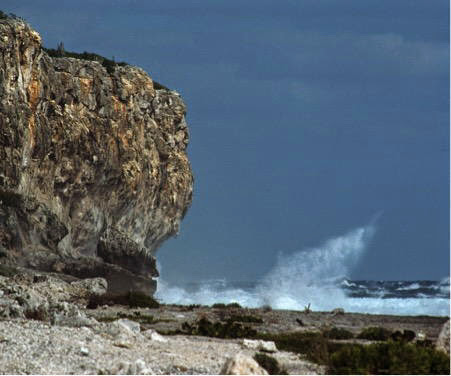
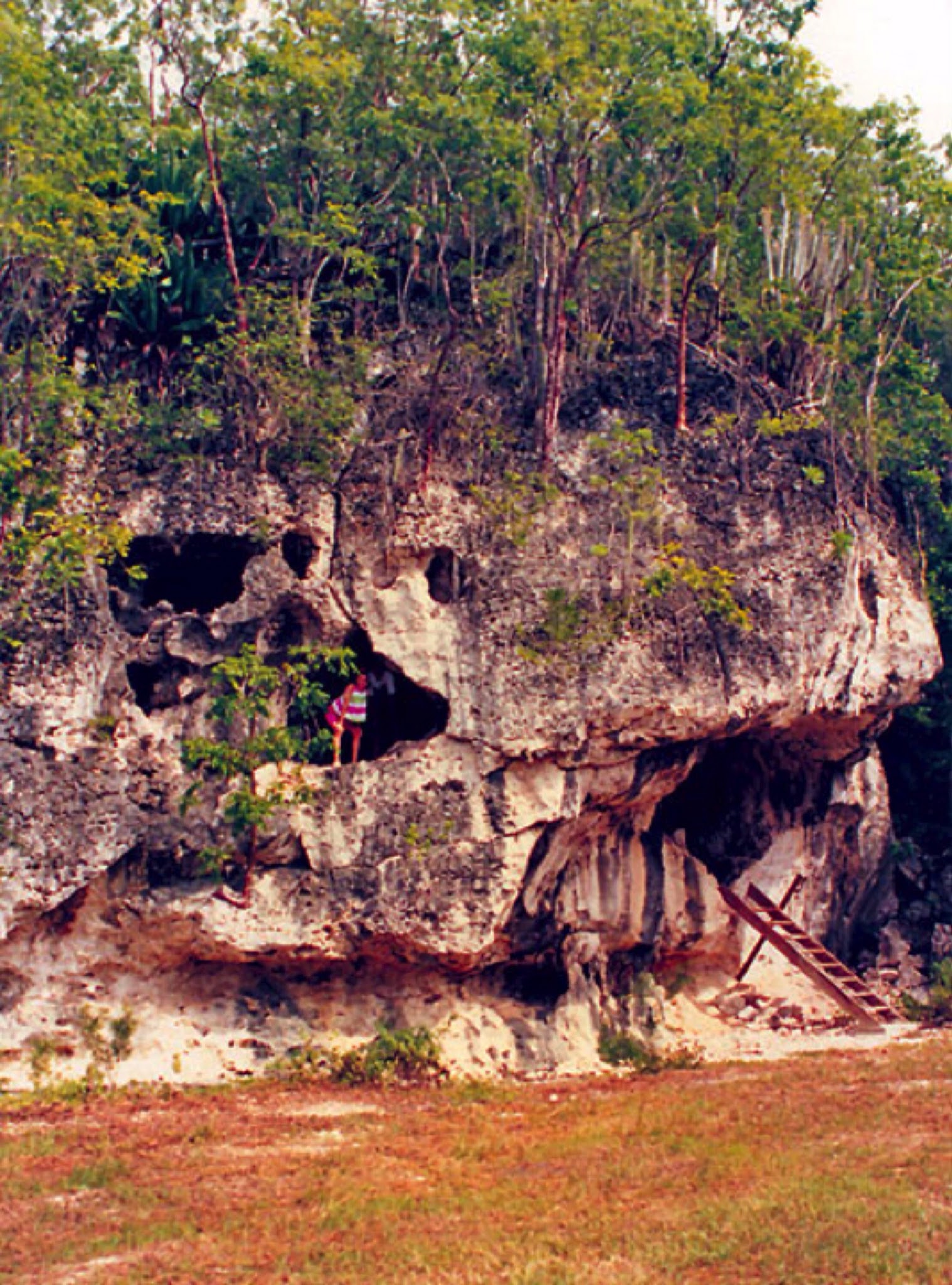
Photos above from Cayman Brac, Cayman Islands.


Thursday, December 11, 2014

Bahamas takes on renewable energy challenge - Missed Opportunity for Cayman?

The Bahamas has become the latest recruit to Richard Branson's green energy drive for Caribbean islands.

Branson's Carbon War Room NGO is aiming to help islands in the region transition from expensive fossil fuel imports to using their own renewable energy resources as part of its Ten Island Challenge programme.

This week the Bahamas joined the push, committing to developing 20MW of solar PV generation in the outer Family Islands, bringing energy efficiency and solar solutions to a local high school, and replacing streetlights across the nation with energy efficient LED lights.

Carbon War Room plans to support these goals by providing the country's government with a range of technical, project management, communications, and business advisory services.

The Bahamas joins the islands of Aruba, Grenada, San Andres and Providencia in Colombia, Saint Lucia, and Turks & Caicos in the challenge, which aims to generate how small states can decarbonise in a cost-effective manner.

"The Bahamas' entry into the Ten Island Challenge signals another step forward for the Caribbean region in the effort towards a clean energy future," Branson said in a statement. "The progress made in The Bahamas will help inspire other islands to work towards accomplishing their renewable energy objectives."

While the focus to date has been on Caribbean islands, earlier this year Peter Boyd, Carbon War Room's chief operating officer, told BusinessGreen the programme could expand into the Pacific and to isolated communities, military bases, or mines. "There are island energy economies even if the 'island' isn't surrounded by water," he said at the time.


Friday, August 29, 2014

‘Mangrove Man’ inspired by world travel

He’s traveled half a million miles over the years – enough to go around the world 12 times, or to the moon and halfway back – so it’s little wonder that writer, photographer, conservationist and educator Martin Keeley continues to find inspiration for his work.

Keeley’s latest trips are with the Marvelous Mangrove education curriculum, a program that teaches schoolchildren about the importance of mangroves and the eco-systems which they support worldwide, as well as training teachers to teach both students and other teachers.

The program was developed by Cayman Brac-based Keeley in 1999 and initially was incorporated into Cayman’s primary school curriculum. It is part of the Mangrove Action Project, a conservation group comprised of more than 300 scientists and academics spanning more than 60 nations.

The Marvelous Mangrove program is now in 11 countries, with the expansion this year to South Sulawesi, Indonesia, and Queensland, Australia.

“For me, the mangrove trips continue to stimulate the creative process,” said the writer.

“They often inspire my poetry, and I reckon that in another six months or so I’ll have enough to publish another anthology. My photography also continues to benefit from my travels and exposure to other cultures and their environments.”

In addition, he says, he gets an in-depth perspective on the countries and the cultures where he works.

“I experience and observe firsthand their societies and the common problems they face – the huge and ever growing disparity between the obscenely wealthy and the desperately poor who are barely making it,” Keeley added.

“The contrasts I observed this summer between nations like Indonesia and Australia stimulate not only sympathy and anger between the haves and have-nots, but empathy with those whose daily struggle is that of survival, while others have little or no idea how lucky they are take for granted their secure and protective social environment.”

At the Indonesian trip, 30 teachers and educators spent three days in an intense workshop that, in the words of Keeley, “introduced them to the wonderful world of mangroves through hands-on science.”

A particular highlight was the surprise introduction of 15 school kids who came in and assisted for the afternoon, Keeley said.

“The setting is perfect, with elevated cabins connected by elevated walkways and the “hall” for the workshop itself in a Roman-style amphitheater that is open to the elements – roofed, but with shutters, not glass windows,” he said.

“The accommodation, theater and restaurant operate independent of the grid on solar power with water from local wells and storage systems which is treated through solar osmosis, although it sometimes has to be topped up by water trucks during the dry season. The food is all grown locally, and mostly seafood that is caught locally on a daily basis.”

The Australian leg of the trip, he said, was slightly different.

“Australia saw the launch of ‘Mangrovia,’ a huge inflatable red mangrove that students go inside to explore and hear storytelling,” Keeley said.

“In addition, Mangrovia’s creator, international festival artist Evelyn Roth, also designed and made 28 costumes of mangrove critters that are used in conjunction with the inflatable.

“Many Cayman students [and adults] have had similar experiences with my huge inflatable shark and the 30 mangrove critter costumes which go with it during the past 15 years! It’s an exciting way to learn.”

The issue of mangrove conservation has become more and more important in recent years, Keeley says, largely because of their environmental qualities.

“It has been known for many years, and the 2004 Asian Tsunami proved it beyond doubt, that mangroves are the first line of defense against major tropical storms, be they hurricanes or typhoons,” Mr. Keeley continued.

“Recent studies during the past six or seven years have also shown that, given the opportunity, mangroves will keep pace with sea level rise thereby extending that level of protection. In addition, recent research has shown that mangroves capture CO2 from the atmosphere and store it in leaves, roots, trunks and soil.

“No maximum storage capacity has been determined as the trees continuously store carbon in the soil for centuries or millennia. Obviously ripping out mangroves releases this stored CO2 and thereby adds to the acceleration of global warming.

“National governments from Vietnam and China to Belize and Guatemala have come to understand what local communities and scientists have been telling them for many years. Mangroves are the major source of more than 75 percent of reef species of fish and invertebrates – they are the spawning and nursery grounds for these species. Thousands of communities round the world rely on these aquatic species for their livelihoods and to feed their families.”

Next up for stamps on the increasingly-packed passport pages will be trips to Bangladesh and Kenya, scheduled for summer 2015. Keeley has already visited both briefly to get the ball rolling and he told Weekender that – funding permitting – translations of the materials and teacher training workshops will be introduced.

There seems no sign of slowing down there, either, for the Brac-based whirlwind.

“World-wide at least a dozen other countries are interested in the Marvellous Mangroves curriculum,” he concluded.

“As usual, it’s just a matter of time and, of course, money, to make it happen.” More