
Climate change can cause both flooding and droughts. How is that possible? Learn more: bit.ly/2kY6xh6
Climate change can cause both flooding and droughts. How is that possible? Learn more: bit.ly/2kY6xh6

Caribbean economies suffer from some of the highest electricity prices in the world.
Despite their abundance of renewable energy sources, Cayman has a relatively low level of renewable energy penetration; the economy continues to spend a large proportion of its GDP on imported fossil fuels and residents and businesses continue to pay some of the highest electricity bills in the region. This is a common situation among island nations.
There is a clear opportunity for Cayman to emerge as a regional leader in developing solutions to address climate change through the adoption of renewable energy which will reduce the dependency on fossil fuels and provide key environmental, social and economic benefits.
With the Cayman Islands National Energy Policy now in place, a framework for transition is complete and seizing upon that vision will be critical to affecting positive change for the Cayman Islands and all those who follow.
The recent achievements for islands at COP21 provide a strong driver for action focused on carbon reduction goals. Given that Cayman ranks highly among islands as carbon emitters, it is critical that we position ourselves as leaders in carbon reduction and meet the goals set out in the National Energy Policy and the Paris agreement.
Cayman seeks to stand with other islands in the region and across the world to embrace a low carbon future and to stand on the front line of demonstrating solutions to climate change while delivering cheaper, secure, reliable and economically feasible energy solutions.
Who should attend?
Be part of Cayman’s low carbon future by joining an event which seeks to set out our vision, renewable road-map and opportunities.
The event will bring together delegates from public, private and non-profit sectors, underlining our collaborative approach to a sustainable future- government officials, project developers, manufacturers, investors and key players across the non-profit landscape.
Join government official and industry leads and participate in interactive panel discussions that seek to establish what the journey ahead looks like and how we address the challenges and maximise the opportunities.
Make the most of key networking opportunities, bringing together local, regional and global participation.
For More Information and Register
The Climate War Room, an initiative of The Cayman Institute is committed to using a .eco domain, which is a new web address ending for anyone committed to positive change for the planet.
.eco is a new web address ending—known as a top-level domain—for anyone committed to positive change for the planet. .eco web addresses are available to any business, government, non-profit or individual working toward a sustainable future.
The .eco domain is backed by more than 50 environmental organizations including Conservation International, United Nations Global Compact and WWF and is a trusted symbol for the environmental community. www.climatewarroom.org
The Caribbean Transitionary Energy Conference (CTEC2017) was officially launched this morning with a press conference at The Cayman Islands Government building this morning.
Remarks were given by Hon. D. Kurt Tibbetts OBE, JP, MLA - Cayman Islands Minister for Planning, Lands, Agriculture, Housing and Infrastructure, event organiser James Whittaker - CEO, GreenTech Group and President, Cayman Renewable Energy Association (CREA), and sponsor Pilar Bush, Executive Vice President of Marketing, Dart Enterprises Ltd. Visit our website to register
SUVA, Fiji, April 21, 2017 (ENS) – Fiji and other island nations may leapfrog the developed countries, becoming models for a greater than sustainable future – a transformational future – one that cherishes the natural world while providing the resources that humanity needs and enjoys.

The United Nations labels these islands Small Island Developing States, or SIDS. Others prefer the term Large Ocean Island States. Whatever they are called, in this region, both ecology and economy have plenty of room to grow.
The Pacific island Republic of Fiji is an archipelago of more than 330 islands, of which 110 are permanently inhabited, and more than 500 islets, amounting to a total land area of about 18,300 square kilometres (7,100 square miles). More than 85 percent of Fiji’s population of 860,000 live on the two major islands, Viti Levu and Vanua Levu.
Fiji is one of the few naturally pristine island chains left in the world, one of the rare places with beautiful coral reefs, plants and animals with a crystal clear view of the stars and starfish alike.
(http://ens-newswire.com/2017/04/21/fiji-spearheads-development-beyond-the-sustainable/
Marine Geospatial Scientist (South Atlantic Coastal Mapping Project)
The position will co-ordinate / manage the ‘Mapping Falklands and South Georgia coastal margins for spatial planning Project’ being delivered over a period of two years.
The Coastal Mapping Project is being funded by Defra through the Darwin Plus initiative. SAERI has been tasked with undertaking geospatial analyses of the Falkland Islands and South Georgia coastal margins.
The Coastal Mapping Project aims to utilise technological and objective-based analyses with mixed resolution satellite imagery, spatial data and local expert knowledge in an integrated probabilistic approach. Habitat maps produced will emphasise baseline measurement, providing a sound basis for planning, decision-making and monitoring.
The post is being offered on a 12 month basis initially as SAERI is due to move to an incorporated status in the latter months of 2017.
You should be / have:
PhD qualified - or studying towards a PhD - in coastal or marine geospatial science and analysis or related area
At least 5 years post graduate experience working in geospatial science and analyses
At least 3 years’ experience with coastal and/or marine habitat delineation and modelling
A high level of computer literacy with an awareness of model building e.g. Python, R, Matlab
For more information, a detailed job description and application form, please contact Megan Middleton at the Human Resources Department on +500 27420 or by e-mail (mmiddleton@sec.gov.fk). Contact Tara Pelembe (tpelembe@env.institute.ac.fk) for job specific detail.
Application forms should be returned to Human Resources by the Friday 5th May 2017

WHY CAYMAN? WHY NOW?
Caribbean economies suffer from some of the highest electricity prices in the world. Despite their abundance of renewable energy sources, Cayman has a relatively low level of renewable energy penetration; the economy continues to spend a large proportion of its GDP on imported fossil fuels.
The Caribbean Transitional Energy Conference (CTEC) is about building our resilience as a small nation, about diversifying our energy sector and the way that we do business.
It is about ensuring sustainable social and economic growth through strong leadership, recognising the threat of climate change and the vulnerability of islands across the world and voicing our commitment to take the measures that we can take now. More
Imagine 1.8 Billion Advocates For Global Sustainability Through Tourism

International destinations attracted about 1.2 billion travelers last year, and the number of global travelers is expected to reach 1.8 billion in 2030. Imagine if this expanding multitude could be a positive force for a more sustainable world both on their travels and back at home.
We have an epic opportunity this year to spark change. As travelers, we can rally around the International Year of Sustainable Tourism for Development organized for 2017 by the World Tourism Organization, a specialized agency of the United Nations.
I’m in Madrid, along with hundreds of corporate, government and nonprofit leaders from around the world to participate in the official launch of the International Year. The special UN initiative is focused on building awareness and promoting action in support of the global sustainable development goals. The goals cover some of the world’s most pressing issues, including poverty reduction, education and the environment. I am here because the UN views tourism as part of the answer, and in my role as CEO of the USA arm of Hostelling International, a vice chair of the UNWTO Affiliate Member group.
The UN defines sustainable tourism broadly, in terms of economic, social and environmental impacts, both current and future. That makes this brand of tourism different. For example, it aspires to advance environmentally sustainable practices, protect cultural and natural heritage, and even reduce poverty in tourist destinations.
We have a chance to help bring sustainable tourism to the mainstream and the opportunity for impact is massive. How big? A global survey of 100,000 travelers last year by Booking.com found that 65 percent said they hadn’t stayed or didn’t know if they had stayed in eco-friendly accommodations. And among those who didn’t plan on a stay in a sustainable accommodation, 39% said it was because they didn’t know sustainable accommodations exist.
https://goo.gl/F04nAE
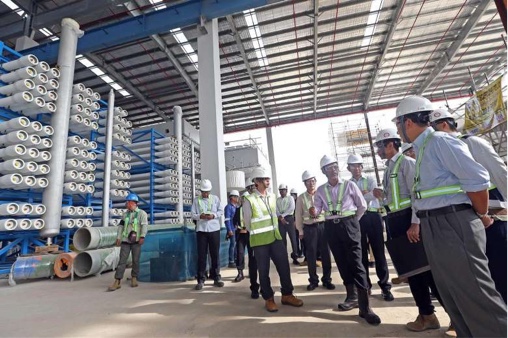
Singapore is facing a major challenge in its water security in the next 50 years, and the impending rise in water prices - which sparked debate when it was announced on Tuesday - is only a small part of the solution.
Minister for the Environment and Water Resources Masagos Zulkifli said yesterday at a Pre-Committee of Supply consultation session - attended by 35 members of industry, academia, non-governmental organisations and the public - that having a culture of "revulsion" towards water wastage was much more critical to the country than worrying about the cost of water.
Industry will have a growing role in perpetuating this culture, as it is already using more than half (55 per cent) of Singapore's water. By 2060, this is predicted to hit 70 per cent of Singapore's total water demand, which itself is expected to double by then.
Nevertheless, Mr Masagos said the Government will give due consideration to economic factors in setting the price of water.
"While we need to recover its cost, we cannot do so by sacrificing the competitiveness of Singapore to attract industries to come here," he said.
(http://www.straitstimes.com/singapore/challenging-times-ahead-for-spores-water-security
Five Pacific islands lost to rising seas as climate change hits

The submerged islands were part of the Solomon Islands, an archipelago that over the last two decades has seen annual sea levels rise as much as 10mm (0.4in), according to research published in the May issue of the online journal Environmental Research Letters.
The missing islands, ranging in size from 1 to 5 hectares (2.5-12.4 acres) were not inhabited by humans. But six other islands had large swaths of land washed into the sea and on two of those, entire villages were destroyed and people forced to relocate, the researchers found.
One was Nuatambu island, home to 25 families, which has lost 11 houses and half its inhabitable area since 2011, the research said.
The study is the first that scientifically “confirms the numerous anecdotal accounts from across the Pacific of the dramatic impacts of climate change on coastlines and people,” the researchers wrote in a separate commentary on an academic website.
The scientists used aerial and satellite images dating back to 1947 of 33 islands, as well as traditional knowledge and radiocarbon dating of trees for their findings. More
Water, Water Everywhere : Maldives - Image of the Day

The palm tree-fringed beaches of the Maldives give the appearance of an island paradise. But behind the tiny island nation lies a more complicated story.
The archipelago numbers 1,190 coral islands grouped into 26 atolls. Tourism powers the country’s economy, as 80 of its islands contain resorts. But its most lucrative asset—proximity to the azure seas—threatens to bring its downfall. The Maldives stands to lose much to sea-level rise, according to the United Nations.
As the smallest Asian country, the Republic of Maldives has a total population the size of a modest European city. The islands rise just a smidgeon above the Indian Ocean: roughly 80 percent of the country stands no more than 1 meter (3 feet) above sea level, according to the CIA World Factbook.
The nation was one of the first to warn of the effects of climate change that are already taking place. In 2009, then-president Mohamed Nasheed made international headlines by holding an underwater cabinet meeting in scuba attire to draw attention to the issue.
During bad storms, knee-deep water has inundated some islands. Malé, the capital and home to one-third of the nation’s residents—as well as multi-million dollar concrete stormwalls—has borne the brunt of several large storms in the past few decades. The city has also struggled to contain vector-borne diseases like dengue fever. (Heavy rains leave behind shallow pools where disease-spreading mosquitoes lay their eggs.)
This image was acquired on April 3, 2013, by the Advanced Spaceborne Emission and Reflection Radiometer (ASTER) aboard the Terra satellite. Note: the synthetic natural color image, which combines several different spectral ranges to simulate the look of natural color, makes the islands appear slightly brighter than would an aerial photograph.
(http://earthobservatory.nasa.gov/IOTD/view.php?id=89453&src=eoa-iotd

Scholarships for students from SIDS
Please share this opportunity with SIDS residents interested in pursuing a Masters in the following fields:
A) - mitigation of climate change and the development of a low carbon economy,
B) - identifying risks and vulnerability to adapt to climate change and enhance resilience
C) - good governance of climate change.
You might be, or might know of, a promising graduate from a Small Island Developing State interested in coming to study in Malta at the University of Malta, on a full scholarship. Three such scholarships are on offer by the Government of Malta for courses starting Oct 2017.
More information available on request by emailing godfrey.baldacchino@um.edu.mt

Forward looking and proactive thinking benefits small states and SIDS in today’s globalized and hyper-competitive environment.
In the 1980s, during the nascent days of the satellite communications industry, Luxembourg foresaw the fat cat it could become. The tiny European nation, known for steel manufacturing and tax breaks, provided financial support and passed regulations that allowed its homegrown satellite company, SES, to thrive. And because it provided that early support, one of the globe’s smallest countries came to host the world’s second-largest commercial satellite operator.
Luxembourg liked the way that went down. And now, 30 years later, the country is positioning itself to iterate on that plot, in a different off-Earth industry: asteroid mining.
Asteroid mining is what it sounds like: going to the solar system’s hard bodies, extracting valuable resources, and using them to make something new. If humans are going to become a spacefaring species, they can’t launch all the necessaries from Cape Canaveral. More

Small Islands Developing States (SIDS), but also other developing countries, especially in the Global South, still face distinctive challenges to ensure sustainable livelihoods for their current population as well as future generations. One of these challenges relates to energy – the access to affordable energy, the reliable supply of sustainable energy and the efficient use of energy.
To reach learners from SIDS all over the world, an unique online learning course has been developed to address this themes – 100% online! The L3EAP online learning course “Sustainable Energy for SIDS” (9/1 – 26/2/2017) seeks to inspire learners to ask the right questions and enable them to assess the opportunities of renewable and sustainable energy-efficient energy technologies offer for SIDS in particular. This course will help learners to think carefully and critically about current energy systems and energy use, and how we can improve energy access, energy security and/or energy efficiency in SIDS and beyond. Join our global learning community and….
REGISTER NOW:
Free online course “Sustainable Energy for SIDS”
Sign up at http://e-learning.project-l3eap.eu
Timeframe: 9/1–26/2/2017
Target groups: energy practitioners; master students (in particular engineering, environmental science, economics, social sciences)
Over a period of seven weeks and drawing from concrete experiences from Fiji and Mauritius (featuring 20 short learning videos and audio files with Dr Anirudh Sing, University of the South Pacific (USP), Dr Dinesh Surroop, University of Mauritius and further expert speakers; related training handbooks allowing deeper insights into the topics and further interactive resources and features, e.g. quizzes, discussion fori), the learners can explore the interdisciplinary nature of the topic in the interactive learning platform which is accessible at http://e-learning.project-l3eap.eu. Moreover, they are encouraged to interact and collaborate with fellow learners to form a truly global SIDS learning community. A number of qualified facilitators and tutors will accompany learners along the way, to clarify any open issues and providing guidance and spark motivation.
Although everyone is welcome to join (open access, free of charge), this course is designed for a specific audience, i.e. energy practitioners seeking to better grasp the interdisciplinarity of the topic and wanting to develop a concrete energy project proposal that may serve valuable in daily operations. Moreover, the course will provide students from a variety of disciplines (engineering, environmental science, economics, social sciences) with hands-on knowledge and project development know-how which could result in a concrete research project proposal which can, for example, be useful for an applied master’s thesis.
Moreover, as the material is of Open Educational Resources (OER) nature, it may be re-used, distributed, and amended by learners and instructors alike, allowing creative further development and allowing maximum utilization of these materials in other universities and teaching institutions all over the world.
Further information/contact project L3EAP:
EDULINK project L3EAP - see www.project-l3eap.eu
Franziska Wolf / Hamburg University of Applied Sciences
franziska.wolf(at)haw-hamburg.de

Please see the recently released video featuring The Nature Conservancy’s At the Water’s Edge project, which combines unique community and natural infrastructure approaches to build resilient communities in the Caribbean island of Grenada.
At the Water’s Edge - About the video
The Nature Conservancy teamed up with local government, community members and partners to strengthen one of Grenville, Grenada’s most powerful allies against climate change – nature itself. The Caribbean fishing town has faced years of erosion caused by the degradation of a coral reef, destruction of mangrove forests and severe weather. In January 2015, the Conservancy piloted innovative hybrid reef structures, the full build-out of which will reduce wave energy, and restoremangroves along the shoreline of Grenville Bay. Watch the video to see as the underwater structures are installed by local fishermen using local materials and hear from community and project leaders. This unique approach to coastal resilience, which combines community engagement with nature-based solutions, is helping Grenville become resilient to the impacts of climate change, while rebuilding the habitats their economy and culture rely on. You can learn more about this unique project from October’s Nature Conservancy Magazine cover story and check out the video here.
Video Link: https://www.youtube.com/watch?v=hGZs-JT1NJA&feature=youtu.be


GIZ in Grenada is looking from applications from suitable candidates from the Caribbean working on climate change mitigation in the cooling sector.
The German Agency for Development Cooperation (Deutsche Gesellschaft fuer Internationale Zusammenarbeit, GIZ) GmbH (www.giz.de) seeks to employ a
Technical Expert (m/f) for Cooling Systems and Climate Policy/Energy efficiency
to support the implementation activities in Grenada and in the region for the programme “Cool Contributions fighting Climate Change” (C4).
Starting date for the successful candidate will be January 1st, 2017.
The C4 project, financed by the German Federal Ministry for the Environment, Nature Conservation, Building and Nuclear Safety under the International Climate Initiative (www.international-climate-initiative.com/en/) supports the Government of Grenada in formulating mitigation strategies in the refrigeration, air conditioning and foam (RAC &F) sector and thereby advancing the Nationally Determined Contributions to the Paris Agreement. The improved framework conditions will encourage the use of energy-efficient RAC&F equipment and environmentally-friendly natural refrigerants and blowing agents. These measures will, in turn, lead to realizing a more climate-friendly RAC&F development pathway.
The successful candidate will work closely, on a day-to-day basis, with the counterparts in the Ministry of Finance and Energy and the Ministry of Education, Human Research Development and the Environment for the implementation of C4 Project. He or she will also need to collaborate with a global team working on the C4 project in GIZ HQ in Germany.
He or she will be working with a focus on:
§ Support of policy and transition processes in Grenada for integrated ozone and climate protection with the following areas:
§ Support of sector-specific NDC development with the following objectives:
Qualifications:
· University degree, ideally in a subject related to climate change mitigation, energy economics, Refrigeration Air Conditioning & Foam RAC&F).
Professional Experience and required competences
· At least 2 years of professional working experience in public advisory services or in the private sector, with a focus on RAC&F, climate change mitigation and or/ finance, energy or similar fields;
· experience in project management, change processes, multi-stakeholder coordination across various sectors in Grenada;
· Economic and technical analysis, experience with public awareness-raising and capacity building activities would be an asset;
· Excellent communication and networking skills;
· Very good analytical and writing skills.
Languages and Applications:
Fluency in spoken and written English,
Qualified candidates are requested to send their CV to Ms Petra Fraser (petra.fraser@giz.de) before 20/11/2016. All CVs will be dealt with in strict confidentiality.
Real innovation happened in Paris that highlights ways to help vulnerable communities adapt to climate change right now.


“The Caribbean Community Climate Change Centre (CCCCC) in Partnership with the GIZ, The Japan Caribbean Climate Change Partnership (J-CCCP) and the United Nations Development Program (UNDP), is hosting Belize’s First B2B Waste to Energy and Renewable Energy Fair at the Belize Biltmore Plaza, in Belize City on the 9th November, 2016.”
https://caribbeanclimateblog.com/2016/11/03/belizes-first-b2b-waste-to-energy-renewable-energy-fair/
For Immediate Release
Caribbean Fisherfolk Leaders committed to keeping Fisherfolk Action Learning Group going

Port of Spain. October 27, 2016 - Eighteen fisherfolk leaders from sixteen Caribbean countries and the Caribbean Network of Fisherfolk Organisations (CNFO) met in Barbados for the Fourth Caribbean Fisherfolk Action Learning Group (FFALG) workshop, from October 19 – 21. Also, in attendance, were partners from the Fisheries Authorities of Barbados, Saint Lucia, Saint Vincent and the Grenadines and Suriname, and the Caribbean Regional Fisheries Mechanism, Centre for Resource Management and Environmental Studies of the University of the West Indies (UWI-CERMES), Caribbean Natural Resources Institute, Food and Agriculture Organization of the United Nations and The Nature Conservancy.
With this being the final workshop of the FFALG under the Strengthening Caribbean Fisherfolk to Participate in Governance (SCFPG) project, the opportunity was taken to share experiences of the CNFO and its membership on policy influencing, and identify lessons learnt and best practices on participation in policy and decision‐making processes at the national, regional and global levels. The FFALG also carried out an evaluation of the SCFPG project and their own capacity development.

Participants from the Fourth Fisherfolk Action Learning Group Workshop, October 19-21, 2016, Barbados
Participants also addressed gender in fisheries, recognising that there was very little information on gender issues in fisheries in the Caribbean and no attention to gender in the Caribbean Community Common Fisheries Policy (CCCFP). The work of the UWI-CERMES led Gender in Fisheries Team (GIFT) was acknowledged by all participants, and support given for their initiative to draft a protocol aimed at recognising gender within the context of the Small-Scale Fisheries Guidelines for consideration under CCCFP.
In terms of the way forward, the fisherfolk leaders agreed that the Action Learning Group was playing a significant role in developing their leadership skills and capacity to influence policy and committed to take ownership and maintain the Group beyond the life of the project.

Ms. Vernel Nicholls, President of BARNUFO and newly elected Chair of the CNFO, makes a point during the panel discussions on fisherfolk’ s experience in influencing policy.
Ms. Vernel Nicholls, President of the Barbados National Union of Fisherfolk Organisations (BARNUFO), shared her own experience of the Group, stating “…the Action Learning Group has been a really good experience for us as fisherfolk. It has really done a lot for me in terms of my development. I remember my first meeting with fisherfolk leaders in Grenada representing BARNUFO, I did not have any confidence, in fact, I wanted to crawl under the table. The Fisherfolk Action Learning Group has helped to build my confidence.”
During this Workshop, the recently registered CNFO, held its first General Assembly, at which it elected a seven person executive, with Ms. Vernel Nicholls as Chair.
The European Union funded Strengthening Caribbean Fisherfolk to Participate in Governanceproject is targeting fisherfolk organisations in the countries of Anguilla, Antigua and Barbuda, The Bahamas, Belize, Barbados, Dominica, Grenada, Guyana, Haiti, Jamaica, Montserrat, Saint Lucia, St Kitts and Nevis, St Vincent and the Grenadines, Suriname, Trinidad and Tobago and Turks and Caicos. The project is aimed at improving the contribution of the small-scale fisheries sector to food security in these countries through building the capacity of regional and national fisherfolk organisation networks to participate in fisheries governance and management. The project comes to an end in December 2016.
About CANARI: The Caribbean Natural Resources Institute is a regional, technical, non-profit organisation which has been working in the islands of the Caribbean for more than 20 years. Our mission is to promote equitable participation and effective collaboration in managing natural resources critical to development. Our programmes focus on research, sharing and dissemination of lessons learned, capacity building and fostering regional partnerships.
Connect with us:
Connect with us:
For further information: Please see http://www.canari.org/strengthening-caribbean-fisherfolk-to-participate-in-governance/ or contact Terrence Phillips at CANARI at terrence@canari.org or call: 1-868-626-6062
Submitted on October 27, 2016
Via: Glispa


Awareness of the damaging impact of invasive species is growing rapidly, just as the problem itself is growing. Island flora and fauna tend to be particularly vulnerable to IAS, and many insular endemics have been driven to extinction by these invaders. But, by their very nature, islands may also offer the possibility of long-term refuge and security if alien species can be eradicated or effectively controlled.
Over recent decades, the management and even eradication of island invasives has developed from a concept born of desperation to small scale experimentation, to medium scale trials, to large scale operations where success is almost expected. The scale of response is increasing to meet the escalating challenge. Progress is made largely by learning from the lessons and experience of earlier operations, good and bad. For this, there is no substitute for face-to-face discussion, the discovery of new approaches from posters and spoken presentations, and access to the best people in the business, all gathered in one place.


