Small Island Developing States (SIDS) are threatened by Rising Sea Levels, Climate Change, Energy Security, Food Security and Water Security. This blog will attempt to post articles and reports that may be useful to these vulnerable states around the globe.
The catastrophic 2017 hurricane season provided ample demonstrations of the increasing vulnerability of Caribbean populations and infrastructure to natural disasters. Researchers at UC Santa Cruz and the Nature Conservancy have now measured the protective role of coral reefs and field-tested a solution that reduces coastal risks by combining innovative engineering with restoration ecology.
Working in Grenville Bay, Grenada, the researchers showed that degradation of coral reefs is directly linked to shoreline erosion and coastal flooding in parts of the bay. The study, published February 1 in the Journal of Environmental Management, also evaluates one of the first uses of reef restoration as natural infrastructure specifically designed to reduce risks to people and property.
Investigating the link between healthy reefs and shoreline stability, the researchers found that Grenville's healthy reefs keep more than half of the bay's coastline intact by reducing the wave energy arriving on shore. In contrast, severe reef degradation is linked with chronic coastal erosion in the northern section of the bay, where the shoreline is disappearing at a rate of nearly two feet every year.
In an attempt to adapt, villagers have built makeshift barriers with tires and driftwood to slow the erosion threatening their homes, but these efforts have been largely unsuccessful. The reef restoration project was designed to enhance both the ecological functions of natural reef habitat and its protective effects.
"We are able to apply coastal engineering tools and models to support reef science and management. Ours is one of the first studies to directly show with evidence from the field sites and engineering models the impacts of reef loss on shorelines," said lead author Borja Reguero, a researcher at the Institute of Marine Sciences at UC Santa Cruz. Read More
Global Weather Oscillations (GWO) was cited by news media as the only major hurricane prediction organization that correctly predicted the hyperactive 2017 Atlantic hurricane season from beginning to end, and the destructive United States hurricane landfalls.
The media also noted that when the hurricane season began last year, “nearly every major weather agency predicted a normal 2017 hurricane season – but only Global Weather Oscillations Inc. (GWO) had an accurate forecast” – with a prediction for a destructive hurricane season with 16 named storms, eight hurricanes, four major hurricanes – and 2 major impact hurricanes for the United States.
GWO also predicted the United States would have 6 named storms and 3 hurricanes making landfall in 2017 – and where they would occur. Just as predicted, the U.S. ended up with six named storms and 3 hurricanes. GWO predicted that the Florida Peninsula would break out of their 12-year hurricane drought with a major category 3-4 hurricane making landfall on the south tip of Florida. GWO also predicted that Texas could break out of their 8-year hurricane drought with a landfalling hurricane just above Corpus Christi – and a Category 1 hurricane striking the upper Gulf Coast. The 2017 landfalling hurricanes ended up being – Harvey, Irma and Nate. Read More
Caribbean countries have campaigned for strong climate targets, captured in the campaign slogan '1.5C to stay alive.' This refers to the limit of warming beyond which the island states will become unviable in the face of threats including rising sea levels, flooding, ocean acidification and drought.
Drawing on evidence from diplomatic correspondence published in 2010, Dr Sealey-Huggins argues that the failure of the international community to adopt this target shows how the interests and preferred approach of powerful industrialised nations "are prioritised in the climate regime at the expense of Caribbean societies."
The paper also describes how diplomatic correspondence depicted financial aid being made conditional upon political support, and identifies "bullying tactics" and the use of intelligence resources to strengthen the negotiating position of more developed nations. Dr Sealey-Huggins suggests that the lack of capital resources in the Caribbean results in the region being particularly vulnerable to manipulation through the use of financial aid in this way. More
Should Caribbean small island states initiate a Windies Navy for post-disaster rescue? Coordinated using the Zello App to communicate / coordinate, as did the Cajun Navy in Houston in the aftermath of Hurricane Harvey.
Holly Hartman, at the dining room table where she helped the Cajun Navy rescue Houstonians after Tropical Storm Harvey.
I downloaded an app. And suddenly, was part of the Cajun Navy. After two minutes of training, I was talking to people desperate for help.
After watching nonstop coverage of the hurricane and the incredible rescues that were taking place, I got in bed at 10:30 on Tuesday night. I had been glued to the TV for days. Every time I would change the channel in an attempt to get my mind on something else for a few minutes, I was drawn right back in.
I finally turned off the TV and picked up my phone to do a quick check of email and Facebook. I read an article about the Cajun Navy and the thousands of selfless volunteers who have shown up to this city en masse. The article explained they were using a walkie-talkie-type app called Zello to communicate with each other, locate victims, get directions, etc. I downloaded the app, found the Cajun Navy channel and started listening.
I was completely enthralled. Voice after voice after voice coming though my phone in the dark, some asking for help, some saying they were on their way. Most of the transmissions I was hearing when I first tuned in were from Houston, but within 30 minutes or so, calls started coming in from Port Arthur and Orange. Harvey had moved east from Houston and was pummeling East Texas.
As I was listening, I quickly figured out that there were a few moderators on the app that were in charge and very experienced in using this method of communication during emergencies. One in particular, Brittney, was giving directions, taking rescue requests, and prioritizing calls and rescues. At one point, she said something that made me realize she's a nurse, so I immediately understood why she was so effective in this situation.
A couple of other women (who were working from other parts of the country, not Houston) who had been taking calls from victims and logging in the information came on the line around 12:30 and said they had to sign off so they could get to bed. They asked if there was anyone who could work through the night to keep taking rescue requests and log them.
I sat up and turned on my light. I timidly pushed the "talk" button and said, "I can." More
Caribbean economies suffer from some of the highest electricity prices in the world. Despite their abundance of renewable energy sources, Cayman has a relatively low level of renewable energy penetration; the economy continues to spend a large proportion of its GDP on imported fossil fuels.
The Caribbean Transitional Energy Conference (CTEC) is about building our resilience as a small nation, about diversifying our energy sector and the way that we do business.
It is about ensuring sustainable social and economic growth through strong leadership, recognising the threat of climate change and the vulnerability of islands across the world and voicing our commitment to take the measures that we can take now. More
Within the Caribbean, there is a growing awareness of the need for a new economic paradigm for inclusive and sustainable development, in order to deliver solutions for the most pressing challenges which are made worse by international economic and environmental crises.
In the backdrop of the limited diversification of the countries’ economies and their dependence on natural resources, green economy offers a viable option to increase competitiveness and resilience of the region’s economies and merge prosperity and growth for all with sustainability.
"I commit my Government to working assiduously with the Social Partnership to ensure that the measures indentified in Barbados’ Green Economy Scoping Study, which can contribute to a more prosperous and environmentally sensitive Barbados, will be implemented expeditiously" said Freundel J. Stuart, Prime Minister of Barbados.
“We see a green economy not only as the area of renewable energy, but we see the green economy as a means of providing new opportunities for our people in St. Kitts,” said Earl Asim Martin, Deputy Prime Minister of St. Kitts and Nevis.
"We are also showing that it is possible to create a better, environmentally sustainable national economy without compromising our citizens’ legitimate aspirations for increased prosperity," said Bharrat Jagdeo, Former Prime Minister of Guyana
Effective green economy strategies and programmes must address barriers to change that affect the whole Caribbean region. In searching for alternatives to “business-as-usual”, emphasis should be placed on redirecting investments and creating economic incentives that lead to sustainable development and poverty eradication.
UNEP, in cooperation with the CARICOM Secretariat and with financial support of the European Union, is supporting the region through a Caribbean Green Economy Initiative.
The outcomes of project, as well as the experiences and lessons learned during its implementation should offer ideas and opportunities for scaling up green economy transition in other countries and regions especially in island states in the Pacific, Africa and elsewhere.
Please download the project flyer on green economy in the Caribbean here.
As part of its mandate to promote resilient energy matrices region-wide, CARICOM has identified the promotion of investment into energy efficiency programs and projects as a priority action item.
On April 5th at 10.00am EST, the Caribbean Community (CARICOM) Secretariat and New Energy Events will co-host a webinar focused on new approaches to the commercialization of energy efficiency programs and projects in the Caribbean.
Confirmed panelists:
Jacob Corvidae, Manager, Rocky Mountain Institute
Kelly Tomblin, President & CEO, Jamaica Public Service Co.
Dr. Devon Gardner, Programme Manager, Energy, CARICOM
Joseph Williams, Sustainable Energy Advisor, Caribbean Development Bank
Despite the obvious potential for investment in energy efficiency across the Caribbean, the markets are yet to take off in any meaningful way. The unavailability of sustainable and affordable financing is widely recognized as the most significant hurdle to commercialization. The webinar will explore an emerging alignment of stakeholders around energy efficiency investments, and examine a number of innovative approaches to financing.
Topics will include:
• How do we introduce investment in energy efficiency into the mainstream?
• How do regional utilities look at investment in EE initiatives from a long-term ROI perspective? How can we align economic incentives to motivate utilities to invest in EE?
• What can we learn from the experience of other markets and other utilities? Hawaii, for example?
• What is the Integrated Utility Service (IUS) model? What can we learn from the initial experience in Fort Collins?
• How might utility-centric EE programs align with public sector and multilateral objectives and with what implication for the financing of EE programs?
• How do we de-risk EE investment?
• What are the opportunity costs associated with the inability of the current "market will deliver" philosophy to tap the regional EE potential?
• What are the key stakeholders - utilities, utility regulators, governments, multilaterals and private investors - prepared to do in order to deliver clean, efficient, reliable and cost-effective energy services to end-users? More
CARICOM Reviews Commitments Made under the Paris Agreement
12 February 2016: A two-day meeting of the Caribbean Community (CARICOM) climate change ministers undertook a review of the outcomes of the 21st session of the Conference of the Parties (COP 21) to the UNFCCC and assessed opportunities for the region. The main outcome of COP 21 is the Paris Agreement, an international climate change treaty that is expected to enter into force in 2020. Parties to the Paris Agreement agreed to limit the increase in the global average temperature to well below 2°C above preindustrial levels and to pursue efforts to limit the temperature increase to 1.5°C.
Parties further agreed in the Paris Agreement to foster adaptation, climate resilience and low greenhouse gas (GHG) emissions development, and to ensure finance flows consistent with a pathway towards low GHG emissions and climate-resilient development.
The CARICOM meeting brought together climate change technicians and their ministers who addressed COP 21 outcomes, reviewed commitments made by the region in the context of the Paris Agreement and assessed opportunities associated with CARICOM member States acceding to the Agreement.
The Paris Agreement will be opened for signature at the UN Headquarters in New York from 22 April 2016 to 21 April 2017. The UN Secretary-General will convene a high-level signature ceremony on 22 April 2016. The Paris Agreement shall enter into force when at least 55 countries representing at least 55% of the total global GHG emissions become Parties to the Agreement.
Green Aruba is an annual conference born in 2010 with the specific aim to place dedicated emphasis on Aruba's energy transition to 100% fuel independence.
Besides showcasing Aruba's progress and challenges to the accelerated penetration of renewables in the total energy mix, Green Aruba also exhibits the experiences and knowledge of other institutions and island nations in this field. Over the past six years, Green Aruba has evolved into a practical and valuable well-known platform within the region for the exchange of information and applied knowledge on sustainable and best practices for the shift to cleaner, more environmentally friendly energy sources and resources.
Green Aruba VI – Share Sustainability
At this year's Green Aruba conference to be held October 27th and 28th, the main theme will focus on sharing sustainability by together confronting the common barriers we face, identifying the solutions moving forward and creating the essential roadmaps to achieve our desired growth paths of the sustainability journey for our island nations.
Aruba has made remarkable progress over the years in the penetration level of renewables and/or efficiency at production level, with in 2015 reaching close to the 20% mark. With the ongoing and upcoming planned projects operational by the end of 2017, the 40% barrier will be surpassed by 2018!
With our goal to reach 100% fuel free energy production by 2020, and in order to surpass the 40% level, it is fundamental to embark on a "deep dive" into our existing energy mix. Aruba is examining cutting-edge technologies and new business models for our utility companies, all in conjunction with our RAS framework, to create a balance between Reliable and Sustainable investments. This balancing act will only be achievable if energy production costs remain Affordable for the customer base.
Local utility stakeholders together with foreign renowned institutions are preparing for this dive known as the Aruba Renewable Integration Study (ARIS), and will present their approach and concept at the upcoming conference. The ARIS will provide models that map out the road forward towards Aruba's aspiring renewable energy goals, while maintaining grid reliability and minimizing overall system costs, and can serve as a prototype or starting point for fellow island nations. More
11 September 2015: The 9th Latin American and Caribbean Carbon Forum (LACCF 2015) concluded with calls for the use of market-based mechanisms and other forms of carbon pricing and climate finance to be included as mitigation and development tools in the global climate agreement expected to be adopted at the 21st session of the Conference of the Parties (COP 21) to the UN Framework Convention on Climate Change (UNFCCC).
The Forum, which took place from 9-11 September 2015, in Santiago, Chile, was organized by the World Bank Group, the Latin American Energy Organization (OLADE), the International Emissions Trading Association (IETA), the UN Environment Programme (UNEP) and the UNEP DTU Partnership, the Inter-American Development Bank (IADB), the UNFCCC Secretariat, the UN Development Programme (UNDP) and the Development Bank of Latin America (CAF).
It brought together key business and government representatives and other stakeholders from across the Latin America and the Caribbean (LAC) region to share, among other things: the most recent developments on carbon pricing, climate financing and green investments in LAC; and best practices and lessons learned from the implementation of the CDM in LAC.
The Forum provided a platform to showcase successful examples of the use of market-based approaches such as the Clean Development Mechanism (CDM), innovative financial instruments, and carbon pricing policies in the region. Discussions at the Forum also highlighted the need to bridge the gap between public and private sector actions so as to leverage the finance needed to address climate change in the region.
The Forum concluded, inter alia, that the expected Paris agreement should not overlook any mechanism that could be used to put the LAC region and the world on a low-carbon development pathway. [UNFCCC Press Release] [UNEP DTU Press Release] [LACCF 2015 Website] More
The Seismic Research Centre (SRC) of the University of the West Indies (UWI) is warning the region to “move expeditiously” towards building resilience amid predictions the Caribbean could be hit with an earthquake of magnitude 8.0 or greater, Caribbean 360 reports.
“We must develop, legislate and enforce Building Codes using up-to-date seismic hazard maps based on the latest available science. Preparedness measures at the individual levels are insufficient and greater efforts are needed to facilitate self-resilience,” the SRC said in a statement as it marked the fifth anniversary of the magnitude 7.0 earthquake that rocked Haiti in 2010, killing an estimated 300,000 people.
The SRC said that the earthquake in Haiti “should have been the wakeup call for a fundamental shift in regional mechanisms for coping with seismic hazards.”
It said major earthquake disasters around the world have stimulated similar shifts and resulted in greater resilience to seismic hazards in these regions.
“This has not happened in the Caribbean and the region continues to be extremely vulnerable to seismic events,” the SRC said, adding “research suggests that the region is capable of generating an earthquake of magnitude 6.0 or larger every 3-5 years.
“Of more concerns, we are long overdue for a magnitude 8.0 earthquake, which has 32 times more energy than the Haiti event. In light of these sobering facts, it is imperative for the region to move expeditiously towards building resilience to such events,” it added.
The SRC said that while there have been advances in many areas, “the effectiveness of the implemented strategy from country to country still needs to be measured.
“The need for broad-based impact assessments for seismic hazards and risks is now greater than ever with clearly established short term and long term objectives. Every year that passes without the necessary measures being in place is a year closer to a repeat of the Haiti disaster. Now is the time to be ready,” the SRC added. More
In the Caribbean, the CDB signed a €4.45 million grant contribution agreement with the EU-Caribbean Investment Facility (EU-CIF) in support of the Sustainable Energy for the Eastern Caribbean (SEEC) Programme, which will provide technical assistance and investment grants for sustainable energy solutions in six countries: Antigua and Barbuda, Grenada, Dominica, St. Kitts and Nevis, St. Lucia, and St. Vincent and the Grenadines. [CDB Press Release] More
CARICOM 5 July 2015: The 36th Regular Meeting of the Conference of Heads of Government of the Caribbean Community (CARICOM) focused on energy, bolstering education systems, and Haiti's "looming humanitarian crisis," among other issues. A high-level symposium on sustainable development convened on the sidelines of the Conference.
During the meeting, held on 2-4 July 2015, in Bridgetown, Barbados, leaders welcomed the establishment of a Caribbean Centre for Renewable Energy, which will be hosted by Barbados. The Centre will act as the implementation hub for sustainable energy activities and projects within the Caribbean. The Government of Trinidad and Tobago proposed creating a Caribbean Energy Fund, which participants supported.
Discussions at the Conference also addressed: access to concessional development financing for small island developing States (SIDS), with leaders advocating for a vulnerability measurement instead of gross domestic product (GDP) to determine economic health; a climate agreement that would limit warming to below 1.5°C compared to pre-industrial levels; and decision-making mechanisms in the region.
The Conference resulted in a communiqué that addresses: sustainable development; resilience building and wealth creation for Caribbean development, and the role of Caribbean universities; science and technology; and the promotion of sustainable energy. Participants also adopted 'The CARICOM Declaration for Climate Action,' which outlines the Caribbean region's priorities for the 2015 climate agreement, including loss and damage, limiting warming to below 1.5°C, a compliance mechanism, and finance measures, including improved and privatized access to funds by SIDS.
Speaking during the high-level symposium on sustainable development, UN Secretary-General Ban Ki-moon said that, by 2020, Barbados will be one of the world's top five solar energy users on a per capita basis, and Caribbean countries "are lighting the path to the future." Noting that sustainable development and climate change are "two sides of the same coin," Ban reiterated that this generation could be the first to end global poverty, and the last to prevent the worst impacts of climate change, "before it is too late."
Ban underscored that the proposed Sustainable Development Goals (SDGs) must be "focused, financed and followed up," and that partnerships must be strengthened with regard to capacity building, financing, access to technology, and improved data collection and statistics.
Ban also called on countries to: link the global agenda to regional agendas; deepen regional integration; focus on the needs and vulnerabilities of SIDS and middle-income countries (MICs), including by addressing the debt challenge; and achieve a low-carbon, climate-resilient development pathway. He said he will continue working to guarantee that SIDS and the least developed countries (LDCs) are top funding priorities of the Green Climate Fund (GCF), among other sources.
The JetBlue Foundation is offering two scholarships for students to attend the Centre for Responsible Travel (CREST) and the Puntacana Ecological Foundation’s Innovators Think Tank. This is a unique opportunity for students to learn about key issues involving climate change and tourism. Applications will be due July 10th and a decision will be made by July 13th. CREST will be handling applications. More
The Caribbean Community Climate Change Centre (5CCCCC's) http://caribbeanclimate.bz/is the region’s premier climate change focused blog. It is produced by the Belmopan, Belize-based Caribbean Community Climate Change Centre (CCCCC). The Centre coordinates the region’s response to climate change. Officially opened in August 2005, the Centre is the key node for information on climate change issues and the region’s response to managing and adapting to climate change.
The Centre maintains the Caribbean’s most extensive repository of information and data on climate change specific to the region, which in part enables us to provide climate change-related policy advice and guidelines to the Caribbean Community (CARICOM) member states through the CARICOM Secretariat. In this role, the Centre is recognised by the United Nations Framework Convention on Climate Change (UNFCCC), the United Nations Environment Programme (UNEP), and other international agencies as the focal point for climate change issues in the Caribbean.
The Centre is also a United Nations Institute for Training and Research (UNITAR) recognised Centre of Excellence, one of an elite few. Learn more about how we’re working to make the Caribbean more climate resilient by perusing The Implementation Plan.
In early March, Stéphane Tromilin, a sustainable energy attaché in the French government, gave a United Nations webinar on the French government’s work on French islands.
In it, he spent most of the time discussing the unique challenges of islands, specifically those in the Caribbean like Guadeloupe, but also noted an island’s value as “laboratories to develop renewable energy solutions.”
Christophe Mazurier, a European financier and climate defender, has seen these laboratories in action, specifically in the Caribbean, where he has a home in the Bahamas. While many of these nations are at greater risk of climate disasters - in the form of devastating hurricanes and other storms - than most other places on earth, many refuse to become victims of the global intransigence on climate change. Instead, many Caribbean nations are taking it upon themselves to be the change they wish to see in their developed-nation counterparts.
Guadeloupe, the overseas French territory mentioned earlier, is getting nearly 30 percent of its energy from solar, a number on par with climate leaders Germany. Aruba gets 20% of its energy from wind, and is aiming to be totally sustainable by 2020. Ten island nations, including the Bahamas, the British Virgin Islands, Grenada, Dominica and more have joined the Ten Island Challenge, launched by Richard Branson as a means to give these Caribbean island clear renewable goals and support them in meeting those goals.
Mazurier says that in many ways, the Caribbean’s move to solar was preordained. Not because they are at the forefront of climate change susceptibility, but because of their incredibly high energy costs. Most Caribbean island nations pay around 33 cents per kWh of energy, while for comparison the United States pays 10 cents per kWh. Even with the price of fuel bottoming out, and energy costs in places like Jamaica being cut in half, Jamaica and others were already well on their way to a renewable future.
In 2013, Jamaica signed a deal that would bring 36 MW of wind power for $63 million, which would help it divest from diesel oil in the long-term. By investing heavily in renewables now, the islands can avoid paying for diesel in the future… No matter how the price fluctuates. Mazurier says that this is the key for these Caribbean island nations, who don’t have multimillion dollar climate budgets. These nations cannot just throw money at the problem in hopes that they can play a role in the ultimate cooling of the climate. Their emissions are negligible in the grand scheme of things. The only aspect that can get these nations to buy in if they know they will ultimately pay less for energy than they do now. The positives for the overall climate and the state of the planet are simply a secondary byproduct of these finance-driven deals.
Whichever way it breaks out, says Mazurier, the Caribbean turn toward renewable energy is a refreshing and encouraging sign. The question now becomes: Can the larger nations take note of their island peers? More
The Eastern Caribbean Marine Managed Areas Network (ECMMAN) Project produced a local music video: This Is Who WE ARE by Ambi, J Mouse, Famus and Bridget Barkan for respecting Marine Life across 6 Caribbean Islands. Dominica, Grenada, St. Vincent and the Grenadines, St. Kitts and Nevis, Antigua and Barbuda and St. Lucia. More
March 2015: The Fisheries and Aquaculture Department of the Food and Agriculture Organization of the UN (FAO) has published a number of reports addressing climate change vulnerability in fisheries and aquaculture based on six regional studies, and disaster risk management (DRM) in fisheries and aquaculture in the Caribbean Community (CARICOM) and the wider Caribbean region.
The report titled ‘Climate Change Vulnerability in Fisheries and Aquaculture: A Synthesis of Six Regional Studies' came about due to the scarcity of information on climate impacts on the sector, with FAO launching six regional case studies to fill the information gaps and provide guidance towards adaptation planning. The case studies, which were undertaken in the Lake Chad Basin, the Caribbean, the Mekong Delta, the Benguela Current, the Pacific Island countries and territories, and Latin America, aimed to: define vulnerability to climate change by understanding potential impacts, sensitivities to such changes and adaptive capacity; identify knowledge gaps in assessing vulnerability; and identify strategies for, and provide policy guidance in reducing vulnerability to climate change.
The other publications focus specifically on DRM and adaptation in the Caribbean. A regional report from a workshop held in Kingston, Jamaica, from 10-12 December 2012, on formulating a strategy, action plan and programme for fisheries and aquaculture, addresses: resilience building and the reduction of vulnerabilities; the regional trend towards adaptation; the development of a regional DRM framework; and regional initiatives in advancing DRM and adaptation. The workshop recommended finalizing and implementing a strategy, action plan and programme proposal in order to strengthen regional and national cooperation, and develop capacity in addressing climate change impacts and disasters in fisheries and aquaculture.
Another document describes a series of local, national and regional programme proposals for the Caribbean. The strategy and action plan publication discusses: mainstreaming climate change adaptation strategies into sustainable development; promoting the implementation of specific adaptation measures to address regional vulnerabilities; promoting actions to reduce emissions through fossil fuel reduction and conservation, and transitioning to renewable and cleaner energy sources; promoting actions to reduce the vulnerability to the impacts of climate change in CARICOM countries; and promoting efforts to gain social, economic and environmental benefits from managing forests in the Caribbean. More
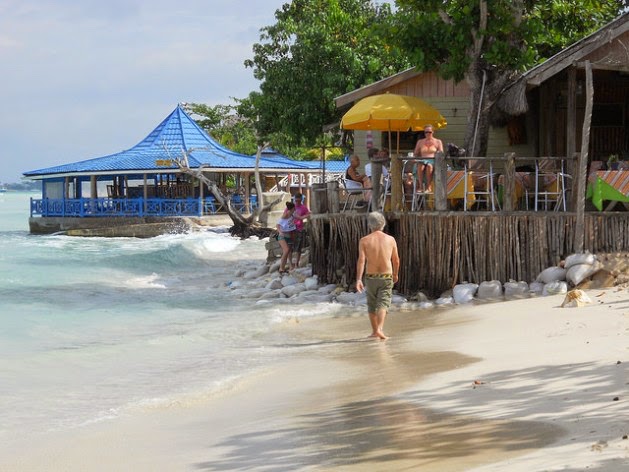
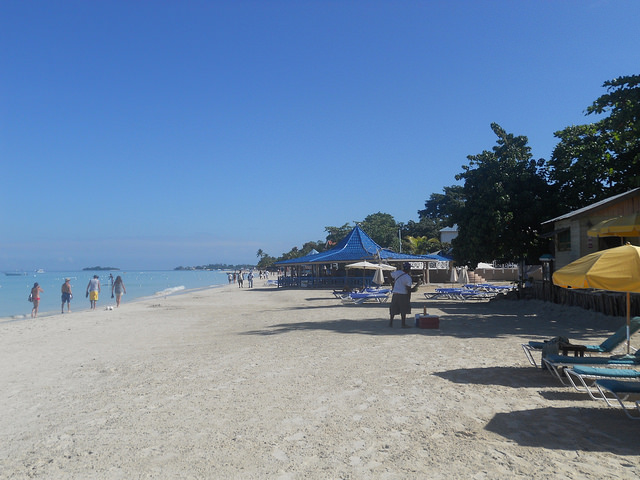
KINGSTON, Feb 2 2015 (IPS) - A plan that government says will slow the rate of erosion on Jamaica’s world-famous Negril beach is being opposed by the people whose livelihoods it is meant to protect.
Jamaica's Negril beach
Work is set to begin in March, but some in the tourist town continue to resist the planned construction of two breakwaters, which experts say is one of a series of actions aimed at protecting the beach and slowing persistent erosion. Those opposing the plan say the structures will do more damage than good.
The construction of the two breakwaters 1.2 kilometres offshore follows on previous work to strengthen the natural ecosystem protection of the coastal communities by replanting sea grass beds and mangroves in several vulnerable communities, including Negril.
“Building breakwaters is not what stakeholders here want. These hard structures cause more erosion than they prevent,” Couples Resort’s Mary Veira told IPS.
There is fear, Veira explained, that the structures will hinder the natural regeneration of the beach that currently occurs after each extreme weather event.
Government targeted the ‘Seven Mile’ stretch of Negril’s coast as its climate change adaptation project after several studies indicated that more than 55 metres of beach had been eroded in the last 40 plus years. The tourist Mecca is said to account for 25 per cent of the earnings of an industry that is responsible for about half of Jamaica’s GDP.
Veira is one of a group of hoteliers calling for a halt to the breakwater project, fearing its construction will irreparably damage Negril’s tourism industry. The environmental activist also pointed out that the structure is significantly different to that proposed by Smith Warner International (SWI) in 2008, in a consultation paid for by the community.
In addition she said, “The engineers who have been awarded the job are not coastal engineers.”
In a newspaper article dated May 2014, Veira noted: “Also of concern to stakeholders is the fact that the Environmental Engineer of National Works Agency, Dr. Mark Richards, admits such a major project of sea defense has really never been done.”
Taken Apr. 19, 2014, this photo shows a fully restored beach at Negril. The sand is taken away by storms and returns a few months later. Hoteliers fear that the breakwater will prevent the natural generation from occuring. Credit: Mary Veira/IPS
Business owners expressed concerns that boulders from the two “large rubble mound breakwaters” could break loose and destroy properties during rough weather. They also worry that it will create an eyesore as well as cause further damage to the fragile marine ecosystem, effectively killing snorkeling beds.
Both the National Environment and Planning Agency (NEPA), which overseas environment and planning on the island, and the National Works Agency (NWA), the entity overseeing the project, are adamant that the fears are unwarranted. Many hoteliers, however, continue to dig in.
The government has accused Veira and others of conducting a misinformation campaign to undermine the project’s credibility and the issue has divided the community.
The construction of the two breakwaters 1.2 kilometres off shore follows on previous work to strengthen the natural ecosystem protection of the coastal communities by replanting sea grass beds and mangroves in several vulnerable communities, including Negril. The structures are expected to break wave action and allow other remedial work to take place.
Government has said the beach nurturing option is out of the question. In May 2014, director of environment in the project’s implementing agency the Planning Institute of Jamaica (PIOJ) Clare Bernard told Negril’s business community in a meeting that the 5.4 million dollars earmarked for construction of the breakwaters could not be used for beach nourishment.
With the start date fast approaching, Sandals Resorts International (SRI) has thrown its weight behind the government’s plan. The popular hotel chain’s position was made clear in a Jan. 13 letter to the Jamaica Observer newspaper by SRI director of business processes and administration Wayne Cummings and reiterated at Friday’s meeting.
“It would be irresponsible of the agency to use government-guaranteed funds to reseed the beach for short-term gain, without treating with the known problems of wave action, only to see the beach retreat once again,” Cummings said in his statement.
Sandals operates three properties along what is said to be the most impacted section of the coastline – the Long Bay Beach also known as the Seven-Mile-Beach, as well as a ‘yet-to-be-developed’ property on the Bloody Bay Beach. The company has over the years invested in its own solutions to protect its properties.
“Let’s get this corrective phase done and commit to working with the Government to initiate a phase two for reseeding and maintaining the beach to bring Negril back to its world-class conditions,” Cummings continued.
On Jan. 23, those for and against faced off in a meeting that authorities hoped would have settled the matter once and for all. But both sides dug in and the meeting ended in a stalemate.
In addition to the fear of property damage from boulders, opponents contend that the current project bears no resemblance to that in a 2008 proposal by Smith Warner International (SWI).
In fact even more recent plans for the beach’s restoration included a comprehensive ecosystem upgrade to include sediment trend analysis, hydrological studies, artificial reefs and other “soft engineering approaches to build disaster resilience”, NEPA’s Manager of Strategic Planning and Policies Anthony McKenzie told IPS in 2012.
But authorities say the plans changed, in part because of the community’s advocacy. And the PIOJ and other government organisations have also expressed shock at the community’s apparent about-face. They have been in constant dialogue since the start, they said.
On Jan. 7, in a statement to the Parliament’s Public Administration and Appropriations Committee, NEPA’s CEO Peter Knight blamed the ongoing row on the lack of “institutional memory”, and a changing of the guard at the helm of various interest groups, such as the Negril Chamber of Commerce.
Knight told the house that as a precautionary measure, an experienced disaster mitigation expert had been contracted to review the plans, pushing the project six-months behind its original schedule.
A onetime head of the Negril Chamber of Commerce and the Jamaica Hotel and Tourist Association, Cummings implored the Negril community to remain focused. He pointed out that the solutions now being presented by government came from its own ‘cause and effect study’ that highlighted the loss of the reef due to due to natural and man-made issues.
Cummings accepted the community’s arguments that businesses will be negatively affected during the construction phase of the project and called on government to help them by providing “economic breathing room” in the form of tax breaks to keep companies afloat.
But marine biologist Andrew Ross understands why the community is upset.
“The engineering reports to which these proposed groynes are modelled only look at the current state and make no reference to the ecosystem services that accumulated sands for the grass meadows, beach and dunes over the previous thousands of years, namely the coral reef ticket,” he noted.
Ross, who specialises in the restoration of coral reefs, added that, “Any sand-targeted engineered solution can only be a band-aid, at best.”
In fact, the sea grass beds replanted two years ago in a multi-sector project funded by the European Union is all but gone, washed out by storms after only a few months. And the introduction of Shorelock, a so-called ‘sand-magnet’ chemical being used on the beach, has not rested well with folks.
Both Cummings and Ross agree on one thing: with all efforts combined, “Negril’s ecosystem can be fixed.” But as Cummings puts it, “As long as the finished product ‘plugs the holes’ identified as being the main causes of the aggressive wave actions.” More
The Obama administration recently hosted the first Caribbean Energy Security Summit to support the region's improved governance, access to finance and increased donor coordination for the energy sector.
Vice President Joe Biden has led the issue of Caribbean energy security and said the Obama administration considers the topic as a primary issue.
"This is extremely important to us. It's overwhelmingly in the interest of the United States of America that we get it right, and that this relationship changes for the better across the board," Biden said.
Biden added that the low oil prices have given little breathing room for governments, but there are alternatives. He mentioned renewable energy as an affordable source in addition to developing wind and solar energy.
"Meanwhile, we're in the midst of a seismic shift in the global economy: the ascendancy of the Americas as the epicenter of energy production in the world," Biden said. "We have more oil and gas rigs running in the United States, than all the rest of the world combined. Mexico, Canada and the United States is the new epicenter of energy -- not the Arabian Peninsula. It is the new epicenter of energy in the 21st century."
The vice president called for an integrated North America to promote energy security since the U.S. wants Caribbean countries to "succeed as prosperous, secure, energy-independent neighbors -- not a world apart, but an integral part of the hemisphere, where every nation is middle class, democratic and secure."
Biden further stressed the purpose of the summit is not to "put up another solar panel or sign another gas contract" but to help countries establish protocol to attract private-sector investment. The vice president, however, acknowledged that countries have to confront corruption by having clear and transparent rules.
The U.S. created the Overseas Private Investment Corporation (OPIC), which will focus on developing energy projects for the Caribbean. Biden announced $90 million from the OPIC will be funded to Jamaica for wind projects.
The Caribbean Energy Security Summit is a "key component" to Biden's Caribbean Energy Security Initiative, which he announced in June 2014.
A joint statement on Monday had participating countries and regional and international organization agreeing for the Caribbean to make "necessary and specific reforms" that include efforts for sustainable and clean energy technologies. The participants also stated their commitment to exchange data and energy information.
The Jan. 26 summit from Washington, D.C. included governments from Antigua and Barbuda, Aruba, Bahamas, Barbados, Belize, Canada, Colombia, Curacao, Dominica, Dominican Republic, France, Germany, Grenada, Guyana, Haiti, Jamaica, Mexico, New Zealand, Spain, St. Kitts and Nevis, St. Lucia, St. Vincent and the Grenadines, Suriname, Trinidad and Tobago and the United Kingdom. The Caribbean Community (CARICOM) Secretariat, Caribbean Development Bank, European Union, Inter-American Development Bank Group, International Renewable Energy Agency, Organization of American States and the World Bank Group also participated. More
Underwater munitions pollute the marine environment with toxic chemicals. We have learned that there is a "need to clean" both chemical and conventional weapons based on potential human health impacts, as well as environmental implications through depleting fish stocks (CHEMSEA Findings Report 2013, Search and Assessment of Sea Dumped Chemical Weapons and Porter, JW, Barton J and Torres 2011, Ecological, Radiological and Toxicological Effects of Naval Bombardment on Coral Reefs of Isla de Vieques, Puerto Rico).
Terrence Long
Underwater Munitions are "Point Source Emitters of Pollution". This means that in most cases, if we remove the source: we remove the problem. Off-the-shelf-technology developed by private sector, oil and gas industry, and military's unmanned systems programs, already exists to detect, map, recover and dispose of underwater munitions and the toxic waste they create. The International Dialogues on Underwater Munitions (IDUM's) mission is to promote the creation of an internationally binding treaty on all classes (biological, chemical, conventional, and radiological) of underwater munitions, to lead to the cleanup of our Oceans worldwide. IDUM hosts and attends international forums to facilitate collaboration with international leaders and organizations to better understand the socio-economic impact on both human health and environment from years of decaying underwater munitions. IDUM cooperates with researchers, industry, and government to foster collaborative solutions that further the clean-up of our oceans. We believe through international diplomacy via national and international programs, dialogue, conferences, workshops, committees, senate hearings, and commissions, we can come together globally to clean our One Ocea
IDUM is considered the international group of experts in Policy, Science, Technology and Responses to Underwater Munitions. We have been extremely effective in furthering international discussion, and creating a united appeal to international governments, as well as creating an International Technology Advisory Board on Sea Dumped Munitions. In support of our efforts, IDUM has been recognized in proceedings for Organization for the Prohibition of Chemical Weapons (OPCW), Third Review Conference of State Parties, 2014 Noble Peace Prize winner and United Nations (Secretary General Report Sixty-eight session on Sustainable development) for our contributions within the Resolution on sea dumped chemical munitions.
IDUM takes action:
IDUM mobilizes working groups for policy science and technology of sea dumped munitions, and has hosted five (5) international dialogues. We have participated as an observer for Helsinki Commission Heads of Delegations for Protection of the Baltic Sea, as well as provided consultations within HELCOM MUNI Ad Hoc Working Groups on Sea Dumped Chemical Weapons. IDUM has also been a "Special Invited Guest" of the OSPAR Commission for the Protection of the North-East Atlantic Oceans, and participates as Co- Directors for CHEMSEA – Search and Assessment of Chemical Weapons, Baltic Sea and NATO Science for Peace and Security (SPS) – MODUM Project.
IDUM is on the Scientific Committee Polish Naval Academy for Marine Security Yearbook and board of directors for International Centre for Chemical Safety and Security (ICCSS). Most recently, IDUM has been invited to centralize our cooperation with global peace and security organizations at The Hague. Our Chairman, Mr. T. P. Long, will manage the office in The Hague and cooperate with the international community of The Hague (including States Parties and the United Nations) to represent your concerns in an open and transparent process.
Mission Statement
The International Dialogue on Underwater Munitions (IDUM) is a non-governmental organization/Society founded in 2004 by Mr. Terrence P. Long following his appearance at a Canadian Senate Hearing with the Senate Standing Committee on Fisheries and Oceans. The IDUM's mission is to promote the creation of an internationally binding treaty on all classes (biological, chemical, conventional, and radiological) of underwater munitions. This treaty would encourage countries to collaborate on underwater munitions policy, research, science, and responses including environmentally-friendly remediation in affected regions. The IDUM is an internationally recognized body where all stakeholders (diplomats, government departments including external affairs, environmental protection and fishery departments, industry, fishermen, salvage divers, oil and gas, militaries and others) can come together in an open and transparent forum to discuss underwater munitions, seek solutions, and promote international teamwork on their issues related to underwater munitions. The IDUM promotes constructive engagement with all stakeholders rather than disengagement so that we may learn from one another's situation and determine how we can best respond in the future with everyone's considerations. What we have learned is that off-the-shelf-technology, developed by the oil and gas industry and military's unmanned systems programs, does exist to address underwater munitions sites. And there is a "Need to clean" based on the potential human health and environmental impact on our health care systems and fish stocks. Underwater munitions in some form or another will continue to pollute the marine environment over time. It’s just a question of "When". Underwater Munitions are "Point Source Emitters of Pollution". In most cases, remove the source and you remove the problem.
Chairman's Message
"The IDUM is collaborating with international leaders and organizations to better understand the socio-economic impact on both human health and environment from years of decaying underwater munitions. The organization is facilitating this through international diplomacy via national and international programs, dialogues, conferences, workshops, committees, senate hearings, and international commissions. Most notable are the international efforts of the Government of Lithuania that resulted in the unanimous passing of the United Nations Resolution on Sea Dumped Chemical Weapons in December 2010 at the United Nations. Internationally, we must organize and continue our work together to collect, process, and provide information on underwater munitions to the Secretary General of the United Nations. Any tangible approach would require a multilateral response from all stakeholders including institutional capacity-building and the creation of an International Donor Trust Fund." Visit the IDUM Website


 © Climate War Room