Showing posts with label Pacific. Show all posts

Monday, January 15, 2018

VACANCY: Three fulltime positions at the Office of the Pacific Ocean Commissioner [POA Update]

Office of the Pacific Ocean Commissioner

Subject: VACANCY: Three fulltime positions at the Office of the Pacific Ocean Commissioner [POA Update]

Date: 15 January 2018 at 11:13:20 am AEDT

The Office of the Pacific Ocean Commissioner is currently recruiting for THREE fulltime positions. The application deadline is ‪5pm‬ (Fiji Time) ‪Friday 26 January 2018‬.

Please note all enquiries and applications MUST be submitted via the PIFS job application site. Any applications submitted to this email address will not be opened. (detailed position descriptions and applications details are available via the links below).

Ocean Analyst and Manager http://www.forumsec.org/pages.cfm/about-us/working-with-us/fulltime-positions/ocean-analyst-manager.html

Ocean Management Officer http://www.forumsec.org/pages.cfm/about-us/working-with-us/fulltime-positions/ocean-management-officer.html

Ocean Communication Officer http://www.forumsec.org/pages.cfm/about-us/working-with-us/fulltime-positions/ocean-communication-officer.html

Method of application:
Applications must be submitted via the application portal accessed via the links above.

Deadline for Applications:
Submissions need to reach the Forum Secretariat by ‪5pm‬ (Fiji time) ‪Friday 26 January 2018‬. Late or incomplete applications will not be considered.

Note: The Secretariat will not be responsible for non-receipt/non-delivery of application documents due to any reason whatsoever.

In the event that further information is required by the Secretariat in relation to the recruitment, the Secretariat reserves the right to seek the required information without the need for calling for resubmission of applications.

Friday, October 9, 2015

Meet the President Trying to Save His Island Nation From Climate Change

For millennia, the people of Kiribati have lived off the land, dwelling on their small islands located in the central Pacific Ocean.

President Anote Tong

But over the last several decades, rising sea levels due largely to climate change have slowly eaten away at the country’s 313 square miles. Without action, the country of 102,000 people may disappear altogether over the next few decades.

Kiribati President Anote Tong has been advocating for bold action to address climate change for years, making his pleas around the world. Now, Tong says his country’s citizens won’t be able to remain on the physical islands of Kiribati much longer without drastic change on global warming. Whatever happens, his country won’t look the same in 50 years.

“We have constantly been calling the international community to do something about reducing emissions, but the reality for us is that it really does not matter,” Tong told TIME in a recent interview. “The gas is already in the atmosphere… either we leave or we spend a lot of resources to build up the islands.”

Around the world, sea levels have risen nearly 3 inches since the early 1990s due to ice melt caused by global warming. Even if countries are able to reduce emissions as much as policymakers have promised, global sea levels will still rise by one to two feet by 2100. Without carbon cuts, that rise could top three feet. In Kiribati, where land is rarely more than few feet above sea level, even a moderate rise could be catastrophic. And the island nation is also at risk from an expected increase in the number of extreme weather events, such as storms and typhoons.

Tong’s plan for dealing with this is two-fold. First, he wants to fortify at least one island in the Kiribati chain so the country’s physical presence doesn’t disappear in its entirety. The president is light on details on how exactly he plans to save an island, but he says the technology exists (he has reportedly considered employing a Japanese company that has proposed engineer islands floating). The exact shape of the plans may depend on the support offered by other countries, Tong said. He’s met with representatives of the Netherlands and other flood-prone regions about how to best protect the islands.

But even if some of the country can be saved from the rising seas, Tong doesn’t expect to be able to accommodate all of the country’s residents. For those forced to leave, Tong says there must be “migration with dignity.” Last year, Kiribati purchased 5,000 acres of land in nearby Fiji as insurance policy and world leaders have indicated that they would be willing to support Kiribati refugees if it becomes necessary.

Catastrophic one-off events like hurricanes and tsunamis tend to prompt international sympathy. (Think of the $14 billion donated to relief efforts following the 2004 Indian Ocean tsunami.) Kiribati has benefited from some of that support, primarily from other Pacific island countries and development groups. But development commitments have measured in the millions, far from the hundreds of millions, if not billions Tong says his country needs to fully adapt to climate change.

Other countries have been less eager to offer support. In a moment that startled many Pacific Islanders, former Australian Prime Minister Tony Abbott was captured on tape last month laughing at a joke about how Kiribati would soon have “water lapping at [its] doors.” Australian Immigration Minister Peter Dutton, who made the off-color remark, apologized but not before Tong had earned the world’s sympathy condemning the joke as “morally irresponsible.”

Despite the attention his country’s plight has received, Tong doesn’t like to linger on the topic. Instead he emphasizes the damage caused by the policies of Australia and other developed countries that have emitted the carbon that is endangering the very existence of Kirbati, where the average resident emits less than 1 ton of carbon dioxide each year or 7% of the global average. “Climate change is not an issue that really respects any sovereignty,” he said. “If it’s a national issue, keep your emissions within your borders, which you cannot do.”

In December, negotiators from around the world will gather in Paris at a United Nations conference aimed at creating a binding agreement for countries of the world to decrease their greenhouse gas emissions. Asked about his hopes for the conference, Tong said his goal was simple: “Give us a proposition that will guarantee that our people will remain above the water.” More


Tuesday, September 22, 2015

El Niño and La Niña will Exacerbate Coastal Hazards Across Entire Pacific

SANTA CRUZ, Calif. — The projected upsurge of severe El Niño and La Niña events will cause an increase in storm events leading to extreme coastal flooding and erosion in populated regions across the Pacific Ocean, according to a multi-agency study published today in Nature Geoscience.

Severe Coastal Erosion During an El Niño Storm

“This study significantly advances the scientific knowledge of the impacts of El Niño and La Niña,” said Patrick Barnard, USGS coastal geologist and the lead author of the study. “Understanding the effects of severe storms fueled by El Niño or La Niña helps coastal managers prepare communities for the expected erosion and flooding associated with this climate cycle.”

The impact of these storms is not presently included in most studies on future coastal vulnerability, which look primarily at sea level rise. New research data, from 48 beaches across three continents and five countries bordering the Pacific Ocean, suggest the predicted increase will exacerbate coastal erosion irrespective of sea level rise affecting the region.

Researchers from 13 different institutions, including the U.S. Geological Survey, University of Sydney, the University of New South Wales and the University of Waikato (New Zealand) analyzed coastal data from across the Pacific Ocean basin from 1979 to 2012. The scientists sought to determine if patterns in coastal change could be connected to major climate cycles. Data came from beaches in the mainland United States and Canada, Japan, Australia, New Zealand and Hawaii.

Although previous studies have analyzed coastal impacts at local and regional levels, this is the first to pull together data from across the Pacific to determine basin-wide patterns. The research group determined all Pacific Ocean regions investigated were affected during either an El Niño or La Niña year. When the west coast of the U.S. mainland and Canada, Hawaii, and northern Japan felt the coastal impacts of El Niño, characterized by bigger waves, different wave direction, higher water levels and/or erosion, the opposite region in the Southern Hemisphere of New Zealand and Australia experienced “suppression,” such as smaller waves and less erosion. The pattern then generally flips: during La Niña, the Southern Hemisphere experienced more severe conditions.

The study also investigated the coastal response of other climate cycles, such as the Southern Annular Mode, which has impacts at the same time in both hemispheres of the Pacific. The data revealed that when the Southern Annular Mode trended towards Antarctica, culminating in more powerful storms in the Southern Ocean, wave energy and coastal erosion in New Zealand and Australia increased, as did the wave energy along the west coast of North America. Other modes of climate variability, such as the Pacific North American pattern, which relates to atmospheric circulation in the North Pacific, are linked to coastal impacts that are more tightly restricted to the northern hemisphere.

Linking coastal erosion to natural climate patterns, such as El Niño/Southern Oscillation and the Southern Annular Mode, can be challenging.

“Shoreline behavior can be controlled by so many different factors, both locally and regionally, that it’s been difficult to isolate the signal until now. However, utilizing the many years of data we were able pull together in this study enabled us to definitively identify how the major climate drivers affect coastal hazards across the Pacific,” said Patrick Barnard. “This will greatly enhance our ability to predict the broader impacts of climate change at the coast.”

A co-author of the paper, Professor Andrew Short from the University of Sydney, says forecast increases in the strength of El Niño and La Niña weather events driven by global climate change means coastal erosion on many Australian beaches could be worse than currently predicted based on sea level rise alone.

“Coastlines of the Pacific are particularly dynamic as they are exposed to storm waves generated often thousands of miles away. This research is of particular importance as it can help Pacific coastal communities prepare for the effects of changing storm regimes driven by climate oscillations like El Niño and La Niña. To help us complete the puzzle, for the next step we would like to look at regions of the Pacific like South America and the Pacific Islands where very limited shoreline data currently exists,” said Mitchell Harley of UNSW Australia, and a coauthor of the paper.

“It's not just El Niño we should be concerned about," said Ian Walker, professor of Geography at the University of Victoria and coauthor of the study. “Our research shows that severe coastal erosion and flooding can occur along the British Columbia coast during both El Niño and La Niña storm seasons unlike further south in California. We need to prepare not only for this winter, but also what could follow when La Niña comes.”

The published paper, “Coastal vulnerability across the Pacific dominated by El Niño/Southern Oscillation” is available online. More


Tuesday, July 21, 2015

MARSHALL ISLANDS FIRST SMALL ISLAND COUNTRY TO SET CLEAR AND ROBUST CLIMATE TARGET FOR 2025

REPUBLIC OF THE MARSHALL ISLANDS

OFFICE OF THE PRESIDENT

MAJURO, MARSHALL ISLANDS

For immediate release, 19 July 2015

Majuro, Republic of the Marshall Islands


MARSHALL ISLANDS FIRST SMALL ISLAND COUNTRY TO SET CLEAR AND ROBUST CLIMATE TARGET FOR 2025

The Republic of the Marshall Islands (RMI) today became the first small island state to set a new emissions reduction target for 2025, and the first developing country to adopt the simpler and more robust absolute economy-wide target that is usually expected of industrialized countries.

RMI’s Intended Nationally Determined Contribution – or ‘INDC’ – includes a commitment to reduce emissions by 32% below 2010 levels by 2025, and also includes an indicative target to further reduce emissions to 45% below 2010 levels by 2030. This is in line with RMI’s longer-term vision to move towards net zero emissions by 2050, or earlier if possible.

The preference for a 2025 target is consistent with calls by the US, Brazil and the world’s most vulnerable countries for shorter five-year commitments to avoid locking in insufficient ambition all the way to 2030, some 15 years away. It will strengthen calls from a growing majority that all countries must come back to the table by 2020 to see if stronger action is possible, particularly as renewable energy and other low-carbon technology becomes cheaper and more efficient.

As RMI once again mops up the damage after the latest in a series of climate disasters to hit the low-lying atoll nation, the new targets reaffirm RMI’s commitment to strong climate leadership in the Pacific region, as recognized by the Majuro Declaration for Climate Leadership adopted in the country when it hosted Pacific Island Leaders in September 2013. RMI’s new target builds on those previous efforts, but are now based on the more rigorous data collected during the preparation of RMI’s greenhouse gas inventory for 2010, which is soon to be submitted to the UNFCCC in the country’s ‘Second National Communication’.

Speaking on the release of the INDC, the President of the Republic of the Marshall Islands, Christopher J. Loeak, said:

"I am proud that, despite the climate disasters hitting our shores with increasing regularity, we remain committed to showing the way in the transition to a low-carbon economy. We may be small, but we exemplify the new reality that going low carbon is in everyone’s interests. It improves our economy, our security, our health and our prosperity, particularly in the Pacific and more broadly in the developing world."

"With these ambitious targets, we are on track to nearly halve our emissions between 2010 and 2030, en route to becoming emissions-free by the middle of the century. The science says this is what’s required globally. We have now joined the United States, the European Union, Ethiopia and others in setting a long-term decarbonization strategy. When added together in Paris, these strategies will stamp fossil fuels with an expiry date."

"Having an absolute economy-wide target means no-one has to look into a crystal ball to understand what it means for how much CO2 goes into the atmosphere. Unlike ‘below business-as-usual’ and ‘GDP intensity’ targets, our numbers don’t rely on unknown variables like size of population and future economic growth. This is the simplest and most robust type of target that a country can adopt. It says ‘we mean business’, and we’re not continuing with ‘business as usual’."

Speaking from Paris, where he is preparing to attend an informal Ministerial meeting on the negotiations convened by French Foreign Minister Laurent Fabius, RMI Minister of Foreign Affairs, Tony de Brum, added:

"Leadership requires vision. Despite the costs of climate change spiraling out of control, we have once again shot for the upper end of what’s possible with our limited resources and international support."

"Since the 2008 oil price shock, the Marshall Islands has embarked on one the world’s most aggressive rollouts of renewables and energy efficiency measures. This helped us to peak our emissions in 2009, just before Copenhagen. But going forward, we’ll need to go harder, upscaling not only on solar, but also biofuels and wind, as well as the potential use of transformational technology, such as Ocean Thermal Energy Conversion. If we can show OTEC to work in our waters, it could change the global energy landscape altogether, delivering clean, green power to big coastal cities all over the world."

"With most of the big emitters’ targets now on the table, everyone knows we are falling well short. This is not something that can be ignored, nor swept away by political expediency. There can be no more excuses for delay or for low-balling ambition on the false premise that coal and other dirty fuels somehow increase prosperity. Exactly the opposite is true. Our message is simple: if one of the world’s smallest, poorest and most geographically isolated countries can do it, so can you."

Media contact:

Thom WoodroofeRMI Ministry of Foreign Affairs

+61 419 668 093 | +44 7958 264 007

thom.woodroofe@independentdiplomat.org


Tuesday, March 10, 2015

Climate change threatens human rights, Kiribati president tells UN

Pacific leaders tell Human Rights Council they fear for the future of their civilisations as climate impacts intensify

Just three weeks after the conclusion of the most recent climate negotiations, Geneva has once again offered a space for governments to consider how to address the human rights implications of climate change.

President Anote Tong

As the issue recently emerged as one of the elements that many countries wish to see integrated to the Paris climate agreement, these discussions provided insights on opportunities for states and UN bodies to better address this issue in the coming months.

Last Friday, the Human Rights Council hosted two high-level panels dedicated to the issue of human rights and climate change, with specific focus on the importance of international cooperation and on the impacts of climate change on the exercise of the right to food.

Representatives from small islands states called for urgent action to mitigate climate change, pointing at the fact that climate change threatens the progress made with the promotion of human rights.

The prime minister of Tuvalu Enele Sopoaga warned that climate change will worsen existing inequities in world already riven with inequality, poverty and conflict. Tuvalu, the prime minister warned, has neither the resources nor the capacity to cope with these impacts.

Kiribati’s President Anote Tong reminded the Human Rights Council that, despite all the efforts by his government, climate change remains an existential threat to his people.

“Who do we appeal and turn to for our people’s right to survive?” president Tong asked the Council. “If there is a major challenge on human rights that deserves global commitment, leadership and collaboration, this is the one: the moral responsibility to act now against climate change.”

Both Sopoaga and Tong challenged the Council to consider how the international community should respond to the climate crisis and to urge more strongly for climate action in order to protect the rights of the most vulnerable people.

Other speakers discussed in their interventions the benefits of integrating human rights into climate policies. UN Special Envoy on Climate Change (and former UN High Commissioner for Human Rights) Mary Robinson emphasized that a “human rights framing to our development and climate responses can maximize the potential for inclusion, participation and equality”.

Victoria Tauli-Corpuz, UN Special Rapporteur on the Rights of Indigenous Peoples, insisted more specifically on the importance to respect the rights of indigenous peoples, in particular land rights and participatory rights, when designing climate policies.

Quoting the fifth assessment report from the UN’s IPCC climate science panel, Victoria Tauli-Corpuz also highlighted that “indigenous, local, and traditional knowledge systems and practices, including indigenous peoples’ holistic view of community and environment, are a major resource for adapting to climate change, but these have not been used consistently in existing adaptation efforts”.

The panels were followed by an interactive dialogue with representatives from governments and civil society.

Several common threads emerged from this discussion, including the importance to fully implement the right of the public to take part in decision-making related to climate change, the recognition of the impacts of climate change on economic and social rights, and the importance to consider the linkages between the need to address climate change while protecting the right to development.

Several speakers also spoke in favor of two specific proposals for UN institutions: the importance to include strong references to human rights in the Paris 2015 climate agreement and the opportunity for the Human Rights Council to nominate a UN special rapporteur on human rights and climate change.

Germany also announced during the panels that the country would join the “Geneva Pledge on Human Rights and Climate Action” signed by 18 countries during the most recent round of climate negotiations.

However, the impact of the high political stakes related to the preparation of the Paris Climate Agreement could also be felt throughout the panels.

The interventions by most countries reflected mainly well-entrenched positions in the Council and at the climate negotiations.

The United States in particular suggested that attempts to push for the inclusion in the climate negotiations of references to the work of the Human Rights Council could lead to the “sabotage of the 2015 climate agreement”, a statement that many participants to the session considered out of tone with the discussions.

The panels were followed by the presentation, on Monday, of the report of the UN Independent Expert on Human Rights and the Environment John Knox.

In his presentation, Prof. Knox emphasized that climate change is likely the most serious threat to the enjoyment of human rights.

Referring to the Geneva Pledge as an example of a good practice to better integrate human rights and climate policies, he challenged relevant UN bodies, such as the Office of the High Commissioner for Human Rights, UNEP and UNDP, to establish focal points for human rights and climate change.

The ongoing discussions in Geneva this week are not expected to lead to immediate concrete results. These exchanges could nevertheless provide additional momentum when related sessions will resume in June, both in Geneva and in Bonn.

For the first half of the month, UN climate negotiations will continue to advance work towards the Paris climate agreement.

Momentum

Several governments having insisted last month on the need to insert human rights language in the negotiating text, the June meeting of the climate talks will be crucial to determine whether this proposals are retained in the draft agreement.

Upon the closing of the climate negotiations in Bonn, the Human Rights Council will gather once again in Geneva to consider, among other matters, the adoption of a new resolution on human rights and climate change.

Over the past two months, Geneva offered two opportunities for governments to deepen their understanding of the interplay between human rights and climate action.

The coming months will now be critical to determine whether, through the UN climate body and the Human Rights Council, states are willing to commit to take steps towards ensuring that climate policies address climate change in a way that promotes human rights at the same time. More


Sunday, January 11, 2015

International Dialogue on Underwater Munitions Highlighting Sea-Dumped Chemical Weapons

International Dialogue on Underwater Munitions

Deadly Depths

Underwater munitions pollute the marine environment with toxic chemicals. We have learned that there is a "need to clean" both chemical and conventional weapons based on potential human health impacts, as well as environmental implications through depleting fish stocks (CHEMSEA Findings Report 2013, Search and Assessment of Sea Dumped Chemical Weapons and Porter, JW, Barton J and Torres 2011, Ecological, Radiological and Toxicological Effects of Naval Bombardment on Coral Reefs of Isla de Vieques, Puerto Rico).

Terrence Long

Underwater Munitions are "Point Source Emitters of Pollution". This means that in most cases, if we remove the source: we remove the problem. Off-the-shelf-technology developed by private sector, oil and gas industry, and military's unmanned systems programs, already exists to detect, map, recover and dispose of underwater munitions and the toxic waste they create. The International Dialogues on Underwater Munitions (IDUM's) mission is to promote the creation of an internationally binding treaty on all classes (biological, chemical, conventional, and radiological) of underwater munitions, to lead to the cleanup of our Oceans worldwide. IDUM hosts and attends international forums to facilitate collaboration with international leaders and organizations to better understand the socio-economic impact on both human health and environment from years of decaying underwater munitions. IDUM cooperates with researchers, industry, and government to foster collaborative solutions that further the clean-up of our oceans. We believe through international diplomacy via national and international programs, dialogue, conferences, workshops, committees, senate hearings, and commissions, we can come together globally to clean our One Ocea

IDUM is considered the international group of experts in Policy, Science, Technology and Responses to Underwater Munitions. We have been extremely effective in furthering international discussion, and creating a united appeal to international governments, as well as creating an International Technology Advisory Board on Sea Dumped Munitions. In support of our efforts, IDUM has been recognized in proceedings for Organization for the Prohibition of Chemical Weapons (OPCW), Third Review Conference of State Parties, 2014 Noble Peace Prize winner and United Nations (Secretary General Report Sixty-eight session on Sustainable development) for our contributions within the Resolution on sea dumped chemical munitions.

IDUM takes action:

IDUM mobilizes working groups for policy science and technology of sea dumped munitions, and has hosted five (5) international dialogues. We have participated as an observer for Helsinki Commission Heads of Delegations for Protection of the Baltic Sea, as well as provided consultations within HELCOM MUNI Ad Hoc Working Groups on Sea Dumped Chemical Weapons. IDUM has also been a "Special Invited Guest" of the OSPAR Commission for the Protection of the North-East Atlantic Oceans, and participates as Co- Directors for CHEMSEA – Search and Assessment of Chemical Weapons, Baltic Sea and NATO Science for Peace and Security (SPS) – MODUM Project.

IDUM is on the Scientific Committee Polish Naval Academy for Marine Security Yearbook and board of directors for International Centre for Chemical Safety and Security (ICCSS). Most recently, IDUM has been invited to centralize our cooperation with global peace and security organizations at The Hague. Our Chairman, Mr. T. P. Long, will manage the office in The Hague and cooperate with the international community of The Hague (including States Parties and the United Nations) to represent your concerns in an open and transparent process.

Mission Statement

The International Dialogue on Underwater Munitions (IDUM) is a non-governmental organization/Society founded in 2004 by Mr. Terrence P. Long following his appearance at a Canadian Senate Hearing with the Senate Standing Committee on Fisheries and Oceans. The IDUM's mission is to promote the creation of an internationally binding treaty on all classes (biological, chemical, conventional, and radiological) of underwater munitions. This treaty would encourage countries to collaborate on underwater munitions policy, research, science, and responses including environmentally-friendly remediation in affected regions. The IDUM is an internationally recognized body where all stakeholders (diplomats, government departments including external affairs, environmental protection and fishery departments, industry, fishermen, salvage divers, oil and gas, militaries and others) can come together in an open and transparent forum to discuss underwater munitions, seek solutions, and promote international teamwork on their issues related to underwater munitions. The IDUM promotes constructive engagement with all stakeholders rather than disengagement so that we may learn from one another's situation and determine how we can best respond in the future with everyone's considerations. What we have learned is that off-the-shelf-technology, developed by the oil and gas industry and military's unmanned systems programs, does exist to address underwater munitions sites. And there is a "Need to clean" based on the potential human health and environmental impact on our health care systems and fish stocks. Underwater munitions in some form or another will continue to pollute the marine environment over time. It’s just a question of "When". Underwater Munitions are "Point Source Emitters of Pollution". In most cases, remove the source and you remove the problem.

Chairman's Message

"The IDUM is collaborating with international leaders and organizations to better understand the socio-economic impact on both human health and environment from years of decaying underwater munitions. The organization is facilitating this through international diplomacy via national and international programs, dialogues, conferences, workshops, committees, senate hearings, and international commissions. Most notable are the international efforts of the Government of Lithuania that resulted in the unanimous passing of the United Nations Resolution on Sea Dumped Chemical Weapons in December 2010 at the United Nations. Internationally, we must organize and continue our work together to collect, process, and provide information on underwater munitions to the Secretary General of the United Nations. Any tangible approach would require a multilateral response from all stakeholders including institutional capacity-building and the creation of an International Donor Trust Fund." Visit the IDUM Website


Wednesday, December 10, 2014

"If we save Tuvalu, we save the world

"If we save Tuvalu, we save the world" - UN Climate Convention, Peru


9 December 2014, Lima, Peru - The Prime Minister of Tuvalu paid homage to ancestors buried in Peru at the UN Climate Convention today. Taking the floor at the High Level Segment of the 20th Conference of the Parties, he began his statement acknowledging the interesting and tragic historical connection with Peru.

During the 1860's slave traders known as blackbirders took approximately 400 people from Tuvalu to work in Peru. None of them ever returned.

"There are Tuvaluans buried here on this land and we pay our respects to our ancestors who were brought here against their will," stated Hon. Enele Sosene Sopoaga, Prime Minister of Tuvalu - remembering the history of Tuvalu before looking to the future.


"I am here at this important meeting as the highest representative of the people of Tuvalu. I carry a huge burden and responsibility. I carry their hopes that there will be a future for Tuvalu. This is an enormous burden to carry. It keeps me awake at night. No national leader in the history of humanity has ever faced this question. Will we survive or will we disappear under the sea? I ask you all to think what it is like to be in my shoes."

On the frontlines of climate change, the greatest single threat to the island atoll, Tuvalu is heartened by the progress leading to a new climate change protocol made at the UN Climate Convention in Peru yet also very clear that they will not support a new protocol without a substantive programme on loss and damage. The new agreement must be agreed upon by the end of December, 2015 in Paris, the host of the next Conference of the Parties.

"Tuvalu, and I suspect most of the world, believes that reaching a comprehensive new protocol in Paris is absolutely essential. We cannot repeat Copenhagen. We cannot suffer the frustration and humiliation of being asked to accept a half-hearted response to a critical global crisis."

"The new protocol must be comprehensive it must cover all issues in a meaningful way. It has to include effective mitigation targets for all countries. It must deliver real outcomes on adaptation and loss and damage. It must deliver the necessary finance to transform our society. And it must deliver the technology and the necessary capacity building to ensure everyone can respond to climate change. All these pillars are essential."

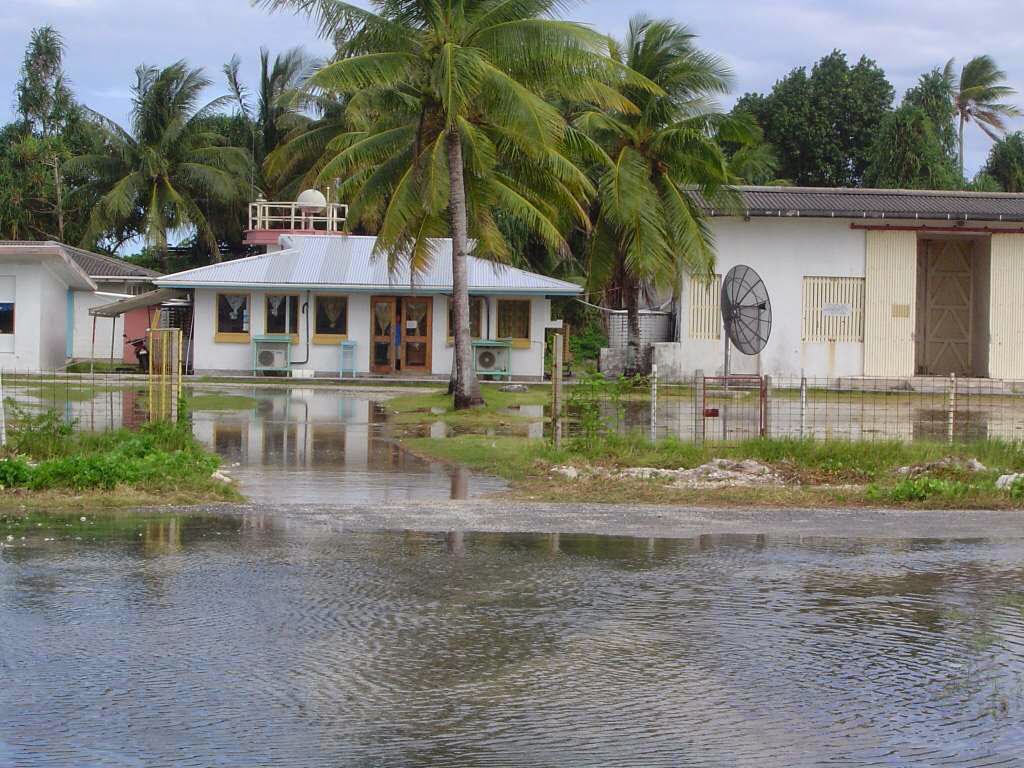
The coral atoll nation of Tuvalu consists of nine inhabited islands with the highest point above sea level being four meters. Now experiencing climate change impacts through saltwater intrusion into agricultural areas, lack of potable water and coastal erosion - the fate of Tuvalu is in the hands of the international community.

"I ask everyone who leaves this room to look into the eyes of the first child they see. I want everyone to look into the child’s eyes and imagine what those eyes will see in ten or twenty years. Will they see hell or will they see a sustainable planet."

"Let us stand proud in Paris. Let us look into the eyes of children and say, yes we have a real future for you. Let us make 2015 the year we saved the Earth! Let us make 2015 the year we saved Tuvalu. For if we save Tuvalu we save the world."

To access the full statement presented by Hon. Enele Sosene Sopoaga, Prime Minister of Tuvalu at the High Level Segment of the 20th Conference of the Parties to the United Nations Framework Convention on Climate Change please visit: http://unfccc.int/files/meetings/lima_dec_2014/statements/application/pdf/cop20_hls_tuvalu.pdf

Monday, December 1, 2014

The 1.5 degrees global warming call from the Pacific, still possible


Amidst the recent release of scientific reports on climate change, the key message has been for urgent action to limit global warming, before time runs out.


The Intergovernmental Panel on Climate Change released their Synthesis Report on the 5th Assessment Report in October, the World Bank released the "Turn down the heat, confronting the new climate normal" report in November and the United Nations Environment Program released their "Bridging the 2014 Emission Gap Report" also in November.

According to the "Turn down the heat" report and an accompanying press release - climate change impacts such as extreme heat events may now be unavoidable because the Earth’s atmospheric system is locked into warming close to 1.5°C above pre-industrial levels by mid-century, and even very ambitious mitigation action taken today will not change this.

This does not mean, however, that long-term warming of 1.5°C is locked in, or that achievement of the 1.5°C warming limit, as called for by vulnerable countries like Pacific Islands, is no longer possible.

"What we see from the scientific literature is that it's clear that we can indeed hold warming below 2 degrees in this century probably with the most aggressive mitigation emission reduction options. We can limit peak warming close to 1.5 degrees and slowly reduce that to below 1.5 degrees by 2100," said Prof. Bill Hare of the Climate Analytics Group, Potsdam Institute.

"This is going to involve fairly major changes in policy settings now but this is what we are negotiating for, to have the emissions go down in the 2020's and if we can do that fast enough then its technically and economically feasible to bring warming back to 1.5 degrees by the end of the century."

"Those that are arguing it's not possible are expressing a political judgment, not a scientific judgment."

There will be climate change impacts experienced by several regions including the Pacific islands, before warming is reduced as limiting peak warming close to 1.5°C by mid century will still result in significant damage.

At the present levels of warming (about 0.8°C above preindustrial) the impacts of climate change are already being felt in many regions of the world. Continued damage is forecast to the coral reefs in the Pacific and other tropical oceans, there is the huge risk of damage to water supply resources in dry regions and substantial drops in crop yield in regions such as sub Saharan Africa.

"On top of that we'll also be experiencing quite major increase in extreme heat events even for 1.5 degrees warming so whatever happens we're going to have to go through some very severe changes," explains Professor Hare.

Here in Lima, Peru at the 20th Conference of the Parties to the United Nations Framework Convention on Climate Change (UNFCCC COP20), the Pacific islands are calling for a 1.5 degree limit to global warming by 2100. The next two weeks of climate negotiations continue the work being done by the Pacific islands as members of the Alliance of Small Islands States, lobbying for the 1.5 degree limit to global warming to be agreed upon in Paris next year.

The new climate treaty is to be agreed upon by the end of December in 2015 in Paris.

"Strengthening the long-term temperature goal to 1.5 degrees is of critical importance for us. Even at the current temperatures, our small low lying islands are being battered by king tides, salt water intrusion, coastal erosion, coral bleaching, ocean acidification, loss of species and habitats," said Ms. Ana Tiraa, Head of the Cook Islands delegation at the UNFCCC COP 20.

"These will only be exacerbated at higher temperatures, with due respect to other parties, the Cook Islands calls for ambition levels that are high enough to keep temperature rise below 1.5 degrees. Temperature rises above 1.5 degrees cannot be an option for low lying small islands if we have a hope of surviving."

According to Prof. Hare, at present there is confidence that with aggressive mitigation action warming can be held to below 2 degrees yet another decade of inaction will most likely lead to warming at 2 degrees or above. The message is clear that the time for action is now.

"It is still feasible to bring global warming to below 1.5 degrees by 2100 but whether or not the world politics and major economies will take enough action in the coming five to 20 years is in question. We are entitled to be skeptical given the inaction that has characterised the last decade as to whether that looks happening but it's not a scientific judgment or statement, the option is well and truly open to bring warming back to below 1.5 degrees. More