Showing posts with label global governance. Show all posts

Thursday, June 18, 2015

Pope Francis, in Sweeping Encyclical, Calls for Swift Action on Climate Change

VATICAN CITY — Pope Francis on Thursday called for a radical transformation of politics, economics and individual lifestyles to confront environmental degradation and climate change, as his much-awaited papal encyclical blended a biting critique of consumerism and irresponsible development with a plea for swift and unified global action.

The vision that Francis outlined in the 184-page encyclical is sweeping in ambition and scope: He described a relentless exploitation and destruction of the environment, which he blamed on apathy, the reckless pursuit of profits, excessive faith in technology, and political shortsightedness. The most vulnerable victims are the world’s poorest people, he declared, who are being dislocated and disregarded.

"Climate change is a global problem with grave implications: environmental, social, economic, political and for the distribution of goods," he wrote. "It represents one of the principal challenges facing humanity in our day."

The first pope from the developing world, Francis, an Argentine, used the encyclical — titled "Laudato Si’," or "Praise Be to You" — to highlight the crisis posed by climate change. He placed most of the blame on fossil fuels and human activity while warning of an "unprecedented destruction of ecosystems, with serious consequence for all of us" if swift action is not taken. Developed, industrialized countries were mostly responsible, he said, and were obligated to help poorer nations confront the crisis.

"Climate change is a global problem with grave implications: environmental, social, economic, political and for the distribution of goods," he wrote. "It represents one of the principal challenges facing humanity in our day." More


Monday, December 1, 2014

The 1.5 degrees global warming call from the Pacific, still possible


Amidst the recent release of scientific reports on climate change, the key message has been for urgent action to limit global warming, before time runs out.


The Intergovernmental Panel on Climate Change released their Synthesis Report on the 5th Assessment Report in October, the World Bank released the "Turn down the heat, confronting the new climate normal" report in November and the United Nations Environment Program released their "Bridging the 2014 Emission Gap Report" also in November.

According to the "Turn down the heat" report and an accompanying press release - climate change impacts such as extreme heat events may now be unavoidable because the Earth’s atmospheric system is locked into warming close to 1.5°C above pre-industrial levels by mid-century, and even very ambitious mitigation action taken today will not change this.

This does not mean, however, that long-term warming of 1.5°C is locked in, or that achievement of the 1.5°C warming limit, as called for by vulnerable countries like Pacific Islands, is no longer possible.

"What we see from the scientific literature is that it's clear that we can indeed hold warming below 2 degrees in this century probably with the most aggressive mitigation emission reduction options. We can limit peak warming close to 1.5 degrees and slowly reduce that to below 1.5 degrees by 2100," said Prof. Bill Hare of the Climate Analytics Group, Potsdam Institute.

"This is going to involve fairly major changes in policy settings now but this is what we are negotiating for, to have the emissions go down in the 2020's and if we can do that fast enough then its technically and economically feasible to bring warming back to 1.5 degrees by the end of the century."

"Those that are arguing it's not possible are expressing a political judgment, not a scientific judgment."

There will be climate change impacts experienced by several regions including the Pacific islands, before warming is reduced as limiting peak warming close to 1.5°C by mid century will still result in significant damage.

At the present levels of warming (about 0.8°C above preindustrial) the impacts of climate change are already being felt in many regions of the world. Continued damage is forecast to the coral reefs in the Pacific and other tropical oceans, there is the huge risk of damage to water supply resources in dry regions and substantial drops in crop yield in regions such as sub Saharan Africa.

"On top of that we'll also be experiencing quite major increase in extreme heat events even for 1.5 degrees warming so whatever happens we're going to have to go through some very severe changes," explains Professor Hare.

Here in Lima, Peru at the 20th Conference of the Parties to the United Nations Framework Convention on Climate Change (UNFCCC COP20), the Pacific islands are calling for a 1.5 degree limit to global warming by 2100. The next two weeks of climate negotiations continue the work being done by the Pacific islands as members of the Alliance of Small Islands States, lobbying for the 1.5 degree limit to global warming to be agreed upon in Paris next year.

The new climate treaty is to be agreed upon by the end of December in 2015 in Paris.

"Strengthening the long-term temperature goal to 1.5 degrees is of critical importance for us. Even at the current temperatures, our small low lying islands are being battered by king tides, salt water intrusion, coastal erosion, coral bleaching, ocean acidification, loss of species and habitats," said Ms. Ana Tiraa, Head of the Cook Islands delegation at the UNFCCC COP 20.

"These will only be exacerbated at higher temperatures, with due respect to other parties, the Cook Islands calls for ambition levels that are high enough to keep temperature rise below 1.5 degrees. Temperature rises above 1.5 degrees cannot be an option for low lying small islands if we have a hope of surviving."

According to Prof. Hare, at present there is confidence that with aggressive mitigation action warming can be held to below 2 degrees yet another decade of inaction will most likely lead to warming at 2 degrees or above. The message is clear that the time for action is now.

"It is still feasible to bring global warming to below 1.5 degrees by 2100 but whether or not the world politics and major economies will take enough action in the coming five to 20 years is in question. We are entitled to be skeptical given the inaction that has characterised the last decade as to whether that looks happening but it's not a scientific judgment or statement, the option is well and truly open to bring warming back to below 1.5 degrees. More


Thursday, November 6, 2014

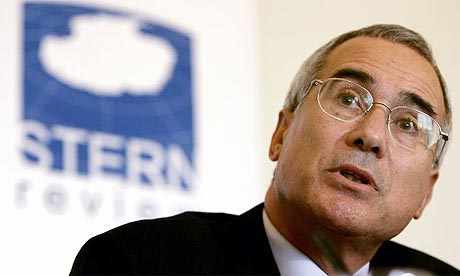
Lord Stern: global warming may create billions of climate refugees

Lord Nicholas Stern, one of the world’s most influential voices on climate economics, does not mince his words when it comes to criticising those who take a narrow view of prosperity and highlighting the devastating consequences of global warming.

Nicholas Stern

"You have to be a complete idiot to think that GDP sums up prosperity," says Stern, who believes we need to develop broader measures of success and combine this with a return to core values if we are to convince people to act to prevent runaway climate change.

Stern, who wrote the landmark 2006 Stern review of the economics of climate change, says if we fail to take heed of the danger signals, we risk temperatures rising this century to levels we haven’t seen for tens of millions of years.

"Hundreds of millions of people, perhaps billions of people would have to move," he warns. "If we’ve learned anything from history that means severe and extended conflict.

"We couldn’t just turn it off. You can’t make a peace treaty with the planet, you can’t negotiate with the laws of physics. You’re in there, you’re stuck. Those are the stakes we’re playing for and that’s why we have to make this second transformation, the climate transformation and move to low carbon economy."

Stern has co-authored the recently published New Climate Economy report, which argues that the world can head off the worst effects of climate change, and enjoy the fruits of continued economic expansion, if it moves quickly to invest in a low-carbon economy.

He says he hopes the study will influence key decision makers because it was written with the support of a coalition of respected politicians, economists, think tanks and institutions, including the World Bank, the International Monetary Fund, the OECD, the International Energy Agency and the UN.

He dismisses the arguments of more radical economists who believe that we need to stop our fixation with growth, arguing that the economy needs to keep expanding if we are to have a hope of eradicating poverty.

"To those who want to knock out growth from objectives, I find they’re close to reprehensible because for me the two defining challenges of this century are overcoming poverty and managing climate change.

"We fail on one, we fail on the other. So I think to say that we should just switch off growth is to miss big aspects of what matters about poverty. And so it worries me. It’s also politically very naive. If you turn it into a pissing contest between growth on the one hand and climate and environment on the other and say you’ve got to choose, you’re setting yourself up for failure."

Stern says investments in renewable energy must be combined with a rethinking of our understanding of prosperity, which he believes will lead to what he terms better growth.

"It means thinking differently about health, about the way we live in our cities and about the strengths of our communities," he says. "It’s not that GDP is idiotic but it’s mostly about the use of labour resources and what it produces. But there are very important parts of this story about prosperity that get missed out."

How does Stern, who is president of the British Academy, believe we can start to measure prosperity that goes beyond GDP?

He says it is vital to start from the perspective of people understanding what they mean by wellbeing and what they value, whether it is family, community, arts or sport.

"You can be reasonably empirical about what moves people and then you go and try to collect data on that," he says. "Once you understand what it is it you’re trying to capture and create indicators, you can then start to talk about policy."

The 68-year-old peer says it’s vital we go back to recognising the importance of Aristotle’s belief in the need to understand what it means to be a virtuous person and to whom we owe a duty of care.

"I’ve been an academic all my life and I look at the evidence of what works and what doesn’t work," he says. "But if you ask yourself what you’re trying to do, that’s spurred by values, by what’s important to you."

For Stern, the heart of his values lies in the importance of family. Speaking immediately after introducing his two-week old granddaughter Rosa on stage at a TEDx talk in New York, he said: "I’m 68 and I am thinking what will Rosa be like when she’s 68? We’re talking about towards the end of this century and what we do now will determine whether the next 100 years is the best of centuries or the worst of centuries."

"Are we going to look our grandchildren in the eye and tell them that we understood the issues, that we recognised the dangers and the opportunities, and still we failed to act?"

Stern believes that it is time for religious leaders, politicians and the media to act more responsibly, pointing in particular to the importance of the Pope’s statement earlier this year that if we destroy creation, creation will destroy us.

Also key to changing hearts and minds is the field of arts, with Stern pointing to Barbara Kingsolver’s book Flight Behaviour, which he says is not only wonderful in describing the human condition but also in questioning our relationship with the environment.

"It’s not just the policy wonks like me we need to try to assemble the evidence and set it out," he says. "You have to do that because emotional argument without rational evidence on cause and effect doesn’t get you all that far. But rational argument about cause and effect alone doesn’t get you there either." More


Monday, September 29, 2014

Explaining Extreme Events of 2013

A report released today investigates the causes of a wide variety of extreme weather and climate events from around the world in 2013. Published by the Bulletin of the American Meteorological Society, "Explaining Extreme Events of 2013 from a Climate Perspective (link is external)" addresses the causes of 16 individual extreme events that occurred on four continents in 2013. NOAA scientists served as three of the four lead editors on the report.

Of the five heat waves studied in the report, human-caused climate change was found to have clearly increased the severity and likelihood of those events. On the other hand, for other events examined like droughts, heavy rain events, and storms, fingerprinting the influence of human activity was more challenging. Human influence on these kinds of events—primarily through the burning of fossil fuels—was sometimes evident, but often less clear, suggesting natural factors played a far more dominant role.

"This annual report contributes to a growing field of science which helps communities, businesses and nations alike understand the impacts of natural and human-caused climate change," said Thomas R. Karl, L.H.D., director of NOAA’s National Climatic Data Center. "The science remains challenging, but the environmental intelligence it yields to decision makers is invaluable and the demand is ever-growing."

Confidence in the role of climate change about any one event is increased when multiple groups using independent methods come to similar conclusions. For example, in this report, five independent research teams looked at specific factors related to the record heat in Australia in 2013. Each consistently found that human-caused climate change increased the likelihood and severity of that event. However, for the California drought, which was investigated by three teams from the United States, human factors were found not to have influenced the lack of rainfall. One team found evidence that atmospheric pressure patterns increased due to human causes, but the influence on the California drought remains uncertain.

When human influence for an event cannot be conclusively identified with the scientific tools available today, this means that if there is a human contribution, it cannot be distinguished from natural climate variability.

"There is great scientific value in having multiple studies analyze the same extreme event to determine the underlying factors that may have influenced it," said Stephanie C. Herring, PhD, lead editor for the report at NOAA’s National Climatic Data Center. "Results from this report not only add to our body of knowledge about what drives extreme events, but what the odds are of these events happening again—and to what severity."

The report was edited by Herring, along with Martin P. Hoerling, NOAA’s Earth System Research Laboratory; Thomas Peterson, NOAA’s National Climatic Data Center, and Peter A. Stott, UK Met Office Hadley Centre and written by 92 scientists from 14 countries. View the full report online (link is external).

Also, view the slides for the media briefing on the "Explaining Extreme Events of 2013 from a Climate Perspective" report. More


Tuesday, September 23, 2014

Commentary: Christopher Jorebon Loeak - President of the Republic of the Marshall Islands


This is the transcript of a video "address to the world" released by President Loeak on 18 September 2014 ahead of the UN Secretary-General's Climate Summit. The full video can be viewed here.https://www.youtube.com/watch?v=i8t7ElMPS_8

Out here in the middle of the Pacific Ocean, climate change has arrived.

In the last year alone, my country has suffered through unprecedented droughts in the north, and the biggest ever king tides in the south; and we have watched the most devastating typhoons in history leave a trail of death and destruction across the region.

Lying just two meters above sea level, my atoll nation stands at the frontline in the battle against climate change. The beaches of Buoj where I use to fish as a boy are already under water, and the fresh water we need to grow our food gets saltier every day. As scientists had predicted, some of our islands have already completely disappeared, gone forever under the ever-rising waves. For the Marshall Islands and our friends in the Pacific, this is already a full-blown climate emergency.

Some tell us that we should begin planning to leave. But how can we? And why should we? These islands are our home. They hold our history, our heritage and our hopes for the future. Are the world's polluters asking us to give up our language, our culture, and our national identity? We are not prepared to do that - we will stay and fight. If the water comes, it comes.

Brick by brick, I built the seawall behind me with my own hands. But even this is barely enough to protect my family from the encroaching waves. Last year, after returning from a visit to the United Nations in New York, I was so shocked by the damage from the rising tides that I added another foot of bricks to the wall.

In the Marshall Islands we have a saying - "Wa kuk wa jimer". It means that we are all in the same boat together. What is happening here is a mere preview of the havoc that awaits if we continue with our polluting ways. If my country goes, others will surely follow. We are the canary in the coalmine.

The climate crisis is forcing us to take matters into our own hands, both at home and on the international stage. Last year the Marshall Islands hosted the largest-ever Pacific Islands Forum Leaders' meeting in Majuro and it remains one of the proudest moments of my Presidency.

The big outcome was the Majuro Declaration for Climate Leadership, a powerful message from the world's most vulnerable countries to the big emitters that surround us that the time for talk is over, and the time for action is now. Our efforts had an impact with the United States, the European Union, the United Kingdom, Mexico and Japan all committing to be climate leaders, and to do more to tackle climate change. At this time last year, I presented the Declaration to UN Secretary-General Ban Ki-moon, and promised to bring the spirit of Majuro to his Climate Change Leaders' Summit in New York, which is now less than a week away.

The Summit comes not a moment too soon. It is the first gathering of world leaders on climate change in nearly five years, and just over a year before our deadline to sign a new global treaty on climate change in Paris at the end of 2015.

Paris cannot be another Copenhagen. The world has changed too much. The science is more alarming, the impacts more severe, the economics more compelling, and the politics more potent. Even the world's two biggest polluters - China and the United States - are working together to find a pathway to a new global agreement.

But there are still some that seek to slow us down.

To my fellow world leaders I say "next week's Summit is a chance for all of us to be the leaders we were elected to be". We must send a strong and united message to the world - and to the people that we represent - that we are ready to do a deal next year. And to avoid the worst impacts of a warmer world, this new deal must capture a vision for a carbon-free world by the middle of the century. Without it, no seawall will be high enough to save my country. Together, we must find the courage to rise to this challenge. It is time to build the greatest climate change alliance the world has ever seen.

My people are counting on it, as is all of humanity.

Christopher J. Loeak is the President of the Republic of the Marshall Islands


Sunday, September 7, 2014

UN Climate Summit 2014

Climate change is not a far-off problem. It is happening now and is having very real consequences on people’s lives. Climate change is disrupting national economies, costing us dearly today and even more tomorrow. But there is a growing recognition that affordable, scalable solutions are available now that will enable us all to leapfrog to cleaner, more resilient economies.UN Climate Summit 2014

There is a sense that change is in the air. UN Secretary-General Ban Ki-moon has invited world leaders, from government, finance, business, and civil society to Climate Summit 2014 this 23 September to galvanize and catalyze climate action. He has asked these leaders to bring bold announcements and actions to the Summit that will reduce emissions, strengthen climate resilience, and mobilize political will for a meaningful legal agreement in 2015. Climate Summit 2014 provides a unique opportunity for leaders to champion an ambitious vision, anchored in action that will enable a meaningful, global agreement in Paris in 2015. More


Thursday, September 4, 2014

UN Special Envoy Highlights Urgency of Climate Agreement

2 September 2014: Small island developing States (SIDS) leaders “really want a climate agreement,” according to Mary Robinson, the UN Special Envoy for Climate Change. Speaking on the margins of the Third International Conference on SIDS, Robinson stressed the urgent need to build climate resilient communities and reduce greenhouse gas (GHG) emissions.

Mary Robinson UN Special Envoy

Robinson has been meeting with SIDS leaders, UN officials and donors to discuss climate change impacts at the Conference. She stated that, while SIDS leaders are engaged in actions to establish and expand partnerships, build capacity and increase financing, they also support an agreement on climate change.

Noting that climate change has traditionally been a focus for ministers of environment and energy, Robinson underscored the importance for Heads of State to address climate change. “Once you have a Head of State focused [on climate change], it becomes a holistic issue,” according to Robinson.

Looking forward, Robinson highlighted the UN Secretary-General's Climate Summit, which will take place on 23 September 2014, in New York, US. She said her role will be to “encourage the importance of the urgency of getting a climate agreement” and called for Heads of State to say what their country will do to address climate change. Robinson underscored the importance of engaging with civil society and the private sector on climate negotiations to ensure a “good, robust, fair climate agreement.” More


Thursday, August 28, 2014

Small islands to sign historic treaty in Samoa

Small islands to sign historic treaty in Samoa, to help finance climate change adaptation

Representatives from 31 small islands and low lying countries that are members of the Alliance of Small Island States (AOSIS) will reaffirm their commitment to the Small Island Developing States (SIDS) Sustainable Energy mechanism – SIDS DOCK – at an Official Ceremony for the Opening of Signature for the Statute Establishing the SIDS DOCK, on 1 September 2014, during the upcoming United Nations (UN) Third International Conference on SIDS, in Apia, Samoa, from 1-4 September. The opening for signature of this historic SIDS-SIDS Treaty is a significant highlight and outcome of the Conference, and a major step toward the treaty’s entry into force.

Representatives scheduled to attend the ceremony confirmed their continuing support for, and preparation to sign the Statute as soon as possible, and reiterated their resolve to continue cooperating to achieve its prompt entry into force and to support the SIDS DOCK goal of 25-50-25 by 2033: Island Energy For Island Life. SIDS need to mobilize and facilitate in excess of USD 20 billion by 2033, about USD 1 billion per year, to help finance the transformation of the SIDS energy sector in order to achieve a 25 percent (from the 2005 baseline) increase in energy efficiency, generation of a minimum of 50 percent of electric power from renewable sources, and a 25 percent decrease in conventional transportation fuel use, in order to significantly increase financial resources to enable climate change adaptation in SIDS.

The Hon. Roosevelt Skerrit, Prime Minister and Minister of Foreign Affairs and Finance, for the Commonwealth of Dominica, and acting in his country’s capacity as Chair of the SIDS DOCK Steering Committee, said that SIDS DOCK represents a significant achievement in solidifying SIDS-SIDS relationships and cooperation and is, “an extraordinary lesson learned of what can happen when a genuine partner takes ‘a chance’ on a new and innovative idea that has the potential to help SIDS adapt and become more resilient to the changing climate and sea level rise.” Recognising that the lives of more than 20 million people in small islands and low lying states are at high risk, the majority of them young people, the Government of Denmark was the first country to provide support for SIDS DOCK start-up activities with a grant of USD 14.5 million in 2010, during climate talks in Copenhagen, Denmark. This gesture and demonstration of support was followed by a grant of USD 15 million, over two years in 2011, from the Government of Japan during climate talks in Cancun, Mexico.

In March 2014, in partnership with the United Nations Industrial and Development Organization (UNIDO), the Government of Austria extended support under a Memorandum of Understanding, with a grant of 1 million euros, for start-up activities for Centres for Renewable Energy and Energy Efficiency in the Caribbean (CCREEE), the Pacific (PCREEE), and support to African SIDS through the Economic Community of West African States (ECOWAS) ECREEE in Cabo Verde, and at a later date, support for a centre in the Indian Ocean region (IOCREEE). The new centres will also act as SE4ALL Hubs, assisting SIDS to translate commitments to actions. SIDS DOCK is highly complementary to the work being done under the Sustainable Energy For All (SE4All) Initiative, a personal initiative of the UN Secretary-General, Ban Ki-moon, that has SIDS as the largest group of signatories and with the highest ambitions.

During the Third International Conference on SIDS, the Government of Samoa and its people will host hundreds of representatives from small islands and low lying states, donors, investors and civil society groups, to what is expected to be the most important conference on SIDS to date, and one that is expected to define SIDS in a Post-2015 world, with genuine partnerships at the core of the agenda. SIDS DOCK is well-positioned to participate in the SIDS Post-2015 Agenda with its partners, the Governments of Denmark, Japan and Austria; the United Nations Development Programme (UNDP) and the United Nations Industrial and Development Organization (UNIDO); The World Bank; and The Clinton Foundation – Clinton Climate Initiative (CCI).

During the Signing Ceremony on September 1, the Dominican Prime Minister will invite other members of the AOSIS to consider joining the organisation. The Statute will remain open for signature in Apia, Samoa until September 5, and will re-open for signature in Belmopan, Belize, from September 6, 2014 until it enters into force. Belize is the host country for SIDS DOCK, with Samoa designated as the location for the Pacific regional office. More


Sunday, June 8, 2014

Many Strong Voices Programme: Building Communities Capacities for Relocation

In May 2014, the New Zealand Court of Appeal dismissed a claim by Kiribati national Ioane Teitiota that he and his family are “climate refugees” and therefore should be allowed to stay in New Zealand.

Teitiota argued that sea level rise due to climate change was making his country uninhabitable and in effect forced his family to seek refuge. The court dismissed Teitiota’s request on the grounds that environmental migrants are not covered under the UN Convention Relating to the Status of Refugees.

Meanwhile, as Teitiota’s claim was winding its way through the New Zealand legal system, the Intergovernmental Panel on Climate Change (IPCC) released its Fifth Assessment Report. The report provides stark details on the implications of sea level rise over the coming decades and what it means for countries like Kiribati and other islands or low-lying coastal regions. It further states that, even with lower emission scenarios, 1.3 metres of sea level rise is “locked in” over the next century, potentially making 15% of the world’s islands uninhabitable. Higher emissions will lead to more melting and will threaten more island habitats.

The IPCC report and other evidence clearly show that the effects of climate change are happening more quickly and are often more severe and unpredictable than anticipated. Among other devastating climate impacts, such as the melting of the West Antarctic Ice Sheet, numerous studies now recognize the potential for mass displacement and relocation of peoples and communities around the world and the associated threats to the social, cultural and economic fabric of their communities. Regardless of the causes, forced displacement and relocation have predictable consequences for marginalized communities.

The 1996 Report of the Royal Commission on Aboriginal Peoples in Canada found that:

The results of more than 25 studies around the world indicate without exception that the relocation, without informed consent, of low-income rural populations with strong ties to their land and homes is a traumatic experience. For the majority of those who have been moved, the profound shock of compulsory relocation is much like the bereavement caused by the death of a parent, spouse or child.

The New Zealand court decision illustrates the gap between the moral challenge we face and the legal frameworks that are inadequate to address climate-induced displacement and migration, both within and across borders. In response to this challenge, people in affected regions are combining forces and working together to achieve climate justice. One such example is the Many Strong Voices (MSV) programme, which brings together people and organizations in the Arctic and SIDS to take action on climate change and links people and regions that might not otherwise realize their common interests.

In the Arctic and SIDS, discussions are already underway. The complex interplay of extreme weather events coupled with slow onset processes, such as erosion and sea level rise, are endangering the lives, livelihoods and cultures of the inhabitants of these coastal and island communities. Accelerated rates of erosion or flooding are threatening dozens of these communities. Traditional methods of reducing vulnerability and building resilience are unable to protect communities, and therefore community-based relocation is the only feasible solution.

In September 2012, MSV launched an initiative to connect and build the capacity of communities that are facing relocation. In partnership with the Center for International Environmental Law and the Alaska Immigration Justice Project, MSV held a dialogue between community leaders from Newtok, Alaska, and the Carteret Islands in Papua New Guinea to learn how informed and participatory decision-making can guide these relocations, minimize adverse effects, and foster community resilience. The people in the Carterets, like those in other Small Island Developing States (SIDS), understand there is a direct connection between sea ice decline and other changes in the Arctic and the adverse impacts they are experiencing. This relationship between regions that might otherwise be seen as remote and unconnected is the foundation of Many Strong Voices.

Building on this initial dialogue, MSV held a global consultation, the Warsaw Dialogue, with affected peoples and communities – as well as civil society representatives, researchers and policymakers – to identify their needs as a means to develop appropriate tools and resources to assist such communities in their relocation efforts. Held on 18 November 2013 during the UNFCCC negotiations (COP19), the Warsaw Dialogue provided an opportunity to learn from those who are engaged in community relocation processes or relocation policies. The aim was to discuss the challenges communities face (as well as the opportunities) to gain a better understanding of the tools and resources needed to ensure that affected peoples and communities can meaningfully participate in relevant decision-making processes.

As one participant from the Pacific said, “We must be pragmatic in our approach, given how quickly some small islands are going under water. We need to educate people about the impacts of climate change on their lives and livelihoods.” All in all, this is the primary objective of MSV’s dialogues and consultations, for those affected to share their experiences and what they’ve learned along the way with a diverse network of people facing similar situations.

One thing we’ve learned is that, despite the devastating effects climate change is already having on coastal and island communities around the world, the stories of Newtok and the Carteret Islands and other communities are not about climate “victims” or “refugees”, but rather about problem solvers. They are about leadership in the face of extreme challenges and threats to one’s cultural heritage and survival. They are about overcoming those challenges using local and traditional knowledge and decision-making processes – and a whole lot of creativity. And they are about the strength and resilience of two communities that are taking the necessary actions to relocate to ensure the cultural resilience and long-term sustainability of their respective communities. The law will follow. More

----------------------

John Crump is Senior Advisor/Climate Change, GRID-Arendal, Ottawa, Canada

Alyssa Johl is Senior Attorney, Climate& Energy Program, Center for International Environmental Law, Washington DC.


Monday, June 2, 2014

The [US] House Committee Declares The IPCC Report Is Not Science

The Intergovernmental Panel on Climate Change (IPCC) report warned that more intense droughts and heat waves will cause famine and water shortages. But, don't worry! Yesterday, the GOP held a hearing to tell us the IPCC is, in fact, a global conspiracy to control our lives and "redistribute wealth among nations."

The hearing, titled "Examining the UN Intergovernmental Panel on Climate Change Process," was convened by the House Committee on Science, Space and Technology—the same folks who recently demonstrated their inability to grasp the idea that the world's climate varies across different regions and who informed us that warmer weather didn't bother the dinosaurs, so what's all the fuss about?

In principle, there's nothing wrong with assessing the methodology of such an important and influential report. But, in one of those quintessential moments of Washington double-think, Chairman Lamar Smith (R-TX)—who accuses the IPCC of creating data to serve a predetermined political agenda—summarized the hearing's conclusions a day before it even began. "The IPCC does not perform science itself and doesn't monitor the climate," Smith told a reporter, "but only reviews carefully selected scientific literature."

So, small wonder that Rep. Eddie Bernice Johnson (D-TX), the ranking Democrat on the committee, offered the opinion:

While the topic of today's hearing is a legitimate one, namely, how the IPCC process can be improved, I am concerned that the real objective of this hearing is to try to undercut the IPCC and to cast doubt on the validity of climate change research.

We aren't going to get very far if we spend our time continually revisiting a scientific debate that has already been settled. Nor will we get far if we continue a recent practice on this Committee of seeming to question the trustworthiness and integrity of this nation's scientific researchers.

Fair and Balanced

Another source of Johnson's skepticism might have been that three of the four expert witnesses testifying at the hearing either deny that humans are responsible for global warming or believe that the potential impact of climate change is grossly overstated.

The witnesses for the prosecution were:

(1) Roger Pielke,Sr.

Who is he?

Senior Research Scientist, Cooperative Institute for Research in Environmental Sciences, and Professor Emeritus of Atmospheric Science, Colorado State University

What's he known for?

Pielke says that carbon dioxide is responsible, at most, for about 28% of human-caused warming up to the present and he is among the most vocal skeptics of reports that the polar ice caps are melting and that sea levels are rising.

What did he say at the hearing?

The IPCC is "giving decision makers who face decisions at the regional and local level a false sense of certainty about the unfolding climate future."

(2) Richard Tol

Who is he?

A professor of economics at the University of Sussex

What's he known for?

He resigned his position with the IPCC team producing the working group's Summary for Policymakers, which he classified as "alarmist." Global warming creates benefits as well as harms, he believes, and in the short term, the benefits are especially pronounced. He's also expressed doubt that climate change will play any role in exacerbating conflicts.

Tol has been criticized by other scientists who have raised questions about his methodology and who have noted that he has a history of making contradictory statements. For instance, in a widely cited 2009 paper, he wrote of "considerable uncertainty about the economic impact of climate change … negative surprises are more likely than positive ones. … The policy implication is that reduction of greenhouse gas emissions should err on the ambitious side."

What did he say at the hearing?

"Academics who research climate change out of curiosity but find less than alarming things are ignored, unless they rise to prominence in which case they are harassed and smeared….The IPCC should therefore investigate the attitudes of its authors and their academic performance and make sure that, in the future, they are more representative of their peers."

(3) Daniel Botkin

Who is he?

Professor Emeritus, Department of Ecology, Evolution, and Marine Biology, University of California, Santa Barbara.

What's he known for?

He has long argued that life has had to deal with environmental change, especially climate change, since the beginning of its existence on Earth—and that we underestimate the ability of species, including humans, to find ways to adapt to the problem.

Botkin wrote a controversial editorial for the Wall Street Journal (Oct 17, 2007) arguing that global warming will not have much impact on life on Earth, and noted that: "the reality is that almost none of the millions of species have disappeared during the past 2.5 million years — with all of its various warming and cooling periods."

The editorial prompted several responses from within the scientific community, including this:

For the past 2.5 million years the climate has oscillated between interglacials which were (at most) a little warmer than today and glacials which were considerably colder than today. There is no precedent in the past 2.5 million years for so much warming so fast. The ecosystem has had 2.5 million years to adapt to glacial-interglacial swings, but we are asking it to adapt to a completely new climate in just a few centuries. The past is not a very good analog for the future in this case. And anyway, the human species can suffer quite a bit before we start talking extinction.

What did he say at the hearing?

"I want to state up front that we have been living through a warming trend driven by a variety of influences. However, it is my view that this is not unusual, and contrary to the characterizations by the IPCC….these environmental changes are not apocalyptic nor irreversible…..Yes, we have been living through a warming trend, no doubt about that. The rate of change we are experiencing is also not unprecedented, and the "mystery" of the warming "plateau" simply indicates the inherent complexity of our global biosphere. Change is normal, life on Earth is inherently risky; it always has been."

The Q & A

The lone witness for the defense was Michael Oppenheimer, the Albert G. Milbank Professor of Geosciences and International Affairs at Princeton University. He was selected by the Democrats, "because he's one of the foremost experts in the world and has been involved with the IPCC," a spokesperson for the Democratic contingent of the committee told Motherboard reporter Jason Koebler.

Koebler describes how things went down at the hearing after the experts presented their statements:

For two hours, climate change deniers interrupted, berated, and cut off Oppenheimer, while the other three other witnesses fielded softball questions from conservative lawmakers and dodged tougher ones from Democratic ones.

In fact, at one point, Rep. Larry Buchson (R-Ind.), who, seconds before had interrupted Oppenheimer and said he wasn't interested in hearing his views, wanted to "apologize on behalf of Congress" to Pielke for the aforementioned "juvenile and insulting questions trying to disparage the credibility" of witnesses who didn't take climate change seriously…..

Dana Rohrabacher [R-CA] pulled out the air quotes when he said "global warming," and took offense to Oppenheimer not being able to "capsulize" all the reasons why he believes that climate change is a big deal in 10 seconds. Smith suggested that the "only thing we know about [climate change models] is that they will be wrong" and suggested that "even if the US was completely eliminated, it's not going to have any discernible impact on global temperatures in the near or far future."

Paul Broun [R-GA] and Buchson noted their belief in the "scientific process" and suggested that they knew more about it because they are doctors (Broun is a dentist; Buchson is a surgeon).

So predictable, and such a waste of time. As I noted earlier, in principle, there is nothing wrong with assessing the methodology of such an important and influential report. But there are far better ways to do it than this. More