Showing posts with label climate reality project. Show all posts

Friday, August 7, 2015

ATTEND A CLIMATE REALITY TRAINING WITH AL GORE

The Climate Reality Leadership Corps training in Miami, Florida, which will be held September 28-30, will bring together a select group of individuals committed to addressing the impacts of climate change and implementing the solutions that will define us to future generations. This training is an opportunity to join a global network of leaders committed to solving the climate crisis.

Over the course of three days, you’ll have the opportunity to hear from experts who will share information about the science behind the climate crisis as well as their experiences educating and engaging diverse networks and communities. You will also have the chance to connect with a group of extraordinary leaders from a variety of sectors and countries around the world.

"Life changing," "re-affirming," and "empowering" are just some of the ways past participants have described their experience. Come as a leader, leave as a Climate Reality Leader. More


Wednesday, August 5, 2015

Climate Reality Training in Miami with Al Gore

I’m reaching out today on behalf of The Climate Reality Project, an organization started by former Vice President Al Gore focused on creating a global movement calling for action on climate. We have an upcoming training opportunity in Miami, Florida that I believe you and others who follow The Cayman Institute / The Climate War Room will be interested in.

As we are all aware, the time has come for action on climate. On September 28-30 in Miami, The Climate Reality Project and Mr. Gore will be hosting a training for new Climate Reality Leaders to help grow the movement. There has never been a better time to engage your friends and colleagues on this issue. The Miami training will not only provide attendees with cutting edge tools to most effectively communicate climate change to your community but will also enter them into a community of over 8,000 devoted individuals from 126 countries who are committed to using their voices to address the climate crisis.

Our training in Miami will highlight the unique challenges that climate change poses to the state of Florida and what some local governments are already doing to tackle them; Florida’s huge untapped solar energy generating capacity; and the role of the ever strengthening Latino voice and vote in driving climate action. At the training, Mr. Gore, and experts and influencers from across the climate sphere will present in panels, take questions, and host breakout sessions.

We encourage you to recommend outstanding leaders in your personal and professional life who would be well suited for giving presentations and helping to build strong support for action on climate change. They can apply for the Climate Leadership Corps Training here. I’ve also attached a document you can share with your network, which has a little more information about who we are and what the Miami training will cover. The deadline to apply is August 26th, 2015.

Please do not hesitate to reach out if you have any questions!

Warm regards,

Joseph Moran | Program Assistant-Climate Reality Leadership Corps

750 Ninth Street, NW, Suite 520 | Washington, DC 20001

NOTICE OF CONFIDENTIALITY & DISCLAIMER
The information contained in this e-mail and any attachments is CONFIDENTIAL and is intended only for the use of the addressee. Any unauthorized use, disclosure, distribution, dissemination, or copying is strictly prohibited and may be unlawful. If you are not the intended recipient, you are prohibited from any further viewing of the e-mail or any attachments or from making any use of the e-mail or attachments. If you believe you have received this e-mail in error, notify us immediately and permanently delete the e-mail, any attachments, and all copies thereof from any drives or storage media and destroy any printouts of the e-mail or attachments and any copies of such printouts. Although this e-mail and any attachments are believed to be free of any virus or other defect that might negatively affect any computer system into which it is received and opened, it is the responsibility of the recipient to ensure that it is virus-free and no responsibility is accepted by the sender for any loss or damage arising in any way in the event that such a virus or defect exists. Thank you for your cooperation.

Fossil Fuels: Four Big Reasons for Hope

The fossil-fuels crowd seems to have a thing for China and India. It feels like at least in the US, at least half the discussions of clean energy and climate change you see on television end with the anti-renewable voice saying, “Well what about China and India? It doesn’t matter what we do if they keep polluting.”

The rest tends to go to script as, almost without fail, a satisfied smirk the size of Texas then creeps into view as our fossil-fuels friend then leans back in his or her chair. Job done. Mission accomplished. Time to head home and light up a victory-lap Cuban.

But here’s the thing. When we think about the biggest reasons for hope that humanity is finally getting its act together to protect this precious planet of ours from climate change, what comes to mind isn’t the Gigafactory that Tesla CEO Elon Musk is building to revolutionize electric vehicles and energy storage. Or how Costa Rica is committed to going carbon-neutral by 2021. Or the fact that Norway is dropping coal investments from its sovereign wealth fund.

It’s China and India.

The world’s first and third-largest economies in 2015 (measured by purchasing power parity) are both stepping up their commitment to renewable energy and China in particular is also working to peak its carbon emissions by 2030 – and aiming to do so sooner. Maybe the most exciting part of all is the fact that this choice isn’t driven by any kind of misguided idealism. It’s a clear-eyed business decision made by leaders looking at the realities of fossil fuels and what they mean for the health of millions of citizens and their respective economies – and recognizing that clean energy is the smart long-term bet.

Admittedly, China’s further along this path than India and both have some ways to go before their power plants are no longer belching dirty coal soot and carbon pollution by the metric ton. But when nations of this size and aspiration begin shifting to new models of development increasingly powered by renewables and seeing it pay off as their economies keep growing, it sends a clear signal to other emerging countries that clean energy can work.

After highlighting some of the countries with a track record of embracing renewables and flourishing today we’re looking at how recent converts to the clean-energy cause are showing over and over that the way to economic success in the twenty-first century is powered by smart technologies like wind and solar. So the next time someone says, “Well what about China and India,” you can say, “Well let me tell you about China and India. And Brazil and Mexico too . . .” More


Thursday, November 6, 2014

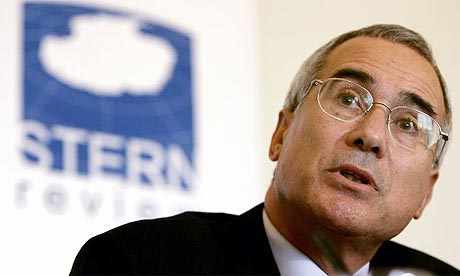
Lord Stern: global warming may create billions of climate refugees

Lord Nicholas Stern, one of the world’s most influential voices on climate economics, does not mince his words when it comes to criticising those who take a narrow view of prosperity and highlighting the devastating consequences of global warming.

Nicholas Stern

"You have to be a complete idiot to think that GDP sums up prosperity," says Stern, who believes we need to develop broader measures of success and combine this with a return to core values if we are to convince people to act to prevent runaway climate change.

Stern, who wrote the landmark 2006 Stern review of the economics of climate change, says if we fail to take heed of the danger signals, we risk temperatures rising this century to levels we haven’t seen for tens of millions of years.

"Hundreds of millions of people, perhaps billions of people would have to move," he warns. "If we’ve learned anything from history that means severe and extended conflict.

"We couldn’t just turn it off. You can’t make a peace treaty with the planet, you can’t negotiate with the laws of physics. You’re in there, you’re stuck. Those are the stakes we’re playing for and that’s why we have to make this second transformation, the climate transformation and move to low carbon economy."

Stern has co-authored the recently published New Climate Economy report, which argues that the world can head off the worst effects of climate change, and enjoy the fruits of continued economic expansion, if it moves quickly to invest in a low-carbon economy.

He says he hopes the study will influence key decision makers because it was written with the support of a coalition of respected politicians, economists, think tanks and institutions, including the World Bank, the International Monetary Fund, the OECD, the International Energy Agency and the UN.

He dismisses the arguments of more radical economists who believe that we need to stop our fixation with growth, arguing that the economy needs to keep expanding if we are to have a hope of eradicating poverty.

"To those who want to knock out growth from objectives, I find they’re close to reprehensible because for me the two defining challenges of this century are overcoming poverty and managing climate change.

"We fail on one, we fail on the other. So I think to say that we should just switch off growth is to miss big aspects of what matters about poverty. And so it worries me. It’s also politically very naive. If you turn it into a pissing contest between growth on the one hand and climate and environment on the other and say you’ve got to choose, you’re setting yourself up for failure."

Stern says investments in renewable energy must be combined with a rethinking of our understanding of prosperity, which he believes will lead to what he terms better growth.

"It means thinking differently about health, about the way we live in our cities and about the strengths of our communities," he says. "It’s not that GDP is idiotic but it’s mostly about the use of labour resources and what it produces. But there are very important parts of this story about prosperity that get missed out."

How does Stern, who is president of the British Academy, believe we can start to measure prosperity that goes beyond GDP?

He says it is vital to start from the perspective of people understanding what they mean by wellbeing and what they value, whether it is family, community, arts or sport.

"You can be reasonably empirical about what moves people and then you go and try to collect data on that," he says. "Once you understand what it is it you’re trying to capture and create indicators, you can then start to talk about policy."

The 68-year-old peer says it’s vital we go back to recognising the importance of Aristotle’s belief in the need to understand what it means to be a virtuous person and to whom we owe a duty of care.

"I’ve been an academic all my life and I look at the evidence of what works and what doesn’t work," he says. "But if you ask yourself what you’re trying to do, that’s spurred by values, by what’s important to you."

For Stern, the heart of his values lies in the importance of family. Speaking immediately after introducing his two-week old granddaughter Rosa on stage at a TEDx talk in New York, he said: "I’m 68 and I am thinking what will Rosa be like when she’s 68? We’re talking about towards the end of this century and what we do now will determine whether the next 100 years is the best of centuries or the worst of centuries."

"Are we going to look our grandchildren in the eye and tell them that we understood the issues, that we recognised the dangers and the opportunities, and still we failed to act?"

Stern believes that it is time for religious leaders, politicians and the media to act more responsibly, pointing in particular to the importance of the Pope’s statement earlier this year that if we destroy creation, creation will destroy us.

Also key to changing hearts and minds is the field of arts, with Stern pointing to Barbara Kingsolver’s book Flight Behaviour, which he says is not only wonderful in describing the human condition but also in questioning our relationship with the environment.

"It’s not just the policy wonks like me we need to try to assemble the evidence and set it out," he says. "You have to do that because emotional argument without rational evidence on cause and effect doesn’t get you all that far. But rational argument about cause and effect alone doesn’t get you there either." More


Monday, September 29, 2014

Explaining Extreme Events of 2013

A report released today investigates the causes of a wide variety of extreme weather and climate events from around the world in 2013. Published by the Bulletin of the American Meteorological Society, "Explaining Extreme Events of 2013 from a Climate Perspective (link is external)" addresses the causes of 16 individual extreme events that occurred on four continents in 2013. NOAA scientists served as three of the four lead editors on the report.

Of the five heat waves studied in the report, human-caused climate change was found to have clearly increased the severity and likelihood of those events. On the other hand, for other events examined like droughts, heavy rain events, and storms, fingerprinting the influence of human activity was more challenging. Human influence on these kinds of events—primarily through the burning of fossil fuels—was sometimes evident, but often less clear, suggesting natural factors played a far more dominant role.

"This annual report contributes to a growing field of science which helps communities, businesses and nations alike understand the impacts of natural and human-caused climate change," said Thomas R. Karl, L.H.D., director of NOAA’s National Climatic Data Center. "The science remains challenging, but the environmental intelligence it yields to decision makers is invaluable and the demand is ever-growing."

Confidence in the role of climate change about any one event is increased when multiple groups using independent methods come to similar conclusions. For example, in this report, five independent research teams looked at specific factors related to the record heat in Australia in 2013. Each consistently found that human-caused climate change increased the likelihood and severity of that event. However, for the California drought, which was investigated by three teams from the United States, human factors were found not to have influenced the lack of rainfall. One team found evidence that atmospheric pressure patterns increased due to human causes, but the influence on the California drought remains uncertain.

When human influence for an event cannot be conclusively identified with the scientific tools available today, this means that if there is a human contribution, it cannot be distinguished from natural climate variability.

"There is great scientific value in having multiple studies analyze the same extreme event to determine the underlying factors that may have influenced it," said Stephanie C. Herring, PhD, lead editor for the report at NOAA’s National Climatic Data Center. "Results from this report not only add to our body of knowledge about what drives extreme events, but what the odds are of these events happening again—and to what severity."

The report was edited by Herring, along with Martin P. Hoerling, NOAA’s Earth System Research Laboratory; Thomas Peterson, NOAA’s National Climatic Data Center, and Peter A. Stott, UK Met Office Hadley Centre and written by 92 scientists from 14 countries. View the full report online (link is external).

Also, view the slides for the media briefing on the "Explaining Extreme Events of 2013 from a Climate Perspective" report. More


Tuesday, September 23, 2014

Commentary: Christopher Jorebon Loeak - President of the Republic of the Marshall Islands


This is the transcript of a video "address to the world" released by President Loeak on 18 September 2014 ahead of the UN Secretary-General's Climate Summit. The full video can be viewed here.https://www.youtube.com/watch?v=i8t7ElMPS_8

Out here in the middle of the Pacific Ocean, climate change has arrived.

In the last year alone, my country has suffered through unprecedented droughts in the north, and the biggest ever king tides in the south; and we have watched the most devastating typhoons in history leave a trail of death and destruction across the region.

Lying just two meters above sea level, my atoll nation stands at the frontline in the battle against climate change. The beaches of Buoj where I use to fish as a boy are already under water, and the fresh water we need to grow our food gets saltier every day. As scientists had predicted, some of our islands have already completely disappeared, gone forever under the ever-rising waves. For the Marshall Islands and our friends in the Pacific, this is already a full-blown climate emergency.

Some tell us that we should begin planning to leave. But how can we? And why should we? These islands are our home. They hold our history, our heritage and our hopes for the future. Are the world's polluters asking us to give up our language, our culture, and our national identity? We are not prepared to do that - we will stay and fight. If the water comes, it comes.

Brick by brick, I built the seawall behind me with my own hands. But even this is barely enough to protect my family from the encroaching waves. Last year, after returning from a visit to the United Nations in New York, I was so shocked by the damage from the rising tides that I added another foot of bricks to the wall.

In the Marshall Islands we have a saying - "Wa kuk wa jimer". It means that we are all in the same boat together. What is happening here is a mere preview of the havoc that awaits if we continue with our polluting ways. If my country goes, others will surely follow. We are the canary in the coalmine.

The climate crisis is forcing us to take matters into our own hands, both at home and on the international stage. Last year the Marshall Islands hosted the largest-ever Pacific Islands Forum Leaders' meeting in Majuro and it remains one of the proudest moments of my Presidency.

The big outcome was the Majuro Declaration for Climate Leadership, a powerful message from the world's most vulnerable countries to the big emitters that surround us that the time for talk is over, and the time for action is now. Our efforts had an impact with the United States, the European Union, the United Kingdom, Mexico and Japan all committing to be climate leaders, and to do more to tackle climate change. At this time last year, I presented the Declaration to UN Secretary-General Ban Ki-moon, and promised to bring the spirit of Majuro to his Climate Change Leaders' Summit in New York, which is now less than a week away.

The Summit comes not a moment too soon. It is the first gathering of world leaders on climate change in nearly five years, and just over a year before our deadline to sign a new global treaty on climate change in Paris at the end of 2015.

Paris cannot be another Copenhagen. The world has changed too much. The science is more alarming, the impacts more severe, the economics more compelling, and the politics more potent. Even the world's two biggest polluters - China and the United States - are working together to find a pathway to a new global agreement.

But there are still some that seek to slow us down.

To my fellow world leaders I say "next week's Summit is a chance for all of us to be the leaders we were elected to be". We must send a strong and united message to the world - and to the people that we represent - that we are ready to do a deal next year. And to avoid the worst impacts of a warmer world, this new deal must capture a vision for a carbon-free world by the middle of the century. Without it, no seawall will be high enough to save my country. Together, we must find the courage to rise to this challenge. It is time to build the greatest climate change alliance the world has ever seen.

My people are counting on it, as is all of humanity.

Christopher J. Loeak is the President of the Republic of the Marshall Islands


Monday, September 8, 2014

IISDRS Summary & Analysis from the SIDS Conference Islands2014

Third International Conference on Small Island Developing States (SIDS) - ‘The Sustainable Development of SIDS Through Genuine and Durable Partnerships’

1-4 September 2014 | Apia, Samoa


http://www.iisd.ca/sids/sids2014/

The Third International Conference on Small Island Developing States (SIDS) took place from 1-4 September 2014 in Apia, Samoa, on the theme of ‘The Sustainable Development of SIDS Through Genuine and Durable Partnerships.’ In parallel with plenary discussions, six multi-stakeholder Partnership Dialogues took place on the themes of: sustainable economic development; climate change and disaster risk management (DRM); social development, health and non-communicable diseases (NCDs), youth and women; sustainable energy; oceans, seas and biodiversity; and water and sanitation, food security and waste management. Many countries and organizations announced new pledges and partnerships. Forums organized by youth, Major Groups and other Stakeholders, the renewable energy sector and the private sector took place prior to the conference.


Twenty-one heads of state and government and 3,500 delegates attended the conference, including representatives from government, the private sector and civil society. Alongside the formal proceedings, many side events took place on issues of importance to SIDS, such as graduation from least developed country (LDC) status, concessional financing, scientific monitoring and assessment, and resilience building. The conference was also an occasion to highlight the cultural traditions of the host country, Samoa, and other island nations, with daily displays of traditional dance, textiles, woodcarving and other crafts in the ‘SIDS Village’ located at the conference venue.


The Third International Conference on SIDS produced an outcome document, titled ‘SIDS Accelerated Modalities of Action (SAMOA) Pathway.’ The document was negotiated during the preparatory process at UN Headquarters in New York and was adopted without further discussion during the closing plenary on Thursday, 4 September 2014.


The Summary of this meeting is now available in PDF format at http://www.iisd.ca/download/pdf/enb0857e.pdf and in HTML format at

http://www.iisd.ca/vol08/enb0857e.html

Like us on Facebook and Follow us on Twitter


A BRIEF ANALYSIS OF THE THIRD INTERNATIONAL CONFERENCE ON SIDS


Ua fetaui lelei fola o le ’alia.

- When the Planks of the Voyaging Canoe Fit Together Well, Great Feats Are Possible.


At the Third UN Conference on Small Island Developing States, diverse actors from SIDS, the developed and the developing world, civil society and the private sector came together, realizing that only in partnership could they hope to guide the world clear of threats and bring it closer to solutions and fulfilled commitments. Hosted by Samoa, the conference allowed SIDS to steer their partners out of a sea of inaction, by focusing on new partnerships to fulfill commitments made to them over the past twenty years.


In the middle a hectic calendar and flurry of UN activities, delegates met in the South Pacific at the largest global meeting ever held in this part of the world. Delegates flew long hours across the Pacific Ocean to reach Samoa, and found themselves simultaneously journeying the distance to a greater understanding of island communities. As participants remarked time and time again, the Samoan people and government put on an impressive and impeccable show; every colorful detail was carried out with care. Samoa and its island neighbors showcased their unique cultures, histories and abilities, from the hopeful melody of the conference theme song and artistic talents of Samoan youth on display, to the arrival of the traditional Hōkūle’a and Hikianalia Polynesian voyaging canoes that sailed all the way from Hawai’i. But alongside their unique cultures, SIDS were also determined that their opinions and calls to action should be heard and experienced.


This brief analysis explores how SIDS seized the opportunities of the Samoa conference to forge new partnerships, and the challenges they face in attempting to navigate their way on the global journey ahead.


Taliu a e popoʻe.

- One Who Is Afraid at Sea Bails Out the Canoe


Twenty years ago in Barbados, and eleven years later in Mauritius, SIDS captured attention when the international community recognized that a holistic vision of sustainable development was needed to counter threats to SIDS’ very existence and wellbeing. At both of these conferences, Member States realized that courage and cooperation was needed to build up, rather than bail out, the SIDS canoe of prosperity.


However, SIDS came to Samoa focused on their vital, though different, needs for sustainable development. With dire health issues, especially non-communicable diseases, depleting fish stocks and deteriorating ocean conditions, lack of access to assistance due to graduation from LDC status, and high levels of unemployment and national debt, SIDS face numerous social, environmental and economic roadblocks, in addition to climate change, hindering their efforts to develop.


But many of the calls for immediate action have gone largely unanswered, and SIDS must now tackle the realities that a changing climate poses to their development. Given recent catastrophic weather events, disaster risk reduction and preparedness was, appropriately, a central topic of discussion in Samoa, although some felt the controversial topic of climate-induced migration deserved more attention. While many of these issues have been on the agenda for at least twenty years, the time remaining for islands to prepare or adapt is running out. One group of countries, specifically low-lying atoll nations, is already feeling the devastating impacts of climate change, and cannot afford to wait for the world to take action. As President Anote Tong of Kiribati implored to his fellow delegates, "How many more COPs will it take to see global action on climate change? For us on the front line, it is already too late."


ʻO le fogavaʻa e tasi.

– We are One Family.


Looking for the urgent implementation of past commitments, rather than sweeping new political agreements, SIDS made the decision to focus the Third International Conference on SIDS on building partnerships. Attempting to put "meat on the bones" of the two previous international conferences and on the SAMOA Pathway itself, the emphasis in Samoa was to incentivize governments and stakeholders to bring new initiatives to the table instead of new text. In fact, with no textual negotiations to steal the attention, the multi-stakeholder partnership dialogues became the central focus of the conference, and 297 partnerships were recorded by its close. Wu Hongbo, Secretary-General of the Conference, remarked that never before had this call for concrete actions been so well integrated into a UN conference, stating that "it is the template of the future."


Although some feared that a lack of high-stake negotiations in Samoa would detract from the importance of or attention given to the conference, island nations seized upon the relaxed atmosphere to present a more positive narrative for their development. Showcasing themselves as models for renewable energy development and energy efficiency, information and communication technologies, and biodiversity conservation, they were able to engage partners on these issues by touting high returns on investment. The need for partnerships between SIDS was highlighted extensively, with work of the Global Island Partnership and SIDS-DOCK driving these efforts forward, as well as initiatives at the local level, such as a new partnership to promote the use of traditional knowledge in resource management in the Pacific islands. The strong presence of civil society, the private sector and the international community across the conference and its multi-sectoral forums illustrated the recognition that partnerships with all stakeholders and actors, including at the local and community levels, is required.


While the announcement of so many commitments and pledges was energizing, whether or not they will be successfully and promptly implemented in the future remains to be seen. As one delegate put it, the process from project gestation to implementation is "tortuously long and laborious." As the traditional body for following-up on the SIDS conferences, the UN Commission on Sustainable Development, held its final meeting in 2013 and the new review process for the SIDS process is yet to be agreed, the accountability of these pledged partnerships and initiatives is murky. However, the SAMOA Pathway document does offer a few options in an UN-housed online platform, a mandated report of the Secretary-General to the 69th Session of the General Assembly on a potential partnership framework, and a call for the High Level Political Forum to devote adequate time to SIDS. But, concrete follow-up on the US$1.9 billion in pledges made in Samoa is still a distant goal given the uncertainty over details of the specific review mechanism.


When asked about prioritizing partnerships as the central theme of the conference, Permanent Representative Aliioaiga Feturi Elisaia of Samoa had a simple answer: "Partnership is not a blame game, but a way to correct mistakes and share in success together," he said, "We will always say thank you to our partners first."


E tuai tuai, ta te maʻona ai.

- It Is a Very Long Time Coming, but it Will Be Satisfying.


The Third International SIDS Conference came at an important time for SIDS to assert their needs and priorities on the world stage, and to finally inspire new actions on long-term challenges. In Samoa, SIDS strongly reaffirmed their categorization as a special group in need of special attention, but also showcased new leadership in presenting island partnership opportunities as exciting, valuable opportunities for the global community.


This is important, especially as the world coalesces around multiple processes and negotiations in 2015 that will have dramatic consequences for small islands— the Third World Conference on Disaster Risk Reduction in Sendai, Japan, the Third Conference on Financing for Development in Addis Ababa, Ethiopia, the adoption of the post-2015 development agenda in New York, US, and the UNFCCC climate change negotiations set to adopt a new agreement in Paris, France. In their statements throughout the week, many island countries expressed hope that they can "seize the moment" to build on the outcome and momentum from Samoa to fight for their priorities on the world stage. If not, some SIDS worried that the outcome of the 2014 Conference risks becoming overshadowed by the multitude of high-profile meetings to come.


The first test will be at the next big gathering of Heads of State and Government, the UN Secretary-General’s Climate Summit later this month, which will take the Samoan model a step further by focusing solely on the launch of new climate initiatives, partnerships, and national commitments ahead of COP 21 in Paris. SIDS called on their global partners to show up in full force at the Summit, and pledge actions building on the momentum started in Samoa. Some countries have responded to the link between commitments to SIDS and strong climate efforts, because, as the US remarked in plenary, "the best thing that we can do for our island partners is reduce our emissions at home." Nevertheless, the difficult climate negotiations in the year and a half ahead threaten to drown out any pledges made in Samoa.


The negotiation of the post-2015 development agenda also offers a unique opportunity for SIDS to carry forward the weight of commitments made in Samoa to a larger scale and lay the groundwork for the means of implementation of new development goals, with innovative new partnerships driving forward progress. Or, will the lack of a coherent review mechanism for SIDS partnerships also plague the international development negotiations? There is much to be worked out in the year ahead.


If one thing is certain, it is that the people and the Government of Samoa were able to bring the international community to its shores in a historic fashion. "Only by making the trip over can you appreciate our reality," said one SIDS delegate. And that reality, while it is one of trepidation and unease for the storms to come, is also one of colorful promise in island communities. The voices of the SIDS rose up in Samoa, making it clear that they would not be underestimated by their "small" or "developing" status. These islands, now connected to the world like never before, may also be its leader in the years to come. As their ships explored the world in ancient times with the stars and waves as guides, so now do the SIDS hope to lead their people and partners in a new direction.


This analysis, taken from the summary issue of the Earth Negotiations Bulletin © enb@iisd.org, is written and edited by Asheline Appleton, Kate Louw, Leila Mead, Kate Offerdahl, and Delia Paul. The Digital Editors are Langston James "Kimo" Goree VI and Kiara Worth. The Editor is Pamela Chasek, Ph.D. pam@iisd.org>.


The Director of IISD Reporting Services is Langston James "Kimo" Goree VI kimo@iisd.org>.


The Sustaining Donors of the Bulletin are the European Commission (DG-ENV and DG-CLIMATE) and the Government of Switzerland (the Swiss Federal Office for the Environment (FOEN) and the Swiss Agency for Development Cooperation (SDC)).

General Support for the Bulletin during 2014 is provided by the German Federal Ministry for the Environment, Nature Conservation, Building and Nuclear Safety (BMUB), the New Zealand Ministry of Foreign Affairs and Trade, SWAN International, the Finnish Ministry for Foreign Affairs, the Japanese Ministry of Environment (through the Institute for Global Environmental Strategies - IGES), the United Nations Environment Programme (UNEP), and the International Development Research Centre (IDRC). Funding for coverage of this conference has been provided by the UN Development Programme (UNDP), UNEP, and the World Bank.


Funding for translation of the Bulletin into French has been provided by the Government of France, the Wallonia, Québec, and the International Organization of La Francophonie/Institute for Sustainable Development of La Francophonie (IOF/IFDD). The opinions expressed in the Bulletin are those of the authors and do not necessarily reflect the views of IISD or other donors. Excerpts from the Bulletin may be used in non-commercial publications with appropriate academic citation.


For information on the Bulletin, including requests to provide reporting services, contact the Director of IISD Reporting Services at kimo@iisd.org>, +1-646-536-7556 or 300 East 56th St., 11D, New York, NY 10022 USA.