Showing posts with label global heating. Show all posts

Saturday, January 30, 2016

Small Island States and the Paris Agreement

Islands predominated in the Paris COP negotiations.[1] From metaphor to moral compass to declarations of kinship—like President Obama’s— the small island developing states’ vulnerability, dignity, and ambitions served as a rudder.

I’m an island boy” — President Barack Obama

Among other significant provisions discussed below, the response of the Agreement and the decision text—the latter a supporting though not legally binding document—and to demands for capacity building and efficient, simplified procedures for accessing financial resources directly addressed small islands’ concerns. And so the closing movements of the meetings offered congratulatory and hortatory words from island representatives, including a spontaneous, harmonized chorus of Bob Marley’s Three Little Birds stressing the refrain, “Every little thing is gonna be alright."[2]

Small island states representatives are, however, clear-eyed about the potential of the Paris Agreement and understand that it is but a foothold in a much, much steeper journey. In Paris they were represented primarily by the Alliance of Small Island States (AOSIS) negotiating bloc, a coalition of small island and low-lying coastal countries that share similar development challenges and concerns about the environment, especially their vulnerability to the adverse effects of global climate change. AOSIS, with 44 members and observers from all regions of the world, works as a negotiating voice for small island developing states (SIDS).

The small islands representatives demanded a number of elements, including a long-term temperature goal of “well below 1.5 degrees” Celsius above pre-industrial levels, an indicative pathway to achieve it, an international mechanism on Loss and Damage due to climate-related events, and scaled-up, reliable financial resources above the $100 billion per year by 2020 already promised by developed countries to developing nations, particularly the most vulnerable.[3]

1.5˚C to stay alive

Beginning with the 2009 COP15 meetings in Copenhagen, SIDS and particularly the atoll nations noted the existential threat of a 2˚C ceiling on temperature rise. The calls for 1.5 to stay alive were, however, largely relegated to the tense hallways of Copenhagen’s Bella Center six years ago. The 2015 final decision text and Paris Agreement, in contrast, emphasize the urgent need to hold increased global average temperature to “well below 2˚ C above pre-industrial levels” and to pursue efforts to limit the temperature increase to 1.5˚ C.

This is palpable progress, meeting in part a demand of island states, but is not supported by the remainder of the text. While the Agreement calls for global peaking of emissions “as soon as possible,” it does not require complete decarbonization of global economies, opting instead for a balance between anthropogenic emissions by sources and removals by sinks. The absence of the decarbonization mandate makes the 1.5˚ C goal almost entirely illusory. Settling on and supporting a1.5˚C ceiling will be a critical next step in future decision-making. More


Friday, October 16, 2015

New study questions long-held theories of climate variability in the North Atlantic

A University of Miami (UM) Rosenstiel School of Marine and Atmospheric-led study challenges the prevailing wisdom by identifying the atmosphere as the driver of a decades-long climate variation known as the Atlantic Multi-decadal Oscillation (AMO).

The findings offer new insight on the causes and predictability of natural climate variations, which are known to cause wide-ranging global weather impacts, including increased rainfall, drought, and greater hurricane frequency in many parts of the Atlantic basin.

For decades, research on climate variations in the Atlantic has focused almost exclusively on the role of ocean circulation as the main driver, specifically the Atlantic Meridional Overturning Circulation, which carries warm water north in the upper layers of the ocean and cold water south in lower layers like a large conveyor belt.

“The idea of the ocean as the driver has been a powerful one.” said UM Rosenstiel School Professor Amy Clement, the lead author on the study. We used computer models in a new way to test this idea, and find that in fact there is a lot that can be explained without the ocean circulation.”

While the overall rise in average temperature of the Atlantic is caused by greenhouse gases, this study examines the fluctuations occurring within this human-related trend. Identifying the main driver of the AMO is critical to help predict the overall warming of the North Atlantic Ocean in coming decades from both natural and human-made climate change. Recent research suggests that an AMO warm phase has been in effect since the mid-1990s, which has caused changes in rainfall in the southeastern US, and resulted in twice as many tropical storms becoming hurricanes than during cool phases.

Using multiple climate models from around the world, Clement’s research team removed the ocean circulation from the analysis to reveal that variations in the Atlantic climate were generally the same. The AMO results in a horseshoe-shaped pattern of ocean surface temperatures in the North Atlantic Ocean that have been naturally occurring for the last 1000 years on timescales of 60-80 years. This new analysis shows that the pattern of the AMO can be accounted for by atmospheric circulation alone, without any role for the ocean circulation.

“These results force us to rethink our ability to predict decade-scale temperature fluctuations in the Atlantic and their associated impacts on land. It may be that many of the changes have limited predictability, which means that we should be prepared for a range of climate outcomes associated with global warming,” said Clement. More

The work was support by grants from the Department of Energy and the National Oceanographic and Atmospheric Administration.

Story Source:

The above post is reprinted from materials provided by University of Miami Rosenstiel School of Marine & Atmospheric Science. Note: Materials may be edited for content and length.

Journal Reference:

  1. A. Clement, K. Bellomo, L. N. Murphy, M. A. Cane, T. Mauritsen, G. Radel, B. Stevens. The Atlantic Multidecadal Oscillation without a role for ocean circulation. Science, 2015; 350 (6258): 320 DOI: 10.1126/science.aab3980
Copyright 2015 ScienceDaily or by third parties, where indicated. All rights controlled by their respective owners.


Friday, August 28, 2015

Methane Leaks in Natural-Gas Supply Chain Far Exceed Estimates, Study Says

A little-noted portion of the chain of pipelines and equipment that brings natural gas from the field into power plants and homes is responsible for a surprising amount of methane emissions, according to a study published on Tuesday.

Natural-gas gathering facilities, which collect from multiple wells, lose about 100 billion cubic feet of natural gas a year, about eight times as much as estimates used by the Environmental Protection Agency, according to the study, which appeared in the journal Environmental Science & Technology.

The newly discovered leaks, if counted in the E.P.A. inventory, would increase its entire systemwide estimate by about 25 percent, said the Environmental Defense Fund, which sponsored the research as part of methane emissions studies it organized.

“The gathering and processing sector, a piece of the supply chain that most people don’t even know exists, may be the biggest single fraction of emissions coming from natural gas,” said Mark Brownstein, who leads the Environmental Defense Fund’s work on methane emissions.

Methane is the main component of natural gas and has a more potent short-term effect on climate change than carbon dioxide. The effect that the newfound emissions would have on climate change over 20 years, the Environmental Defense Fund said, would be similar to that of 37 coal-fired power plants.

The new study, led by researchers at Colorado State University, involves measurements of 114 natural-gas gathering facilities and 16 processing plants in 13 states.

Many gathering facilities use puffs of natural gas in valves that open and close to regulate gas or liquid flow, releasing a bit of methane into the air with every cycle. Anthony J. Marchese, a professor of mechanical engineering at Colorado State and the lead author of the new study, said that this practice surprised him. “I was: ‘Really? That’s what they do?’ ” he said.

Companies can substitute other relatively inexpensive technologies for the methane-leaking systems, he said, but “they’re so used to using gas pneumatic, and they think it’s so reliable, they are reluctant to change.”

The recognition of gathering facilities as a major source of methane leaks is an opportunity to look harder and fix them, and to upgrade to equipment that does not emit natural gas, Mr. Brownstein said. “None of this is rocket science,” he said. “Most of it is auto mechanics.”

The Obama administration, while promoting a boom in natural gas, has pushed for businesses to reduce leaks. The E.P.A. proposed new standards on methane emissions on Tuesday. Those rules, however, would apply only to new and modified equipment. “That clearly doesn’t begin to address the majority of the problem — the stuff that is already in the field and operating,” Mr. Brownstein said.

The agency has not closely tracked emissions from gathering facilities before. A statement by the agency in response to questions about the study said that the “E.P.A. looks forward to reviewing the upcoming E.D.F. study on methane emissions from natural gas systems.”

Citing the administration’s methane strategy and noting that “substantial new amounts of information” were becoming available, the statement said that the “E.P.A. will continue to refine its emission estimates to reflect the most robust and up-to-date information available.”

Professor Marchese said that the amount of gas that escapes from gathering facilities each year could heat 3.2 million homes. Wasting a potentially valuable resource, not to mention harming the environment, he said, mystified him. “Why would you ever vent it when you can use it to generate electricity?” he added.

A spokesman for one of the gas industry companies that participated in the study said that the research would be helpful. “This ultimately helps us perform better,” said John Christiansen, a spokesman for Anadarko Petroleum. The research would help the company “get that methane back in the sales line,” he added, “which is ultimately in our best interest — and everybody’s best interest.” More


Sunday, July 12, 2015

When the End of Human Civilization Is Your Day Job

In the photo: Glaciologist Jason Box, left, at work on the Petermann Glacier on Greenland’s northwest coast, which has lost mass at an accelerated pace in recent years. Box and his family left Ohio State for Europe a couple years ago, and he is relieved to have escaped America’s culture of climate-change denial.

Jason Box

The incident was small, but Jason Box doesn’t want to talk about it. He’s been skittish about the media since it happened. This was last summer, as he was reading the cheery blog posts transmitted by the chief scientist on the Swedish icebreaker Oden, which was exploring the Arctic for an international expedition led by Stockholm University. “Our first observations of elevated methane levels, about ten times higher than in background seawater, were documented … we discovered over 100 new methane seep sites…. The weather Gods are still on our side as we steam through a now ice-free Laptev Sea….”

As a leading climatologist who spent many years studying the Arctic at the Byrd Polar and Climate Research Center at Ohio State, Box knew that this breezy scientific detachment described one of the nightmare long-shot climate scenarios: a feedback loop where warming seas release methane that causes warming that releases more methane that causes more warming, on and on until the planet is incompatible with human life. And he knew there were similar methane releases occurring in the area. On impulse, he sent out a tweet.

“If even a small fraction of Arctic sea floor carbon is released to the atmosphere, we’re f’d.”

The tweet immediately went viral, inspiring a series of headlines:

CLIMATOLOGIST SAYS ARCTIC CARBON RELEASE COULD MEAN “WE’RE FUCKED.”

CLIMATE SCIENTIST DROPS THE F-BOMB AFTER STARTLING ARCTIC DISCOVERY.

CLIMATOLOGIST: METHANE PLUMES FROM THE ARCTIC MEAN WE’RE SCREWED.

Box has been outspoken for years. He’s done science projects with Greenpeace, and he participated in the 2011 mass protest at the White House organized by 350.org. In 2013, he made headlines when a magazine reported his conclusion that a seventy-foot rise in sea levels over the next few centuries was probably already “baked into the system.” Now, with one word, Box had ventured into two particularly dangerous areas. First, the dirty secret of climate science and government climate policies is that they’re all based on probabilities, which means that the effects of standard CO2 targets like an 80 percent reduction by 2050 are based on the middle of the probability curve. Box had ventured to the darker possibilities on the curve’s tail, where few scientists and zero politicians are willing to go. More


Monday, June 29, 2015

On The Legal Front: Climate Science, Awareness and Solutions (CSAS)

The only way to win the carbon war soon enough to avert unacceptable casualties of young people and other life on the planet is to carry out the battle on several fronts simultaneously.

Dr. James Hansen

(That’s the reason for the expansive name of our organization, Climate Science, Awareness and Solutions (CSAS), and also the reason that we support disparate organizations, including Citizens Climate Lobby, Our Children’s Trust, 350.org…).

We sometimes ask if we are using our time right, spending too much time on the legal front?[1] After all, the end game begins only when we achieve an across-the-board transparent (thank you, Pope Francis, for recognizing that!) carbon fee. Focus on a carbon fee is high priority because of the danger that Paris agreements may amount to little more than national “goals” and, what’s worse, more effete ineffectual “cap-and-trade” shenanigans. A focus on science is also needed, as there is still no widespread recognition of the urgency of emission reductions, and better understanding of the science is required to achieve a good strategy to restore energy balance.

The legal approach complements recognition of the moral dimensions of climate change. Can you imagine civil rights advancing without help of the courts? Yet courts will not likely move, and they did not move in the case of civil rights, until the public recognizes the moral dimension and begins to demand action. So it is also essential to get the public more widely involved.

When a judge issues a ruling it has certain gravity. It seems that courts retain more respect with the public than legislatures do. So it is wonderful to report two important legal victories this week. Both are due to remarkably capable, determined individuals, who simply will not give up.

First, the Dutch case. The Netherlands, which will cease to exist within a century or so if the world stays on its present carbon path, is an appropriate place for the first European case in which citizens attempt to hold a state responsible for its inaction in the face of clear danger. The Dutch district court in the Hague ruled for the plaintiff, Urgenda, an environmental organization. The court ordered the Dutch government to reduce emissions 25% by 2020, a stiff order. The hero behind the scenes was lawyer, legal scholar, and author Roger Cox, who has relentlessly pursued this action for the past several years on behalf of young people and future generations.

In Seattle, the King County Superior Court Judge ordered the State to reconsider the petition of eight youth, who brought their case with the help of Our Children’s Trust, requesting that the state reduce emissions consistent with dictates of the best available science. The latter was provided in testimony to the court by Pushker Kharecha, Deputy Director of CSAS, based on our paper in PLOS One, which was not disputed by Washington State, and which calls for a reduction of emissions by 6% per year. The relentless behind-the-scenes champions in this case are Julia Olson (director of Our Children’s Trust) and legal scholar Mary Woods.

Government lawyers, in the Netherlands and Washington State, scurried off after the verdicts to prepare appeals. If they win their appeals, it will not deter the youth or their supporters, who must be relentless in advancing the essential legal front. More on other legal plans soon. More

[1] At present I am involved in 11 legal cases. It could be more – it hurts to turn down requests, but there is only so much time. It would be fewer cases, if I didn’t have the help of a brilliant young lawyer, Dan Galpern.


Friday, June 19, 2015

Heaven / Paradise Belongs To Us All – The New Papal Encyclical

With his encyclical “Laudato Si” the Pope has written more than a moral appeal without obligation.

He has presented a pioneering political analysis with great explosive power, which will probably determine the public debate on climate change, poverty and inequality for years to come. Thus, the encyclical is also highly relevant to me as a non-Catholic and non-believer; the implications of the encyclical are very apparent through the eyes of a secular person.

The climate is a common good, belonging to all and meant for all.

The core of the encyclical makes clear that global warming is a “global problem with grave implications: environmental, social, economic, political and for the distribution of goods” (25 – where the numbers refer to the numbering in the encyclical). The reasons identified are mainly the current models of production and consumption (26). The encyclical emphasizes that the gravest effects of climate change and the increasing inequality are suffered by the poorest (48). Since we face a complex socio-ecological crisis, strategies for a solution demand an integrated approach to combating poverty (139). So far, however, governments have not found a solution for the over-exploitation of the global commons, such as atmosphere, oceans, and forests (169). Therefore, the encyclical focusses on actors, such as non-governmental organizations, cooperatives and intermediate groups (179) and calls for a dialogue between politics, science, business and religion. More


Thursday, June 18, 2015

Pope Francis, in Sweeping Encyclical, Calls for Swift Action on Climate Change

VATICAN CITY — Pope Francis on Thursday called for a radical transformation of politics, economics and individual lifestyles to confront environmental degradation and climate change, as his much-awaited papal encyclical blended a biting critique of consumerism and irresponsible development with a plea for swift and unified global action.

The vision that Francis outlined in the 184-page encyclical is sweeping in ambition and scope: He described a relentless exploitation and destruction of the environment, which he blamed on apathy, the reckless pursuit of profits, excessive faith in technology, and political shortsightedness. The most vulnerable victims are the world’s poorest people, he declared, who are being dislocated and disregarded.

"Climate change is a global problem with grave implications: environmental, social, economic, political and for the distribution of goods," he wrote. "It represents one of the principal challenges facing humanity in our day."

The first pope from the developing world, Francis, an Argentine, used the encyclical — titled "Laudato Si’," or "Praise Be to You" — to highlight the crisis posed by climate change. He placed most of the blame on fossil fuels and human activity while warning of an "unprecedented destruction of ecosystems, with serious consequence for all of us" if swift action is not taken. Developed, industrialized countries were mostly responsible, he said, and were obligated to help poorer nations confront the crisis.

"Climate change is a global problem with grave implications: environmental, social, economic, political and for the distribution of goods," he wrote. "It represents one of the principal challenges facing humanity in our day." More


Sunday, June 7, 2015

The Road to Paris by Albert Bates

Newspaper reporting legend Ross Gelbspan once said, lifestyle change is essential, but lifestyle change won't get us out of this climate mess. We need change of the kind that only comes from governments, acting together.

In a larger sense, we need a change of the kind that defies the arc of social history extending back to at least the last Ice Age. Let's face it. Our civilizations are built on organized murder, slavery and rape of the natural world and of each other. We are a nasty bit of work, we naked apes.

"These talks are not just about streamlining a text; they are about realizing, at a deeper level, the scope of the problem and the required scale for any response."

Some of us work towards change at this very cellular level, exploring spiritual and social limitations, working on our group dynamics, getting under our skin with art, music and spoken word, encouraging the heathen masses to break free from our serpent nature and rise up.

There has always been a tension between "bottom up" grass roots organizing and "top-down" working for policy changes from the infrastructural brain centers. Most political activists do both, although some will not compromise, on principle, and so fail to even get inside the buildings where decisions are taken. Others, like the Green Party activists in Germany, Ireland and elsewhere, succeed in winning seats in government only to see their aspirations dashed in the reakpolitik of consensus governance. More


Monday, January 26, 2015

Help Small Island States Win Their Battle Against Climate Change by Achim Steiner

Earth’s fate is inextricably linked to 52 nations threatened by rising sea levels – the rest of the world should not let them drown

Many of the planet’s most prized destinations, places considered exquisite and idyllic, where nature seems bountiful and people appear at ease, are under threat. In less than a decade, climate change-induced sea level rise could force thousands of people to migrate from some of the world’s 52 small island developing states (Sids).

How Sids respond to threats such as sea level rise, and the degree of support they receive, is indicative of how we, collectively, will adapt to a host of climate change impacts in the coming decades.

When we think of Sids, we may be tempted to imagine small patches of paradise scattered with lightly populated fishing villages, unfettered by the demands of modernity. In fact, almost one in every 100 of us is from a small island developing state.

Sids boast a diversity of cultures, natural resources, biodiversity, and indigenous knowledge that makes them mainstays of our planetary ecosystem. From the multi-billion dollar economy of Singapore, to Papua New Guinea, one of the least explored countries in the world where 1,000 cultural groups are thought to exist, to the very remote Niue, which is one of the world’s largest coral islands – each small island developing state is endowed with its own unique attributes.

Yet what they increasingly share in common are escalating environmental threats that are further aggravated by economic insecurities. Sea level rise is among the most daunting of these threats, which in some regions is up to four times the global average.

According to recent Intergovernmental Panel on Climate Change estimates, if average global temperatures increase by approximately 4C, sea levels could rise as much as one metre by 2100, a scenario that would see nations such as Kiribati, Maldives, Marshall Islands and Tuvalu become uninhabitable, while a large share of the population of many other Sids could be displaced or otherwise.

What makes this situation even more grievous is that the climate change threats facing many Sids are by-and-large not of their own making. Their total combined annual carbon dioxide output, although rising, accounts for less than 1% of global emissions.

A girl sits on tree root at Teaoraereke, South Tarawa

Sids are suffering disproportionately from acts of environmental negligence of which we are collectively guilty. Larger economies, until recently, have managed better than small ones to mask the impacts of exhausting their natural capital and contributing heavily to greenhouse gas emissions, but the consequences of this neglect are catching up with them too.

Many of the planet’s most prized destinations, places considered exquisite and idyllic, where nature seems bountiful and people appear at ease, are under threat. In less than a decade, climate change-induced sea level rise could force thousands of people to migrate from some of the world’s 52 small island developing states (Sids).

How Sids respond to threats such as sea level rise, and the degree of support they receive, is indicative of how we, collectively, will adapt to a host of climate change impacts in the coming decades.

When we think of Sids, we may be tempted to imagine small patches of paradise scattered with lightly populated fishing villages, unfettered by the demands of modernity. In fact, almost one in every 100 of us is from a small island developing state.

Sids boast a diversity of cultures, natural resources, biodiversity, and indigenous knowledge that makes them mainstays of our planetary ecosystem. From the multi-billion dollar economy of Singapore, to Papua New Guinea, one of the least explored countries in the world where 1,000 cultural groups are thought to exist, to the very remote Niue, which is one of the world’s largest coral islands – each small island developing state is endowed with its own unique attributes.

Yet what they increasingly share in common are escalating environmental threats that are further aggravated by economic insecurities. Sea level rise is among the most daunting of these threats, which in some regions is up to four times the global average.

According to recent Intergovernmental Panel on Climate Change estimates, if average global temperatures increase by approximately 4C, sea levels could rise as much as one metre by 2100, a scenario that would see nations such as Kiribati, Maldives, Marshall Islands and Tuvalu become uninhabitable, while a large share of the population of many other Sids could be displaced or otherwise.

What makes this situation even more grievous is that the climate change threats facing many Sids are by-and-large not of their own making. Their total combined annual carbon dioxide output, although rising, accounts for less than 1% of global emissions.

Sids are suffering disproportionately from acts of environmental negligence of which we are collectively guilty. Larger economies, until recently, have managed better than small ones to mask the impacts of exhausting their natural capital and contributing heavily to greenhouse gas emissions, but the consequences of this neglect are catching up with them too.

Responses to these threats that apply the business-as-usual economic models that have brought them to the state of economic and environmental vulnerability they are in today will be temporary at best, and catastrophic at worst. That is why Sids are beginning to take the first steps on a blue-green economy transition – a strategy that targets resource efficiency and clean technology, is carbon neutral and socially inclusive, will provide a healthy environment and help conserve resources, while integrating traditional knowledge and giving priority to island community and culture that will build their resilience to the impacts of climate change.

But we should not look at climate change threats in isolation from other influenced by human activities, because climate change is in fact exacerbating problems that we have already created, such as desertification, biodiversity loss, and food insecurity.

Take the degradation of marine ecosystems as an example. A number of studies show that it is overfishing that currently outweighs all other human impacts on marine ecosystems, including climate change. With Sids accounting for seven out of 10 of the world’s countries most dependent on fish and seafood consumption, reducing emissions alone will not be enough to ensure a sufficient supply of fish in the future.

The governments of these small island states are recognising that many policies of the past have left them ill-prepared to respond to the impacts of climate change, and it is this awareness that is motivating them to make sustainable economic growth the cornerstone of their development.

The energy sector, where they are leading the switch to renewables, is a prime example of necessity driving innovation and change. On average, Pacific island households spend approximately 20% of their household income on energy, and can often pay up to 400% more per kilowatt-hour of electricity than the United States.

As a result, many states are now developing their domestic renewable energy markets. For instance, the small South Pacific island of Tokelau is close to meeting 100% of its energy needs through renewables – even powering generators with locally produced coconut biofuel.

And Barbados, already the leading producer of solar water heaters in the Caribbean, is set to save an estimated $283.5m (£171m) through a 29% switch to renewables by 2029.

From valuing and managing their natural resources, to putting the right incentives in place to switch to renewable energy, Sids are leading the blue-green economy transition. And next week, at the third international conference on Sids in Samoa, they will reaffirm their commitment to advancing national sustainable development goals in front of a global audience. What they need from the rest of the world is the solidarity, technologies, and resources to act on that commitment on a scale that will radically change their fortunes.

It is hoped that the new international climate change agreement currently being negotiated, and which will be adopted at the Paris conference in 2015, might help to relieve some of their economic burden of adapting to the impacts of climate change, while also reducing the severity of the impacts by reducing global greenhouse gas emissions.

Supporting Sids on this journey of transition provides an unprecedented opportunity to be part of game-changing socioeconomic solutions that can be applied in broader contexts and bigger economies.

We should look upon Sids as microcosms of our larger society, and not stand back and allow them to grapple with a threat for which they are largely inculpable. More


Saturday, January 10, 2015

On a tropical island, fossils reveal past -- and possible future -- of polar ice

The balmy islands of Seychelles couldn’t feel farther from Antarctica, but their fossil corals could reveal much about the fate of polar ice sheets.

About 125,000 years ago, the average global temperature was only slightly warmer, but sea levels rose high enough to submerge the locations of many of today’s coastal cities. Understanding what caused seas to rise then could shed light on how to protect those cities today.

The balmy islands of Seychelles couldn’t feel farther from Antarctica, but their fossil corals could reveal much about the fate of polar ice sheets.

About 125,000 years ago, the average global temperature was only slightly warmer, but sea levels rose high enough to submerge the locations of many of today’s coastal cities. Understanding what caused seas to rise then could shed light on how to protect those cities today.

By examining fossil corals found on the Indian Ocean islands, University of Florida geochemist Andrea Dutton found evidence that global mean sea level during that period peaked at 20 to 30 feet above current levels. Dutton’s team of international researchers concluded that rapid retreat of an unstable part of the Antarctic ice sheet was a major contributor to that sea-level rise.

“This occurred during a time when the average global temperature was only slightly warmer than at present,” Dutton said.

Dutton evaluated fossil corals in Seychelles because sea level in that region closely matches that of global mean sea level. Local patterns of sea-level change can differ from global trends because of variations in Earth’s surface and gravity fields that occur when ice sheets grow and shrink.

In an article published in the January 2015 issue of Quaternary Science Reviews, the researchers concluded that while sea-level rise in the Last Interglacial period was driven by the same processes active today — thermal expansion of seawater, melting mountain glaciers and melting polar ice sheets in Greenland and Antarctica — most was driven by polar ice sheet melt. Their study, partially funded by the National Science Foundation, also suggests the Antarctic ice sheet partially collapsed early in that period.

“Following a rapid transition to high sea levels when the last interglacial period began, sea level continued rising steadily,” Dutton said. “The collapse of Antarctic ice occurred when the polar regions were a few degrees warmer than they are now — temperatures that we are likely to reach within a matter of decades.”

Several recent studies by other researchers suggest that process may have already started.

“We could be poised for another partial collapse of the Antarctic ice sheet,” Dutton said. More

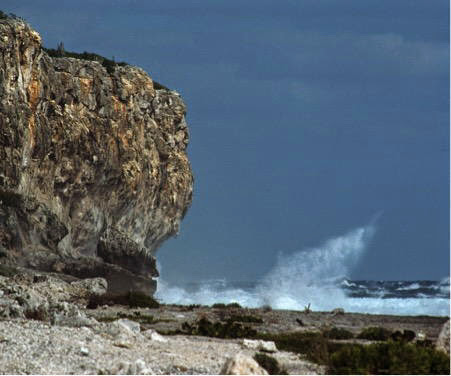
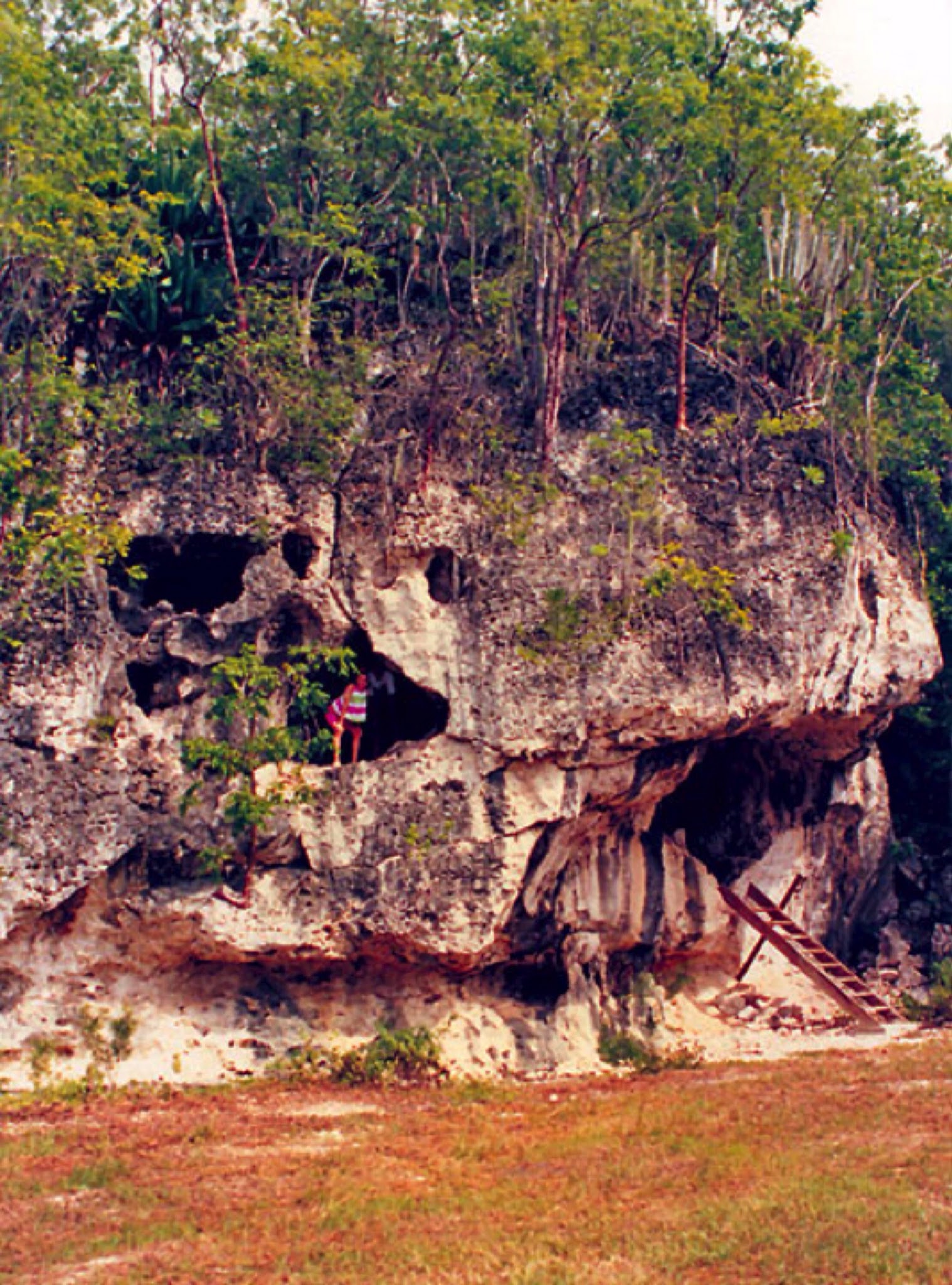
Photos above from Cayman Brac, Cayman Islands.


Monday, December 8, 2014

Typhoon Hagupit Hits Philippines: Climate Catastrophe Is Here Now! by Kumi Naidoo

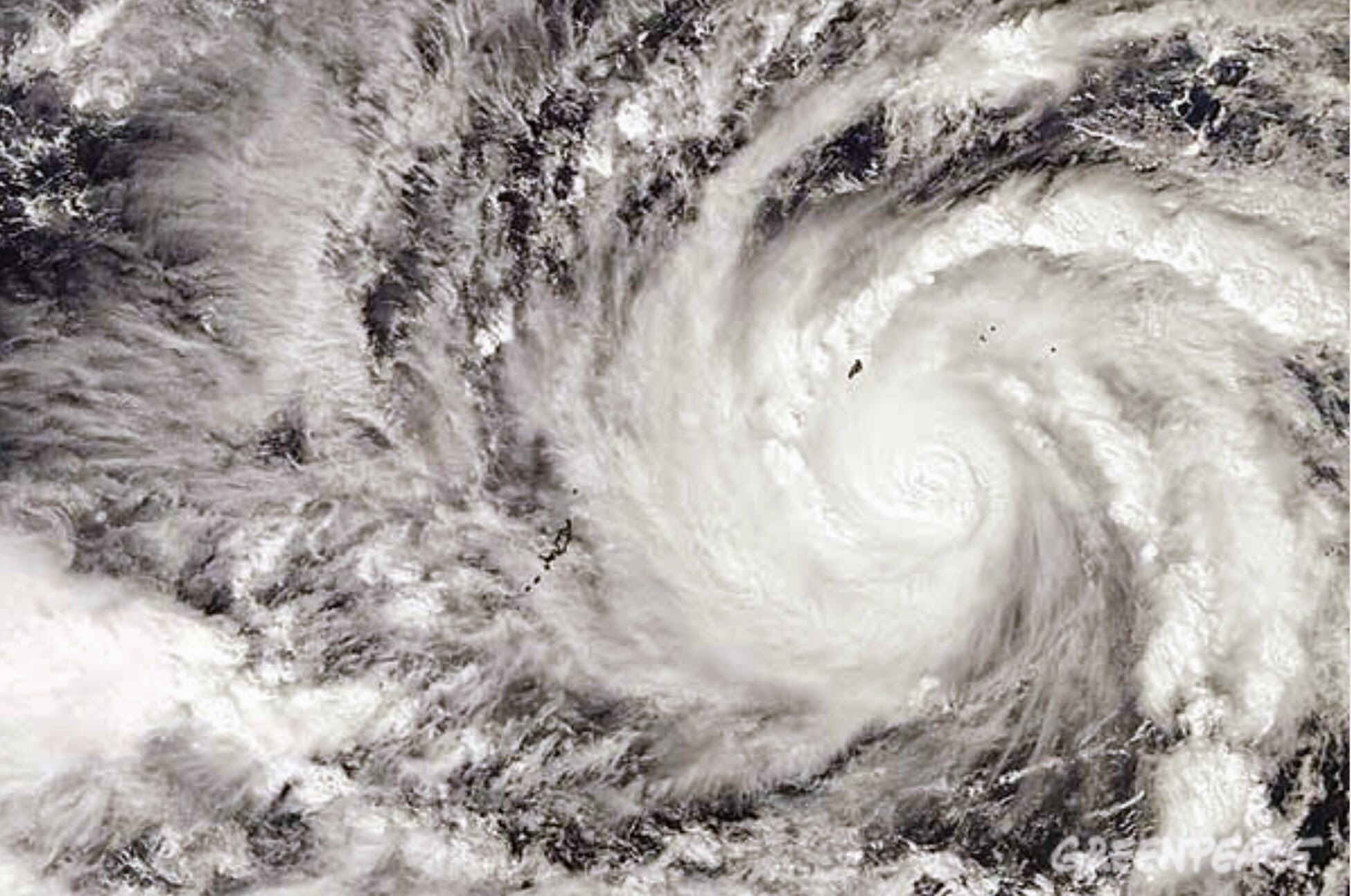
As Typhoon Hagupit hits the Philippines, one of the biggest peacetime evacuations in history has been launched to prevent a repeat of the massive loss of life which devastated communities when Super Typhoon Haiyan hit the same area just over a year ago.

Typhoon Hagupit

“One of the biggest evacuations in peacetime” strikes a sickening chord. Is this peacetime or are we at war with nature?

I was about to head to Lima, when I got a call to come to the Philippines to support our office and its work around Typhoon Hagupit (which means lash). In Lima another round of the UN climate talks are underway to negotiate a global treaty to prevent catastrophic climate change. A truce of sorts with nature.

But these negotiations have been going on far too long, with insufficient urgency and too much behind the scenes, and not so much behind the scenes, interference from the fossil fuel lobby.

This year, like last year and the year before these negotiations take place against a devastating backdrop of a so-called ‘extreme weather event’, something that climate scientists have been warning us about if we don’t take urgent action.

Tragically, we are not taking urgent action. Nature does not negotiate, it responds to our intransigence. For the people of the Philippines, and in many other parts of the world, climate change is already a catastrophe.

Only one year ago, Super Typhoon Haiyan killed thousands, destroyed communities and caused billions of dollars in damage. Many survivors who are still displaced have this week had to evacuate the tents they have been living in as Typhoon Hagupit carves a path across the country as I write.

It’s too early to assess the impact so far—we are all hoping early indications will spare the Philippines of the same pain that was experienced after Haiyan.

Here in Manila, we prepare to travel to the impacted areas in the wake of Typhoon Hagupit, or Ruby, as it has been named. We will offer what minor assistance we can.

We will stand in solidarity with the Filipino people and we will call out those who are responsible for climate change, those who are responsible for the devastation and who should be helping pay for the clean up and for adaptation to a world in which our weather is an increasing source of mass destruction.

With heavy hearts we prepare to bear witness. We challenge those in Lima to turn their attention from the lethargy and process of the negotiations and pay attention to what is happening in the real world.

We call on them to understand that climate change is not a future threat to be negotiated but a clear and present danger that requires urgent action now!

Each year, the people of the Philippines learn the hard way what inaction on emissions mean. They might be slightly better prepared and more resilient, but they are also rightly more aghast that each year—at the same time—the climate meetings seem to continue in a vacuum, not prepared to take meaningful action, not able to respond to the urgency of our time and not holding accountable the Big Polluters that are causing the climate to change with ferocious pace.

Before leaving for Manila I also received a message from Yeb Saño, climate commissioner for the Philippines: “I hope you can join us as we bear witness to the impact of this new super typhoon. Your help would be very valuable in delivering a message to Lima loud and clear.”

Yeb was the Filipino chief negotiator for three years at the UN climate talks and recently visited the Arctic on a Greenpeace ship to witness the Arctic sea ice minimum. Two years ago in Doha, as Typhoon Pablo took the lives of many he broke through the normally reserved language of dispassionate diplomacy that dominates UN climate treaty talks:

“Please … let 2012 be remembered as the year the world found the courage to … take responsibility for the future we want. I ask of all of us here, if not us, then who? If not now, then when? If not here, then where?”

I am joining Greenpeace Philippines and Yeb to visit the worst hit areas, document the devastation and send a clear message from climate change ground zero to Lima and the rest of the world that the ones that are responsible for the majority of emissions will be held accountable by the communities that are suffering the impacts of extreme weather events linked to climate change.

We will call on the heads of the fossil fuel companies who are culpable for the unfolding tragedy to examine their consciences and accept their historic responsibility. They say the truth is the first casualty of war, in this war against nature, the truth of climate science is unquestionable.

Please join us. Please add your voice by signing our petition calling on Big Polluters to be held legally and morally accountable for climate damages. After signing the petition you will be redirected to a site where you can make a donation to the relief efforts of partner organizations. More


Sunday, November 9, 2014

The end of beaches? Why the world’s shorelines are in serious trouble

We can have our beachfront properties — our Miami high-rises, our Hamptons mansions, our Jersey boardwalks — or we can have our beaches. But as geologist and Duke University emeritus professor Orrin Pilkey has been arguing for decades now, we can’t have both.

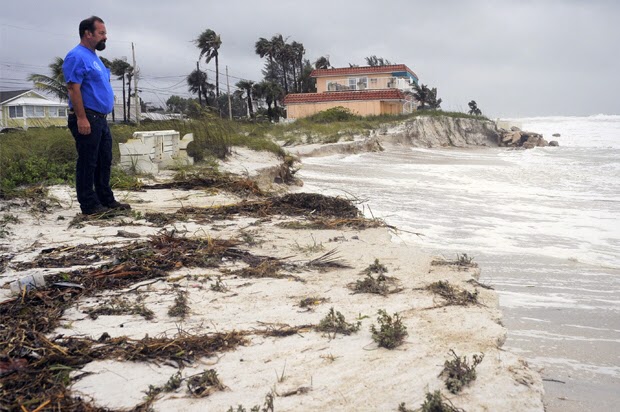
Bradenton Beach, June 2012

As the oceans warm and sea levels rise, coastal living is becoming an increasingly risky proposition. Any climate scientist would tell you not to invest in a beach house, and yet large-scale migration inland is something we’ve yet to see. The beaches themselves can withstand extreme weather, of course. But it’s our attempts to hold them in place, through techno-fixes like seawalls and beach replenishment, that ironically enough will end up destroying them. Sooner or later, Pilkey argues, we’re going to be forced to retreat. The question is whether there’ll be any beach left by then.

The Last Beach,” which Pilkey co-wrote with J. Andrew G. Cooper, a professor of coastal studies at the University of Ulster, is but his latest attempt to drive home just how wrong-headed our push to build on and preserve shorelines is. It’s been an uphill battle; for Pilkey, what counts as progress was that people acknowledged his plea not to rebuild after Superstorm Sandy instead of just attacking him for suggesting it — even if they didn’t really end up following his advice.

Bring pollution, oil spills and the destructive business of sand mining into the picture, and it’s not so extreme, Pilkey told Salon, to imagine a future where beaches as we know them — as places to live and even as places to visit — will no longer exist.

Our conversation, which has been lightly edited for length and clarity, follows.

We don’t typically think of beaches as something that can “go extinct,” but it seems like that’s basically what you’re arguing here.

That’s exactly what we argue: that beaches in developed areas will not be there, that they will be replaced by seawalls large and small. There will be beaches left in remote places and on national seashores and things like that, perhaps — although they’ll be suffering too, because they’ll be eroding and retreating back separately from the developed areas, which will be standing still for a while.

By the time we really begin to see what’s happening, like we are right now in Florida, we’ll be worrying about Manhattan and Queens and Boston and Washington, D.C., Philadelphia, Miami, Charleston, all those cities. We fully expect that the great expense required to hold back the shoreline — which is a losing proposition in any event — will be overwhelming for them.

It seems to us to be pretty obvious — and I think most geologists would agree with this — that in a 50- to 100-year timeframe we’re in trouble. The best example of that, the proof in the pudding, is Florida, where they have hundreds of miles of highrise-lined shoreline. What can they do? You could move the buildings back, but that’s very costly and there’s no place to move them to. So what we see right now, especially with the current governor of Florida, is the building of seawalls right and left. All you have to do is declare an emergency and you can build a seawall.

In the book, you also discuss how beaches have become dangerous places. So would you say there’s also a loss of beaches, not physically, but as we are able to enjoy them?

Yeah, that was the point of that. We, by the way, were really shocked — the one chapter that was really out of our range was pollution, and we were rather shocked at the numbers. We saw repeated statements about how to use a beach, if you’re going to go to a beach what should you do and how should you use it, in the technical literature, but it hasn’t been getting out to the public. Maybe that’s a little bit of irresponsibility on the part of some of the biochemists in not getting that out to the public. On the other hand, I know what would happen. They would get heavily criticized, probably, as being alarmists.

But yes, the fact is that the beaches are getting more and more polluted, and as more and more villages and towns and cities crowd up against the beaches that’s going to continue. Some of the things the literature said seemed rather outrageous to us. One is never to go barefoot on a beach. That’s a tough one. The one thing that everyone agrees is a bad thing to do is to get buried in the sand. And who in this world has not been buried in the sand at some time in their life? If you have a cut or an abrasion of some kind… I’ve always thought that going in the salt water had a healing effect on cuts, but that was really wrong. I’ve told that to a thousand students over the years, and if any of them are reading this I take it all back. It’s very dangerous.

Well, not very dangerous. There’s a very low probability of getting something, but if you do, the probability of getting something serious is high.

And that’s worse than it used to be?

There are no numbers to show it, that we know of, but yes. The pollutants on beaches are higher than they used to be, we think.

I imagine that you must have trouble getting people to take some of the issues you write about seriously. For example, there’s the beach that was stolen in Jamaica — something like that can come off as an offbeat, funny news story instead of a serious environmental crime. Do you come across that sort of response often?

Where we are not taken seriously? Of course, but I’m used to that because I’ve been arguing for years that we need to move houses back and retreat from the shoreline, or let houses fall in, but not leave them in place. My argument in the past in similar situations has been that we have a choice at the shoreline: We can have beaches or we can have buildings, but we can’t have them both. You have to take your choice — and of course, that is met with a lot of derision by beach property owners.

“The Last Beach,” I anticipate, will be met with some derision, because it seems a little extreme. But it’s not extreme at all. Of that I am certain. In my 40 years of working on this I can see the situation deteriorating. We’re going down a bad road, no question about it, and I feel confident about that.

Right after Superstorm Sandy, you wrote an article for the New York Times arguing that we shouldn’t rebuild. What kind of response did that get?

I got some money — somebody wanted to support my next book. Everything that happened to me directly was good, and I think the response was really good, surprisingly good. I heard that the American Shore & Beach Preservation Association (ASBPA) — which is a civilian group beating a hard drum of “there’s no need to retreat” — in their newsletter they made a few nasty comments about me…

A long time ago, when I started saying these things, the response was really negative, like “aw, c’mon, don’t be stupid, nobody’s going to move back.” Now, moving back is not outrageous, and the relationship between seawalls and the loss of beaches is pretty widely known. I think I can say that the response to that editorial was so different than it would have been 30 years ago, 20 years ago. And that’s a good thing.

What about the actual response from people working on recovery from the storm? Did anyone listen? Is the East Coast going to be just as vulnerable the next time a storm comes?

Thirty years ago, the response would have been massive seawalls, there’s no question of that. Hurricane Sandy was the first time I’ve heard serious discussion on the part of the governors of New Jersey and New York about maybe moving back and not rebuilding. As it was, they didn’t do much — they basically rebuilt — but that was music to my ears. I’ve never heard that before. In the past it’s always been “c’mon, we’re Americans, we’re not going to throw up our hands and slink away.”

Almost every house, if there was a house left, had an American flag in front of it. It brought out patriotism, for some reason or another. I guess that’s better than depression, but it’s different. Even though most of these things didn’t bear fruit, we’re getting there. I guess I’m learning that it takes years to get this into the public understanding. I don’t know how many years it’s going to take before we really start moving back, but we’re going to have to, no question about it, or we’ll just give up on the beach. I really believe that we will give up on the beach, for the most part. Beach replenishment, you see, will not be feasible as the sea level rises, because you’re holding the shoreline back in place, where it doesn’t want to be.

The beaches will disappear much faster than they are now. In North Carolina a typical beach lasts about three years. In New Jersey it’s probably about the same, and in Florida, where the wave energy is a little lower, it’s about seven to nine years. In any case, it’s a very costly proposition and it’s definitely going to get more costly.

How far back do people realistically need to move?

It all depends on where you are. If you’re on a barrier island you can move to the back side of the island, but the problem with that is that the back side of the island is lower in elevation. The highest elevation on most barrier islands is at the front of the island, so you’re moving back but on the other hand the chance of being struck directly by waves is increased.

For the most part, if someone is going to go through the cost of moving they ought to get off the island. In Florida, there ain’t no place to get off the island. It’s very, very low and flooding quickly as the sea level rises. We have a photograph in the book of the so-called “Outlaw House” in North Carolina (Outlaw was the family name). It was moved back three or five times, depending on who you believe, and right now it’s very close to the beach once again. That’s a mom-and-pop cottage, and initially it was moved by mules. All the houses near the Outlaw House now are all McMansions. They can be moved, but they’re expensive. The McMansion that was in the movie “Nights in Rodanthe” was just moved down the highway a bit to a safer place — I say safer, but not safe.

In a recent interview, you said you’ve stopped defining yourself as a scientist and have instead become a scientific advocate. When and how did that change come about?

I started out as a deep-sea sedimentologist. I worked on the continental margin of North Carolina and the abyssal plains — I sampled 13 abyssal plains around the world — but I got tired of going to sea. When my parents’ house was damaged in Hurricane Camille, my father and I wrote this little book called “How to Live On an Island,” and it was three eighths of an inch thick and it cost a dollar fifty, and I couldn’t believe the impact it had. People were asking to quote us and so forth, and I realized there was a real vacuum here and I began to move to the beach. I traded a research vessel for a 16-foot skiff, and I’m very happy about that. It’s been very satisfying.

When I first came to Duke it was not possible, before you get tenured, to get involved with controversial things with the general public. One had to wait until one had tenure before one could start pounding on the table about these things, and by the time I got my 16-foot skiff I was already tenured. I had also been a journal editor and a couple other things, and that gave me credibility in the scientific community. Nonetheless, I remember a number of times being criticized by scientists, basically saying “you’re off-base for doing this kind of thing.” I have a 25-book series, “Living with the Shore” for every state, and we have local geologists who were the senior authors of each of these books. I think for probably every book, at least one of the authors would say “I’m not going to lower myself and make science so simple,” or something to that effect, saying that “we can’t expect the public to understand everything we’re doing.”

But I don’t think I hear much of that anymore. I think at least geologists, and probably a lot of others now, are recognizing the value of being able to converse with the public. I know that most universities, Duke included, appreciate work that has an impact on the general public. It’s not like it was when I started at all. We are rewarded for doing such work, although there are local problems in individual states, probably in every state, where public schools still have problems. Here in North Carolina, I know at least two, maybe three geologists who have been asked to turn in their emails, or to furnish all emails that have to do with sea-level rise.

What you’re asking of the public is really difficult: You’re asking them to give up something they love, that they can protect in the short term, in favor of looking at the big picture. It’s something that people come up against with a lot of these environmental and climate problems. Do you have any insights into how to get that message through to people?

The reason you go to beaches is because you went down there with your mother and father during the summer and had the most wonderful time in your whole life, and what could be better than to live there year-round? But here in North Carolina we have some really good newspapers, at least on this issue. I spent a few years back in Woods Hole, Massachusetts, and I found that the people there were far less educated on the problem of beaches and seawalls and retreating shorelines. It was a very marginal thing in Massachusetts, but in North Carolina we have a much longer shoreline and a much higher-energy shoreline. So it’s not a surprise to most people. If they come here from Kansas it might be a surprise, but the locals here are pretty well-educated. Excepting the particular political situation we have right now, which is very pro-development — but that comes and goes — I think in North Carolina we’re better prepared than some other states.

The real resistance to good coastal management with a long-term view is coming not from the people who came down there because their mommy and daddy brought them to the beach. It’s coming from the people who are making money on it. From what I’ve seen here, the high-cost developments are the ones who are trying to change the laws to let them build seawalls. They’re going to protect the houses; they couldn’t give a damn about the general public. Up on South Hampton, New York, rich people are building massive walls. They’re doing things that are illegal in some communities, but when you have billions of dollars you can get an army of lawyers to hold off the community very readily. Wealthy communities are the problem. More


Thursday, November 6, 2014

Lord Stern: global warming may create billions of climate refugees

Lord Nicholas Stern, one of the world’s most influential voices on climate economics, does not mince his words when it comes to criticising those who take a narrow view of prosperity and highlighting the devastating consequences of global warming.

Nicholas Stern

"You have to be a complete idiot to think that GDP sums up prosperity," says Stern, who believes we need to develop broader measures of success and combine this with a return to core values if we are to convince people to act to prevent runaway climate change.

Stern, who wrote the landmark 2006 Stern review of the economics of climate change, says if we fail to take heed of the danger signals, we risk temperatures rising this century to levels we haven’t seen for tens of millions of years.

"Hundreds of millions of people, perhaps billions of people would have to move," he warns. "If we’ve learned anything from history that means severe and extended conflict.

"We couldn’t just turn it off. You can’t make a peace treaty with the planet, you can’t negotiate with the laws of physics. You’re in there, you’re stuck. Those are the stakes we’re playing for and that’s why we have to make this second transformation, the climate transformation and move to low carbon economy."

Stern has co-authored the recently published New Climate Economy report, which argues that the world can head off the worst effects of climate change, and enjoy the fruits of continued economic expansion, if it moves quickly to invest in a low-carbon economy.

He says he hopes the study will influence key decision makers because it was written with the support of a coalition of respected politicians, economists, think tanks and institutions, including the World Bank, the International Monetary Fund, the OECD, the International Energy Agency and the UN.

He dismisses the arguments of more radical economists who believe that we need to stop our fixation with growth, arguing that the economy needs to keep expanding if we are to have a hope of eradicating poverty.

"To those who want to knock out growth from objectives, I find they’re close to reprehensible because for me the two defining challenges of this century are overcoming poverty and managing climate change.

"We fail on one, we fail on the other. So I think to say that we should just switch off growth is to miss big aspects of what matters about poverty. And so it worries me. It’s also politically very naive. If you turn it into a pissing contest between growth on the one hand and climate and environment on the other and say you’ve got to choose, you’re setting yourself up for failure."

Stern says investments in renewable energy must be combined with a rethinking of our understanding of prosperity, which he believes will lead to what he terms better growth.

"It means thinking differently about health, about the way we live in our cities and about the strengths of our communities," he says. "It’s not that GDP is idiotic but it’s mostly about the use of labour resources and what it produces. But there are very important parts of this story about prosperity that get missed out."

How does Stern, who is president of the British Academy, believe we can start to measure prosperity that goes beyond GDP?

He says it is vital to start from the perspective of people understanding what they mean by wellbeing and what they value, whether it is family, community, arts or sport.

"You can be reasonably empirical about what moves people and then you go and try to collect data on that," he says. "Once you understand what it is it you’re trying to capture and create indicators, you can then start to talk about policy."

The 68-year-old peer says it’s vital we go back to recognising the importance of Aristotle’s belief in the need to understand what it means to be a virtuous person and to whom we owe a duty of care.

"I’ve been an academic all my life and I look at the evidence of what works and what doesn’t work," he says. "But if you ask yourself what you’re trying to do, that’s spurred by values, by what’s important to you."

For Stern, the heart of his values lies in the importance of family. Speaking immediately after introducing his two-week old granddaughter Rosa on stage at a TEDx talk in New York, he said: "I’m 68 and I am thinking what will Rosa be like when she’s 68? We’re talking about towards the end of this century and what we do now will determine whether the next 100 years is the best of centuries or the worst of centuries."

"Are we going to look our grandchildren in the eye and tell them that we understood the issues, that we recognised the dangers and the opportunities, and still we failed to act?"

Stern believes that it is time for religious leaders, politicians and the media to act more responsibly, pointing in particular to the importance of the Pope’s statement earlier this year that if we destroy creation, creation will destroy us.

Also key to changing hearts and minds is the field of arts, with Stern pointing to Barbara Kingsolver’s book Flight Behaviour, which he says is not only wonderful in describing the human condition but also in questioning our relationship with the environment.

"It’s not just the policy wonks like me we need to try to assemble the evidence and set it out," he says. "You have to do that because emotional argument without rational evidence on cause and effect doesn’t get you all that far. But rational argument about cause and effect alone doesn’t get you there either." More