Showing posts with label disaster preparedness. Show all posts

Saturday, January 10, 2015

On a tropical island, fossils reveal past -- and possible future -- of polar ice

The balmy islands of Seychelles couldn’t feel farther from Antarctica, but their fossil corals could reveal much about the fate of polar ice sheets.

About 125,000 years ago, the average global temperature was only slightly warmer, but sea levels rose high enough to submerge the locations of many of today’s coastal cities. Understanding what caused seas to rise then could shed light on how to protect those cities today.

The balmy islands of Seychelles couldn’t feel farther from Antarctica, but their fossil corals could reveal much about the fate of polar ice sheets.

About 125,000 years ago, the average global temperature was only slightly warmer, but sea levels rose high enough to submerge the locations of many of today’s coastal cities. Understanding what caused seas to rise then could shed light on how to protect those cities today.

By examining fossil corals found on the Indian Ocean islands, University of Florida geochemist Andrea Dutton found evidence that global mean sea level during that period peaked at 20 to 30 feet above current levels. Dutton’s team of international researchers concluded that rapid retreat of an unstable part of the Antarctic ice sheet was a major contributor to that sea-level rise.

“This occurred during a time when the average global temperature was only slightly warmer than at present,” Dutton said.

Dutton evaluated fossil corals in Seychelles because sea level in that region closely matches that of global mean sea level. Local patterns of sea-level change can differ from global trends because of variations in Earth’s surface and gravity fields that occur when ice sheets grow and shrink.

In an article published in the January 2015 issue of Quaternary Science Reviews, the researchers concluded that while sea-level rise in the Last Interglacial period was driven by the same processes active today — thermal expansion of seawater, melting mountain glaciers and melting polar ice sheets in Greenland and Antarctica — most was driven by polar ice sheet melt. Their study, partially funded by the National Science Foundation, also suggests the Antarctic ice sheet partially collapsed early in that period.

“Following a rapid transition to high sea levels when the last interglacial period began, sea level continued rising steadily,” Dutton said. “The collapse of Antarctic ice occurred when the polar regions were a few degrees warmer than they are now — temperatures that we are likely to reach within a matter of decades.”

Several recent studies by other researchers suggest that process may have already started.

“We could be poised for another partial collapse of the Antarctic ice sheet,” Dutton said. More

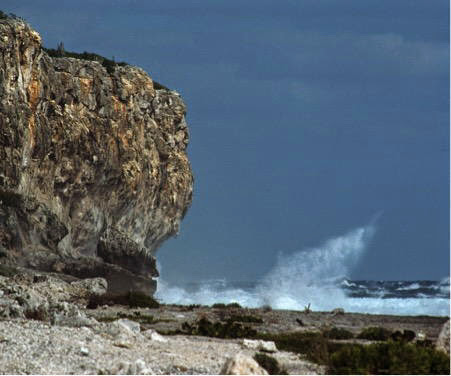
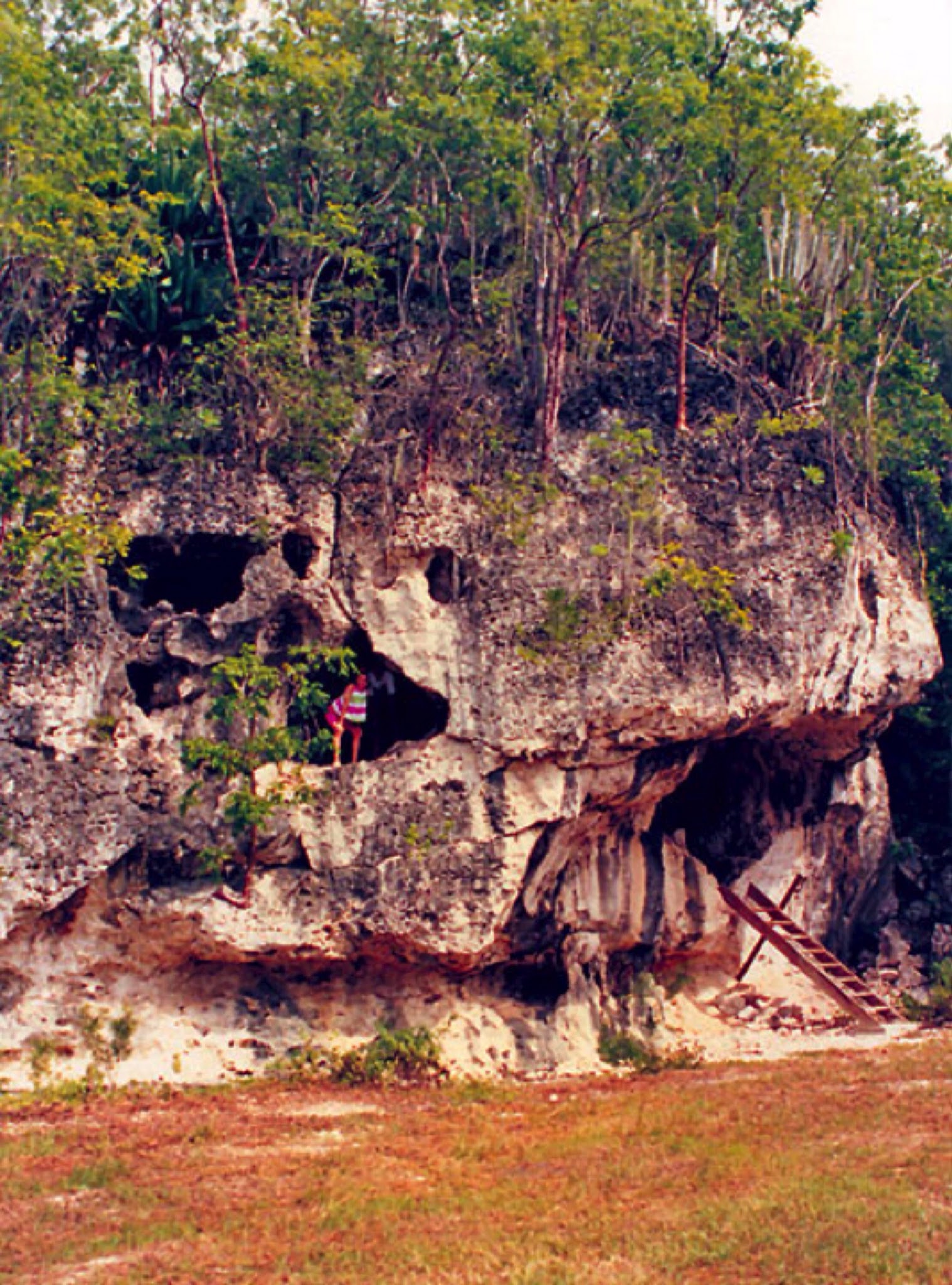
Photos above from Cayman Brac, Cayman Islands.


Sunday, December 7, 2014

Announcing “Disastersand Ecosystems: Resilience in a Changing Climate”

Announcing “Disastersand Ecosystems: Resilience in a Changing Climate”, a new Massive Open OnlineCourse (MOOC) to be launched on 12 January, 2015

What we all know is that disasters are increasing worldwide. Population growth,environmental degradation and climate change will likely exacerbate disasterimpacts in many regions of the world. What role do ecosystems play in reducingdisaster risks and adapting to climate change? This is the topic of an exciting new Massive Open Online Course thatwill go live in January 2015. It was developedjointly by the United Nations Environment Programme (UNEP), the Center for NaturalResources and Development (CNRD) and the Cologne University of Applied Sciences(CUAS), Germany. This is UNEP’s first MOOC, developed through its engagement with universities worldwide including the Global Universities Partnership on Environment for Sustainability (GUPES).

The MOOC covers a broad range of topics from disastermanagement, climate change, ecosystem management and community resilience. Howthese issues are linked and how well-managed ecosystems enhance resilience to naturaldisasters and climate change impacts are the core theme of the course.
The MOOC is designed at two levels: the leadership track, with the first 6 units providing generalintroduction to the fundamental concepts, which is suitable for people from allbackgrounds who wish to have a basic undertaking of the topic. The second level, or expert track comprises 15 units with more in depth learning on thevarious tools of ecosystem-based disaster risk reduction and climate changeadaptation.
The course is delivered by both scientists and practitioners.In addition there are guest lectures from global leaders and experts, such as Achim Steiner, the Executive Director of the United Nations Environment Programme, Julia Marton-Lefèvre, former Director General of the International Union for the Conservationof Nature (IUCN), Rajendra Pachauri of Teri University and Margareta Wahlströmof the UN International Strategy on Disaster Reduction (UNISDR).

Students will have the opportunity to enhance their knowledgethrough quizzes, real life and fictitious problem-solving exercises, additionalreading materials, videos and a discussion forum. An Expert-of-the-Week will be available torespond to questions and interact with students. Students will receive weeklynewsletters with up-to-date news on ecosystem-based disaster risk reduction andadaptation.
The course is invaluable for universities around the world,where faculty members can use it to update their curriculum and use thelectures and teaching materials for blended learning for their own courses. Atthe same time, the MOOC format also allows those currently outside theuniversity system to learn about the new developments in the area of disastersand climate change, without having to enroll in a university or pay for anonline course. Those who successfully complete the course will be provided witha course certificate.

Visit: www.themooc.net<http://www.themooc.net/>, or enroll directly at:
https://iversity.org/en/courses/disasters-and-ecosystems-resilience-in-a-changing-climate


Monday, September 29, 2014

Explaining Extreme Events of 2013

A report released today investigates the causes of a wide variety of extreme weather and climate events from around the world in 2013. Published by the Bulletin of the American Meteorological Society, "Explaining Extreme Events of 2013 from a Climate Perspective (link is external)" addresses the causes of 16 individual extreme events that occurred on four continents in 2013. NOAA scientists served as three of the four lead editors on the report.

Of the five heat waves studied in the report, human-caused climate change was found to have clearly increased the severity and likelihood of those events. On the other hand, for other events examined like droughts, heavy rain events, and storms, fingerprinting the influence of human activity was more challenging. Human influence on these kinds of events—primarily through the burning of fossil fuels—was sometimes evident, but often less clear, suggesting natural factors played a far more dominant role.

"This annual report contributes to a growing field of science which helps communities, businesses and nations alike understand the impacts of natural and human-caused climate change," said Thomas R. Karl, L.H.D., director of NOAA’s National Climatic Data Center. "The science remains challenging, but the environmental intelligence it yields to decision makers is invaluable and the demand is ever-growing."

Confidence in the role of climate change about any one event is increased when multiple groups using independent methods come to similar conclusions. For example, in this report, five independent research teams looked at specific factors related to the record heat in Australia in 2013. Each consistently found that human-caused climate change increased the likelihood and severity of that event. However, for the California drought, which was investigated by three teams from the United States, human factors were found not to have influenced the lack of rainfall. One team found evidence that atmospheric pressure patterns increased due to human causes, but the influence on the California drought remains uncertain.

When human influence for an event cannot be conclusively identified with the scientific tools available today, this means that if there is a human contribution, it cannot be distinguished from natural climate variability.

"There is great scientific value in having multiple studies analyze the same extreme event to determine the underlying factors that may have influenced it," said Stephanie C. Herring, PhD, lead editor for the report at NOAA’s National Climatic Data Center. "Results from this report not only add to our body of knowledge about what drives extreme events, but what the odds are of these events happening again—and to what severity."

The report was edited by Herring, along with Martin P. Hoerling, NOAA’s Earth System Research Laboratory; Thomas Peterson, NOAA’s National Climatic Data Center, and Peter A. Stott, UK Met Office Hadley Centre and written by 92 scientists from 14 countries. View the full report online (link is external).

Also, view the slides for the media briefing on the "Explaining Extreme Events of 2013 from a Climate Perspective" report. More


Tuesday, September 9, 2014

ECLAC, CARICOM Highlight Vulnerabilities, Opportunities in Caribbean SIDS

3 September 2014: During a side event at the Third International Conference on Small Island Developing States (SIDS), representatives of Caribbean SIDS and the UN discussed critical factors that underpin the vulnerability of Caribbean SIDS.


‘The vulnerability of Caribbean SIDS revisited - it's all about size' took place in Apia, Samoa, on 3 September 2014, and was organized by the Economic Commission for Latin America and the Caribbean (ECLAC) in collaboration with the Caribbean Community (CARICOM) Secretariat.


Speakers discussed trade and finance, governance and institutional capacity, disaster management, regional integration and opportunities arising from the small size of SIDS, as well as the fact that the majority of Caribbean SIDS are classified as middle-income countries, based on gross domestic product (GDP).


Raúl García-Buchaca, ECLAC, said middle-income status based on GDP fails to consider inequalities at the national level. John Ashe, President of the UN General Assembly (UNGA), focused on the particular vulnerabilities of Caribbean SIDS, and suggested mainstreaming them into the post-2015 development agenda. Winston Dookeran, Minister of Foreign Affairs, Trinidad and Tobago, called for working with development partners and international financial institutions to build buffers to external shocks, and declared that “Size may well be an opportunity rather than a limitation.”


Carolyn Rodrigues-Birkett, Minister of Foreign Affairs, Guyana, said the Caribbean would require over 7% growth to be sustainable, and mentioned the challenge in diversifying Caribbean economies within the new global economic order. Camillo Gonsalves, Minister of Foreign Affairs, Saint Vincent and the Grenadines, said that because of their small GDP, SIDS are unable to finance adaptation and recovery from natural disasters, and recommended regional integration, development financing, preferential trade, and debt relief and restructuring to assist in this regard.


Participants also introduced a vulnerability-resilience profile for arriving at an index, said the SIDS resilience fund could be a good measure in this regard, and underscored that the human capital must be recognized, public policy revolutionized, and political structure transformed. [ECLAC Press Release] [Statement of UNGA President] More


Sunday, September 7, 2014

Nation-building policies in Timor-Leste: disaster risk reduction, including climate change adaptation

"Nation building policies in Timor-Leste: disaster risk reduction, including climate change adaptation".

Few studies have explored the relationships between nation-building, disaster risk reduction and climate change adaptation. Focusing on small island developing states, this paper examines nation-building in Timor-Leste, a small island developing state that recently achieved independence. Nation-building in Timor-Leste is explored in the context of disaster risk reduction, which necessarily includes climate change adaptation. The study presents a synopsis of Timor-Leste's history and its nation-building efforts as well as an overview of the state of knowledge of disaster risk reduction including climate change adaptation. It also offers an analysis of significant gaps and challenges in terms of vertical and horizontal governance, large donor presence, data availability and the integration of disaster risk reduction and climate change adaptation for nation-building in Timor-Leste. Relevant and applicable lessons are provided from other small island developing states to assist Timor-Leste in identifying its own trajectory out of underdevelopment while it builds on existing strengths.

  1. Jessica Mercer1,*,
  2. Ilan Kelman2,3,
  3. Francisco do Rosario4,
  4. Abilio de Deus de Jesus Lima5,
  5. Augusto da Silva6,
  6. Anna-Maija Beloff7 and
  7. Alex McClean8

Article first published online: 5 SEP 2014

DOI: 10.1111/disa.12082


http://onlinelibrary.wiley.com/doi/10.1111/disa.12082/abstract


Tuesday, June 3, 2014

United Nations Environment Programme releases report on Small Island Developing States (SIDS)

MEDIA ADVISORY

United Nations Environment Programme releases report on
Small Island Developing States (SIDS)


SARASOTA, FLORIDA/ WASHINGTON, D.C.— On World Environment Day, the United Nations Environment Programme (UNEP) will release the SIDS Foresight Report. The report outlines 20 key emerging challenges and opportunities facing these nations and coastal communities —such as the disproportionate impact of climate change, the loss of biodiversity and forests, and overfishing. It also demonstrates how SIDS can transition to an inclusive green economy and ensure a sustainable prosperous future.

Emerging environmental and socio-economic issues, such as the impacts of climate change and an increase in the frequency and intensity of extreme events, threaten sustainable development and poverty alleviation in Small Island Developing States (SIDS). According to the new report, adopting green economy approaches can ensure future prosperity,

WHAT: Press Conference launching UNEP report on Small Island Developing States
Key findings will be highlighted and a question and answer session will follow

WHEN: Thursday, June 5, 2014 09:00-10:00 a.m. (Eastern Time)

WHERE: Mote Marine Laboratory
Keating Marine Education Center
New Pass Gallery, 3rd Floor
1599 Ken Thompson Parkway
Sarasota, Florida 34236

WHO: Opening remarks by Carolyn Mason, Sarasota County Commissioner
Report summary by Patricia Beneke, Regional Director, UNEP Regional Office for North America
Q&A moderated by Dr. Michael P. Crosby, President and CEO of Mote Marine Laboratory and Aquarium

Community forum portal: www.mote.org/wedforum and www.mote.org/wedforumyoutube
Live on Access Sarasota on Comcast cable (ch19) and Verizon cable (ch32)

For more information, contact: Elisabeth Guilbaud-Cox, Head of Communications at UNEP Regional Office of North America, Tel: (202) 812-2100; E-mail: elisabeth.guilbaud-cox@unep.org

Reporters and media agencies interested in attending the press conference, please contact Sarasota County Media Relations at (941)-861-6397 or news@scgov.net to register and ensure AV/technical assistance can be accommodated.


Thursday, May 29, 2014

Putting Climate Polluters in the Dock

Can Caribbean governments take legal action against other countries that they believe are warming the planet with devastating consequences?

A former regional diplomat argues the answer is yes. Ronald Sanders, who is also a senior research fellow at London University, says such legal action would require all Small Island Developing States (SIDS) acting together.

He believes the Hague-based International Court of Justice (ICJ) would be amenable to hearing their arguments, although the court’s requirement that all parties to a dispute agree to its jurisdiction would be a major stumbling block.

“It is most unlikely that the countries that are warming the planet, which incidentally now include India and China, not just the United States, Canada and the European Union…[that] they would agree to jurisdiction,” Sanders told IPS.

“The alternative, if countries wanted to press the issue of compensation for the destruction caused by climate change, is that they would have to go to the United Nations General Assembly.”

Sanders said that the Caribbean Community (CARICOM) countries could “as a group put forward a resolution stating the case that they do believe, and there is evidence to support it, that climate change and global warming is having a material effect… on the integrity of their countries.

“We’re seeing coastal areas vanishing and we know that if sea level rise continues large parts of existing islands will disappear and some of them may even be submerged, so the evidence is there.”

Sanders pointed to the damaging effects of flooding and landslides in St. Vincent and the Grenadines, St. Lucia, and Dominica as 2013 came to an end.

The prime minister of St. Vincent and the Grenadines, Dr. Ralph Gonsalves, described the flooding and landslides as “unprecedented” and gave a preliminary estimate of damage in his country alone to be in excess of 60 million dollars.

“People who live in the Caribbean know from their own experience that climate change is real,” Sanders said.

“They know it from days and nights that are hotter than in the past, from more frequent and more intense hurricanes or freak years like the last one when there were none, from long periods of dry weather followed by unseasonal heavy rainfall and flooding, and from the recognisable erosion of coastal areas and reefs.”

At the U.N. climate talks in Warsaw last November, developing countries fought hard for the creation of a third pillar of a new climate treaty to be finalised in 2015. After two weeks and 36 straight hours of negotiations, they finally won the International Mechanism for Loss and Damage (IMLD), to go with the mitigation (emissions reduction) and adaptation pillars.

The details of that mechanism will be hammered out at climate talks in Bonn this June, and finally in Paris the following year. As chair of the Alliance of Small Island States (AOSIS), Nauru will be present at a meeting in New Delhi next week of the BASIC group (Brazil, South Africa, India and China) to try and build a common platform for the international talks.

“It isn’t just the Caribbean, of course,” Sanders said. “A number of other countries in the world – the Pacific countries – are facing an even more pressing danger than we are at the moment. There are countries in Africa that are facing this problem, and countries in Asia,” he told IPS.

“Now if they all join together, there is a moral case to be raised at the United Nations and maybe that is the place at which we would more effectively press it if we acted together. It would require great leadership, great courage and great unity,” he added.

Pointing to the OECD countries, Sir Ronald said they act together, consult with each other and come up with a programme which they then say is what the international standard must be and the developing countries must accept it.

“Why do the developing countries not understand that we could reverse that process? We can stand up together and say look, this is what we are demanding and the developed countries would then have to listen to what the developing countries are saying,” Sir Ronald said.

Following their recent 25th inter-sessional meeting in St. Vincent, Jamaican Prime Minister Portia Simpson Miller praised the increased focus that CARICOM leaders have placed on the issue of climate change, especially in light of the freak storm last year that devastated St. Lucia, Dominica and St. Vincent and the Grenadines.

At that meeting, heads of government agreed on the establishment of a task force on climate change and SIDS to provide guidance to Caribbean climate change negotiators, their ministers and political leaders in order to ensure the strategic positioning of the region in the negotiations.

In Antigua, where drought has persisted for months, water catchments are quickly drying up. The water manager at the state-owned Antigua Public utilities Authority (APUA), Ivan Rodrigues, blames climate change.

“We know that the climate is changing and what we need to do is to cater for it and deal with it,” he told IPS.

But he is not sold on the idea of international legal action against the large industrialised countries.

“I think what will cause [a reversal of their practices] is consumer activism,” he said. “The argument may not be strong enough for a court of law to actually penalise a government.”

But Sanders firmly believes an opinion from the International Court of Justice would make a huge difference.

“We could get an opinion. If the United Nations General Assembly were to accept a resolution that, say, we want an opinion from the International Court of Jurists on this matter, I think we could get an opinion that would be favourable to a case for the Caribbean and other countries that are affected by climate change,” he told IPS.

“If there was a case where countries, governments and large companies knew that if they continue these harmful practices, action would be taken against them, of course they would change their position because at the end of the day they want to be profitable and successful. They don’t want to be having to fight court cases and losing them and then having to pay compensation,” he added. More
 

Friday, May 16, 2014

Coral Reefs Protect Shorelines By Reducing Wave Energy By 97 Percent, Study Finds

Coral reefs provide substantial protection against wave energy, lessening the impact of sea level rise and intense storm surges for 7 million people in the U.S. alone, according to a new report.

The report, published this week in the journal Nature Communications, reviewed 255 studies on the protective nature of coral reefs and found that reefs reduce wave energy by 97 percent on average, causing the waves that reach the shoreline to be significantly calmer than they would have been without the reefs. Michael Beck, one of the authors of the report and senior scientist for the Nature Conservancy, said he was surprised at the 97 percent average for reef wave reduction. He said he knew it would be a large number — other studies have shown that reefs are effective at reducing wave energy, but none yet had quantified it ocean-wide — but he didn’t know just how big.

The report also found that worldwide, 197 million people are protected by reefs, and that maintaining the health of coral reefs is far less expensive than installing artificial defenses — according to the report, the median cost of building artificial wave defenses is $19,791 per meter, while the median cost of coral restoration projects is $1,290 per meter. Beck said the Nature Conservancy is working in a coral reef in Grenville, Grenada to build back the reef’s crest, the highest part of the reef that’s the most important for wave-breaking. He said degredation of the reef crest, which has been caused over the last 50 years by climate change, pollution, and sand mining, can explain a “huge amount” of the erosion and sedimentation that’s been occurring in the bay.

“A variety of causes has led to a little bit of degradation in height in the reef, and when you’ve lost that height in the reef, you can suddenly explain a huge amount of problems that have been happening,” he said.

Beck’s team has been been building back the reef in Grenada by using old coral rubble and concrete blocks, then trying to regrow the living coral on those structures. Projects like that, he said, are important to coral reefs’ survival — though coral is threatened gravely by climate change and ocean acidification, he said reefs “can be resilient” and recover from stresses like bleaching. He pointed to a mass bleaching event that occurred in 1998, after El Niño drove up water temperatures worldwide, as evidence. Though many were worried the reefs wouldn’t bounce back from this event, which was the most extensive and severe in history, certain reefs did recover, despite significant losses worldwide.

“Those reefs that were managed well, where you reduce the other stressors like pollution and overfishing, recovered,” he said. “Living coral came back and came back in quite good abundances in places were coral reefs were managed well.”

That event points to the need for better reef management, Beck said, especially now, as reefs around the world continue to suffer the effects of warming oceans, pollution, fishing practices and other impacts. Elkhorn coral, which play an integral role in the reef ecosystem of the Florida Keys, are being killed off by White Pox disease, which one researcher says is likely caused by untreated human sewage that enters the ocean through leaky septic systems in Florida. And outside of the 1998 event, scientists have found other significant evidence of coral bleaching, an effect that’s due to warmer-than-usual ocean temperatures and is likely to get worse as the ocean warms.

Other coastal and marine ecosystems provide protection from storm surge, sea level rise and erosion, but they too are struggling with human-induced impacts — in fact, Beck said coral reefs are in better shape worldwide than oyster reefs and mangrove forests. These coastal ecosystems have also been found to be a cost-effective way of providing protection — an April report noted restoring ecosystems like oyster reefs can create more jobs than offshore oil development and provide $15 in net economic benefits for every $1 invested. More


Monday, March 31, 2014

Planet at Risk

Human interference with the climate system is occurring, and climate change poses risks for human and natural systems . The assessment of impacts, adaptation, and vulnerability in the Working Group II contribution to the IPCC's Fifth Assessment Report (WGII AR5) evaluates how patterns of risks and potential benefits are shifting due to climate change. It considers how impacts and risks related to climate change can be reduced and managed through adaptation and mitigation. The report assesses needs, options, opportunities, constraints, resilience, limits, and other aspects associated with adaptation.

Climate change involves complex interactions and changing likelihoods of diverse impacts. A focus on risk, which is new in this report, supports decision-making in the context of climate change, and complements other elements of the report. People and societies may perceive or rank risks and potential benefits differently, given diverse values and goals.

Compared to past WGII reports, the WGII AR5 assesses a substantially larger knowledge base of relevant scientific, technical, and socioeconomic literature. Increased literature has facilitated comprehensive assessment across a broader set of topics and sectors, with expanded coverage of human systems, adaptation, and the ocean. More


Wednesday, March 5, 2014

Extreme weather is 'silver lining' for climate action: Christiana Figueres

Devastating extreme weather including recent flooding in England, Australia's hottest year on record and the US being hit by a polar vortex have a "silver lining" of boosting climate change to the highest level of politics and reminding politicians that climate change is not a partisan issue, according to the UN's climate chief. Christiana Figueres said that it was amoral for people to look at climate change from a politically partisan perspective, because of its impact on future generations.

The "very strange" weather experienced across the world over the last two years was a sign "we are [already] experiencing climate change," the executive secretary of the UN climate secretariat told the Guardian.

The flooding of thousands of homes in England because of the wettest winter on record has brought climate change to the forefront of political debate in the UK. The pprime minister, David Cameron, when challenged by Labour leader, Ed Miliband, on his views on man-made climate change and having climate change sceptics in his cabinet, said last week: "I believe man-made climate change is one of the most serious threats that this country and this world faces."

Climate change was barely mentioned at all in the 2012 US election battle until superstorm Sandy struck New York, prompting the city's then mayor, Michael Bloomberg, to endorse Barack Obama's candidacy because he would "lead on climate change."

Figueres said: "There's no doubt that these events, that I call experiential evidence of climate change, does raise the issue to the highest political levels. It's unfortunate that we have to have these weather events, but there is a silver lining if you wish, that they remind us is solving climate change, addressing climate change in a timely way, is not a partisan issue."

She added: "We are reminded that climate change events are for everyone, they're affecting everyone, they have much, much longer effects than a political cycle. Frankly, they're intergenerational, so morally we cannot afford to look at climate change from a partisan perspective."

Figueres said that examples of recent extreme weather around the world were a sign climate change was here now. "If you take them individually you can say maybe it's a fluke. The problem is it's not a fluke and you can't take them individually. What it's doing is giving us a pattern of abnormality that's becoming the norm. These very strange extreme weather events are going to continue in their frequency and their severity … It's not that climate change is going to be here in the future, we are experiencing climate change."

Figueres was speaking in London before meeting businesses including Unilever, Lafarge and Royal Dutch Shell to urge them to put pressure on governments to take action on climate change, ahead of renewed international negotiations in Bonn next week to flesh out details of a draft climate treaty to be laid out in Lima this year and agreed in Paris at the end of 2015.

"2014 is a crucial year because of the timing of next year, [in 2015] there will be very little time work on the actual agreement. We have to frontload the work," she said.

Peru's foreign minister told the Guardian in January that the Lima meeting in December must produce a first draft of a deal to cut carbon emissions, which will be the first of its kind after efforts to get legally binding agreement for cuts from most of the world's countries failed at a blockbuster meeting in Copenhagen in 2009.

Asked if a bad deal was better than no deal next year, she said: "Paris has to reach a meaningful agreement because, frankly, we are running out of time."

But she dismissed parallels with the run-up to the Copenhagen summit, saying the frequency of extreme weather events, lower renewable energy costs and progress on climate legislation at a national level meant it was different this time round.

"I hope that we don't need too many more Sandys or Haiyans or fires in Australia or floods in the UK to wake us up. My sense is there is already much momentum.We have 66 governments that have climate legislation, we have a total of 500 laws around the world on climate, whereas before Copenhagen we only had 47."

But the grouping of the world's 47 "least developed" countries said this week that they would want far more money to adapt their economies to climate change than the $100bn a year that been so far proposed by rich countries.

"We will want more than the $100bn to agree to a new Paris protocol," said Quamrul Choudhury, a lead negotiator for the group which includes many African and Asian countries. "On top of that we will want a legal mechanism to compensate for 'loss and damage' [compensation for extreme climate change events]. There should definitely be some space in the [final] treaty for that," he said in London.

He called on rich countries to compromise. "The battle lines are drawn. Everyone wants to defend their country and nobody will give an inch, but everyone has to make some sacrifice or we won't have a deal. We need high-level political commitment to raise ambition."

Choudhury, who is also Bangladesh's climate envoy to the United Nations, met British climate negotiators ahead of the Bonn talks. "I am optimistic that the world can avoid another diplomatic disaster like Copenhagen in 2009. There have been major changes since then. In 2008-09 we knew it would be very expensive to reduce emissions. Now we know it does not cost very much. It's not expensive, not a Herculean task. Countries like the UK know they can reduce emissions by 65% without it costing very much at all.

"But even if we have an ambitious mitigation target [to cut emissions] adaptation must be the cornerstone of a new treaty. This is not a zero-sum game. If we treat it like that there will be no Paris protocol," he said.

Figueres later agreed that the $100m proposed in 2009 as compensation for poor countries would not be enough for them to build defences and adapt their economies. "It was a figure plucked from a hat … $100bn is not enough [to meet] the mitigation and not at all for the adaptation costs. The International Energy Agency has suggested it may cost $1 trillion over 25 years just for adaptation. $100bn is a freckle on the map of what needs to be invested."

A major UN climate science panel report to be published at the end of this month will spell out the impacts of climate change on humanity and the natural world.Leaked versions of the report say agricultural production will decline by up to 2% every decade for the rest of the 21st century. More


Tuesday, February 11, 2014

Climate change and the world’s coasts

Coastal regions may face massive increases in damages from storm surge flooding over the course of the 21st century.

According to a new study published in the Proceedings of the National Academy of Sciences, global average storm surge damages could increase from about 10-40 billion USD per year today to up to 100,000 billion USD per year by the end of century, if no adaptation action is taken. The study lead by the Berlin-based think-tank Global Climate Forum (GCF) presents, for the first time, comprehensive global simulation results on future storm surge damages to buildings and infrastructure. Drastic increases in these damages are expected, on one hand, due to rising sea-levels and, on the other hand, due to population and economic growth. Asia and Africa may be particularly hard hit because of their rapidly growing coastal mega-cities, such as Shanghai, Manila or Lagos.

“If we ignore this problem, the consequences will be dramatic,” explained Jochen Hinkel from GCF and the study’s lead author. In 2100, up to 600 million people (around 5 percent of the global population) could be affected by coastal flooding if no adaptation measures are put in place. “Countries need to take action and invest in coastal protection measures, such as building or raising dikes, amongst other options,” urged Hinkel. With such protection measures, the projected damages could be reduced to below 80 billion USD per year during the 21st century. The researchers found that investments level of 10 to 70 billion USD per year could achieve such a reduction.

Prompt action is needed most in Asia and Africa, where today large parts of the population are

already affected by storm surge flooding. Yet even Germany must invest in coastal protection. It is not only dikes that are needed however. Alternative and more flexible coastal protection measures that better fit the natural environmental should also be developed. Examples of such alternatives to dikes are the reintroduction of mangrove forests, the rehabilitation of coastal dunes or artificial oyster banks.

Meeting the challenge of adapting to rising sea-levels will not be easy. “Poor countries and heavily impacted small-island states are not able to make the necessary investments alone. They need international support,” explained Hinkel. Adding to the challenge, international finance mechanisms have thus far proved sluggish in mobilising funds for adapting to climate change, as the debate on adaptation funding at the recent climate conference in Warsaw once again confirmed.

“If we do not reduce greenhouse gases swiftly and substantially, some regions will have to seriously consider relocating significant numbers of people in the longer run,” explained Hinkel. Yet regardless of how much sea-level rise climate change brings, careful long-term regional and urban planning can ensure that development in high-risk flood zones is avoided. This long-term perspective is however a challenge to bring about, as coastal development tends to be dominated by short-term interests of, for example, real-estate and tourism companies, which prefer to build directly at the waterfront. More


Tuesday, January 28, 2014

Utilities Feeling Rooftop Solar Heat Start Fighting Back

If you wonder why America’s utilities are rattled by the explosive growth in rooftop solar -- and are pushing back -- William Walker has a story for you.

Ewa Beach Oahu.

A flip-flop wearing Walker stands in his driveway pointing to a ubiquitous neighborhood feature – solar panels on the roofs of five of six houses nearby. He lives in Ewa Beach, a development on the sultry leeward coast of the Hawaiian island of Oahu built on land cleared of sugar cane fields.

Shade is scarce and residents here call their homes “hot boxes,” requiring almost round-the-clock air conditioning. Hawaii, which imports pricey oil to power its electricity grid, has the highest utility rates in the nation -- at 37 cents a kilowatt-hour, they’re more than double California and triple the national average.

With bills for 1,600 square foot houses like these running as high as $400 a month, solar is seen as less a green statement than an economic no-brainer given state and federal tax credits for as much as 65 percent of installation costs. Almost every day since Walker and his wife Mi Chong moved in last April, solar installers came rapping on the door, hawking a rooftop system.

They finally bought one: an 18-panel, $35,000 installation producing 5.9 kilowatts of power financed for $305 a month. It would be connected to the grid under a system known as net metering that essentially lets residents deduct the value of their solar-produced electricity from their power bill and even be paid for electricity in excess of that.

Paying for Itself

Walker estimates his bill would have dropped most months to an $18 service charge -- offsetting that $305 loan payment. Anticipating his power bills would continue to rise, he figured the system could pay for itself in as little as five years; his electricity after that would be free.

That is until his utility, a subsidiary of Honolulu-based Hawaiian Electric Industries Inc., told the Walkers they couldn’t connect their system to the grid. They aren’t alone. Solar installers here estimate that hundreds if not thousands of the state’s residents are being put in solar limbo by a virtual moratorium on new connections in many parts of the company’s service area.

America's Power Machine

The reason, according to the Hawaiian Electric Co.: so many Hawaiians are stampeding to solar that circuits may become oversaturated, causing voltage spikes, damaging appliances, electronics and even the utility’s equipment. The company needs more time to study the matter.

The Walkers, who say they got no advance notice of the shutdown, are now paying both their power bill and their monthly rooftop loan. HECO, as the utility is known, recently told them they will eventually be allowed to join the grid without having to pay for expensive equipment upgrades. It still can’t say when.

‘Profit Motivation’

“Everyone is on board with getting solar and HECO has now put up a wall,” Walker said. “The only thing we can see is profit motivation.”

Spurred by a drop in panel prices, robust government subsidies and a technology that no longer appears experimental to mainstream America, rooftop photovoltaic solar is bursting out everywhere. About 200,000 U.S. homes and businesses added rooftop solar in the past two years alone – about 3 gigawatts of power and enough to replace four or five conventionally-sized coal plants.

The U.S. set a single-quarter record with 31,000 residential rooftop installations in the three months through Sept. 30. Solar represented 72 percent of all power added in the U.S. in October.

Connection Slowdown

Utilities, seeing a threat to about $360 billion a year in power sales and a challenge to the hegemony of the conventional grid, are feeling the heat and fighting back. HECO, despite criticism from Hawaii’s solar industry, denies the moratorium is anything more than an honest effort to address the technical challenges of integrating the solar flooding onto its grid.

The slowdown comes in a state where 9 percent of the utility’s residential customers on Oahu are already generating most of their power from the sun and where connections have doubled yearly since 2008.

In California, where solar already powers the equivalent of 626,000 homes, utilities continue to aggressively push for grid fees that would add about $120 a year to rooftop users’ bills and, solar advocates say, slow down solar adoptions.

Similar skirmishes have broken out in as many as a dozen of the 43 states that have adopted net-metering policies as part of their push to promote renewable energy. In Colorado, Xcel Energy Inc. has proposed cutting the payments it makes for excess power generated by customers by about half, because it says higher payouts result in an unfair subsidy to solar users.

Arizona Protesters

It faces a fight from solar advocates who are circulating a petition that has attracted 30,000 signers.

In Arizona, 1,000 protesters last month swarmed the state capital while local and national solar advocates lobbied against an effort by utility Arizona Public Service to impose a $50 monthly fee on new solar adopters. Solar advocates said the charge would have crippled the state’s 10,000-worker solar industry and thwarted the desire of residents to have a choice in the power consumption.

State regulators, after two days of often contentious debate, voted to allow the state’s largest utility to charge customers about $4.90 a month for solar connections after Dec. 31 -- less than 10 percent of what it was asking for.

Falling Short

Don Brandt, chief executive officer of APS and its parent company Pinnacle West Capital Corp., panned the deal, saying that while it nods to the impact that net metering is having on utility operations and revenues, it “falls well short of protecting the interests of the 1 million residential customers who do not have solar panels.”

Lyndon Rive, CEO of SolarCity Corp., said it was “crazy for a utility to charge for services they didn’t deliver.

‘‘Why not tax energy efficient homes, or small homes that consume less than average?’’ said Rive, whose company is the nation’s second-largest rooftop solar installer. ‘‘APS just doesn’t want to lose control.” More