Showing posts with label food security. Show all posts

Monday, November 27, 2017

Protection of the Cayman Islands Exclusive Economic Zone

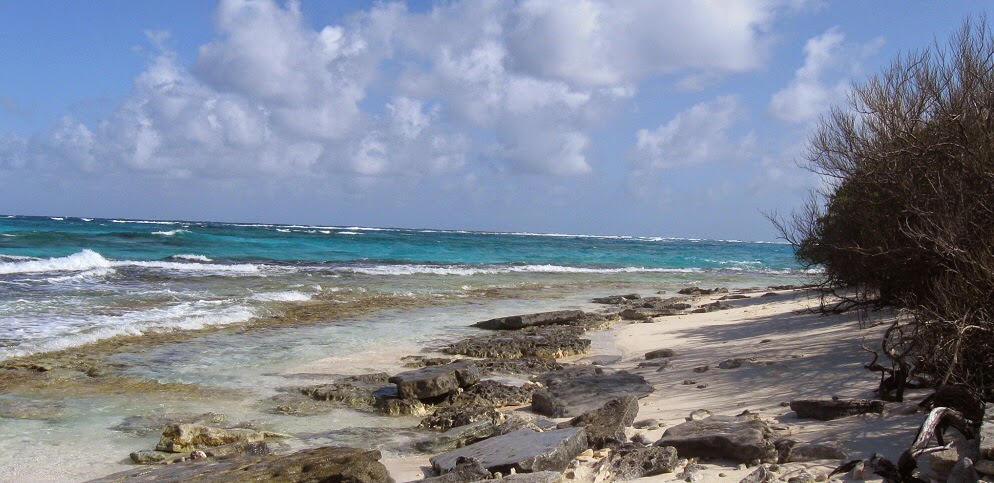
As a Maritime Nation it is perhaps time that the Cayman Islands / Cayman Islands Government acquires a Marine Patrol Vessel capable of patrolling our Exclusive Economic Zone [EEZ] to ensure decimation of shark and over-fishing of Pelagic and other spicies is brought under control.

Preservation of the environment is crucial and funding could be available for this purpose, as was demonstrated by the Seychelles, who was given a debt writedown in return for protecting their EEZ in their i.4 million square kilometers of the Indian Ocean. The Western Indian Ocean Coastal Challenge (WIOCC)
Key Facts
More than 30 million people in the Western Indian Ocean (WIO) islands and East African coastal communities rely on the coastal environment for goods and services and as a source of livelihoods and income
* The economic value of ecosystem goods and services is estimated to be over US$25 billion annually
* Tourism is the largest source of income directly linked to the coastal and marine environment, the region attracts over 20 million tourists that inject US$6 billion+ into economies annually
* Fisheries play an important role in WIO national economies providing from 5.0% to 99.1% of national agricultural exports as well as sources of employment, income and animal protein
* The natural resources that fuel the WIO regions economic activity are under pressure from issues such as overfishing, overdevelopment, pollution and environmental degradation.
* Climate change is exacerbating these problems and present mounting challenges to the sustainable development of the region. In 1998, coral bleaching at an unprecedented scale caused widespread coral mortality across most of the western Indian Ocean, altering the goods and services provided by these reefs .
* There is urgent need for governments and stakeholders to come together and take action to combat climate change, conserve biodiversity and promote sustainable livelihoods to build resilience.


The natural resources that fuel the WIO regions economic activity are under pressure from issues such as overfishing, overdevelopment, pollution and environmental degradation. Climate change is exacerbating these problems and present mounting challenges to the sustainable development of the region. In 1998, coral bleaching at an unprecedented scale caused widespread coral mortality across most of the western Indian Ocean, altering the goods and services provided by these reefs . There is urgent need for governments and stakeholders to come together and take action to combat climate change, conserve biodiversity and promote sustainable livelihoods to build resilience. GLISPA.ORG

Friday, February 19, 2016

TEDx University College of the Cayman Islands

Did you get a chance to see Shonda Rhimes (Grey’s Anatomy, Scandal, etc.) doing her TED talk on Monday evening? If not, you can catch her online at:http://www.ted.com/talks/shonda_rhimes_my_year_of_saying_yes_to_everything

Her talk entitled “My year of saying yes to everything” was absolutely inspiring.

But that’s what TED is about, as you already know if you were one of the 124 people who registered for this past Tuesday’s simulcast at UCCI of the big TED 2016 event in Vancouver, Canada.

However, nothing beats the thrill of seeing live speakers, engaging with them face-to-face, and discussing those great ideas with other TED event attendees.

Of course, the cheapest admission ticket for TED 2016 in Vancouver was US$8500. (Not an admission price that just anyone can afford in these challenging economic times.)

So, keep in mind that just next month, on March 19th, you can experience the same excitement of live speakers and great ideas at TEDxUCCI 2016. The theme this year is FutureVision…and it will undoubtedly be the most insightful TEDx ever for investigating the many pressing issues facing Cayman and the world.

From 10 a.m. until 3 p.m., you’ll hear great talks on topics including conservation, energy use and production, the ocean’s potential, heath, technical literacy, economic and social sustainability, creative professions, and dealing effectively with today’s complex world. There will also be a new production by the UCCI theatre arts students and great food prepared by UCCI’s Hospitality students.

Nick Robson of the Cayman Institute shall be presenting a talk entitled Predicting The Future. Come out and be entertained and hopefully learn a thing or two.

Early Bird 2-for-1: Bring a Friend for Free!

Through the end of this week, two registrants can pay just one admission fee to attend TEDxUCCI 2016. Both people must register for the TEDxUCCI 2016 event online atwww.TEDxUCCI.ky and then both registration confirmations can be taken to the UCCI campus within 10 working days for payment. As long as both registrations were made before February 21st, only one admission fee will be charged.

Admission costs $25 for non-students and $10 for students. But this week’s 2-for-1 special can provide as much as a 50% savings for TEDx-enthusiasts on a budget. TEDxUCCI 2016 is hosted by UCCI and generously sponsored by the Ministry of Community Affairs, Youth & Sports and Foster’s Food Fair.

To register or for more information, go to www.TEDxUCCI.ky or contact info@TEDxUCCI.ky


Friday, November 20, 2015

The Forgotten U.N. Climate Goal: 1.5°C

While much of the attention on a historic Paris climate meeting in the coming weeks will focus on the confounding task of trying to keep global warming below 2°C, or 3.6°F, a battle over another goal — one that has been forgotten by many — will be playing out in the negotiating halls.

SIDS are at risk from SLR

Delegates representing island states and others whose homelands are most threatened by rising seas will be pushing for the formal adoption of a long-overlooked goal, one that limits warming to less than 1.5°C, or 2.7°F.

Such a goal would be an ambitious one. Some negotiators and onlookers already seem to have given up hope of limiting warming to less than 2°C, much less 1.5°C. Fossil fuel burning, deforestation and other climate-changing hallmarks of industrialization have elevated temperatures 1°C since the 19th century, pushing tides up more than 8 inches. Pledges submitted by nations ahead of the meeting to take steps to slow climate change could yet allow warming to soar to 3°C or more.

The longing by low-lying nations to limit warming to 1.5°C has been overshadowed since 2010 by a preoccupation by many with the less ambitious goal. On Wednesday, the U.N. released the latest report to confirm that goal — to limit warming to 2°C, compared with preindustrial times — could be reached through massive globally cooperative efforts that overhaul energy supply chains and reform farming and forest management.

“We definitely think that staying below 2 degrees is still very possible,” Christiana Figueres, executive secretary of the U.N. Framework Convention on Climate Change, told reporters as the report was released. “Getting down to the range of 1.5 should not be taken off the table either.”

When climate delegates agreed during meetings in Copenhagen in 2009 that “the increase in global temperature should be below 2 degrees Celsius,” they also agreed that a study would be completed by 2015 comparing the effects of that goal with an alternative one of curbing temperature rises to 1.5°C. During talks a year later, negotiators agreed to consider tightening the 2°C goal to 1.5°C in the “near future.”

Ahead of what could be history’s most highly anticipated round of climate negotiations, the governments of the countries that are most vulnerable to sea level rise believe that future time has arrived.

The study called for in Copenhagen was published by the U.N. in May, based on interviews with some 70 experts. It concluded that adopting the 1.5°C alternative would be technically feasible, and that meeting it would come with a “high likelihood of meaningful differences” compared with allowing earth to warm by 2°C.

“The scientific finding is that 2 degrees is not enough,” said Ronny Jumeau, a U.N. ambassador from the Seychelles who will negotiate on behalf of small island states during the two-week round of Paris talks, which begin in two weeks. “1.5 is what the low-lying, small island developing states need for their survival.”

The May report warned of the “high” risks that would accompany 2°C of warming, including crop failures, floods, extreme weather events that jeopardize health, and “mass coral bleaching.” But it also pointed out that “there would be significant residual impacts even with 1.5°C of warming.”

It concluded that “most” species would be able to keep up with climate change if warming is kept below 1.5°C. It found, bleakly optimistically, that “up to half of coral reefs may remain” if the planet warms 1.5°C, that sea level rise “may remain below” 3.3 feet, ocean acidification impacts “would stay at moderate levels,” and that it would be easier for communities to adapt to climate change — especially farmers.

Strategies for limiting warming to 1.5°C by century’s end “are similar to those limiting warming to 2°C,” the report noted. It concluded that such strategies would involve “more immediate” actions and “an additional scaling-up” of clean energy and of any technology that captures and stores carbon dioxide pollution, such as at coal power plants.

The conclusions from the May report were consistent with the views of leading scientists.

“To limit warming to 1.5°C, we would not only have to bring carbon emissions down dramatically, but likely would need to employ expensive carbon capture technology,” Penn State meteorology professor Michael Mann said. “Even the deployment of this technology would be cheaper than allowing the damages of allowing global warming to proceed.”

Mark Jacobson, a Stanford University professor whose research focuses on clean energy, said that a radical enough global switch from fossil fuels to clean energy alternatives could be enough to limit warming to less than 1.5°C — even without the need for carbon capture or nuclear power technologies.

Still, the islanders’ quest to adopt the forgotten temperature goal at global climate talks is coinciding with a growing fatigue among some experts over what they see as an overemphasis on the 2°C goal. The goal is an oblique one, since rising temperatures are one of the long-term knock-on effects of rising levels of greenhouse gas pollution.

“There’s too much talk about goals,” said Harvard University economics professor Robert Stavins, who follows the climate talks. He said it would be better to focus on how to increase the ambition of more than 100 national climate pledges under the hoped-for Paris agreement.

But Jumeau of the Seychelles pointed out that a 1.5°C goal would be achievable, and that adopting and meeting it would benefit rich coastal nations as well as those whose existences may be threatened by rising seas.

“It’s not just about the islands, it’s about New York, it’s about New Orleans, it’s about London, it’s about Venice,” Jumeau said. “There is no way we can compromise on 1.5.” More


Sunday, November 15, 2015

Oceans and ocean activism, deserve broader role in climate change discussions

Researchers argue that both ocean scientists and world leaders should pay more attention to how communities are experiencing, adapting to and even influencing changes in the world's oceans.

When President Barack Obama visited the shrinking Exit Glacier in September, he pointed to a very obvious sign of our warming planet literally at his feet.

Less visible, but perhaps more indelible, signs of changing climate lie in the oceans. A University of Washington researcher argues in the journal Science that people -- including the world leaders who will gather later this month in Paris for the latest round of climate change negotiations -- should pay more attention to how climate change's impacts on ocean and coastal environments affect societies around the globe.

"When people see headlines on big science findings that the oceans are acidifying, or sea levels are rising, they feel a sense of helplessness in the face of inexorable change," said lead author and UW professor of marine and environmental affairs Edward Allison. "Yet there are many things that people can, and indeed are already, doing."

The review paper, published Nov. 13, looks at scientific understanding of changes to the world's oceans and how people around the world are responding. These reactions include denial, planned adaptation, a search for technical fixes, and political activism to reduce emissions and tackle the root causes of climate change. The paper also looks at how projected changes in climate and ocean conditions will impact economic activities related to the oceans, to begin a discussion about the future of the human relationship with the marine environment.

"I felt that there was a gap in the research being carried out by the ocean sciences community," Allison said. "Research hasn't really engaged with the politics of climate mitigation and adaptation in the way that scientists working on forests and agriculture have."

"There's a lot of citizen action that can be done at a local level to prevent coastal damage," he continued. Examples cited in the paper include planting mangroves, saving coral reefs, or preventing beach erosion by planting coconut palms. In the Pacific Northwest, shellfish growers have begun to look at how to adapt their practices to account for more acidic seawater.

On a broader scale, Allison points to this spring's "kayaktivist" protesters in Seattle's Puget Sound, where people took to non-motorized marine craft to protest plans to capitalize on melting Arctic sea ice to extract more fossil fuels from the Arctic Ocean "I think the kayaktivists send a message that the future of the oceans, when it comes to energy generation, should be in renewables rather than in fossil fuels," Allison said. "You have this perverse situation where the melting of polar ice caps has allowed more economic exploitation of the Arctic, including for industries that contribute most to global warming." Allison began his career in marine biology, but later moved to fisheries management and international development, a background that helps him bring an interdisciplinary perspective to marine issues. A recent paper he co-authored looked at the tradeoffs between sustainable-fish certification programs and food for local fishing communities.

Co-author Hannah Bassett, a UW master's student in marine and environmental affairs, reviewed existing literature on how climate change will affect marine industries. The impacts on most industries will be negative, she found. But a few, including research and development of new ocean technologies, may benefit. She also found that while aquaculture is often cited as a possible adaptation strategy for declining wild fish stocks, aquaculture itself is anticipated to feel some negative impacts from climate change.

The paper lays out the case for a more interdisciplinary approach to ocean research, with natural and social scientists working together to document the impact of climate change and resulting actions and to understand how oceanic peoples are experiencing, adapting and even influencing changes in the world's oceans. Shifts in the world's oceans are long-lasting, extend far beyond the coast, and touch humans on many different levels, Allison said.

"The ocean is not just a place for economic activity," he said. "It's a place for inspiration, it's a place for enjoyment, it defines many cultures, and it's a place where we get some of our most nutritious food. What's at stake here? It's a timely moment to think about that." More


Wednesday, June 17, 2015

To fight desertification, let's manage our land better

Every year, we lose 24 billion tons of fertile soil to erosion and 12 million hectares of land to desertification and drought. This threatens the lives and livelihoods of 1.5 billion people now.

In the future, desertification could displace up to 135 million people by 2045. Land degradation could also reduce global food production by up to 12% and push world food prices up by 30%. In Egypt, Ghana, Central African Republic, Pakistan, Tajikistan and Paraguay, land degradation could cause an annual GDP loss of up to 7%.

Pressure on land resources is expected to increase as populations grow, socio-economic development happens and the climate changes. A growing population will demand more food, which means that unsuitable or especially biodiverse land will be claimed for farming and be more vulnerable to degradation. Increased fertilizer and pesticide use related to agriculture will increase nutrient loading in soils, causing eutrophication and declines in fertility over time. Climate change will also aggravate land degradation—especially in drylands, which occupy 40% of global land area, and are inhabited by some 2 billion people. Urban areas, which are located in the world’s highly fertile areas, could grow to account for more than 5% of global land by mid-century.

Unless we manage our land better, every person will rely on just .11 hectares of land for their food; down from .45 hectares in 1960.

So how do we manage land better?

It will all come down to what we do with our soil, which is the most significant natural capital for ensuring food, water, and energy security while adapting and building resilience to climate change and shocks. The soil’s nutrient cycling provides the largest contribution (51%) of the total value (USD33 trillion) of all ‘ecosystem services’ provided each year. But soil’s important function is often forgotten as the missing link in our pursuit of sustainable development.

We must invest in applicable solutions that are transformative, and can be scaled up. Climate-smart agriculture is an alternative approach to managing land sustainably whilst increasing agricultural productivity. It includes land management options that sequester carbon and enhance resilience to climate change. Proven climate-smart practices such as agroforestry, integrated soil fertility management, conservation agriculture, and improved irrigation can ensure that land is used optimally, restored and managed in a manner that maximizes ecological, economic and social benefits.

But climate-smart agriculture requires conducive policy frameworks, increased investment, and judicious policy management. Rural poverty is often a product of policies that discriminate against small landholders, forcing them off the land, creating sub-optimal land use outcomes, and long term degradation. Secure land rights are necessary for climate-smart agriculture, providing incentives for local communities to manage land more sustainably. In Rwanda, for instance, land tenure reform rapidly doubled investment in soil conservation, with even larger increases for plots managed by female farmers.

Second, there is need for increased national investment in climate smart agriculture. For technologies such as conservation agriculture that require substantial up-front investment in machinery and other inputs, schemes such as those involving payment for ecosystem services may be more effective in promoting CSA technology adoption. For technologies such as agroforestry systems, innovative finance mechanisms that help farmers bridge the period between when trees are planted, mature and generate income can be decisive.

Third, in some cases, direct public investment in landscape restoration and rehabilitation can bring about sizeable livelihood benefits and create better conditions for attracting further investments by farmers and communities. The China Loess Plateau is a well-documented success story of landscape restoration. Similar experiences are happening in Ethiopia, Kazakhstan and Senegal.

Fourth, a number of improved land management technologies are knowledge-intensive, and promoting their adoption will require training. Conservation agriculture for instance entails sophisticated combinations of no-tillage, residue management, use of cover crops, and other activities and practices that many farmers have limited experience with. The knowledge base of local land management practices can also be improved through targeted capacity development programs.

Many demand-side interventions can strategically break the adoption barriers associated with climate-smart practices. These include: providing farmers with improved weather forecasting, weather-indexed crop insurance, and measures to reduce production variability such as drought-tolerant crops, deep-rooted crops, and irrigation. These should be combined with supply-side measures such as lowering trade barriers to increase national and regional market size, improving road and rail infrastructure to lower transport costs, and improving market information systems to increase farmers’ access to markets.

Lastly, public support is as crucial as the amount of support to fully realize the productivity, adaptation, and mitigation benefits in agriculture. Public support that focuses on research, investments in improved land management, and land tenure rather than on input support is generally more effective, benefits more farmers, and is more sustainable in the long run.

Actions to reduce the negative impacts of land degradation and desertification must indeed go hand in hand with interventions that eradicate poverty and address inequality. Without them, we will not end poverty and boost shared prosperity. More


Tuesday, March 17, 2015

FAO Reports Address Disaster Risk Management in Fisheries and Aquaculture

March 2015: The Fisheries and Aquaculture Department of the Food and Agriculture Organization of the UN (FAO) has published a number of reports addressing climate change vulnerability in fisheries and aquaculture based on six regional studies, and disaster risk management (DRM) in fisheries and aquaculture in the Caribbean Community (CARICOM) and the wider Caribbean region.


The report titled ‘Climate Change Vulnerability in Fisheries and Aquaculture: A Synthesis of Six Regional Studies' came about due to the scarcity of information on climate impacts on the sector, with FAO launching six regional case studies to fill the information gaps and provide guidance towards adaptation planning. The case studies, which were undertaken in the Lake Chad Basin, the Caribbean, the Mekong Delta, the Benguela Current, the Pacific Island countries and territories, and Latin America, aimed to: define vulnerability to climate change by understanding potential impacts, sensitivities to such changes and adaptive capacity; identify knowledge gaps in assessing vulnerability; and identify strategies for, and provide policy guidance in reducing vulnerability to climate change.


The other publications focus specifically on DRM and adaptation in the Caribbean. A regional report from a workshop held in Kingston, Jamaica, from 10-12 December 2012, on formulating a strategy, action plan and programme for fisheries and aquaculture, addresses: resilience building and the reduction of vulnerabilities; the regional trend towards adaptation; the development of a regional DRM framework; and regional initiatives in advancing DRM and adaptation. The workshop recommended finalizing and implementing a strategy, action plan and programme proposal in order to strengthen regional and national cooperation, and develop capacity in addressing climate change impacts and disasters in fisheries and aquaculture.


Another document describes a series of local, national and regional programme proposals for the Caribbean. The strategy and action plan publication discusses: mainstreaming climate change adaptation strategies into sustainable development; promoting the implementation of specific adaptation measures to address regional vulnerabilities; promoting actions to reduce emissions through fossil fuel reduction and conservation, and transitioning to renewable and cleaner energy sources; promoting actions to reduce the vulnerability to the impacts of climate change in CARICOM countries; and promoting efforts to gain social, economic and environmental benefits from managing forests in the Caribbean. More


[Publication: Climate Change Vulnerability in Fisheries and Aquaculture: A Synthesis of Six Regional Studies] [Publication: DRM and Climate Change Adaptation in the CARICOM and Wider Caribbean Region: Formulating a Strategy, Action Plan and Programme for Fisheries and Aquaculture] [Publication: DRM and Climate Change Adaptation in the CARICOM and Wider Caribbean Region: Programme Proposals] [Publication: DRM and Climate Change Adaptation in the CARICOM and Wider Caribbean Region: Strategy and Action Plan]


Thursday, February 26, 2015

A Thirsty, Violent World

They say you learn something new everyday. For me, this day qualifies. Michael Specter writes at the New Yorker on the increasingly dire prospects for water -- of the clean, unpolluted kind -- for a clamoring humankind and of the water wars that are surely on the horizon.

And he has this, on the origins of the word "rivals": "After all, the word 'rivals' has its roots in battles over water—coming from the Latin, rivalis, for 'one taking from the same stream as another.'” Who knew? Not me. Specter's prognostication on our looming water disasters is a grim but important read and not just for Pakistanis or Nigerians, but for us in a country in which California is parched for water in a prolonged drought and researchers are predicting humongous droughts coming later in the century for our breadbasket, the Midwest! TomDispatch


A Thirsty, Violent World

Angry protesters filled the streets of Karachi last week, clogging traffic lanes and public squares until police and paratroopers were forced to intervene. That’s not rare in Pakistan, which is often a site of political and religious violence.

But last week’s protests had nothing to do with freedom of expression, drone wars, or Americans. They were about access to water. When Khawaja Muhammad Asif, the Minister of Defense, Power, and Water (yes, that is one ministry), warned that the country’s chronic water shortages could soon become uncontrollable, he was looking on the bright side. The meagre allotment of water available to each Pakistani is a third of what it was in 1950. As the country’s population rises, that amount is falling fast.

Dozens of other countries face similar situations—not someday, or soon, but now. Rapid climate change, population growth, and a growing demand for meat (and, thus, for the water required to grow feed for livestock) have propelled them into a state of emergency. Millions of words have been written, and scores of urgent meetings have been held, since I last wrote about this issue for the magazine, nearly a decade ago; in that time, things have only grown worse.

The various physical calamities that confront the world are hard to separate, but growing hunger and the struggle to find clean water for billions of people are clearly connected. Each problem fuels others, particularly in the developing world—where the harshest impact of natural catastrophes has always been felt. Yet the water crisis challenges even the richest among us.

California is now in its fourth year of drought, staggering through its worst dry spell in twelve hundred years; farmers have sold their herds, and some have abandoned crops. Cities have begun rationing water. According to the London-based organization Wateraid, water shortages are responsible for more deaths in Nigeria than Boko Haram; there are places in India where hospitals have trouble finding the water required to sterilize surgical tools.

Nowhere, however, is the situation more acute than in Brazil, particularly for the twenty million residents of São Paulo. “You have all the elements for a perfect storm, except that we don’t have water,” a former environmental minister told Lizzie O’Leary, in a recent interview for the syndicated radio show “Marketplace.” The country is bracing for riots. “There is a real risk of social convulsion,” José Galizia Tundisi, a hydrologist with the Brazilian Academy of Sciences, warned in a press conference last week. He said that officials have failed to act with appropriate urgency. “Authorities need to act immediately to avoid the worst.” But people rarely act until the crisis is directly affecting them, and at that point it will be too late.

It is not that we are actually running out of water, because water never technically disappears. When it leaves one place, it goes somewhere else, and the amount of freshwater on earth has not changed significantly for millions of years. But the number of people on the planet has grown exponentially; in just the past century, the population has tripled, and water use has grown sixfold. More than that, we have polluted much of what remains readily available—and climate change has made it significantly more difficult to plan for floods and droughts.

Success is part of the problem, just as it is with the pollution caused by our industrial growth. The standard of living has improved for hundreds of millions of people, and the pace of improvement will quicken. As populations grow more prosperous, vegetarian life styles often yield to a Western diet, with all the disasters that implies. The new middle classes, particularly in India and China, eat more protein than they once did, and that, again, requires more water use. (On average, hundreds of gallons of water are required to produce a single hamburger.)

Feeding a planet with nine billion residents will require at least fifty per cent more water in 2050 than we use today. It is hard to see where that water will come from. Half of the planet already lives in urban areas, and that number will increase along with the pressure to supply clean water.

“Unfortunately, the world has not really woken up to the reality of what we are going to face, in terms of the crises, as far as water is concerned,” Rajendra Pachauri, the chairman of the International Panel on Climate Change, said at a conference on water security earlier this month. “If you look at agricultural products, if you look at animal protein, the demand for which is growing—that’s highly water intensive. At the same time, on the supply side, there are going to be several constraints. Firstly because there are going to be profound changes in the water cycle due to climate change.”

Floods will become more common, and so will droughts, according to most assessments of the warming earth. “The twenty-first-century projections make the [previous] mega-droughts seem like quaint walks through the garden of Eden,” Jason Smerdon, a climate scientist at Columbia University’s Lamont-Doherty Earth Observatory, said recently. At the same time, demands for economic growth in India and other developing nations will necessarily increase pollution of rivers and lakes. That will force people to dig deeper than ever before into the earth for water.

There are ways to replace oil, gas, and coal, though we won’t do that unless economic necessity demands it. But there isn’t a tidy and synthetic invention to replace water. Conservation would help immensely, as would a more rational use of agricultural land—irrigation today consumes seventy per cent of all freshwater.

The result of continued inaction is clear. Development experts, who rarely agree on much, all agree that water wars are on the horizon. That would be nothing new for humanity. After all, the word “rivals” has its roots in battles over water—coming from the Latin, rivalis, for “one taking from the same stream as another.” It would be nice to think that, with our complete knowledge of the physical world, we have moved beyond the limitations our ancestors faced two thousand years ago. But the truth is otherwise; rivals we remain, and the evidence suggests that, until we start dying of thirst, we will stay that way. More


Tuesday, October 28, 2014

IPCC’s Fifth Assessment Report on Climate Change. What does it mean for the Caribbean?IPCC’s Fifth Assessment Report on Climate Change. What does it mean for the Caribbean?

The Caribbean’s response to Climate Change is grounded in a firm regional commitment, policy and strategy. Our three foundation documents – The Liliendaal Declaration (July 2009), The Regional Framework for Achieving Development Resilient to Climate Change (July 2009) and its Implementation Plan (March 2012) – are the basis for climate action in the region.

The Fifth Assessment Report (AR5) of the United Nations Intergovernmental Panel on Climate Change (IPCC) underscores the importance, scientific rigour and utility of these landmark documents. The IPCC’s latest assessment confirms the Caribbean Community’s longstanding call to limit global temperature rise to 1.5 degrees celsius as outlined in the Liliendaal Declaration. At the Nations Nation Framework Convention on Climate Change (UNFCCC) Conference of the Parties (COP) Meeting in 2009, which took place in Copenhagen, Denmark, the Caribbean Community indicated to the world community that a global temperature rise above 1.50C would seriously affect the survival of the community.

In 2010 at the UNFCCC COP Meeting in Cancun, governments agreed that emissions ought to be kept at a level that would ensure global temperature increases would be limited to below 20C. At that time, the Alliance of Small Island States (AOSIS), which includes the Caribbean, re-iterated that any rise in temperature above 1.50C would seriously affect their survival and compromise their development agenda. The United Nations Human Development Report (2008) and the State of the World Report (2009) of The Worldwatch Institute supports this position and have identified 20C as the threshold above which irreversible and dangerous Climate Change will become unavoidable.

Accordingly, the Caribbean welcomes the IPCC’s Fifth Assessment Report prepared by over 2000 eminent scientists. It verifies observations in the Caribbean that temperatures are rising, extreme weather events are occurring more frequently, sea levels are rising, and there are more incidences of coral bleaching. These climatic changes will further exacerbate the limited availability of fresh water, agricultural productivity, result in more erosion and inundation, and increase the migration of fish from the Caribbean to cooler waters and more hospitable habitats. The cumulative effect is reduced food security, malnutrition, and productivity, thus increasing the challenges to achieving poverty reduction and socio-economic development.

The report notes that greenhouse gases emissions, the cause of Climate Change, continues to rise at an ever increasing rate. Unless this trend is arrested and rectified by 2050, global temperatures could rise by at least 4°C by 2100. This would be catastrophic for the Caribbean. However, the report is not all gloom and doom. More than half of the new energy plants for electricity are from renewable resources, a trend that must accelerate substantially if the goal of limiting global warming to below 2°C by 2100 is to remain feasible.

The IPCC AR5 Report should therefore serve as a further wake up call to our region that we cannot continue on a business as usual trajectory. It is an imperative that Climate Change be integrated in every aspect of the region’s development agenda, as well as its short, medium and long-term planning. The region must also continue to aggressively engage its partners at the bilateral and multilateral levels to reduce their emissions. The best form of adaptation is reduction in emissions level.

Dr Kenrick Leslie

The IPCC will adopt the Synthesis Report of the AR5 in Copenhagen, Denmark in late October 2014. Caribbean negotiators are already preparing to ensure that the most important information from the report are captured in the Synthesis Report.

See the highlights of the Caribbean Launch of the UN IPCC AR5 Report in this video:

Learn more about the implications of the IPCC AR5 Report via www.caribbeanclimate.bz and @CaribbeanClimate.

* Dr Kenrick Leslie is the Executive Director of the Caribbean Community Climate Change Centre, the regional focal point for Climate Change.

Tuesday, September 30, 2014

We throw out more food than plastic, paper, metal, and glass

The much-anticipated U.N. Climate Summit, which began a few days ago in New York, and was ostensibly a platform for world leaders to leap frog debates over whether climate change is real, and skip straight to discussions centered around how to overcome the challenges it poses.

But it’s also an impetus for those beyond the sessions’ panels to illuminate troubling patterns of behavior that are contributing to our collective carbon footprint—and food waste is without question one of the most egregious, especially in the United States.

In 2012, the most recent year for which estimates are available, Americans threw out roughly 35 million tons of food, according to the Environmental Protection Agency. That’s almost 20 percent more food than the United States tossed out in 2000, 50 percent more than in 1990, and nearly three times what Americans discarded in 1960, when the country threw out a now seemingly paltry 12.2 million tons.

“Food waste is an incredible and absurd issue for the world today,” Jose Lopez, Nestle’s head of operations said of the issue earlier this month.

Take as percentages, not tonnage.

Roughly a third of the food produced worldwide never gets eaten. The problem is particularly egregious in developed countries, where food is seen as being more expendable than it is elsewhere. “Every year, consumers in rich countries waste almost as much food (222 million tonnes) as the entire net food production of sub-Saharan Africa (230 million tonnes),” the U.N. notes on its website.

This country is one of the worst offenders: a 2012 paper by the Natural Resources Defense Council estimated that as much as 40 percent of America’s food supply ends up in a dumpster.

The most obvious problem with this waste is that while Americans are throwing out their food, an estimated one in every nine people in the world still suffers from chronic hunger—that is, insufficient food—including more than 200 million in Sub-Saharan Africa and more than 500 million Asia. Even in the United States, where that number is significantly lower, some 14 percent of U.S. households still struggled to put food on the table for a portion of last year, according to the USDA.

The level of food waste suggests that curbing hunger isn’t a matter of producing more food so much as better preserving and distributing the food currently being produced. As the United Nations noted in its report on world hunger last week, there is actually enough food to feed all seven billion people living in the world today.

But there’s another less apparent problem with food waste: the threat to the environment. Landfills full of decomposing food release methane, which is said to be at least 20 times more lethal a greenhouse gas than carbon dioxide. And America’s landfills are full of food—organic waste is the second largest contributor to the country’s landfills. Those same landfills are the single largest producer of methane emissions in the United States—they produce almost a quarter of the country’s total methane emissions, according to the NRDC.

The environmental cost of food waste goes further than just methane emissions. Producing food is a costly affair for the environment—an estimated one third of global carbon emissions come from agriculture—but it’s one society pays to feed itself.

The price for producing food that never ends up in someone’s mouth is much more—it includes both the resources and environmental decay sacrificed for its making. The livestock industry contributes more than 15 percent of global carbon emissions, according to the U.N, which means that when Americans throw out meat, they are wasting some of the most environmentally costly food available. More

Given all the discussions concerning the creation of a new landfill here in the Cayman Islands, here a link to creating healthy soil using composted food scraps and hervested water, and helping to reduce waste going to the dump.

Read about what how you can build better soil with all that food "waste" in the WMG's Soil Resource Guide: Here or here from the Watershed Management group's site here


Sunday, September 7, 2014

UN Climate Summit 2014

Climate change is not a far-off problem. It is happening now and is having very real consequences on people’s lives. Climate change is disrupting national economies, costing us dearly today and even more tomorrow. But there is a growing recognition that affordable, scalable solutions are available now that will enable us all to leapfrog to cleaner, more resilient economies.UN Climate Summit 2014

There is a sense that change is in the air. UN Secretary-General Ban Ki-moon has invited world leaders, from government, finance, business, and civil society to Climate Summit 2014 this 23 September to galvanize and catalyze climate action. He has asked these leaders to bring bold announcements and actions to the Summit that will reduce emissions, strengthen climate resilience, and mobilize political will for a meaningful legal agreement in 2015. Climate Summit 2014 provides a unique opportunity for leaders to champion an ambitious vision, anchored in action that will enable a meaningful, global agreement in Paris in 2015. More


Sunday, July 13, 2014

New Study Reveals Whales as Marine Ecosystem Engineers

Baleen and sperm whales, known collectively as the great whales, include the largest animals in the history of life on Earth.

Though large in size, whales have long been considered too rare to make much of a difference in the ocean, and the focus of much marine ecological research has been on smaller organisms, such as algae and planktonic animals. While these small organisms are essential to life in the sea, they are not the whole story. As great whales recover from centuries of overhunting, scientists are beginning to appreciate their roles as ecosystem engineers of the ocean.

A recent synthesis, published in Frontiers in Ecology and the Environment, evaluates decades of research on the ecological role of great whales. The authors, led by Joe Roman at the University of Vermont, suggest that the influence of these animals has been substantially undervalued because, until now, scientists have underestimated the degree to which the decline in whale population has altered marine ecosystems.

Commercial whaling dramatically reduced the abundance of great whales—by at least 66 percent and perhaps as high as 90 percent, according to some estimates—but recovery is possible, and potentially critical for ocean resiliency.

Among their many ecological functions, whales recycle nutrients and enhance primary productivity, locally and on a regional scale. Whales mix the water column, and after feeding at depth, release surface plumes of fecal material. This "whale pump" supplies iron and nitrogen—essentially fertilizers—to primary producers in the surface ocean. Further, the migrations of baleen whales between highly productive, high-latitude feeding and low-latitude calving grounds are among the longest annual movements of mammals. By fasting in these winter calving grounds near the equator, humpback whales, for example, release nitrogen in the form of urea into comparatively nutrient-poor areas—transporting nutrients nearly 10,000 kilometers on the "great whale conveyor belt."

Sometimes, commercial fishermen have seen whales as competition. But this new paper summarizes a strong body of evidence that indicates the opposite can be true: whale recovery "could lead to higher rates of productivity in locations where whales aggregate to feed and give birth," supporting more robust fisheries.

Whales, as one of the longer-lived species in marine systems, can ease the impact of perturbations inclimate, predation and productivity. The continued recovery of great whales may help buffer marine ecosystems from destabilizing stresses and could lead to higher rates of productivity in locations where whales aggregate to feed and give birth.

And when they die, many whale carcasses sink to dark depths of the ocean—delivering massive pulses of organic material to a realm that is typically nutrient and energy impoverished. A 40-ton gray whale, for example, provides more than 2,000 times the background carbon flux that would typically rain down on the area underlying the carcass in an entire year.

"Whales appear to harbor a specialized suite of animals in the deep sea, with many species requiring whale falls to complete their life cycles and persist in the ocean," said Craig Smith, co-author and Oceanography Professor at the University of Hawai‘i at Mānoa. "When whales were removed from the ocean by whalers, these whale-fall specialists lost their essential habitat." More

________________________________________________

I question if it would be possible for humans to work with marine mamals and other sea creatures to 'manage' the oceans for the benefit of the marine environment, the inhabitants of the oceans as well as the living beings on the planet. It would certainly be beneficial to all concerned and would possible go some way towards mitigating climate change. Editor


Monday, June 16, 2014

Small island developing states summit aims for alliances

The UN’s Third International Conference on Small Island Developing States (SIDS), in Apia, Samoa, on 1-4 September, will aim to identify the unique needs andvulnerabilities of island nations and opportunities for international support.

“The challenges facing SIDS are interlinked and cannot be tackled in silo or by one country alone,” says conference secretary-general Wu Hongbo. “This calls for collaboration and partnerships, with active engagement by all stakeholders, governmental and non-governmental.”

The conference will focus on critical areas where new global partnerships are needed, including climate change, oceans, waste, sustainable tourism and disaster risk reduction. Various voluntary commitments have already been announced. These include the creation of a Caribbean Centre for Renewable Energy and Energy Efficiency, which is intended to tackle the challenges of access to affordable energy, energy security and climate change mitigation and adaptation. Once fully operational, which is due to happen by 2018, the centre will fall under the remit of the UN Industrial Development Organization (UNIDO). “The centre will assist energy industries in developing countries in taking advantage of growing sustainable energy market opportunities and provide a platform to promote South-South and North-South knowledge and technology transfer,” says UNIDO renewable energy expert, Martin Lugmayr.

Other new collaborative projects include the University Consortium of Small Island States, which, with the Spanish government and the UN Department of Economic and Social Affairs, announced plans to develop a degree in sustainable development delivered internationally through an online portal. In addition, six countries and various organisations have announced support for the Coral Triangle Initiative that will protect the region, which is home to the highest coral diversity in the world.Maintaining ocean health will be a centrepiece of the conference, according to Milan Meetarbhan, Mauritius’ ambassador to the UN, who says this should lead to the development of a global strategy for a healthy ocean economy. “Given [the ocean’s] crucial importance to the international community and to SIDS in particular, the Samoa summit should consider making a clear recommendation in favour of a stand-alone Sustainable Development Goal on the oceans,” Meetarbhan says. The conference will echo and reinforce targets likely to be outlined in the forthcoming Sustainable Development Goals (a draft of which was released this week), as many of the topics addressed have global significance, says Wu. It will also contribute to an elaboration of the post-2015 UN development agenda, he adds. “In particular, [this will be] through discussions on climate change, where SIDS’ experiences are providing both an example of the devastating impacts and the outcomes of efforts to fight the phenomenon,” he says.

This will be the first SIDS conference in the Pacific. The inaugural conference was held in Barbados in 1994 and resulted in the Declaration of Barbados. This officially recognised the sustainable development needs of SIDS and called for regional and international support to deliver these. The second conference, held in Mauritius in 2005, concluded with the Mauritius Strategy, a further implementation of the Barbados plan with emphasis on the vulnerability of island nations. Wu said the outcome document for this year’s conference will outline priorities for all SIDS and provide a road map for future action to address sustainability priorities. > Link to the Third International Conference on Small Island Developing States More

DESA News: Renewing Focus on Sustainable Islands


Published on Apr 30, 201 4 • "Many of the challenges facing Small Island Developing States are shared by the international community, such as climate change, biodiversity loss, oceans and seas, disasters [...]," said UN DESA's Under-Secretary-General and Conference Secretary-General Wu Hongbo, as preparations accelerate ahead of the UN Conference on Small Island Developing States in Samoa on 1 -4 September. DESA News also spoke with some of the conference bureau members who shared their hopes for this major event.

In the video [in order of appearance]: - Ali'ioaiga Feturi Alisaia, Permanent Representative of Samoa to the United Nations - Milan J N Meetarghan, Permanent Representative of Mauritius - Ronald Jumeau, the Roving Ambassador of Seychelles for Climate Change and Small Island Developing States - Karen Tan, Permanent Representative of Singapore - Phillip Taula, Deputy Permanent Representative of New Zealand

Read the DESA News feature article: http://bit.ly/1 hTrCki

For information on the Third International Conference on Small Island Developing States: http://www.sids2014.org/