Showing posts with label singapore. Show all posts

Friday, January 26, 2018

Building a resilient future: One drop at a time - By Robert C.Brears


To prepare Singapore for future weather changes and the impacts of dimate change on its water services, the Public Utilities Board (PUB)has initiated a series of adaptation measures.

With climate change likely to lead to prolonged dry periods, PUB has developed a robust, diversified, and sustainable water supply that includes NEWater and desalination, both of which are not dependent on rainfall and therefore boost the city-state’s resilience to dry weather.

NEWater

NEWater is a process involving the treating of used water into ultra-clean, high-grade reclaimed water that provides up to 40% of Singapore’s current water needs. NEWater is mainly used for industrial and air-con cooling purposes and is delivered via a dedicated pipe network. During dry periods, NEWater is added to PUB’s reservoirs to blend with raw water, which is then treated at the waterworks before becoming potable water. By 2060, NEWater is expected to meet up to 55% of the country’s future water demand.

Desalination

Because Singapore is surrounded by sea, PUB already has two operational desalination plants with a combined capacity of 100 mgd, which can meet up to 25% of current water demand. By 2020, PUB will have three new 30 mgd desalination plants. By 2060, desalinated water is projected to meet up to 30% of total water demand. With desalination being energy-intensive — Singapore currently uses reverse osmosis, which uses around 3.5 kWh/m³ — PUB is exploring low-energy desalination options to reduce in half the desalination energy used in the future. Options include electrodeionization (an electric field pulls dissolved salts from the water) and biomimicry (mangrove plants and euryhaline fish extract freshwater from seawater using minimal amounts of energy). Read More

Tuesday, October 27, 2015

Indonesia's fires labelled a 'crime against humanity' as 500,000 suffer

Raging forest fires across Indonesia are thought to be responsible for up to half a million cases of respiratory infections, with the resultant haze covering parts of Malaysia and Singapore now being described as a “crime against humanity”.

Tens of thousands of hectares of forest have been alight for more than two months as a result of slash and burn – the fastest and quickest way to clear land for new plantations.

Indonesia is the world’s largest producer of palm oil and fires are frequently intentionally lit to clear the land with the resulting haze an annual headache.

But this year a prolonged dry season and the impact of El Niño have made the situation far worse, with one estimate that daily emissions from the fires have surpassed the average daily emissions of the entire US economy.

The fires have caused the air to turn a toxic sepia colour in the worst hit areas of Sumatra and Kalimantan, where levels of the Pollutant Standard Index (PSI) have pushed toward 2,000. Anything above 300 is considered hazardous.

Endangered wildlife such as orangutans have also been forced to flee the forests because of the fires.

Six Indonesian provinces have declared a state of emergency.

Across the region Indonesia’s haze crisis has been causing havoc – schools in neighbouring Singapore and Malaysia have been shut down, flights have been grounded, events cancelled and Indonesian products boycotted, as millions try to avoid the intense smoke.

In the worst affected parts, on Sumatra and Kalimantan, ten people have died from haze-related illnesses and more than 500,000 cases of acute respiratory tract infections have been reported since July 1. More


Sunday, April 26, 2015

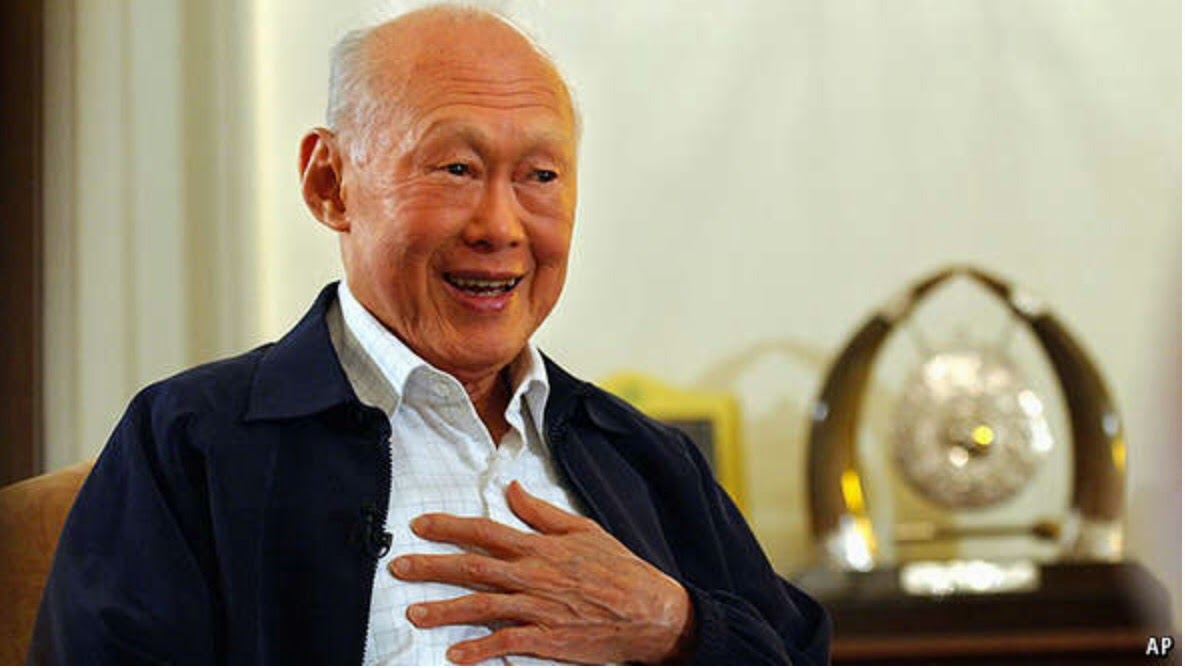
Economic Legacy of Lee Kuan Yew: Lessons for Aspiring Countries

Developing countries have much to learn from Lee Kuan Yew, the first prime minister of Singapore who transformed the republic from a third world economy to one of the most advanced countries in one generation.

Lee Kuan Yew

The lessons for countries aspiring to learn from the Singapore development model are clear – strengthen institutions and improve governance.

But this is much easier said than done. To begin with aspiring countries need to improve the rule of law so that no one is above the law of the land. Equally crucial, they need to reduce corruption as corruption is regressive – small and medium-sized firms pay higher amounts in bribes than large firms.

Thirdly, they need to reform public institutions such as the civil service, bureaucracy, and public administration. Fourthly, they also need to improve the environment affecting the private sector through regulatory reforms, reforms of labour markets, and provision of clearly-defined property rights.

The dilemma is that such reforms generate benefits only in the longer term, making them hard for policymakers and politicians with a shorter time horizon to set as priorities. Yet without them, other policy measures to support sustained economic growth will become less effective and ultimately unravel.

Importance of good governance

Strong institutions and good governance – the economic legacy of Lee Kuan Yew for aspiring countries

The Singapore model of good governance is well-recognised. Development theorists of the past were of the view that economic development could be explained solely by factors like the availability of natural resources, high levels of saving and investment, and openness to foreign trade and investment.

More recently, the Growth Report published in 2008 by the Commission on Growth and Development headed by Nobel laureate Michael Spence has found that an additional factor has also to be good governance, based on mainly Singapore’s development experience under Lee.

As Senior Minister Goh Chok Tong, who participated in the Commission, puts it, for a delicious dish “besides having the right ingredients and the right recipe, you must have a master chef”.

Economic development does not just happen. It must be consciously chosen as an overarching goal by the government.

Good governance means a government that delivers political and economic stability, implements the correct macroeconomic policies, articulates a vision for the country and implements it.

This requires a capable, committed, and credible government, governments that people can trust in, and leaders who are above the board. An abundance of natural resources is neither necessary nor sufficient for a country’s economic development. What is required is good governance.

A case of good governance is Lee’s choice of the Singapore development model in the 1960s and beyond.

The Singapore Development Model

After the separation from Malaysia in 1965, Singapore was similar to a typical developing country of today. GNP per capita was about US$300, unemployment rates were high, and racial disharmony was rife. The announcement by the British in 1968 that they would withdraw their forces from Singapore was also expected to aggravate the unemployment situation further. How should jobs be created?

As the prime minister of a small country, Lee was always thinking big and making bold decisions in the interest of the country. Mr Lee adopted a development model based on export of labour-intensive manufactured goods to world markets. Lee invited multinational companies from all over to invest heavily in Singapore. Produce in Singapore and sell to the world, he told them.

To provide an attractive investment environment, the government built the appropriate infrastructure, cut tariffs and quotas, offered tax incentives, and implemented appropriate macroeconomic policies. The Economics Development Board (EDB) Singapore was established in 1961 to provide a business friendly environment to foreign investors and to convince them that Singapore was a good place to invest.

The National Wages Council (NWC) was also established in 1972 to make sure that the benefits of foreign investment were shared and also to accelerate Singapore’s move up the development ladder. Mr Lee also met foreign investors regularly and listened to them and their grievances.

Although pragmatic, Lee’s choice of an export-oriented development model driven mainly by foreign investment was a risky strategy at the time. This is because in the 1960s and 1970s, foreign investment was not welcome in the developing world.

The dependency theorists, in particular, argued that foreign investors from developed countries typically exploit cheap labour and extract natural resources of the developing countries. It is only after the success of the Singapore development model that export-oriented development strategies driven by foreign investment has been popularly adopted all over the world.

‘It’s not how you start but how you arrive’

In the 1980s and the 1990s the type of investment Singapore sought to attract shifted gradually from labour-intensive industries (eg, garments, textiles, and wigs) towards more high-tech and knowledge-based industries (eg, chips, wafer fabs, and disk drives).

Lee noted that, since the unemployment problem had been overcome, the new challenge was “how to improve the quality of the new investments and with it the education and skill levels of our workers”.

Lee’s attempt to make Singapore the Asian financial centre and global business hub is also bold. Unable to compete with Hong Kong then, Lee tried especially hard to convince foreign bankers and international financial institutions to come to Singapore by establishing integrity, efficiency, the rule of law, reliability, and stability.

In his words, “[the] history of our financial centre is the story of how we built up credibility as a place of integrity, and developed the officers with the knowledge and skills to regulate and supervise the banks, security houses and other financial institutions….”

Overall, Mr Lee’s development strategy which focused on strengthening institutions and improving governance was successful. Other developing countries will, however, face difficulties in adopting this strategy.

A case in point is South Asia. Countries in this region had begun their reform programmes in the early 1990s by focusing on macroeconomic areas – monetary and fiscal reforms, and industrial deregulation – which had contributed to a more rapid economic growth.

These reforms, however, eventually ran out of steam – because of red tape, endemic corruption, and lack of rule of law – and have contributed to the recent economic slowdown. Lee’s model followed his dictum, which he shared with the King of Bhutan: “It’s not how you start the journey that counts, but how you arrive.” More


Sunday, March 22, 2015

Could Cayman Become The Singapore Of The West?

Lee Kuan Yew - Father of Singapore

Lee Kuan Yew - The wise man of the East

IF YOU seek his monument: look around Singapore. Prosperous, orderly, clean, efficient and honestly governed, it is not the work of Lee Kuan Yew alone. But even his severest critics would agree that Mr Lee, who died early on March 23rd (Singapore time) at the age of 91, played an enormous part. Singapore’s leader from before "self-government" from Britain in 1959, he was prime minister until 1990, and retired in stages, leaving the cabinet only in 2011, and remaining a member of parliament until his death. Under him Singapore, with no natural resources, has become one of the world’s richest countries. Many admirers look to it as a model, and Mr Lee as a sage. He did indeed have much to teach the world; but some, especially in China, draw the wrong lesson: that authoritarianism works.

Part of Mr Lee’s influence stemmed from his role as a clear-eyed, blunt-speaking geostrategist. He was an astute observer of the defining contest of our era—China’s emergence and how America reacts to it. He was also a respected interpreter of each to the other, and an important voice, with unique access in both countries, arguing for continued American engagement in Asia and for Chinese tolerance of it.

Critics mock Singapore for being like North Korea or as "Disneyland with the death penalty", as William Gibson described it in 1993. However, Mr Lee’s defenders argue that the restrictions are a small price to pay for stability and prosperity. GDP figures do not lie: Mr Lee’s policies have worked. Singapore is a thriving city-state. Unlike North Korea or Disneyland, it offers a real challenge to the liberal notion that growth, prosperity and freedom should and do go together.

China’s leaders, especially, are fascinated by Singapore’s style of one-party rule. They see flaws in "Western-style democracy": its short-termism; its disregard for non-voters such as children and foreigners; and its habit of throwing up unqualified leaders. Mr Lee’s "meritocracy" promises a solution.

But four peculiarities of Singapore make it look like an anomaly. First is its size. It is a city with a foreign policy, which means it has a cohesion that vast, diverse countries cannot match. Second, this cohesion is reinforced by the turbulent circumstances of its birth. After a painful divorce from Malaysia in 1965, the government has never let Singaporeans forget that a Chinese-majority island, surrounded by Muslim-majority Indonesia and Malaysia, would always be vulnerable. Geography is third. Singapore has flourished in part because of the failings of the rest of its region. Rather as Hong Kong’s prosperity was based on being Chinese but not entirely part of China, so Singapore is in South-East Asia, but not of it.

Only one Lee Kuan Yew
However, the most important reason for Singapore’s singular experience is Mr Lee himself. Incorruptible himself, he kept government unusually clean. He ensured that Singapore pays its ministers and civil servants high salaries. Under today’s prime minister, his son Lee Hsien Loong, the bureaucracy has remained orderly and clean. Unlike many other independence leaders, Mr Lee designed a system to outlast him. Singapore’s government claims it has faced enough electoral competition to keep it honest but not so much that there was a high risk of losing power. So it has been able to eschew populism and take decisions in the country’s long-term interests.

But in most countries, probity requires checks, balances and an opposition that is not always condemned as unpatriotic. In China, for example, Xi Jinping, two years into an anti-corruption campaign, shows no sign of winning the battle. Across much of the developing world, those in opposition are treated as traitors whether their criticisms make sense or not.

Even in Singapore the model may not outlast its creator for long. Singaporeans are having few children and ageing fast, so the government faces demands for more generous social-welfare provisions. And growth has become dependent on high levels of immigration, angering natives who feel the influx is suppressing their wages and making it impossible to get a seat on the tube. That balance between competition and inevitable re-election is shifting uncomfortably. The Singapore model may prove unsustainable even in Singapore. More


Tuesday, March 4, 2014

Weather in Singapore driest since 1869

The prolonged dry weather affecting Singapore since mid-January has set a new record for the driest month since 1869, according to the National Environment Agency (NEA).

At the Changi climate station, the rainfall total recorded last month was 0.2mm, breaking the previous record of 6.3mm in February 2010.

Apart from being the driest month ever, last month is the most windy month in the last 30 years.

At the Changi climate station, the average daily wind speed of 13.3 kilometre per hour (kph) recorded last month exceeds the previous high of 12.5kph in January 1985.

The prolonged dry conditions have also set a new record for the lowest average daily relative humidity of 74.5%.

The previous record low for February and any month of the year was 76.9% (February 1968) and 74.6% (June 2013).

The last day of significant rainfall was on February 16 when between 0.2mm and 29m was recorded in various parts of the island.

Since then, there has been little or no rainfall, with Singapore entering another period of dry spell on February 17.

The dry weather affecting Singapore and the surrounding region is expected to persist in the first half of this month.

With the expected onset of the inter-monsoon in the second half of this month, the winds in the region will turn light and variable in direction.

Increased rainfall can be expected in the later part of the month.

With the dry weather expected to continue, the National Water Agency has started a public campaign to get everyone to conserve water. – Bernama, March 4, 2014. More