Saturday, March 24, 2012

New research lowers past estimates of sea-level rise

The seas are creeping higher as the planet warms. But how high could they go? Projections for the year 2100 range from inches to several feet, or even more.
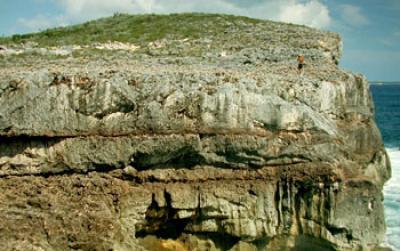
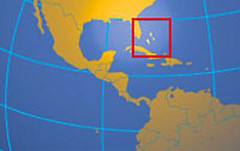
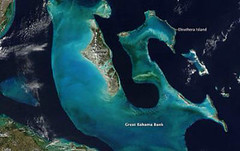
The sub-tropical islands of Bermuda and the Bahamas are two seemingly unlikely places scientists have gone looking for answers.

The cliffs and ancient reefs on Bermuda and the Bahamas have lured fossil-hunters for decades. The land on the Bahamas, for example, has a foundation of fossil coral; the stone is derived from the disintegration of age-old coral reefs and seashells.

These areas are now attracting scientists investigating global sea level rise.

By pinpointing where the shorelines stood on cliffs and coral reefs in the Bahamas and Bermuda during an extremely warm period 400,000 years ago, researchers hope to narrow the range of global sea-level projections for the future. After correcting for what they say was sinking of these islands at that time, scientists estimate that the seas rose 20 feet to 43 feet higher than today--up to a third less than previous estimates, though still a drastic change.
The results are reported in this week's issue of the journal Nature.

"Our research provides a simple explanation for high beach deposits [such as fossils in the Bahamas]," said the paper's lead author Maureen Raymo, a scientist at Columbia University's Lamont-Doherty Earth Observatory.


Average global sea-level rose eight inches since the 1880s, and is currently rising an inch per decade, driven by thermal expansion of seawater and melting of glaciers and ice sheets, including the still mostly intact ice in Greenland and West Antarctica.

In its most recent report, the Intergovernmental Panel on Climate Change estimated that the seas could rise up to two feet by 2100.
That number could go higher depending on the amount of ice melt and the quantity of greenhouse gas emissions.

The United Nations estimates a five feet sea-level rise would be enough to swamp 17 million people in low-lying Bangladesh alone.

The new study factors in the loading and unloading of ice from North America during the ice ages preceding the long-ago sea-level rise. More


Wednesday, March 21, 2012

Barbados Employment Opportunity


Caribsave

BARBADOS EMPLOYMENT OPPORTUNITY

The CARIBSAVE Partnership is seeking an experienced and self-motivated Project Manager for our Barbados Headquarters.

For further information please visit our website www.caribsave.org

Closing date for applications is Monday 2 April 2012

Tuesday, March 20, 2012

Caribbean Mobilises Funds for Ten-Year Climate Plan

PORT OF SPAIN, Trinidad, Mar 16 (IPS) - Failure to adapt to climate change will derail the development aspirations of the 15-member Caribbean Community (Caricom), researchers warn, siphoning off an average of five percent of 2004 gross domestic product regionwide by 2025.The predicted costs could rise to as much as 75 percent by 2100 for smaller nations, says the Belize-based Caribbean Community Climate Change Centre (CCCCC).

Meeting in Suriname last week, Caricom leaders acknowledged the severity of the threat, adopting a common strategy dubbed the "Implementation Plan for the Regional Framework for Achieving Development Resilient to Climate Change".

The problem now is how to pay for it.

The CCCCC, which drafted the plan at Caricom's request, noted that "these concerns will require both adaptation and mitigation actions, which will necessitate significant and sustained investment of resources" that Caribbean countries will be unable to raise on their own.

"These climate challenges are compounded by the fact that Caricom states are relatively small, have an exceptionally high level of external debt - in some instances above 100 percent of GDP - and depend heavily on expensive imported fuel," Dr. Kenrick Leslie, CCCCC's executive director, told IPS.

He noted that fuel prices "reached 147 dollars per barrel in 2008, with 21 percent of GDP, or four times the food import bill of four billion dollars, being expended on this product in 2010.

"This means that Caricom states do not have the necessary resources to implement adaptation programmes," he said, adding "given the scale of these costs, (it) will mean that the economies of the Caricom states are in perpetual recession."

Leslie said that socioeconomic development and adaptation measures, such as replanting of mangroves, better land use planning, and building coastal defence structures against rising sea levels are closely intertwined.

"Adaptation is increasingly described as climate resilient development or development under a hostile climate. It is the ability of states to withstand the vagaries of a changing climate, or even if impacted negatively, how quickly they are able to response and rebound," he said. More


Global Sea Level Likely to Rise As Much As 70 Feet in Future Generations

Scientists looked back in time—in the geologic record—to see the future

Washington, D.C. - Even if humankind manages to limit global warming to 2 degrees Celsius (3.6 degrees Fahrenheit)—as the Intergovernmental Panel on Climate Change recommends—future generations will likely have to deal with a completely different world.

One with sea levels 40 to 70 feet higher than at present, according to research results published this week in the journal Geology.

The scientists, led by Kenneth Miller of Rutgers University, reached their conclusion by studying rock and soil cores taken in Virginia, New Zealand and the Eniwetok Atoll in the north Pacific Ocean.

They looked at the late Pliocene epoch, 2.7 million to 3.2 million years ago, the last time the carbon dioxide level in Earth’s atmosphere was at its current level and when atmospheric temperatures were 2 C higher than they are now. Earth with a sea level rise of six meters. Imagine a possible future rise of 70 feet. Credit: NASA

“The difference in water volume released is the equivalent of melting the entire Greenland and West Antarctic Ice Sheets, as well as some of the marine margin of the East Antarctic Ice Sheet,” said H. Richard Lane, program director in the National Science Foundation’s Division of Earth Sciences, which funded the work.

“Such a rise of the modern oceans would swamp the world’s coasts and affect as much as 70 percent of the world’s population.”

“You don’t need to sell your beach real estate yet, because melting of these large ice sheets will take centuries to millennia,” Miller said.

“The current trajectory for the 21st century global rise of sea level is 2 to 3 feet due to warming of the oceans, partial melting of mountain glaciers and partial melting of Greenland and Antarctica.” More


Monday, March 19, 2012

Water and Food Facts for World Water Day

March 22 is World Water Day, and its theme this year—water and food security—couldn’t be more pressing. But what do we really know about water—where it goes, what it’s used for, and how to preserve it? Here are a few water facts to get people thinking about what the “food and water crisis” really means, and how we can begin to change things.

Consumption

India, China and the United States together account for about one-third of the water extracted each year globally.

Over 90 percent of the water consumed globally by humans is used for agriculture.

Irrigation and Groundwater

Only 16 percent of world’s cropland is irrigated. But because irrigated land is more than twice as productive, that land accounts for 36 percent of the food we harvest.

To meet the constant demand for irrigation, countries are increasingly using more and more non-renewable groundwater. According to the United Nations, groundwater extraction has tripled in the last half century. India and China’s use of groundwater grew the most – today these countries use ten times as much groundwater as they did in 1950.

The amount of groundwater the world uses is so huge, it’s contributing to rising sea levels – as much as 25 percent of the observed amount in recent years. That means that an enormous amounts of water drawn from underground aquifers is never replaced. Or as Duke University’s Bill Chameides puts it, “Mankind is moving buckets and buckets of water from land to the ocean.”

The amount of groundwater the world uses is so huge that it’s also changing local climates, and it may bemasking the effects of global warming, according to research published in Climate Dynamics. This masking effect is most striking over North America, India, the Middle East and East Asia.

Pumping groundwater consumes enormous amounts of energy. In India, approximately one-fifth of the nation’s total electricity consumption goes toward pumping groundwater for irrigation. In the most important food producing areas, that number is much higher.

Virtual Water

Almost everything we do—from growing food, to making clothes and computers and automobiles, to generating electricity requires water. “Virtual water” refers to the amount of water it takes to produce and transport a commodity. Check your own water footprint here.

Many water-stressed nations are today virtual water exporters. India is the largest net exporter of virtual water.

Climate Change and the Future

According to the OECD, by 2030 almost half of the world’s population will be living under severe water stress.

Globally, heat waves and extreme drought could increase under climate change. The impact will be worse in some areas. According to research by Lamont-Doherty scientists at the Earth Institute, by mid-century dustbowl conditions seen in the 1930s will become the new norm for the southwestern United States.

Water stress threatens the grid. Conventional powerplants – hydroelectric, coal-fired, gas fired and nuclear—require tremendous volumes of water to run, accounting for 50 percent of water withdrawals in the United States. According to a study for the Columbia Journal of Environmental Law, the convergence of population growth, rising demand and drought could cause huge water shortages and force powerplant shutdowns.

What You Can Do

Think about diet. The amount of water it takes to produce different kinds of food various tremendously. The water footprint of beef is particularly egregious, consuming anywhere from 2500 to 5000 gallons of water per pound. Consider cutting back, or switching to grass-fed beef, which has a significantly lower water footprint. More


Wednesday, March 14, 2012

Fukushima, Europe's nuclear test

Madrid, Spain - Seen from Europe, the irrationality of the political and media discourse over nuclear energy has, if anything, increased and intensified in the year since the meltdown at Japan's Fukushima Daiichi power plant. Yet a dispassionate assessment of nuclear energy's place in the world remains as necessary as it is challenging.

Europeans should not pontificate on nuclear energy policy as if our opinion mattered worldwide, but we do. On the other hand, Europe does have a qualified responsibility in the area of security, where we still can promote an international regulatory and institutional framework that would discipline states and bring about greater transparency where global risks such as nuclear power are concerned.

Europe is equally responsible for advancing research on more secure technologies, particularly a fourth generation of nuclear reactor technology. We Europeans cannot afford the luxury of dismantling a high-value-added industrial sector in which we still have a real comparative advantage.

In-depth coverage one year after triple disaster

In Europe, Fukushima prompted a media blitz of gloom and doom over nuclear energy. The German magazine Der Spiegelheralded the "9/11 of the nuclear industry" and "the end of the nuclear era", while Spain's leading newspaper El Pais preached that supporting "this energy [was] irrational", and that "China has put a brake on its nuclear ambitions". But reality has proven such assessments to be both biased and hopelessly wrong.

True, a few countries - Belgium, Italy, Germany, and Switzerland, with Peru the only non-European country to join the trend - formally declared their intention to phase out or avoid nuclear energy. These decisions affect a total of 26 reactors, while 61 reactors are under construction around the world, with another 156 projected and 343 under official consideration. If these plans are realised, the number of functioning reactors, currently 437, will double.

But, more interestingly, the nuclear boom is not global: Brazil is at the forefront in Latin America, while the fastest development is occurring in Asia, mostly in China and India. If we compare this geographical distribution with a global snapshot of nuclear sites prior to the Three Mile Island nuclear meltdown in the United States in 1979, a striking correlation emerges between countries' nuclear energy policy and their geopolitical standing and economic vigour. More

To make the transition to alternative energy and hopefully nuclear fusion, we are going to have to continue using nuclear. Having said this, I will say that we have to retrofit all the 60+ year old nuclear plants to a vastly higher safety standard. We must also start using the latest nuclear reactor technologies, the fourth generation designs like the Toshiba 4s, TerraPower’s Travelling Wave and the Hyperion design. These are all a great deal safer and proliferation proof. You may want to read Power To Save The World: The Truth About Nuclear Energy by Gwyneth Cravens and Richard Rhodes. Editor


Entire nation of Kiribati to be relocated over rising sea level threat

The low-lying Pacific nation of Kiribati is negotiating to buy land in Fiji so it can relocate islanders under threat from rising sea levels.

In what could be the world's first climate-induced migration of modern times, Anote Tong, the Kiribati president, said he was in talks with Fiji's military government to buy up to 5,000 acres of freehold land on which his countrymen could be housed.

Some of Kiribati's 32 pancake-flat coral atolls, which straddle the equator over 1,350,000 square miles of ocean, are already disappearing beneath the waves.

Most of its 113,000 people are crammed on to Tarawa, the administrative centre, a chain of islets which curve in a horseshoe shape around a lagoon.

"This is the last resort, there's no way out of this one," Mr Tong said.

"Our people will have to move as the tides have reached our homes and villages."

Mr Tong said the plan would be to send a trickle of skilled workers first, so they could merge more easily with the Fijian population and make a positive contribution to that country's economy.

"We don't want 100,000 people from Kiribati coming to Fiji in one go," he told the state-run Fiji One television channel.

"They need to find employment, not as refugees but as immigrant people with skills to offer, people who have a place in the community, people who will not be seen as second-class citizens.

"What we need is the international community to come up with an urgent funding package to deal with that ambition, and the needs of countries like Kiribati." More


Political upheaval should not affect Maldive climate policy - official

BANGKOK (AlertNet) – A change of leaders in the Maldives should not affect the country’s much-praised climate policy and the country remains committed to becoming the world’s first carbon neutral country, a top environmental official told AlertNet.

The Maldives, a collection of picture-perfect islands and small atolls in the Indian Ocean favoured by well-heeled tourists, is one of the world's countries most vulnerable to climate change.

It is the lowest-lying country on the planet, with an average ground level of 1.5 metres (5 feet) above sea level. Over the last century, sea levels have risen by about 20 cm (8 inches) and further rises could submerge the Maldives.

Ibrahim Naeem, head of the country’s Environmental Protection Agency, said the recent political upheaval which saw the overthrow of presidentMohamed Nasheed, a well-known climate change campaigner, would not derail the Maldives’ leadership on climate issues.

“True, Nasheed has been very vocal and very popular with western society. He's really a good man advocating for (action on) climate change and the impacts we're facing in the Maldives,” Naeem told AlertNet.

“But I don't think this change will bring any change to the climate policy because it is (Nasheed’s) vice-president who's ruling the country now,” he said, speaking on the sidelines of the Second Asia Pacific Climate Adaptation Forum in Bangkok. More


Greenland icesheet more vulnerable than thought to warming

AFP - The Greenland icesheet is more sensitive to global warming than thought, for just a relatively small — but very long term — temperature rise would melt it completely, according to a study published on Sunday.

Previous research has suggested it would need warming of at least 3.1 degrees Celsius (5.6 degrees Fahrenheit) above pre-industrial levels, in a range of 1.9-5.1 C (3.4-9.1 F), to totally melt the icesheet.

But new estimates, published in the journal Nature Climate Change, put the threshold at 1.6 C (2.9 F), in a range of 0.8-3.2 C (1.4-5.8 F), although this would have to be sustained for tens of thousands of years.

Greenland is second to Antarctica as the biggest source of locked-up water on land.

If it melted completely, this would drive up sea levels by 7.2 metres (23.6 feet), swamping deltas and low-lying islands.

If global warming were limited to 2 C (3.6 F), a target enshrined in the UN climate-change negotiations, complete melting would happen on a timescale of 50,000 years, according to the study.

Current carbon emissions, though, place warming far beyond this objective. If they were unchecked, a fifth of the icesheet would melt within 500 years and all would be gone within 2,000 years, the study says. More


Sunday, March 11, 2012

The Georgia Guide Stones: A Guide To The Age Of Reason or...

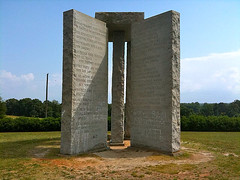
The Georgia Guidestones is a large granite monument in Elbert County, Georgia, USA. A message comprising ten guides is inscribed on the structure in eight modern languages, and a shorter message is inscribed at the top of the structure in four ancient languages' scripts:Babylonian, Classical Greek, Sanskrit, and Egyptian hieroglyphs.

  1. Maintain humanity under 500,000,000 in perpetual balance with nature.
  2. Guide reproduction wisely — improving fitness and diversity.
  3. Unite humanity with a living new language.
  4. Rule passion — faith — tradition — and all things with tempered reason.
  5. Protect people and nations with fair laws and just courts.
  6. Let all nations rule internally resolving external disputes in a world court.
  7. Avoid petty laws and useless officials.
  8. Balance personal rights with social duties.
  9. Prize truth — beauty — love — seeking harmony with the infinite.
  10. Be not a cancer on the earth — Leave room for nature — Leave room for nature.

Given the events that humanity will have to deal with going forward into this century the Guides inscribed in these stones are certainly worthwhile precepts to follow.

We have Climate Change, Energy Security, Water Security, Food Security and a Burgeoning Population. All of these topics are potential Conflict Triggers. Do you see any corelation to the ten precepts above?

The question, will we be smart and altruistic enough to heed warnings like these on the Georgia Guide Stones or will these stones become the Stonehenge of 2112?

The choices we make today, as spoken of by James Hansen (climate change link above) of making drastic cuts to CO2 and methane output, instead of Business as Usual (BAU) and subsidies to the oil companies will will have either positive or negative effects on our children and grand children's quality of life. making the right decisions now may well be creating the conditions to avoid conflict in the future.

There are many of us who work for non-governmental and research organizations who question how we are going to feed 9.5 billion of this planets population in fourty years time. When we think about agriculture irrigation immediately comes to mind. As the worlds climate heats up rainfall patterns will change with some areas having drought and others having devestating flooding as Australia and Pakistan have experienced in recent years.

These threats were first raised by The Club of Rome fourty years ago. The Club of Rome was founded in 1968 as an informal association of independent leading personalities from politics, business and science, men and women who are long-term thinkers interested in contributing in a systemic interdisciplinary and holistic manner to a better world. The Club of Rome members share a common concern for the future of humanity and the planet. The aims of the Club of Rome are: to identify the most crucial problems which will determine the future of humanity through integrated and forward-looking analysis; to evaluate alternative scenarios for the future and to assess risks, choices and opportunities; to develop and propose practical solutions to the challenges identified; to communicate the new insights and knowledge derived from this analysis to decision-makers in the public and private sectors and also to the general public and to stimulate public debate and effective action to improve the prospects for the future. Humanity however, have not heeded this warning. Time is runing out and a tipping point will be reached at which point we will have a runaway, out of control catastrophe.


Watch David Wasdell, Director of the Meridian Programme as he talks about climate change. At 24 minutes into the presentation he talks about NASA being afraid to release findings of methane releases off the coast of San Diego for fear of retribution by the Bush administration. David Wasdell, Director of the Meridian Programme, is a world-renowned expert in the dynamics of climate change. He is also a reviewer of the International Panel on Climate Change (IPCC) assessment reports and the author of numerous papers and presentations on climate change and related topics. For more on David Wasdell visit: www.meridian.org.uk

In politics we must remember what Mikhail Gorbachev said, "Today one often hears that politics is a dirty business, incompatible with morality. No, politics becomes dirty and a zero-sum, lose-lose game only when it has no moral core". Mikhail Gorbachev - The Soviet Union’s last General Secretary and first President.

Are we smart enough to heed the advice given to us by some of our best thinkers or are we headnig for centuries of conflict, theocratic states and a new dark age? The choice is ours. Act now while there is still a little time.

Nicholas B. Robson

Cayman Islands

11th. March 2012


Thursday, March 8, 2012

Kiribati in Fiji relocation plan

The low-lying Pacific island nation of Kiribati is considering purchasing land in Fiji to help secure a future threatened by rising sea levels.

Kiribati’s President Anote Tong is in talks to buy 23 sq km (9 sq miles) on Fiji’s Vanua Levu island.

The land is wanted for crops, to settle some Kiribati farmers and to extract earth for sea defences, reports say.

Some of Kiribati’s 32 coral atolls, which straddle the equator, are already disappearing beneath the ocean. None of the atolls rises more than a few metres above the sea level.

‘Last resort’

Fiji, which is more than 2,000km (1,300 miles) away, is one of a number of countries that Kiribati hopes its population may be able to move to in the future.

The chairman of Fiji’s Real Estate Agents Licensing Board, Colin Sibary, said he was facilitating talks between Kiribati officials and a Fijian freeholder who owns the land on Vanua Levu.

“I’ve been working very hard on this for Kiribati for a year,” Mr Sibary told the BBC.

“After the purchase they will formalise a development plan which will include various farms to produce vegetables, fruit and meat for export to Kiribati.” More


Thursday, March 1, 2012

Many Strong Voices Launches New And Updated Web Site

Many Strong Voices (MSV) has just launched its new web site, which has been revised and updated. There are sections with downloadable materials -- publications, posters, postcards, etc. -- which you should feel free to use. We will shortly about linking to other projects and material as well. Click Here


Wednesday, February 22, 2012

OECS Investigates Funding for Climate Change Adaptation and Sustainable Energy


16 February 2012: An Organisation of Eastern Caribbean States (OECS) workshop examined climate financing opportunities for Caribbean small island developing States (SIDS) to enable them to respond to the challenges of climate change and variability. The workshop was organized in collaboration with, and with the financial support of, the World Bank Institute (WBI).

The workshop, which took place from 15-16 February 2012, in Rodney Bay, Saint Lucia, explored the range of climate finance instruments available for adaptation and sustainable energy, including case studies on their use, and sought to identify knowledge gaps and areas in which further capacity building efforts in OECS countries will be required. Participants discussed how to integrate carbon revenues in project financing, and strategies for mobilizing financial and investment flows to address climate change.

Workshop participants also discussed the current state of the global climate negotiations and the SIDS position therein, as well as adaptation challenges of particular concern to OECS countries, namely watershed management and sustainable land management. Member States of OECS include Anguilla, Antigua and Barbuda, British Virgin Islands, Commonwealth of Dominica, Grenada, Montserrat, Saint Lucia, St. Christopher (St. Kitts) and Nevis, and St. Vincent and the Grenadines. [IISD RS Sources] More


Wednesday, February 15, 2012

AOSIS Chair Identifies Climate Change Mitigation and Adaptation as Main Challenges

 
12 February 2012: In a welcome statement marking her start as Chair of the Bureau of the Alliance of Small Island States (AOSIS), Ambassador Marlene Moses of Nauru identified the Alliance’s main challenge over the next few years as working with the international community to achieve climate change mitigation and adaptation. Moses, Nauru’s Permanent Representative to the UN, became the AOSIS Chair in January 2012, succeeding Ambassador Dessima Williams of Grenada. 
Highlighting the current and forecasted impacts of climate change on island communities, Moses noted that the international community’s response to climate change has been less than what is required, both to protect island people and all of the world’s inhabitants. She said AOSIS, therefore, is investigating ways to increase the greenhouse gas (GHG) emission reductions ambition and to partner with committed countries to find the additional reductions that science shows is needed.
With regard to climate change mitigation, the challenge is to work with the international community to stabilize GHG emissions at a level that ensures the survival of all nations. With regard to adaptation, it is to provide the resources vulnerable communities need to adapt to the unavoidable impacts of climate change, and develop sustainable futures. [Statement by AOSIS Chair]
 

Sunday, February 5, 2012

Island nations want climate change in world court

 UNITED NATIONS: Small island nations, whose very existence is threatened by the rising sea levels brought about by global warming, are seeking to take the issue of climate change before the International Court of Justice.

Johnson Toribiong, president of Palau, said Friday his country and other island nations had formed an expert advisory committee to bring the issue before the U.N. General Assembly. That would allow the world court in the Hague to determine the legal ramifications of climate change under international law.
”If 20 years of climate change negotiations have taught us anything, it’s that every state sees climate change differently. For some, it is mainly an economic issue … for others it’s about geopolitics and their past or future place in the global economy, but for us it’s about survival,” Toribiong said.
”Pacific countries are in the red zone, a swell of ocean where waters have risen two or three times higher than anywhere else in the world. That differential might explain why we speak about climate change so urgently and we look to everyone in every corner of the United Nations to find a solution,” he added.
Michael Gerrard, director of the Center for Climate Change Law at Colombia University and a member the advisory committee, said the idea is to have a court determination compelling developed nations to control emissions of the greenhouse gases believed to cause global warming in the absence of an international treaty. More
 

Saturday, February 4, 2012

Interview with John Ashton, UK's Special Representative for climate change

 “It was the voice of the Caribbean that changed the world at Durban,” says John Ashton, the UK Foreign Secretary’s Special Representative for Climate Change. 
The Caribbean, perhaps more than any region in the world, faces an existential threat from global climate change. It is that threat which has spurred the region to band together and provide a voice to larger countries, urging them to confront the realities of what is a clear and present danger. Accordingly, climate change was a major subject of discussion at the recent UK-Caribbean Forum in Grenada, a country that has been putting climate issues at the forefront. To learn more, Caribbean Journal talked to Ashton about Caribbean-UK climate talks, regional integration and what Caribbean intervention meant at Durban.

What were the major points of discussion on climate at the forum?

Well I came here in this visit sort of on the back of my experiences in Durban at the end of last year. And I think there’s a very important experience from Durban that deserves to be much better understood around the world. In the last night, the final few hours of Durban, this whole 20 years of global climate diplomacy was on knife-edge – if it had gone the other way, we would not able to pick up the pieces. You can have a Copenhagen experience but you can’t have it twice – it would have turned into a zombie process. 

What was it that made the critical difference? It was the voice of the Caribbean, and particularly [Grenadian Foreign Minister] Karl Hood’s intervention. But Karl Hood’s intervention was kind of on the shoulders of a really sustained effort on the part of some Caribbean leaders, like former President Jagdeo of Guyana, of people and institutions like the Climate Change Coordinating Centre in Belize – for example, and all of that effort came to a kind of crescendo that night. Because what needed to happen that night was for there to be an overwhelming emotional momentum in favour of a high-ambition outcome. And in the end, in that kind of circumstance, it was only the voices of the vulnerable countries – the people who were going to be existentially damaged by climate change soon – we’re all going to be existentially damaged by climate change if we don’t get a grip on it – but it will happen in a sequence. And you needed to hear from those countries that really are on the front line of it, and the Caribbean participants, and particularly Grenada, in their capacity as chairman of AOSIS, were right at the front of that. And just remembering back, it was this intervention that then triggered a number of others interventions that created that overwhelming momentum in the room. More
 

Sunday, January 29, 2012

Sea Wall Proposal For Torres Strait Island

 THE Torres Strait Island Regional Council’s application to the Federal Government’s Regional Development Australia Fund for money for sea walls has cleared the first stage of the approval process. 
 
On Wednesday, January 11, the RDAF announced the proposal was one of three in the Far North still with a shot at securing a share of $200 million in Commonwealth cash for new projects in regional Australia. Last December, TSIRC applied for $5 million through round two of the RDAF to help rebuild seawalls on Boigu and Saibai to protect those communities from flooding in king tides.

However required works for all six islands in the Torres Strait affected by rising sea levels have been costed at $22.4 million. A TSIRC spokesperson said the council was pleased its expression of interest had made it through the first round.
“Obviously we hope our submission will be successful so we can move on with the necessary upgrades to community infrastructure on Boigu and Saibai,” the spokesperson said.
RDA Far North Queensland and Torres Strait chairman Allan Dale said the announcement of the projects going to full application provided an opportunity to further demonstrate how the projects would meet the needs of the region.
“The quality of the projects received in our region was very high, making it a difficult choice between many worthy options,” Dr Dale said. 
“Many of the projects submitted make a great contribution to progression of the Far North Queensland and Torres Strait Roadmap and we will be continuing to work with both Governments to see them progressed over time.”
He said TSIRC’s sea walls project was just one of three projects “critically important for our region”. 
The two other Far North projects chosen to proceed to the next stage include a proposal to upgrade the Hann Highway, and a proposal to rebuild the Malanda visitors and interpretive centre.
“While providing a lifeline for new mining, agricultural and pastoral development in the Gulf, the Hann Highway proposal also improves the region’s overall freight reliability,” Dr Dale said. 
“Equally, after much feasibility work, the Torres Strait sea walls proposal would provide much needed infrastructure to secure the future of island communities now at risk from sea level rise.  More
 

Monday, January 23, 2012

Climate Change: A Serious Threat

 This short video was produced by the Caribbean Community Climate Change Centre for viewing at the 17th Conference of the Parties (COP) in Durban, South Africa.

It underscores the gravity of the threat of climate change to the Caribbean region and the role that the CARICOM Climate Change Centre (CCCCC) plays in preparing the region for these threats. 

More specifically, it outlines the impending threats to tourism, agriculture, public health and other sectors while also explaining, through interviews with senior staff, the extensive achievements of past and current regional projects and initiatives. 
 
The video ends on a cautionary note, pointing to the urgency of policy to commit to a reduction in emissions in order to stem the tide of climate related impacts.  http://www.youtube.com/watch?v=HjR3mdwqVUM.  
 

Tuesday, January 17, 2012

Study: global warming related sea level rise poses big threat to Washington, D.C.

 Global warming-related sea level rise constitutes a major threat to the nation’s capital, with the potential to inundate national monuments, museums, military bases, and parts of the Metro Rail system during the next several decades and beyond, according to a recent study published in the journal “Risk Analysis.” 

The study helps localize a problem that is more typically discussed at the global level, and makes clear that public officials must make decisions in the near-term in order to minimize future losses. Considering the city’s history, it should come as no surprise to learn that Washington, D.C. is vulnerable to sea level rise. 

The National Mall and Foggy Bottom were originally marshland, and the area between the Anacostia River and I-295 used to be open water. What is rather disturbing and less well known, though, is just how vulnerable D.C. is to even minor amounts of sea level rise, which according to some studies is virtually guaranteed as the amounts of greenhouse gases in the atmosphere continue to climb, temperatures rise, and mountain glaciers and ice caps melt. 

 The study, led by Bilal Ayyub of the University of Maryland, found that even if sea level rise turns out to be at the very low end of projections, it would still cause significant damage in Washington. For example, if the local sea level were to rise by just 0.1 meter, or about 4 inches, by 2043, nearly 68,000 people would be affected, and property damage would total upwards of $2 billion - without including damage to military bases and government property. The study points out the vulnerability of the military installations the line the Potomac River, particularly Bolling Air Force Base, which would lose 23 buildings to inundation by 2043 if sea level rise proceeds at its recent rate, and many more if it speeds up. More


Thursday, January 12, 2012

ECLAC Report Examines Climate Change Impacts on Latin America and Caribbean Coasts

 ECLAC Report Examines Climate Change Impacts on Latin America and Caribbean Coasts

The UN Economic Commission for Latin America and the Caribbean (ECLAC) has published a report that examines current and future trends in climate variability and their likely impacts on the region's extensive coastline.The report, prepared by the Environmental Hydraulics Institute of the University of Cantabria, Spain, analyzes and provides an atlas of the current physical conditions and changes detected in key coastal variables in 44,851 miles of LAC coastline, such as average sea level, surface temperature of the sea, salinity, swells, astronomical tides, air temperature anomalies, wind changes and hurricanes. The report further looks at how these variables might be affected by 2040, 2050 and 2070. 

 The analysis divides results into four basic geographic areas: North America; Central America; South America; and Caribbean islands. Where possible, the report tries to identify subregional differences in the variables. For example, it notes that the fastest sea level rise (three centimeters per year) is in Northern Brazil, Venezuela, Colombia's Caribbean coast and some Caribbean islands, and the slowest in Ecuador.The report is the first in a series of four, which are planned to be released in 2012 as part of an ECLAC project on climate change and LAC coastal regions financed by the Government of Spain. The second will look in greater detail at the vulnerability and exposure to climate change of LAC coasts, the third will detail probable climate change impacts, and the fourth will evaluate the climate change risks faced by LAC coasts. ECLAC also plans to release support documents on the theories and methodology used to project climate change impacts on LAC's coastal regions and analyze their risks. 

[ECLAC Press Release] [Publication: Climate Change Impacts in the Latin American and Caribbean Coastal Regions: Changes, Trends and Climate Variability (in Spanish)] More


Wednesday, January 11, 2012

Working with nature in and for islands

 What can we learn from islands on ecosystem-based adaptation (EbA) in a changing climate: from practice to policy? Read the summary and download presentations of the event on the topic convened at the Rio Conventions Pavilion during the recent United Nations Climate Change Conference (UNFCCC COP 17), in Durban, South Africa. 

During the event on Ecosystem-based Adaptation in a Changing Climate: From Practice to Policy? Lessons learnt from islands Ambassador Ronald Jumeau, Permanent Representative of the Republic of Seychelles to the United Nations reminded that Islands are places of high biodiversity and that local economies and identity are highly dependent on islands ecosystems and associated natural resources. Yet islands are highly vulnerable to climate change impacts and least able to address them effectively. ‘Working with nature’ as EbA proposes is an attractive and cost-effective measure to build the resilience of island environments in the face of climate change. 


The event outlined the complexity of developing effective EbA responses from problem identification through to policy, strategic partnerships, good practice guidelines and the need for strategic adaptation of plans. These plans should be supported by good science and vulnerability assessment and lead to implementation, political advocacy and the need for innovative financial mechanisms.The full summary of the event can be accessed here. It includes the key messages on:Implementing climate change adaptation programmes in island regions: A European Union perspective on the role of EbA;What can we learn from implementing EbA in islands and island territories: From practice to policy;Principles and guidelines for mainstreaming EbA in policy making and project development;Debt-for-Adaptation-Swaps in SIDS.All presentations can be downloaded from the links on the the right-hand side of this page.The event was organized by IUCN and the European Commission as partners to the Rio Conventions Pavilion, with participation of the Global Islands Partnership (GLISPA), IUCN Commission on Ecosystem Management (CEM), and IUCN Members: BirdLife International and The Nature Conservancy (TNC). For more information on this session, please contact Dominique Benzaken, IUCN.For information on other adaptation-related events at the UNFCCC COP 17, please write to the Adaptation Hub or visit the Adaptation Hub online. More


Monday, January 9, 2012

That sinking feeling

An Australian surfing tourism hot spot, the Maldives battles to keep its head above water. Ben Doherty talks to the country's President, Mohamed Nasheed.


Mohamed Nasheed carries the air of a man without much time. ''How did it go? Did we win?'' he asks an aide as he sweeps, almost at a run, down the marbled corridors of the presidential office. 
Maldives.

Told yes, the vote on the reappointment of his Minister of Islamic Affairs had succeeded in his country's fractious parliament, he is pleased: ''That's good, our minister keeps his job. Now, what's next?'' The offhand manner is no affectation. Nasheed is a man running out of time.


As the President of the Maldives, the string of paradisiacal Indian Ocean islands that could become the first nation lost - entirely - to climate change, there are not many minutes to waste for Nasheed. ''We've already lost it in so many senses,'' he tells the Herald during a rare moment of peace in a meeting room. His country is losing three inhabited islands a year, swallowed by the ocean, he explains. More

Saturday, December 24, 2011

PM seeks support of Latin American for small developing states Read more: http://www.jamaicaobserver.com/news/PM-seeks-support-of-Latin-American-for-small-developing-states_10336352#ixzz1hSSEizzu

PRIME Minister Andrew Holness has called on the Latin American States to give special attention to small developing states in fighting vulnerabilities such as socio-economic challenges.

Addressing the Latin American and Caribbean Summit on Integration and Development (CALC) in Caracas, Venezuela on the weekend, the prime minister said the socio-economic challenges that confront the small developing states include the impact of natural disasters and climate change; high prevalence of HIV/AIDS and non-communicable diseases; high levels of indebtedness and the categorization of some countries as upper middle income which affects access to concessional forms of loan financing and debt relief.

"The time has come to expand our horizons towards regional integration respecting the principles of solidarity, flexibility, pluralism, diversity and complementarity of actions, taking into account the importance of ensuring favourable treatment for the small vulnerable economies and island developing states. We must seek to do that now as a region... to foster our own solutions and to promote integrated regional development," the Jamaican prime minister said.

He said the CALC Summit was "another significant step to consolidate our own regional space and to construct the political, economic, social and cultural integration of Latin America and the Caribbean through the vehicle of the Community of Latin American and Caribbean States".

More: http://www.jamaicaobserver.com/news/PM-seeks-support-of-Latin-American-for-small-developing-states_10336352#ixzz1hSSVgqgG

Thursday, December 22, 2011

ECLAC Study Looks at Energy-Climate Change Interface for Central America Through 2100

December 2011: A recently-released sectoral study by the UN Economic Commission for Latin America and the Caribbean (ECLAC) on energy and climate change in Central America looks at the probable impact of climate change on the evolution of its energy sector during two periods, the present through 2020, and 2021-2100.  The study concludes that the main cost of climate change on Central America's energy sector may be a decrease in hydropower production, the region's main indigenous energy source, due to the decline and increased variability of rainfall patterns.

The ECLAC study points out that assessing climate change impacts requires long time horizons, whereas most energy development scenarios for developing countries, including those of Central America, tend to look only 15 or 20 years into the future. This study looked at probable impacts based on Intergovernmental Panel on Climate Change (IPCC) scenarios and built long-term energy development scenarios for Belize, Costa Rica, El Salvador, Guatemala, Honduras, Nicaragua and Panama that include inputs from ECLAC's Economics of Climate Change in Central America (ECCCA) project, which calculated the greenhouse gas (GHG) emissions that would result and evaluated several mitigation strategies.

The study estimates that over 2010-2100, regional average per-capita energy consumption will either double, triple or quintuple under the three economic scenarios used, with Belize, Costa Rica and Panama likely to have per capita consumption rates 2-3 times higher than those of the other four countries. The study suggests increased dependence on external energy supplies, particularly from 2040 onward. It predicts that consumption of traditional biomass for household use will fall drastically, while increasing urbanization will increase dependence on electricity and petroleum derivatives, principally in passenger and cargo land transport. While the study suggests substantial expansion of the region's 22,000 megawatts (MW) hydropower potential in the early decades of the 21st century, this trend likely will taper off in the second half of the century as a result of precipitation changes, particularly in the five nations in the northern portion of the isthmus.

The report makes several recommendations, including greater emphasis, strengthening and institutionalization of energy efficiency and renewable energy development programs, with periodic evaluations and adjustments, and greater focus on transport and climate change options, such as policies to decrease transport demand and favor transport modes that consume less energy and are less contaminating. [ECLAC abstract (Spanish)] [Publication: Estudio sectorial regional sobre energía y cambio climático en Centroamérica (Spanish)] More