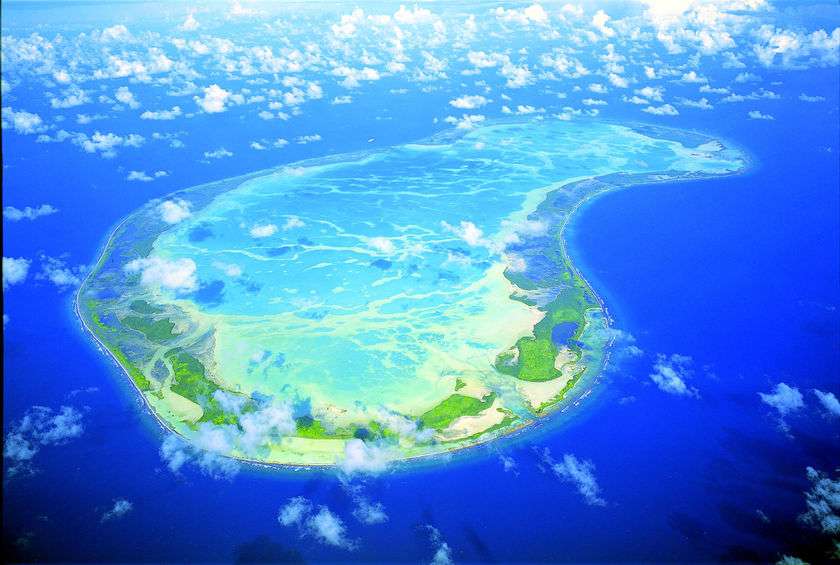
Small Island Developing States (SIDS) are threatened by Rising Sea Levels, Climate Change, Energy Security, Food Security and Water Security. This blog will attempt to post articles and reports that may be useful to these vulnerable states around the globe.
Wednesday, November 28, 2012
Adapting to a warmer world: No going back
The southern part of Manhattan went black after floodwaters shorted out electrical systems. With the subway system disabled, many residents resorted to traversing the island by foot, and water supplies in some areas became contaminated with bacteria and pollutants.
The largest Atlantic hurricane on record, Sandy wreaked US$50 billion in economic losses along the US northeast coast, providing a costly reminder of how ill-prepared even the richest nations are for weather extremes. Some recent weather disasters have now been attributed, at least in part, to human activity, including the 2003 European heatwave1 and the floods in England in 2000 (ref. 2). According to the Intergovernmental Panel on Climate Change (IPCC), storms, floods and droughts will strike more frequently and with greater strength as the climate warms3. And if nations are struggling to cope now, how will they manage in a warmer, harsher future?
Just a decade ago, 'adaptation' was something of a dirty word in the climate arena — an insinuation that nations could continue with business as usual and deal with the mess later. But greenhouse-gas emissions are increasing at an unprecedented rate and countries have failed to negotiate a successor to the Kyoto Protocol climate treaty. That stark reality has forced climate researchers and policy-makers to explore ways to weather some of the inevitable changes.Nature special:nature.com/kyoto
“As progress to reduce emissions has slowed in most countries, there has been a turn towards adaptation,” says Jon Barnett, a political geographer at the University of Melbourne in Australia.
Adaptation has tended to focus on hard defences, such as shoring up sea walls and building dams. But as awareness of adaptation has grown, so too has the concept. “Adaptation means different things to different people, and is extremely location specific,” says Neil Adger, an environmental and economic geographer at the University of Exeter, UK. Although residents in Bangladesh can raise their houses on stilts to survive floods, some settlements in Alaska and the Maldives must move in the face of rising sea levels. More
Tuesday, November 27, 2012
Third LAC Political Dialogue on Energy Efficiency Adopts Declaration
20 November 2012: The Third Regional Political Dialogue on Energy Efficiency in Latin America and the Caribbean met to discuss the institutional and policy frameworks needed in the region to promote rational and sustainable energy use to guide mutual and international cooperative efforts in LAC on the issue.
The Dialogue, held from 15-16 November 2012 in Panama City, Panama, under the theme "Measuring Energy Efficiency," was organized by the UN Economic Commission for Latin America and the Caribbean (ECLAC), the Latin American Parliament (Parlatino), the Inter-American Development Bank (IDB) and Panama's National Energy Secretariat (SNE), with financial support from the German International Cooperation Agency (GIZ). In addition to representatives from national governments, regional organizations and UN agencies, the meeting included most of the national parliamentarians serving on Parlatino's Energy and Mines Committee.
The meeting was organized into six thematic dialogues on: result indicators for energy efficiency; energy efficiency standards and certification; new advances in national energy efficiency programs; smart grids; energy efficiency in transport; and normative and legislative changes for promoting energy efficiency. It closed with a roundtable on proposals and future steps to reinforce energy efficiency promotion and measurement initiatives in LAC.
At the end of the meeting, the Parlatino participants adopted a Declaration committing the legislators to work in their national legislatures to pass laws that, inter alia: correct price distortions that impede sustainable energy demand management; fund national energy efficiency programs; permit the introduction of performance indicators for energy efficiency programs; and promote the role of governments in energy efficiency as planners, promoters and regulators. They also created a Parlatino working group to track national initiatives.
The Dialogue was preceded on 12-13 November 2012 by a workshop convened in Panama City by ECLAC and ADEME of the six-nation (Argentina, Bolivia, Brazil, Chile, Paraguay, Uruguay) "Energy Efficiency Indicator Base" (known by its Spanish acronym BIEE) project. Workshop participants presented the results of national efforts to collect statistics related to energy efficiency and other issues as discussed at a May 2012 BIEE workshop. They then selected several indicators which all LAC nations may use, which were presented at the Political Dialogue. [ECLAC Release and Presentations(in Spanish)] [document: Parlatino Declaration on Energy Efficiency (in Spanish)] [IISD RS article on May 2012 BIEE workshop]
Monday, November 19, 2012
Taking Stock: World Fish Catch Falls to 90 Million Tons in 2012
The wild fish catch per person has dropped even more dramatically, from 17 kilograms (37.5 pounds) per person at its height in 1988 to 13 kilograms in 2012—a 37-year low. While wild fish harvests have flattened out during this time, the output from fish farming has soared from 24 million tons in the mid-1990s to a projected 67 million tons in 2012.
Over the last several decades, as demand for fish and shellfish for food, feed, and other products rose dramatically, fishing operations have used increasingly sophisticated technologies—such as on-vessel refrigeration and processing facilities, spotter planes, and GPS satellites. Industrial fishing fleets initially targeted the northern hemisphere’s coastal fish stocks, then as stocks were depleted they expanded progressively southward on average close to one degree of latitude annually since 1950. The fastest expansion was during the 1980s and early 1990s. Thereafter, the only frontiers remaining were the high seas, the hard-to-reach waters near Antarctica and in the Arctic, and the depths of the oceans.
The escalating pursuit of fish—now with gross revenue exceeding $80 billion per year—has had heavy ecological consequences, including the alteration of marine food webs via a massive reduction in the populations of larger, longer-lived predatory fish such as tunas, cods, and marlins. Unselective fishing gear, including longlines and bottom-scraping trawls, kill large numbers of non-target animals like sea turtles, sharks, and corals.
As of 2009, some 57 percent of the oceanic fish stocks evaluated by FAO are “fully exploited,” with harvest levels at or near what fisheries scientists call maximum sustainable yield (MSY). If we think of a fish stock as a savings account, fishing at MSY is theoretically similar to withdrawing only the accrued interest, avoiding dipping into the principal.
Some 30 percent of stocks are “overexploited”—they have been fished beyond MSY and require strong management intervention in order to rebuild. The share of stocks in this category has tripled since the mid-1970s. A well-known example of this is the Newfoundland cod fishery that collapsed in the early 1990s and has yet to recover.
This leaves just 13 percent of oceanic fish stocks in the “non-fully exploited” category, down from 40 percent in 1974. Unfortunately, these remaining stocks tend to have very limited potential for safely increasing the catch.
These FAO figures describe 395 fisheries that account for some 70 percent of the global catch. Included are the small minority that have undergone the time-consuming and expensive process of formal scientific stock assessment, with the remainder being "unassessed" fisheries. There are thousands more unassessed fisheries, however, that are absent from the FAO analysis. In a 2012 Science article, Christopher Costello and colleagues published the first attempt to characterize all of the world’s unassessed fisheries. The authors report that 64 percent of them were overexploited as of 2009.
The top 10 fished species represent roughly one quarter of the world catch. Nearly all of the stocks of these species are considered fully exploited (most of these fish have more than one geographically distinct stock), including both of the major stocks of Peruvian anchovy, the world's leading wild-caught fish. Stocks that are overexploited and in need of rebuilding include largehead hairtail—a ribbon-like predator caught mainly by Chinese ships—in its main fishing grounds in the Northwest Pacific. (See data.)
Despite the unsustainable nature of current harvest levels, countries continue to subsidize fishing fleets in ways that encourage even higher catches. Governments around the world spend an estimated $16 billion annually on increasing fleet size and fish-catching ability, including $4 billion for fuel subsidies. Industrial countries spend some $10 billion of that total. More than $2 billion is spent by China, whose 15-million-ton catch is nearly triple that of the next closest country, Indonesia. More
Tuesday, November 13, 2012
European Union may open up to OT travellers
It is now up to the European Parliament and to the Council of the European Union to make a final decision on the Commission proposal. This would mean easier travel to and from the various destinations as the countries included on the list would be expected to reciprocate, making it easier for Europeans to travel to the Caribbean and the various territories.
The move is aimed at simplifying travel and nationals from the countries would no longer require a visa for short stays of up to 90 days if they have a relevant passport for business or pleasure.
"Traveling without a visa is not just a symbolic gesture - it will have a direct impact on citizens of these countries and on EU citizens, in the form of more people-to-people contacts and business opportunities," said Cecilia Malmström, EU Commissioner for Home Affairs.
In addition to the UK’s overseas territories, the list of proposed countries includes Dominica, Grenada, Saint Lucia, Saint Vincent and the Grenadines, Trinidad and Tobago, Kiribati, the Marshall Islands, Micronesia, Nauru, Palau, Samoa, the Solomon Islands, Tonga, Tuvalu and Vanuatu and Timor-Leste. More
Thursday, November 8, 2012
Will President Obama Seize the Moment for Action on Climate Change?
Superstorm Sandy changed the U.S. political zeitgeist on climate change virtually overnight.
When BusinessWeekruns a cover blazoned with "It's Global Warming Stupid" and politicians start breaking their "climate silence," you know the jig is up. President Obama acknowledged as much in his acceptance speech, when he said he wanted to "pass on a country that isn't threatened by the destructive power of a warming planet."
The question is, where we go from here. Are Americans now prepared to accelerate action to slow climate change? Or will a new fortress mentality take hold? And I mean that quite literally. One commentator recently suggested surrounding lower Manhattan with retractable walls, begging the question of where all that displaced water would go.
As the dust settles from the election, the president will come under increasing pressure to make good on his promise, through both domestic action as well as taking a more cooperative stance at the UN climate negotiations. Much will be written about this in the weeks to come.
In the meantime, he might take some inspiration from some of the many transformative solutions being put into practice elsewhere. The good news is that there are many such examples, so many that the United Nations climate agency launched an initiative to celebrate some of the most exciting, inspiring stories they could find. "Momentum for Change" is a platform for encouraging and celebrating innovative action -- designated as "lighthouse" activities -- either to reduce climate change, or to reduce its impacts.
In 2012, the initiative focused on the urban poor. To qualify as lighthouse activities, projects needed to not only address climate change, but also to improve the lives - both socially and environmentally - of the poorest and most vulnerable people in the community. They also had to demonstrate their catalytic potential for long-term transformational change, which meant that they had to be capable of being repeated elsewhere, and could be scaled up over time. More
Wednesday, November 7, 2012
Tokelau islands shift to solar energy
The South Pacific territory - comprising the three atolls of Atafu, Nukunonu and Fakaofo - had been dependent on diesel to generate electricity.
New Zealand, which administers Tokelau, funded a $7m (£4.3m) solar project.
Solar grids were constructed on the three atolls, with the last completed earlier this week.
"The Tokelau Renewable Energy Project is a world first. Tokelau's three main atolls now have enough solar capacity, on average, to meet electricity needs," New Zealand Foreign Affairs Minister Murray McCully said in a statement.
"Until now, Tokelau has been 100% dependent upon diesel for electricity generation, with heavy economic and environmental costs," he added.
Project co-ordinator Mike Basset-Smith said that the move represented a "milestone of huge importance" for Tokelau, as it would now be able to spend more on social welfare.
The remote islands of Tokelau lie between New Zealand and Hawaii. More
Sunday, November 4, 2012
PEC Supports Water Access Projects in Palau, Marshall Islands
Palau will receive US$4 million to establish a solar-powered desalination project, to ensure a regular and reliable supply of safe drinking water to residents in Peleliu, Palau. The project includes the installation of a solar-powered Reverse Osmosis (RO) plant that desalinates groundwater using solar energy, producing fresh water. The solar power generation system will produce approximately 98,820 kilowatt hours (kWh) of energy per year, contributing 0.11% electricity towards Palau’s current power generation. Palau’s Ministry of Public Infrastructure, Industries and Commerce through the Energy Office will be the focal point for the project, and the Bureau of Public Works will operate and maintain the systems upon completion.
A similar project was approved for the Marshall Islands, which will receive US$3,150,105 to establish the Potable Water Solutions for Outer Islands by Photovoltaic (PV) Reverse Osmosis (RO) System Project. This project will assist islands in maintaining water supply while minimizing the effects of long, dry periods of little to no rainfall. Under the project, small portable solar PV powered RO systems will be installed at community elementary schools in each outer atoll, providing 150 to 300 gallons of fresh potable water daily.
The PEC Fund is a commitment by the Government of Japan to provide 6.8 billion Japanese yen (approximately US$66 million) to Forum Island Countries for the establishment of solar and desalination initiatives to address environmental challenges. Islands which have accessed the fund include Cook Islands, the Federated States of Micronesia, Fiji, Kiribati, Nauru, Niue, the Republic of Palau, Samoa, Solomon Islands and Tuvalu. [PIFS Press Release: Palau] [PIFS Press Release: Marshall Islands] More
Wednesday, October 31, 2012
Watching Sandy, Ignoring Climate Change
A couple of weeks ago, Munich Re, one of the world’s largest reinsurance firms, issued a study titled “Severe Weather in North America.”
According to the press release that accompanied the report, “Nowhere in the world is the rising number of natural catastrophes more evident than in North America.” The number of what Munich Re refers to as “weather-related loss events,” and what the rest of us would probably call weather-related disasters, has quintupled over the last three decades. While many factors have contributed to this trend, including an increase in the number of people living in flood-prone areas, the report identified global warming as one of the major culprits: “Climate change particularly affects formation of heat-waves, droughts, intense precipitation events, and in the long run most probably also tropical cyclone intensity.”
Munich Re’s report was aimed at the firm’s clients—other insurance companies—and does not make compelling reading for a general audience. But its appearance just two weeks ahead of Hurricane Sandy seems to lend it a peculiarly grisly relevance. Sandy has been called a “superstorm,” a “Frankenstorm,” a “freakish and unprecedented monster,” and possibly “unique in the annals of American weather history.” It has already killed sixty-five people in the Caribbean, and, although it’s too early to tell what its full impact will be as it churns up the East Coast, loss estimates are topping six billion dollars.
As with any particular “weather-related loss event,” it’s impossible to attribute Sandy to climate change. However, it is possible to say that the storm fits the general pattern in North America, and indeed around the world, toward more extreme weather, a pattern that, increasingly, can be attributed to climate change. Just a few weeks before the Munich Re report appeared, scientists at NASA’s Goddard Institute for Space Studies, in New York, published a study in the Proceedings of the National Academy of Sciences on the apparent increase in extreme heat waves. Extreme summertime heat, which just a few decades ago affected much less than one per cent of the earth’s surface, “now typically covers about 10% of the land area,” the paper observed. “It follows that we can state, with a high degree of confidence, that extreme anomalies”—i.e., heat waves—“such as those in Texas and Oklahoma in 2011 and Moscow in 2010 were a consequence of global warming because their likelihood in the absence of global warming was exceedingly small.” It is worth noting that one of several forces fuelling Sandy is much-higher-than-average sea-surface temperatures along the East Coast.
Coming as it is just a week before Election Day, Sandy makes the fact that climate change has been entirely ignored during this campaign seem all the more grotesque. In a year of record-breaking temperatures across the U.S., record drought conditions in the country’s corn belt, and now a record storm affecting the nation’s most populous cities, neither candidate found the issue to be worthy of discussion. Pressed about this finally the other day on MTV, President Obama called climate change a “critical issue” that he was “surprised” hadn’t come up during any of the debates, a response that was at once completely accurate and totally disingenuous. (Asone commentator pointed out, he might have brought up this “critical” issue on his own since “he is the friggin’ POTUS.”) More
Tuesday, October 30, 2012
Assessing the Damage From Hurricane Sandy
Wastewater
Five of New York’s 14 wastewater treatment plants are in the lowest-lying areas of the city, within the mandatory evacuation zone. When the plants get filled to capacity or flooded, sewage and stormwater mix and bypass the plant, flowing directly into New York’s waterways — and now, into flooded streets and buildings.
Subways and Railroads
By Tuesday evening, subway and commuter rail service remained suspended, and limited bus service was set to resume at 5 p.m. Joseph J. Lhota, chairman of the Metropolitan Transportation Authority, said that damage to the subway system was being assessed, and that service would be restored in pieces. Tunnels under the East River were all flooded and pumping had begun at some of them. Mr. Lhota said that flooding was “literally up to the ceiling” at the South Street subway station in Lower Manhattan. Long Island Railroad remained closed due to flooding on the tracks. Two Metro-North lines north of 59th Street continued to be without power, and Mr. Lhota estimated that there were at least 100 trees downed on the tracks. Staten Island ferry and railway service were also still suspended. In New Jersey, Gov. Chris Christie said there was “major damage on each and every one of New Jersey’s rail lines.” New Jersey Transit and PATH service remained suspended.
Work Begins on Flooded Subways
Seven subway tunnels under the East River were still flooded on Tuesday, most of them in Lower Manhattan, where a 14-foot storm surge topped subway entrances and grates.
It is a horrible event and a rough lesson for any city and country to experience, however, I know that residents of Small Island Developing Stares (SIDS) and Arctic Communities will sympathize and commiserate with the residents of New York and other devastated area of the East Coast of the United States.
This however, is what residents of Small Island Developing Stares (SIDS) and Arctic Communities either go through or have the possibility of being faced, with every year. I therefore sincerely hope that the United States will become more cognizant of what the future holds for SIDS and Arctic communities, and support our adaption and mitigation efforts both financially and in the International Community by supporting international climate change treaties that will bring about a lowering of carbon dioxide in the Earth's atmosphere, our only Home. Editor
Sunday, October 28, 2012
Hurricane Sandy Hits East Coast
Published onOct 28, 2012byokrajoe
67 views
Friday, October 26, 2012
sustainability news: 'Aquaponics' Help Islanders Cultivate Crops and Raise Fish
First announced during the Pacific Islands Forum earlier this year (27—31 August), the pilot project combines aquaculture (raising aquatic animals like fish in tanks) and hydroponics (cultivating plants in water) in symbiosis, a strategy that can be replicated in other island nations.
The project’s long-term objective is to give Pacific islanders — who are facing climate-related issues such as drought and fish poisoning — a way to sustainably grow crops using minimal water and no pesticides.
The Cook Islands aquaponics project was the brainchild of Pacific Islands Trade and Invest, the business arm of the Pacific Islands Forum Secretariat, which has teamed up with the New Zealand and Cook Islands governments, and with Lynnsay Rongokea and Barbara Thomson, both from the Cook Islands, to design and implement the project.
Over the past three months, the team has been successfully growing vegetables using aquaponics in a tank-like structure that emulates a natural ecosystem.
The premise of the project is simple: an attendant feeds fish in a tank, which excrete nitrate-rich waste into the water that runs through a mesh filter and irrigates plants.
Those plants filter out by-products, their roots and microbes, removing nitrates to use as vital nutrients. Once the crops have naturally filtered the water, it is aerated and re-circulated back into the fish tank.
The end products are sustainably grown fish and vegetables free from chemical contamination. The system uses just two per cent of the water used up by traditional agriculture and has zero impact on the health of the lagoon.
There is no need to discard or drain water circulating throughout the system and there is no need for chemical fertilisers, pesticides, herbicides, insecticides and fungicides. More
Sunday, October 21, 2012
$138 Million Maldives Renewable Energy Project Backed by World Bank Launched
The Energy Authority of Maldives has announced the inception of $138 million renewable energy project which would generate 26 MW of electricity in Maldives.
Abdul Matheen, State Minister for Energy revealed that the project is expected to be completed within five years. Out of a total 26 MW of generated electricity, 16 MW will be supplied to the Male region, which constitutes 30% of the total population of the country.
This project is a part of a renewable energy investment plan of the government which has been developed under the Sustainable Renewable Energy Project (SREP) of the Climate Investment Fund. The project would be funded by the World Bank, Asian Development Bank, and German and Japanese Banks.
According to the Energy Authority of the Maldives, the project will be extended to 50 islands to promote the use of renewable energy.
“We are making preparations to commence the project during next month. Under the project, ten islands would run solely on renewable energy. In addition, 30 percent of electricity in 30 islands will be converted to renewable energy,” Matheen detailed. More
Saturday, October 20, 2012
Many Strong Voices: What we do
Global engagement in climate negotiations & IPCC
Many Strong Voices uses the Unted Nations Framework Convention on Climate Change (UNFCCC) negotiations to spread the word on climate change and its effects on SIDS and the Arctic while raising awareness about the rapid changes happening in these regions.![]() |
| A storm off the Seychelles |
Over the years, MSV and its partners have organized side events, lobbied and developed language for official documents and draft texts, held exhibitions of works by student photographers as part of the Portraits of Resilience project. Highlights include:
- Getting human rights language into the report of the Ad Hoc Working Group on Long-term Cooperative Action (AWG-LCA)
- Holding successful side events, including one on Food Security and Human Rights in the Arctic and Small Island Developing States, which was reported in the MSV blog. Speakers included Patricia Cochran (head of the Alaska Native Science Commission), Ronny Jumeau (Seychelles Ambassador to the United Nations), Kirt Ejesaik (Vice-president of the Inuit Circumpolar Council – Canada), and Margreet Wewerinke (a member of the Climate Change Human Rights Working Group).
- Portraits of Resilience exhibitions have been held at negotiations in Copenhagen in 2009 and Durban in 2011. The project has been featured by UNEP and on numerous web sites, including Google Earth.
- Outreach and communications are important parts of MSV activities at UNFCCC events. Besides the activities mentioned above, these include displays, posters, participation in activities such as Development and Climate Days, and media interviews. Social media play a major role in MSV communications at the COP with information circulating on MSV blogs, Facebook and Twitter.
MSV has recently become an observer at the Intergovernmental Panel on Climate Change (IPCC) and will use this position to support efforts by partners in the Arctic, SIDS and other regions to support science and research from some of the most vulnerable regions being included in the next Assessment Report in 2015.
More
Friday, October 19, 2012
Many Strong Voices Advisory Committee Meets In Washington
![]() |
| Auyuittuq - The Land that Never Melts is Melting |
The goal of Many Strong Voices (MSV) is to promote the well-being, security, and sustainability of coastal communities in the Arctic and Small Island Developing States (SIDS) by bringing these regions together to take action on climate change mitigation and adaptation, and to tell their stories to the world.
![]() |
| New wind turbine in the Seychelles |
Why link the Arctic and Small Island Developing States?
At first glance, the Arctic and Small Island Developing States appear to have little in common. Yet Arctic and SIDS societies share characteristics of vulnerability and resilience, and both of their environments are sensitive to climate change impacts.![]() |
| MSV committee members at work |
The impact of climate change on coastal zones is an important common denominator between the two regions and provides a context for comparing vulnerability and adaptation processes. Developing adaptation strategies that contribute to sustainable development in both regions is the key to their longterm survival. At the same time, successful adaptation requires immediate and deep cuts to global greenhouse gas emissions.
Lessons learned through MSV support policy development at local, regional, and international levels. They provide decision-makers in the two regions with the knowledge to safeguard and strengthen vulnerable social, economic, and natural systems. More
The two FIELD papers below may be of interest to readers from SIDS.
“Loss and damage caused by climate change: legal strategies for vulnerable countries” (available at http://www.field.org.uk/news/climate-damage-new-legal-strategies) suggests that vulnerable countries may benefit from considering a range of options, including options beyond the UNFCCC and the Kyoto Protocol. The paper considers negotiations on loss and damage under the UNFCCC, dispute settlement under the UNFCCC or Kyoto Protocol, and international litigation. The paper then focuses on the evolving international law concept of reparations for damage. It suggests that vulnerable countries might consider pursuing a reparations-based strategy in international negotiations beyond the UNFCCC and the Kyoto Protocol, in particular negotiations about the UN’s post-2015 development agenda. The paper highlights new proposals about reparations, including proposals by Maxine Burkett related to climate reparations. FIELD believes that vulnerable countries should play a strong role in shaping how international law on reparations for climate change damage develops.
“International institutions and new sustainable development goals beyond 2015: climate change, poor and vulnerable countries” (at http://www.field.org.uk/news/beyond-2015-climate-poor-and-vulnerable-countries) argues that post-Rio + 20 changes to international institutions and proposed global sustainable development goals should give priority to climate change and poor and vulnerable countries. The paper highlights that the UN Framework Convention on Climate Change (UNFCCC) and the Kyoto Protocol recognize that particularly vulnerable countries and countries such as LDCs, LLDCs and SIDS require special attention and argues that this should also be reflected in changes to international institutions and in new sustainable development goals. The paper considers human security as a potential conceptual framework for strengthening international institutions and determining new goals. It emphasizes challenges for poor and vulnerable countries in a world where advancing climate change is likely to pose an increasing threat to sustainable development and human security.
FIELD would welcome comments on the papers (field@field.org.uk<mailto:field@field.org.uk>).
Foundation for International Environmental Law and Development (FIELD) |www.field.org.uk<http://www.field.org.uk/>
Tel: + 44 (0)20 7842 8521| Suite D, 1st Floor | The Merchant Centre | 1 New Street Square | London, EC4A 3BF | United Kingdom
Registered charity no. 802 934 | Company Limited by Guarantee and Incorporated in England and Wales Reg. No. 2463462
Tuesday, October 9, 2012
Secretary-General Assures CARICOM of Better Cooperation, Requests Engagement on SDGs and Post-2015 Agenda
27 September 2012: During a meeting on the sidelines of the opening of the UN General Assembly session, UN Secretary-General Ban Ki-moon assured leaders of the Caribbean Community (CARICOM) of improved cooperation between the UN and CARICOM regarding trade, debt, climate change and transnational organized crime, among other issues.
He also pledged to continue to raise the issue of the vulnerability of Caribbean island nations to the international financial crisis with the Group of Eight (G8) and Group of 20 (G20) countries.
Ban made the remarks during a meeting with CARICOM Chair Kenny Anthony, Prime Minister of Saint Lucia, as well as President Donald Romotar of Guyana, Prime Minister Simpson Miller of Jamaica, and other CARICOM leaders, at UN Headquarters in New York, US, on 27 September 2012.
Ban said he is committed to ensuring that both the CARICOM Secretariat and CARICOM Member States receive UN assistance that is "more targeted and more responsive to the needs of the region." He mentioned, for example, current talks with the UN Office on Drugs and Crime (UNODC) to implement a regional strategy and to return a small permanent office to the Caribbean.
The Secretary-General thanked CARICOM for its leadership in the lead-up to the UN Conference on Sustainable Development (UNCSD, or Rio+20), and asked the Community to "continue that dynamic engagement" during the establishment of the Sustainable Development Goals (SDGs) and the construction of a post-2015 development agenda. [Statement of UN Secretary-General] More
Sunday, October 7, 2012
Tian Huang: Climate Victims Deserve a Hearing, Whether Here or in The Hague
Last week, leaders of the 193 members of the United Nations General Assembly descended upon New York to open that body's sixty-seventh session. Among the pressing questions facing the body is the adequacy of the international community's current approach to the problem of climate change. The leaders also held a high-level meeting on the rule of law at the national and international levels.
The two agenda items could not be more in sync: All over the world, climate change is creating victims who lack protection of the rule of law. For instance, island nations such as Cape Verde, Grenada, the Marshall Islands, and Palau are seeing their lands increasingly affected by rising sea levels, intensifying storms, and other threats that owe their genesis to greenhouse gas emissions. In the United States, we also are seeing the devastating effects of anthropogenic climate change, most pointedly in the Alaskan village of Kivalina.
The city of Kivalina and its native village reside on the tip of a six-mile barrier reef. With a decline of protective sea ice and a rise of storms and surges, Kivalina's land is being swallowed up - -so much so that the U.S. Government Accountability Office has warned that the village could be flooded at any time and that "[r]emaining on the island... is no longer a viable option for the community."
To fight back, Kivalina filed suit against 19 major energy companies, claiming that they, as major contributors to global warming, should help defray the costs of relocating the city.
Shortly before the U.N. session opened, a U.S. appeals court ruled that, as far as the federal government is concerned, climate change is a political problem to be addressed by the legislative and executive branches. Basic legal principles of right and responsibility, in other words, have no bearing and if the residents of Kivalina want compensation for their harms, they will have to duke it out with their opponents in Congress.
Whether in this or a subsequent U.N. session, a parallel campaign to Kivalina's will be brought to the General Assembly and the question will be raised, will the international community follow the U.S. court's lead by throwing the climate change problem to the dustbin of politics?
Last year, several small island states called on the U.N. General Assembly to request an advisory opinion from the International Court of Justice on the responsibilities of nations whose emissions of greenhouse gases within their jurisdictions contribute to serious harms in other countries. Sensing that endless political negotiations have resulted in little progress internationally, the islands sought to show that the climate change problem is one of law and justice, rather than merely politics and power. More
Friday, October 5, 2012
Sea Level Rise: Within A Decade Vulnerable Islands Have To Evacuate Their Populations
Michael Mann, director of the Earth System Science Center at Pennsylvania State University , said the latest evidence shows that models have underestimated the speed at which the Greenland and west Antarctic ice sheets will start to shrink.
Mann says the Pacific islands, which are only 4.6 meters above sea level at their highest point, are facing the imminent prospect of flooding, with salt water intrusion destroying fresh water supplies and increased erosion.
Mann, who was part of the IPCC team awarded the Nobel peace prize in 2007, said it had been expected that island nations would have several decades to adapt to rising sea levels, but that evacuation may now be their only option.
His warning comes just weeks after the National Snow and Ice Data Centre in Boulder, Colorado disclosed that sea ice in the Arctic shrank a dramatic 18% this year on the previous record set in 2007 to a record low of 3.41m sq km.
"We know Arctic sea ice is declining faster than the models predict," Mann told the Guardian at the SXSW Eco conference in Austin , Texas . "When you look at the major Greenland and the west Antarctic ice sheets, which are critical from the standpoint of sea level rise, once they begin to melt we really start to see sea level rises accelerate.
"The models have typically predicted that will not happen for decades but the measurements that are coming in tell us it is already happening so once again we are decades ahead of schedule.
" Island nations that have considered the possibility of evacuation at some point, like Tuvalu , may have to be contending those sorts of decisions within the matter of a decade or so."
Suggesting evacuations would accelerate a change in public consciousness around the issue of climate change, he said: "Thousands of years of culture is at risk of disappearing as the populations of vulnerable island states have no place to go.
"For these people, current sea levels are already representative of dangerous anthropogenic interference because they will lose their world far before the rest of us suffer.
"I think it is an example, one of a number, where the impacts are playing out in real time. It is not an abstract prediction about the future or about far off exotic creatures like polar bears. We are talking about people potentially having to evacuate from places like Tuvalu or the Arctic 's Kivalina, another low lying island which is already feeling the detrimental impacts of sea level rise."
Mann, who is one of the primary targets for attacks by "climate deniers," said that there is still uncertainty about the speed of global warming as it is not clear what the impact of feedback mechanisms could be. In particular, he pointed to the release of methane that will come as the permafrost in the arctic melts.
"We know there is methane trapped and as it escapes into the atmosphere it accelerates the warming even further," he said. "But we don't know quite how much of it there is, but there is definitely the potential to lead to even greater warming than the models predict."
Mann said it was not only island states that were feeling the impacts of climate change and warned that the terrible drought and wildfires suffered by the US this year were just the precursor of far worse to come.
"If you look at the US , some of these things are unfolding ahead of schedule and we are already contending with climate change impacts that were once theoretical," he said.
"We predicted decades ago that this might eventually happen. We are watching them unfold and there are very real consequences to our economy and to our environment.
"The climate models tell us that what today are record breaking levels of heat will become a typical summer in a matter of 20-30 years if we carry on with business as usual. Not only will this become the new normal but we will have to change the scale because we will see heat and drought far worse than anything we have seen before."
The silver lining in all the bad news is that while the political system is gridlocked when it comes to confronting climate change, public attitudes are starting to change.
"It is going to take a little while to sink in," says Mann "but there is evidence of a dramatic shift in awareness and the public increasingly recognises climate change is real and if the public becomes convinced of this, they will demand action and they are connecting the dots because we are seeing climate change playing out in a very visible way. More
Thursday, October 4, 2012
Better protection for persons displaced by natural disasters
Bern, 02.10.2012 - Norway and Switzerland intend to set up an international agenda for the protection of persons forced to leave their country as a consequence of natural disasters. The Nansen Initiative was launched in Geneva on 2 October 2012 in the presence of Steffen Kongstad, Norway's Ambassador to the UN, and Manuel Bessler, the Federal Council delegate for humanitarian aid. The initiative aims to address the need for normative and institutional measures to protect those affected.
The ceremony in the Palais des Nations to launch the Nansen Initiative, which is named after the polar explorer and first High Commissioner for Refugees Fridtjof Nansen, was attended by numerous representatives of states, NGOs and the High Commissioner for Refugees (UNHCR). Manuel Bessler, the Federal Council delegate for humanitarian aid, representing Switzerland, said in his address: "During my deployments in affected regions such as the Horn of Africa I found that cross-border movements caused by natural disasters are a real problem that has increased in importance in recent years.
It has been proven that there is a need for measures to protect persons displaced by natural disasters. Every year millions of people have to leave their homes and seek shelter elsewhere because of floods, hurricanes, earthquakes, droughts and other natural disasters. Many of these find shelter in their own country but others have to cross national borders. Movements such as these are likely to increase as a result of global warming. National and international measures to protect the persons affected are either non-existent or inadequate.
While displaced persons are protected in their own country by the UN guidelines on internal displacement and by regional instruments, there is a gap in legislation governing cross-border movements caused by natural disasters. Usually such persons are not victims of persecution and are therefore not protected under the UN Convention on Refugees. Moreover, the Human Rights Conventions do not govern key aspects such as the right to enter a country, settlement and the basic rights of those affected. There is also a lack of criteria to distinguish between cross-border movements caused by natural disasters and voluntary migration.
An inter-state process is required in order to close these gaps. At the UNHCR Ministerial Meeting held in Geneva in December 2011, Norway and Switzerland pledged to cooperate with interested countries to formulate solutions to protect persons displaced externally due to natural disasters. This pledge was welcomed by various other States and provides the basis for the Nansen Initiative. The initiative of Norway and Switzerland aims to formulate a protection agenda to serve as the basis for concrete activities in the fields of prevention, protection and assistance during cross-border displacement, return and other permanent solutions for the period following a natural disaster.
Over the next three years the initiative will carry out a series of consultations with governments and representatives of civil society in regions which are particularly affected, on the basis of which a global dialogue will then be organised with a view to formulating a protection agenda. The Nansen Initiative will be headed by a steering group consisting of between six and eight States of the South and North under the chairmanship of Norway and Switzerland. Professor Walter Kälin, a well-known Swiss expert in human rights, has been proposed as envoy of the chairmanship. A consultative committee consisting of representatives of civil society and international organisations will assist the process. The Nansen Initiative is supported by a small secretariat based in Geneva. More
Address for enquiries:
Information FDFA
Bundeshaus West
CH-3003 Bern
Tel.: (+41) 031 322 31 53
Fax: (+41) 031 324 90 47
E-Mail: info@eda.admin.ch
Publisher:
- Federal Department of Foreign Affairs
- Internet: http://www.eda.admin.ch/eda/en/home/recent/media.html
Sunday, September 30, 2012
Leaders of Small Islands Adopt Climate Change Declaration at UNGA
“Climate change is progressing so rapidly, and the current and expected impacts are so alarming, it is absolutely critical that all of the world’s leaders immediately engage in the crisis and begin a serious dialogue about how their countries can specifically begin reducing emissions to the levels science shows is required to avoid a catastrophe. We need a global response to the crisis at an unprecedented level and that will demand leadership at the highest level,” said President Sprent Dabwido of Nauru, Chair of AOSIS.
The Declaration refocuses attention on the urgency of climate change at the once-a-year gathering of world leaders at a time when international leadership on climate change is flagging, even as extreme weather events and record-breaking droughts linked to climate change are becoming more severe and costly.
“We, the Member States of the Alliance of Small Island States (AOSIS), meeting in New York this 27th day of September 2012,” the declaration begins, “Recalling the Charter of the United Nations, and reaffirming the principle of the sovereign equality of all nations… are gravely concerned that climate change poses the most serious threat to our territorial integrity, viability and survival, and that it undermines our efforts to achieve sustainable development goals and threatens our very existence. We reaffirm the sovereign rights of all SIDS in light of the adverse impacts of climate change…”
The Declaration also outlines concrete steps that must be taken at the 18th Conference of the Parties in Doha at the end of the year in order to achieve essential short-term emissions reductions.
“Building on the progress achieved thus far we underscore our commitment to work towards a successful outcome at COP18/CMP8 in Doha, including the following elements:
“Adoption and provisional application of the Doha Amendments to the Kyoto Protocol pending their entry into force that:
- Ensure the widest participation of Annex I Parties in a second commitment period;
- Establish a five-year second commitment period to run from 1 January 2013 to 31 December 2017;
- Establish more ambitious quantified emission limitation or reduction commitments for all Annex I Parties to the Kyoto Protocol; and
- Limit the use of surplus carry over units in the second commitment period of the Kyoto Protocol to ensure environmental integrity.”
Alliance of Small Island States Leaders’ Declaration, 2012 PDF
Small Islands Push for New Energy
With rising oil prices, fuel import bills now represent up to 20 percent of annual imports of 34 of the 38 small island developing states (SIDS), between 5 percent to 20 percent of their Gross Domestic Product – and even up to 15 percent of the total import bills of many of the European Union’s 286 islands.
Action advocated under ‘The Malta Communiqué On Accelerating Renewable Energy Uptake For Islands’ adopted by a 50-nation two-day conference that ended here last week will hopefully slash, in some cases eliminate, reliance on fossils and related pollution, while increasing energy security, employment as well as economic and social wellbeing.
‘The Renewables and Islands Global Summit’ in Malta was co-hosted by the 100-nation International Renewable Energy Agency (IRENA) based in Abu Dhabi and by the government of Malta – a 316 sq km Mediterranean island republic of 410,000 inhabitants, and EU’s smallest member state.
The meeting represents a key milestone in IRENA’s initiative on renewables and islands launched by its governing council last January, as well as a follow-up to the Rio+20 conference in June and the ‘achieving sustainable energy for all in Small Island Developing States’ ministerial meeting in Barbados in May.
The communiqué invites IRENA to establish a global renewable energy islands network (GREIN) as a platform for sharing knowledge, best practice, challenges and lessons learnt while seeking innovative solutions.
GREIN will also help assess country potential, build capacity, formulate business cases for renewables deployment involving the private sector and civil society while identifying available finance as well as new ideas for innovative financing mechanisms.
In addition, the network will develop methodologies for integrating renewables into sustainable tourism, water management, transport, and other industries and services.
IRENA’s Kenyan director-general Adnan Amin told the 120 delegates that “we have confirmed the enormous potential for renewables in small island developing states as well as for developed island countries, not to mention coastal countries with remote, energy-deprived islands of their own. Ambitious policy targets appear increasingly attainable because of great strides forward in technology and cost-effectiveness.
“We are laying the groundwork for a business council to bring investors – from major energy companies to innovative SMEs (small and medium-sized enterprises) and also financial institutions – into the discussion,” Amin added. “Academics and NGOs can also contribute to the search for practical solutions. Developed island states can do much by sharing their experience with small-island developing states that face broadly similar challenges.”
Representatives (including 15 ministers) from 26 developing Pacific, Caribbean and African developing island nations and from coastal developing states with islands reported a wide range of renewables deployment, from detailed long-term plans and ongoing activities to reach up to 100 percent renewables, to admissions of very low deployment and no firm goals or plans yet. More
Malta Comminique Download