Sunday, January 11, 2015

GRID-Arendal Highlights Blue Forests Project Launch

December 2014: GRID-Arendal's interim marine newsletter highlights the launch of the Global Environment Facility's (GEF) Blue Forests Project, which will explore how to harness the value of carbon and other coastal ecosystem services to improve ecosystem management.

The Blue Forests Project aims to increase recognition of the role of mangroves, seagrasses and saltmarshes in climate change mitigation and adaptation. It will also address knowledge gaps on the role of blue forests in storing and sequestering carbon and sheltering towns from storms. The project will be implemented in Ecuador, Indonesia, Kenya, Madagascar, Mozambique and the United Arab Emirates (UAE) as well as in a to-be-determined location in Central America.


The newsletter also highlights: the Norwegian Blue Forests Network, an initiative that focuses on harnessing the potential of blue forests to capture and store atmospheric carbon as well as other ecosystem services; and a GRID-Arendal and Blue Climate Solutions report, ‘Fish Carbon: Exploring Marine Vertebrate Carbon Services.' The report highlights the potential of marine vertebrates to address climate change and prevent global biodiversity loss and presents eight "fish carbon" mechanisms.


GRID-Arendal also announced that it will begin producing a common newsletter for all its programmes beginning in January 2015, making this newsletter the last one focused solely on marine issues. More


[GRID-Arendal Newsletter] [GRID-Arendal News on Blue Forests Project] [Blue Forests Project Website] [GRID-Arendal News on Norwegian Blue Forests Network] [Publication: Fish Carbon: Exploring Marine Vertebrate Carbon Services]


International Dialogue on Underwater Munitions Highlighting Sea-Dumped Chemical Weapons

International Dialogue on Underwater Munitions

Deadly Depths

Underwater munitions pollute the marine environment with toxic chemicals. We have learned that there is a "need to clean" both chemical and conventional weapons based on potential human health impacts, as well as environmental implications through depleting fish stocks (CHEMSEA Findings Report 2013, Search and Assessment of Sea Dumped Chemical Weapons and Porter, JW, Barton J and Torres 2011, Ecological, Radiological and Toxicological Effects of Naval Bombardment on Coral Reefs of Isla de Vieques, Puerto Rico).

Terrence Long

Underwater Munitions are "Point Source Emitters of Pollution". This means that in most cases, if we remove the source: we remove the problem. Off-the-shelf-technology developed by private sector, oil and gas industry, and military's unmanned systems programs, already exists to detect, map, recover and dispose of underwater munitions and the toxic waste they create. The International Dialogues on Underwater Munitions (IDUM's) mission is to promote the creation of an internationally binding treaty on all classes (biological, chemical, conventional, and radiological) of underwater munitions, to lead to the cleanup of our Oceans worldwide. IDUM hosts and attends international forums to facilitate collaboration with international leaders and organizations to better understand the socio-economic impact on both human health and environment from years of decaying underwater munitions. IDUM cooperates with researchers, industry, and government to foster collaborative solutions that further the clean-up of our oceans. We believe through international diplomacy via national and international programs, dialogue, conferences, workshops, committees, senate hearings, and commissions, we can come together globally to clean our One Ocea

IDUM is considered the international group of experts in Policy, Science, Technology and Responses to Underwater Munitions. We have been extremely effective in furthering international discussion, and creating a united appeal to international governments, as well as creating an International Technology Advisory Board on Sea Dumped Munitions. In support of our efforts, IDUM has been recognized in proceedings for Organization for the Prohibition of Chemical Weapons (OPCW), Third Review Conference of State Parties, 2014 Noble Peace Prize winner and United Nations (Secretary General Report Sixty-eight session on Sustainable development) for our contributions within the Resolution on sea dumped chemical munitions.

IDUM takes action:

IDUM mobilizes working groups for policy science and technology of sea dumped munitions, and has hosted five (5) international dialogues. We have participated as an observer for Helsinki Commission Heads of Delegations for Protection of the Baltic Sea, as well as provided consultations within HELCOM MUNI Ad Hoc Working Groups on Sea Dumped Chemical Weapons. IDUM has also been a "Special Invited Guest" of the OSPAR Commission for the Protection of the North-East Atlantic Oceans, and participates as Co- Directors for CHEMSEA – Search and Assessment of Chemical Weapons, Baltic Sea and NATO Science for Peace and Security (SPS) – MODUM Project.

IDUM is on the Scientific Committee Polish Naval Academy for Marine Security Yearbook and board of directors for International Centre for Chemical Safety and Security (ICCSS). Most recently, IDUM has been invited to centralize our cooperation with global peace and security organizations at The Hague. Our Chairman, Mr. T. P. Long, will manage the office in The Hague and cooperate with the international community of The Hague (including States Parties and the United Nations) to represent your concerns in an open and transparent process.

Mission Statement

The International Dialogue on Underwater Munitions (IDUM) is a non-governmental organization/Society founded in 2004 by Mr. Terrence P. Long following his appearance at a Canadian Senate Hearing with the Senate Standing Committee on Fisheries and Oceans. The IDUM's mission is to promote the creation of an internationally binding treaty on all classes (biological, chemical, conventional, and radiological) of underwater munitions. This treaty would encourage countries to collaborate on underwater munitions policy, research, science, and responses including environmentally-friendly remediation in affected regions. The IDUM is an internationally recognized body where all stakeholders (diplomats, government departments including external affairs, environmental protection and fishery departments, industry, fishermen, salvage divers, oil and gas, militaries and others) can come together in an open and transparent forum to discuss underwater munitions, seek solutions, and promote international teamwork on their issues related to underwater munitions. The IDUM promotes constructive engagement with all stakeholders rather than disengagement so that we may learn from one another's situation and determine how we can best respond in the future with everyone's considerations. What we have learned is that off-the-shelf-technology, developed by the oil and gas industry and military's unmanned systems programs, does exist to address underwater munitions sites. And there is a "Need to clean" based on the potential human health and environmental impact on our health care systems and fish stocks. Underwater munitions in some form or another will continue to pollute the marine environment over time. It’s just a question of "When". Underwater Munitions are "Point Source Emitters of Pollution". In most cases, remove the source and you remove the problem.

Chairman's Message

"The IDUM is collaborating with international leaders and organizations to better understand the socio-economic impact on both human health and environment from years of decaying underwater munitions. The organization is facilitating this through international diplomacy via national and international programs, dialogues, conferences, workshops, committees, senate hearings, and international commissions. Most notable are the international efforts of the Government of Lithuania that resulted in the unanimous passing of the United Nations Resolution on Sea Dumped Chemical Weapons in December 2010 at the United Nations. Internationally, we must organize and continue our work together to collect, process, and provide information on underwater munitions to the Secretary General of the United Nations. Any tangible approach would require a multilateral response from all stakeholders including institutional capacity-building and the creation of an International Donor Trust Fund." Visit the IDUM Website


Saturday, January 10, 2015

On a tropical island, fossils reveal past -- and possible future -- of polar ice

The balmy islands of Seychelles couldn’t feel farther from Antarctica, but their fossil corals could reveal much about the fate of polar ice sheets.

About 125,000 years ago, the average global temperature was only slightly warmer, but sea levels rose high enough to submerge the locations of many of today’s coastal cities. Understanding what caused seas to rise then could shed light on how to protect those cities today.

The balmy islands of Seychelles couldn’t feel farther from Antarctica, but their fossil corals could reveal much about the fate of polar ice sheets.

About 125,000 years ago, the average global temperature was only slightly warmer, but sea levels rose high enough to submerge the locations of many of today’s coastal cities. Understanding what caused seas to rise then could shed light on how to protect those cities today.

By examining fossil corals found on the Indian Ocean islands, University of Florida geochemist Andrea Dutton found evidence that global mean sea level during that period peaked at 20 to 30 feet above current levels. Dutton’s team of international researchers concluded that rapid retreat of an unstable part of the Antarctic ice sheet was a major contributor to that sea-level rise.

“This occurred during a time when the average global temperature was only slightly warmer than at present,” Dutton said.

Dutton evaluated fossil corals in Seychelles because sea level in that region closely matches that of global mean sea level. Local patterns of sea-level change can differ from global trends because of variations in Earth’s surface and gravity fields that occur when ice sheets grow and shrink.

In an article published in the January 2015 issue of Quaternary Science Reviews, the researchers concluded that while sea-level rise in the Last Interglacial period was driven by the same processes active today — thermal expansion of seawater, melting mountain glaciers and melting polar ice sheets in Greenland and Antarctica — most was driven by polar ice sheet melt. Their study, partially funded by the National Science Foundation, also suggests the Antarctic ice sheet partially collapsed early in that period.

“Following a rapid transition to high sea levels when the last interglacial period began, sea level continued rising steadily,” Dutton said. “The collapse of Antarctic ice occurred when the polar regions were a few degrees warmer than they are now — temperatures that we are likely to reach within a matter of decades.”

Several recent studies by other researchers suggest that process may have already started.

“We could be poised for another partial collapse of the Antarctic ice sheet,” Dutton said. More

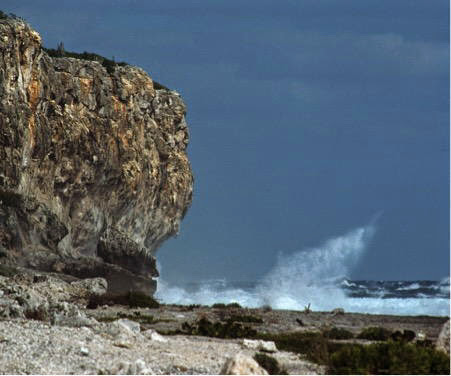
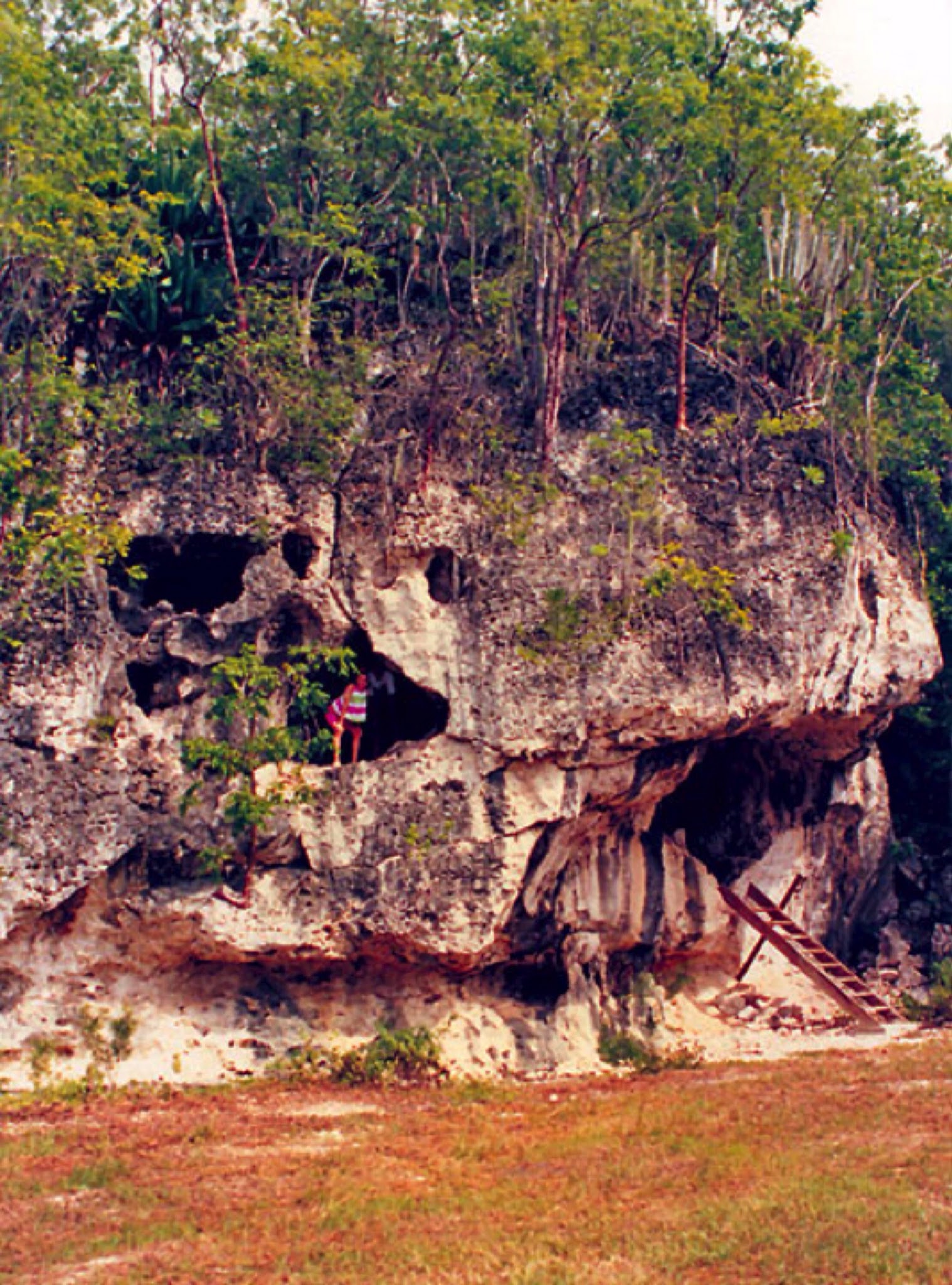
Photos above from Cayman Brac, Cayman Islands.


Tuesday, December 16, 2014

ECLAC Updates Study on Economics of Climate Change in Latin America and the Caribbean read more

5 December 2014: The UN Economic Commission for Latin America and the Caribbean (ECLAC) has published an update of its study ‘The Economics of Climate Change in Latin America and the Caribbean: Paradoxes and challenges of sustainable development,' which provides an overview of expected climate impacts in the region, as well as subregional and national figures.


The report explains that, while growth in the region has led to improved economic and social conditions, it has had negative impacts on the environment, economy and society as a whole, including through more air pollution in urban areas and a deterioration of natural assets, such as water resources and forests.


The report states that the "foundations of the region's economic buoyancy are being undermined" through the region's production structures and consumption patterns, which contribute to a large carbon footprint. The report contends that the region must transition towards a sustainable form of development that will preserve its economic, social and natural assets for future generations and leave them with “a more equal, socially inclusive, low-carbon form of economic growth.”


The report concludes that the climate change challenge is also a sustainable development challenge and recommends achieving “a global consensus that recognizes the asymmetries and paradoxes of the problem.”


ECLAC, in collaboration with the Government of Peru, has also released a document estimating the economic costs of climate change in Peru. Both reports were launched at the Lima Climate Change Conference. [ECLAC Press Release] [Publication: The Economics of Climate Change in Latin America and the Caribbean: Paradoxes and challenges of sustainable development] [IISD RS Coverage of Lima Climate Change Conference]


read more: http://larc.iisd.org/news/eclac-updates-study-on-economics-of-climate-change-in-latin-america-and-the-caribbean/


Thursday, December 11, 2014

Bahamas takes on renewable energy challenge - Missed Opportunity for Cayman?

The Bahamas has become the latest recruit to Richard Branson's green energy drive for Caribbean islands.

Branson's Carbon War Room NGO is aiming to help islands in the region transition from expensive fossil fuel imports to using their own renewable energy resources as part of its Ten Island Challenge programme.

This week the Bahamas joined the push, committing to developing 20MW of solar PV generation in the outer Family Islands, bringing energy efficiency and solar solutions to a local high school, and replacing streetlights across the nation with energy efficient LED lights.

Carbon War Room plans to support these goals by providing the country's government with a range of technical, project management, communications, and business advisory services.

The Bahamas joins the islands of Aruba, Grenada, San Andres and Providencia in Colombia, Saint Lucia, and Turks & Caicos in the challenge, which aims to generate how small states can decarbonise in a cost-effective manner.

"The Bahamas' entry into the Ten Island Challenge signals another step forward for the Caribbean region in the effort towards a clean energy future," Branson said in a statement. "The progress made in The Bahamas will help inspire other islands to work towards accomplishing their renewable energy objectives."

While the focus to date has been on Caribbean islands, earlier this year Peter Boyd, Carbon War Room's chief operating officer, told BusinessGreen the programme could expand into the Pacific and to isolated communities, military bases, or mines. "There are island energy economies even if the 'island' isn't surrounded by water," he said at the time.


Wednesday, December 10, 2014

"If we save Tuvalu, we save the world

"If we save Tuvalu, we save the world" - UN Climate Convention, Peru


9 December 2014, Lima, Peru - The Prime Minister of Tuvalu paid homage to ancestors buried in Peru at the UN Climate Convention today. Taking the floor at the High Level Segment of the 20th Conference of the Parties, he began his statement acknowledging the interesting and tragic historical connection with Peru.

During the 1860's slave traders known as blackbirders took approximately 400 people from Tuvalu to work in Peru. None of them ever returned.

"There are Tuvaluans buried here on this land and we pay our respects to our ancestors who were brought here against their will," stated Hon. Enele Sosene Sopoaga, Prime Minister of Tuvalu - remembering the history of Tuvalu before looking to the future.


"I am here at this important meeting as the highest representative of the people of Tuvalu. I carry a huge burden and responsibility. I carry their hopes that there will be a future for Tuvalu. This is an enormous burden to carry. It keeps me awake at night. No national leader in the history of humanity has ever faced this question. Will we survive or will we disappear under the sea? I ask you all to think what it is like to be in my shoes."

On the frontlines of climate change, the greatest single threat to the island atoll, Tuvalu is heartened by the progress leading to a new climate change protocol made at the UN Climate Convention in Peru yet also very clear that they will not support a new protocol without a substantive programme on loss and damage. The new agreement must be agreed upon by the end of December, 2015 in Paris, the host of the next Conference of the Parties.

"Tuvalu, and I suspect most of the world, believes that reaching a comprehensive new protocol in Paris is absolutely essential. We cannot repeat Copenhagen. We cannot suffer the frustration and humiliation of being asked to accept a half-hearted response to a critical global crisis."

"The new protocol must be comprehensive it must cover all issues in a meaningful way. It has to include effective mitigation targets for all countries. It must deliver real outcomes on adaptation and loss and damage. It must deliver the necessary finance to transform our society. And it must deliver the technology and the necessary capacity building to ensure everyone can respond to climate change. All these pillars are essential."

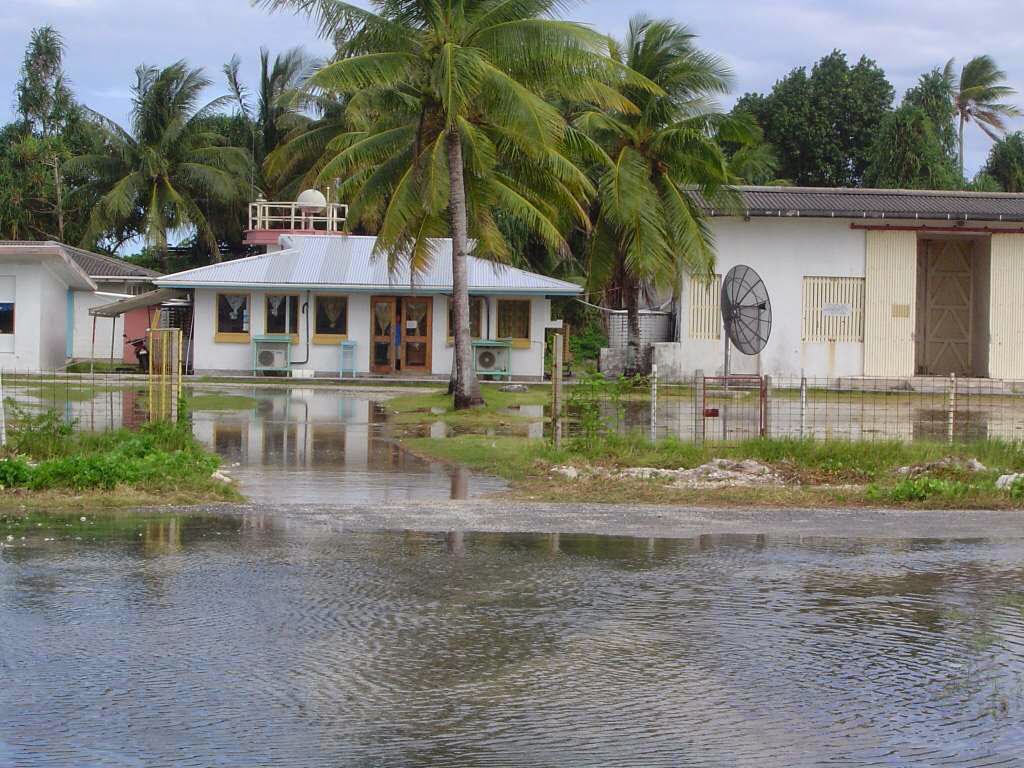
The coral atoll nation of Tuvalu consists of nine inhabited islands with the highest point above sea level being four meters. Now experiencing climate change impacts through saltwater intrusion into agricultural areas, lack of potable water and coastal erosion - the fate of Tuvalu is in the hands of the international community.

"I ask everyone who leaves this room to look into the eyes of the first child they see. I want everyone to look into the child’s eyes and imagine what those eyes will see in ten or twenty years. Will they see hell or will they see a sustainable planet."

"Let us stand proud in Paris. Let us look into the eyes of children and say, yes we have a real future for you. Let us make 2015 the year we saved the Earth! Let us make 2015 the year we saved Tuvalu. For if we save Tuvalu we save the world."

To access the full statement presented by Hon. Enele Sosene Sopoaga, Prime Minister of Tuvalu at the High Level Segment of the 20th Conference of the Parties to the United Nations Framework Convention on Climate Change please visit: http://unfccc.int/files/meetings/lima_dec_2014/statements/application/pdf/cop20_hls_tuvalu.pdf

Monday, December 8, 2014

Typhoon Hagupit Hits Philippines: Climate Catastrophe Is Here Now! by Kumi Naidoo

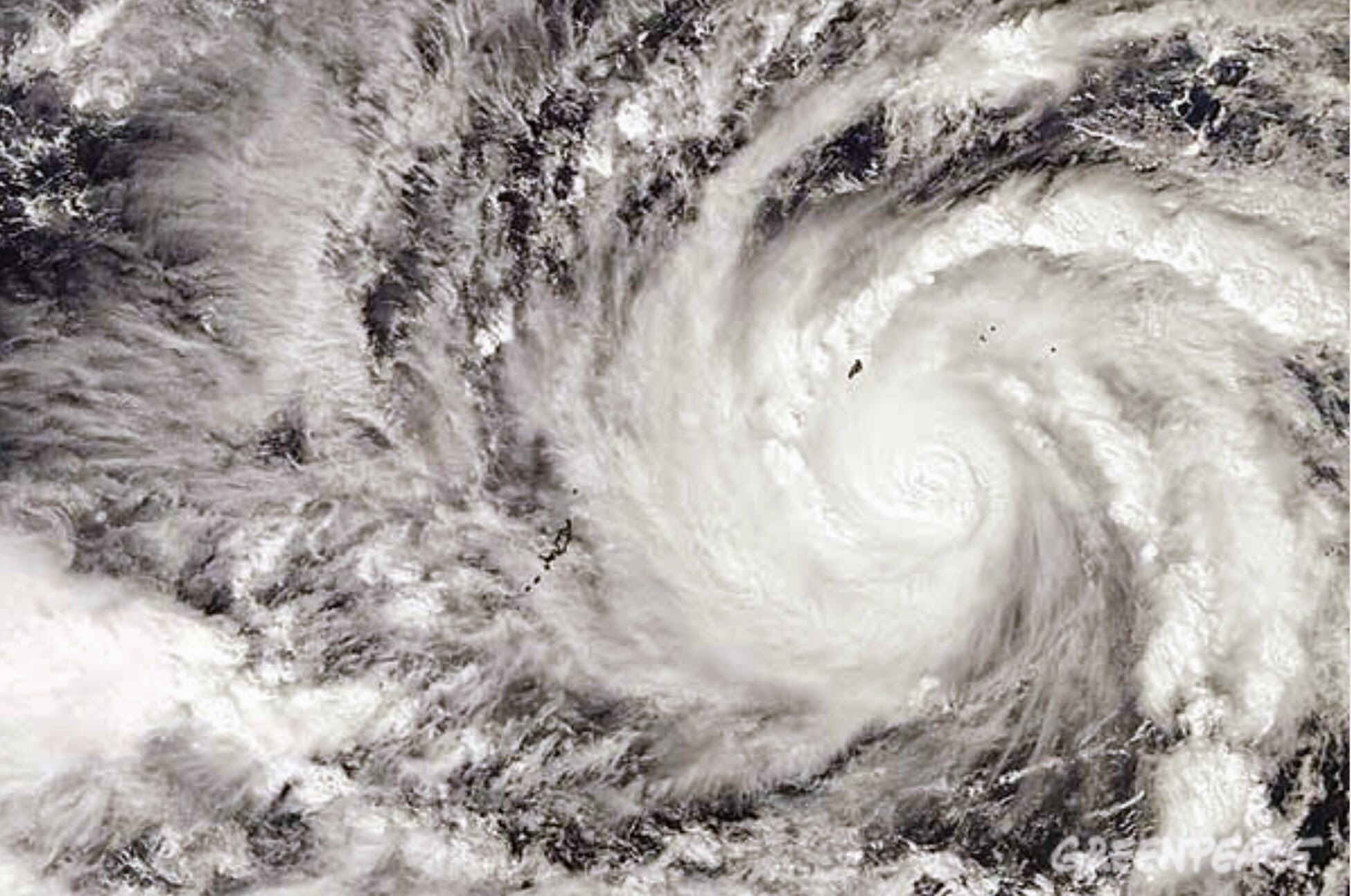
As Typhoon Hagupit hits the Philippines, one of the biggest peacetime evacuations in history has been launched to prevent a repeat of the massive loss of life which devastated communities when Super Typhoon Haiyan hit the same area just over a year ago.
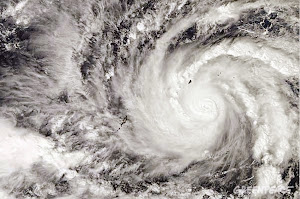
Typhoon Hagupit

“One of the biggest evacuations in peacetime” strikes a sickening chord. Is this peacetime or are we at war with nature?

I was about to head to Lima, when I got a call to come to the Philippines to support our office and its work around Typhoon Hagupit (which means lash). In Lima another round of the UN climate talks are underway to negotiate a global treaty to prevent catastrophic climate change. A truce of sorts with nature.

But these negotiations have been going on far too long, with insufficient urgency and too much behind the scenes, and not so much behind the scenes, interference from the fossil fuel lobby.

This year, like last year and the year before these negotiations take place against a devastating backdrop of a so-called ‘extreme weather event’, something that climate scientists have been warning us about if we don’t take urgent action.

Tragically, we are not taking urgent action. Nature does not negotiate, it responds to our intransigence. For the people of the Philippines, and in many other parts of the world, climate change is already a catastrophe.

Only one year ago, Super Typhoon Haiyan killed thousands, destroyed communities and caused billions of dollars in damage. Many survivors who are still displaced have this week had to evacuate the tents they have been living in as Typhoon Hagupit carves a path across the country as I write.

It’s too early to assess the impact so far—we are all hoping early indications will spare the Philippines of the same pain that was experienced after Haiyan.

Here in Manila, we prepare to travel to the impacted areas in the wake of Typhoon Hagupit, or Ruby, as it has been named. We will offer what minor assistance we can.

We will stand in solidarity with the Filipino people and we will call out those who are responsible for climate change, those who are responsible for the devastation and who should be helping pay for the clean up and for adaptation to a world in which our weather is an increasing source of mass destruction.

With heavy hearts we prepare to bear witness. We challenge those in Lima to turn their attention from the lethargy and process of the negotiations and pay attention to what is happening in the real world.

We call on them to understand that climate change is not a future threat to be negotiated but a clear and present danger that requires urgent action now!

Each year, the people of the Philippines learn the hard way what inaction on emissions mean. They might be slightly better prepared and more resilient, but they are also rightly more aghast that each year—at the same time—the climate meetings seem to continue in a vacuum, not prepared to take meaningful action, not able to respond to the urgency of our time and not holding accountable the Big Polluters that are causing the climate to change with ferocious pace.

Before leaving for Manila I also received a message from Yeb Saño, climate commissioner for the Philippines: “I hope you can join us as we bear witness to the impact of this new super typhoon. Your help would be very valuable in delivering a message to Lima loud and clear.”

Yeb was the Filipino chief negotiator for three years at the UN climate talks and recently visited the Arctic on a Greenpeace ship to witness the Arctic sea ice minimum. Two years ago in Doha, as Typhoon Pablo took the lives of many he broke through the normally reserved language of dispassionate diplomacy that dominates UN climate treaty talks:

“Please … let 2012 be remembered as the year the world found the courage to … take responsibility for the future we want. I ask of all of us here, if not us, then who? If not now, then when? If not here, then where?”

I am joining Greenpeace Philippines and Yeb to visit the worst hit areas, document the devastation and send a clear message from climate change ground zero to Lima and the rest of the world that the ones that are responsible for the majority of emissions will be held accountable by the communities that are suffering the impacts of extreme weather events linked to climate change.

We will call on the heads of the fossil fuel companies who are culpable for the unfolding tragedy to examine their consciences and accept their historic responsibility. They say the truth is the first casualty of war, in this war against nature, the truth of climate science is unquestionable.

Please join us. Please add your voice by signing our petition calling on Big Polluters to be held legally and morally accountable for climate damages. After signing the petition you will be redirected to a site where you can make a donation to the relief efforts of partner organizations. More


Sunday, December 7, 2014

Announcing “Disastersand Ecosystems: Resilience in a Changing Climate”

Announcing “Disastersand Ecosystems: Resilience in a Changing Climate”, a new Massive Open OnlineCourse (MOOC) to be launched on 12 January, 2015

What we all know is that disasters are increasing worldwide. Population growth,environmental degradation and climate change will likely exacerbate disasterimpacts in many regions of the world. What role do ecosystems play in reducingdisaster risks and adapting to climate change? This is the topic of an exciting new Massive Open Online Course thatwill go live in January 2015. It was developedjointly by the United Nations Environment Programme (UNEP), the Center for NaturalResources and Development (CNRD) and the Cologne University of Applied Sciences(CUAS), Germany. This is UNEP’s first MOOC, developed through its engagement with universities worldwide including the Global Universities Partnership on Environment for Sustainability (GUPES).

The MOOC covers a broad range of topics from disastermanagement, climate change, ecosystem management and community resilience. Howthese issues are linked and how well-managed ecosystems enhance resilience to naturaldisasters and climate change impacts are the core theme of the course.
The MOOC is designed at two levels: the leadership track, with the first 6 units providing generalintroduction to the fundamental concepts, which is suitable for people from allbackgrounds who wish to have a basic undertaking of the topic. The second level, or expert track comprises 15 units with more in depth learning on thevarious tools of ecosystem-based disaster risk reduction and climate changeadaptation.
The course is delivered by both scientists and practitioners.In addition there are guest lectures from global leaders and experts, such as Achim Steiner, the Executive Director of the United Nations Environment Programme, Julia Marton-Lefèvre, former Director General of the International Union for the Conservationof Nature (IUCN), Rajendra Pachauri of Teri University and Margareta Wahlströmof the UN International Strategy on Disaster Reduction (UNISDR).

Students will have the opportunity to enhance their knowledgethrough quizzes, real life and fictitious problem-solving exercises, additionalreading materials, videos and a discussion forum. An Expert-of-the-Week will be available torespond to questions and interact with students. Students will receive weeklynewsletters with up-to-date news on ecosystem-based disaster risk reduction andadaptation.
The course is invaluable for universities around the world,where faculty members can use it to update their curriculum and use thelectures and teaching materials for blended learning for their own courses. Atthe same time, the MOOC format also allows those currently outside theuniversity system to learn about the new developments in the area of disastersand climate change, without having to enroll in a university or pay for anonline course. Those who successfully complete the course will be provided witha course certificate.

Visit: www.themooc.net<http://www.themooc.net/>, or enroll directly at:
https://iversity.org/en/courses/disasters-and-ecosystems-resilience-in-a-changing-climate


Wednesday, December 3, 2014

Drought Management Experts Examine Tools to Address Water Scarcity

21 November 2014: The UN Educational, Scientific and Cultural Organization (UNESCO), the Centre for Natural Resources and Development (CRND), the Climate Services Partnership, the International Centre for Integrated Water Resources Management (ICIWaRM) and the government of Flanders, Belgium, organized an international symposium on ‘Building a Community of Practice on Drought Management Tools'.


The meeting aimed to: develop project proposals and solutions to promote international cooperation on drought; and establish a community of practice to share information and develop drought management tools. The community of practice will be integrated into existing regional networks, including: Aridas-Latin America and the Caribbean (LAC); CNRD; the UNESCO Global Network for Water and Development Information in Arid Lands (G-WADI); and Columbia University Global Centres.


The meeting took place from 19-21 November 2014, in Santiago, Chile. [UNESCO Press Release] [Symposium Website] More


Launch of St Helena's first national biosecurity policy

St Helena’s announces launch of first national biosecurity policy

St Helena is a UK Overseas Territory in the South Atlantic, currently served by a single ship, 6 days voyage from Cape Town. In 2016 the first airport will open, breaking the island’s isolation and greatly increasing biosecurity risk. The Policy is the result of over a full year’s work, with extensive stakeholder and public consultation. It provides the framework for preventing or mitigating against the increased risk of introduction of new and potentially harmful pests, weeds and diseases to St Helena associated with the air access and a new cargo system.

St Helena’s national vision for biosecurity is: ‘an effective biosecurity system of shared responsibility that protects the sustainable future of our Island, allowing a vibrant economy, safe movement of people and goods, and enhanced livelihoods and health.’

Biosecurity St Helena, as the policy document is known, is guided by seven principles: leadership, communication, shared responsibility, risk and evidence-based decision making, cooperation and equity. An implementation plan is also in place for priority actions to be delivered by responsible agencies.

Deputy Chair for Economic Development, Derek Thomas, said in his speech at the launch event that: "Having a biosecurity policy for the first time gives us a guiding document to help us achieve our vision and our response to our biosecurity challenge. Itrequires the support, participation and compliance of all St Helenians and visitors alike".

The document and other information on St Helena’s biosecurity system can be found athttp://www.sainthelena.gov.sh/st-helena-biosecurity-service/


Monday, December 1, 2014

The 1.5 degrees global warming call from the Pacific, still possible


Amidst the recent release of scientific reports on climate change, the key message has been for urgent action to limit global warming, before time runs out.


The Intergovernmental Panel on Climate Change released their Synthesis Report on the 5th Assessment Report in October, the World Bank released the "Turn down the heat, confronting the new climate normal" report in November and the United Nations Environment Program released their "Bridging the 2014 Emission Gap Report" also in November.

According to the "Turn down the heat" report and an accompanying press release - climate change impacts such as extreme heat events may now be unavoidable because the Earth’s atmospheric system is locked into warming close to 1.5°C above pre-industrial levels by mid-century, and even very ambitious mitigation action taken today will not change this.

This does not mean, however, that long-term warming of 1.5°C is locked in, or that achievement of the 1.5°C warming limit, as called for by vulnerable countries like Pacific Islands, is no longer possible.

"What we see from the scientific literature is that it's clear that we can indeed hold warming below 2 degrees in this century probably with the most aggressive mitigation emission reduction options. We can limit peak warming close to 1.5 degrees and slowly reduce that to below 1.5 degrees by 2100," said Prof. Bill Hare of the Climate Analytics Group, Potsdam Institute.

"This is going to involve fairly major changes in policy settings now but this is what we are negotiating for, to have the emissions go down in the 2020's and if we can do that fast enough then its technically and economically feasible to bring warming back to 1.5 degrees by the end of the century."

"Those that are arguing it's not possible are expressing a political judgment, not a scientific judgment."

There will be climate change impacts experienced by several regions including the Pacific islands, before warming is reduced as limiting peak warming close to 1.5°C by mid century will still result in significant damage.

At the present levels of warming (about 0.8°C above preindustrial) the impacts of climate change are already being felt in many regions of the world. Continued damage is forecast to the coral reefs in the Pacific and other tropical oceans, there is the huge risk of damage to water supply resources in dry regions and substantial drops in crop yield in regions such as sub Saharan Africa.

"On top of that we'll also be experiencing quite major increase in extreme heat events even for 1.5 degrees warming so whatever happens we're going to have to go through some very severe changes," explains Professor Hare.

Here in Lima, Peru at the 20th Conference of the Parties to the United Nations Framework Convention on Climate Change (UNFCCC COP20), the Pacific islands are calling for a 1.5 degree limit to global warming by 2100. The next two weeks of climate negotiations continue the work being done by the Pacific islands as members of the Alliance of Small Islands States, lobbying for the 1.5 degree limit to global warming to be agreed upon in Paris next year.

The new climate treaty is to be agreed upon by the end of December in 2015 in Paris.

"Strengthening the long-term temperature goal to 1.5 degrees is of critical importance for us. Even at the current temperatures, our small low lying islands are being battered by king tides, salt water intrusion, coastal erosion, coral bleaching, ocean acidification, loss of species and habitats," said Ms. Ana Tiraa, Head of the Cook Islands delegation at the UNFCCC COP 20.

"These will only be exacerbated at higher temperatures, with due respect to other parties, the Cook Islands calls for ambition levels that are high enough to keep temperature rise below 1.5 degrees. Temperature rises above 1.5 degrees cannot be an option for low lying small islands if we have a hope of surviving."

According to Prof. Hare, at present there is confidence that with aggressive mitigation action warming can be held to below 2 degrees yet another decade of inaction will most likely lead to warming at 2 degrees or above. The message is clear that the time for action is now.

"It is still feasible to bring global warming to below 1.5 degrees by 2100 but whether or not the world politics and major economies will take enough action in the coming five to 20 years is in question. We are entitled to be skeptical given the inaction that has characterised the last decade as to whether that looks happening but it's not a scientific judgment or statement, the option is well and truly open to bring warming back to below 1.5 degrees. More