Thursday, February 26, 2015

A Thirsty, Violent World

They say you learn something new everyday. For me, this day qualifies. Michael Specter writes at the New Yorker on the increasingly dire prospects for water -- of the clean, unpolluted kind -- for a clamoring humankind and of the water wars that are surely on the horizon.

And he has this, on the origins of the word "rivals": "After all, the word 'rivals' has its roots in battles over water—coming from the Latin, rivalis, for 'one taking from the same stream as another.'” Who knew? Not me. Specter's prognostication on our looming water disasters is a grim but important read and not just for Pakistanis or Nigerians, but for us in a country in which California is parched for water in a prolonged drought and researchers are predicting humongous droughts coming later in the century for our breadbasket, the Midwest! TomDispatch


A Thirsty, Violent World

Angry protesters filled the streets of Karachi last week, clogging traffic lanes and public squares until police and paratroopers were forced to intervene. That’s not rare in Pakistan, which is often a site of political and religious violence.

But last week’s protests had nothing to do with freedom of expression, drone wars, or Americans. They were about access to water. When Khawaja Muhammad Asif, the Minister of Defense, Power, and Water (yes, that is one ministry), warned that the country’s chronic water shortages could soon become uncontrollable, he was looking on the bright side. The meagre allotment of water available to each Pakistani is a third of what it was in 1950. As the country’s population rises, that amount is falling fast.

Dozens of other countries face similar situations—not someday, or soon, but now. Rapid climate change, population growth, and a growing demand for meat (and, thus, for the water required to grow feed for livestock) have propelled them into a state of emergency. Millions of words have been written, and scores of urgent meetings have been held, since I last wrote about this issue for the magazine, nearly a decade ago; in that time, things have only grown worse.

The various physical calamities that confront the world are hard to separate, but growing hunger and the struggle to find clean water for billions of people are clearly connected. Each problem fuels others, particularly in the developing world—where the harshest impact of natural catastrophes has always been felt. Yet the water crisis challenges even the richest among us.

California is now in its fourth year of drought, staggering through its worst dry spell in twelve hundred years; farmers have sold their herds, and some have abandoned crops. Cities have begun rationing water. According to the London-based organization Wateraid, water shortages are responsible for more deaths in Nigeria than Boko Haram; there are places in India where hospitals have trouble finding the water required to sterilize surgical tools.

Nowhere, however, is the situation more acute than in Brazil, particularly for the twenty million residents of São Paulo. “You have all the elements for a perfect storm, except that we don’t have water,” a former environmental minister told Lizzie O’Leary, in a recent interview for the syndicated radio show “Marketplace.” The country is bracing for riots. “There is a real risk of social convulsion,” José Galizia Tundisi, a hydrologist with the Brazilian Academy of Sciences, warned in a press conference last week. He said that officials have failed to act with appropriate urgency. “Authorities need to act immediately to avoid the worst.” But people rarely act until the crisis is directly affecting them, and at that point it will be too late.

It is not that we are actually running out of water, because water never technically disappears. When it leaves one place, it goes somewhere else, and the amount of freshwater on earth has not changed significantly for millions of years. But the number of people on the planet has grown exponentially; in just the past century, the population has tripled, and water use has grown sixfold. More than that, we have polluted much of what remains readily available—and climate change has made it significantly more difficult to plan for floods and droughts.

Success is part of the problem, just as it is with the pollution caused by our industrial growth. The standard of living has improved for hundreds of millions of people, and the pace of improvement will quicken. As populations grow more prosperous, vegetarian life styles often yield to a Western diet, with all the disasters that implies. The new middle classes, particularly in India and China, eat more protein than they once did, and that, again, requires more water use. (On average, hundreds of gallons of water are required to produce a single hamburger.)

Feeding a planet with nine billion residents will require at least fifty per cent more water in 2050 than we use today. It is hard to see where that water will come from. Half of the planet already lives in urban areas, and that number will increase along with the pressure to supply clean water.

“Unfortunately, the world has not really woken up to the reality of what we are going to face, in terms of the crises, as far as water is concerned,” Rajendra Pachauri, the chairman of the International Panel on Climate Change, said at a conference on water security earlier this month. “If you look at agricultural products, if you look at animal protein, the demand for which is growing—that’s highly water intensive. At the same time, on the supply side, there are going to be several constraints. Firstly because there are going to be profound changes in the water cycle due to climate change.”

Floods will become more common, and so will droughts, according to most assessments of the warming earth. “The twenty-first-century projections make the [previous] mega-droughts seem like quaint walks through the garden of Eden,” Jason Smerdon, a climate scientist at Columbia University’s Lamont-Doherty Earth Observatory, said recently. At the same time, demands for economic growth in India and other developing nations will necessarily increase pollution of rivers and lakes. That will force people to dig deeper than ever before into the earth for water.

There are ways to replace oil, gas, and coal, though we won’t do that unless economic necessity demands it. But there isn’t a tidy and synthetic invention to replace water. Conservation would help immensely, as would a more rational use of agricultural land—irrigation today consumes seventy per cent of all freshwater.

The result of continued inaction is clear. Development experts, who rarely agree on much, all agree that water wars are on the horizon. That would be nothing new for humanity. After all, the word “rivals” has its roots in battles over water—coming from the Latin, rivalis, for “one taking from the same stream as another.” It would be nice to think that, with our complete knowledge of the physical world, we have moved beyond the limitations our ancestors faced two thousand years ago. But the truth is otherwise; rivals we remain, and the evidence suggests that, until we start dying of thirst, we will stay that way. More


Wednesday, February 11, 2015

“If we win, then every coastal city in the world wins, every fishing village in the world wins.” Seychelles Ambassador to the UN Ronny Jumeau

2015 is big year for the world. A final draft of the Sustainable Development Goals are due by the time heads of state gather in New York for the UN Summit in September.

Ambassador Ronny Jumeau

Then, six weeks later diplomats gather in Paris for the last best chance at striking a global agreement on climate change. Today we are kicking off a regular series we are calling “Meet a 2015er” that will offer glimpses into the life of the UN officials, NGO people, diplomats and advocates as they help shape the international development and climate change agenda this year.

We kick off this series in with Ronny Jumeau, the Seychelles Ambassador to the United Nations. Jumeau often represents the Association of Small Island States (AOSIS) in climate change negotiations, but wants to emphasize that these are his own views.

So, we’re sitting here in a snow storm in New York and you are headed to equally cold Geneva for the adaptation meeting of the UNFCC. Let’s talk about the climate change SDG. What is your role in all these negotiations?

My job is to explain things in a way that people understand, without the jargon. We need to move past that and look at the people involved in climate change. We can’t just focus on the science or graphs and figures.

How are the Small Island Developing States (SIDS) feeling about the pace and status of the climate SDG and the climate talks leading up to Paris?

There are so many issues [left] unresolved [by the Lima round of talks in December]. Everybody’s frustrated. Well, maybe not everybody but if you want a strong, ambitious agreement in Paris of course you’re frustrated!

It’s unfortunate that the climate change process has reached a stage where we always say…at least it’s better than nothing. That’s a poor judgement. We say, ‘it could have been worse.’ Everything could have been worse! As long as you’re not dead, it could have been worse.

Sounds quite depressing for the fate of the climate SDG and Paris agreement.

[Laughing] Most resilient of us all are the islands. We are certainly the ones who smile the most, it’s our way of coping. Once you know the worst that can happen [it’s not so bad] — it’s when you don’t know that is the worst. We already know the bottom line…our countries will disappear. We just don’t want that narrative to take over.

There are countries that have approached us who say, you do know if the science is right, that even if we cut all emissions tomorrow, sea level will continue rising. That’s one of the problems AOSIS faces, but the moment you start that conversation, then no one has to listen to you anymore.

What does that mean for how you look at parallel SDG negotiations and Paris climate talks?

The more we make climate change a development narrative, the more attention we get. Tackling climate change cannot be seen as a barrier to pulling people out of poverty. I think we’ve kept that divorced too much. Between pulling out of poverty and climate change, I know which ones will ‘win votes’ as a politician: it’s the poverty reduction.

Our first priority is to make sure that we are still around! So for us, the SDGs and climate change action are one in the same.

Every year AOSIS has a luncheon with the Secretary General. The last time we had lunch and the Ambassadors were speaking, I told them a weak climate agreement will ensure that the SDGs will not succeed. For the SIDS, there can be no sustainable development if the SIDS are not around [due to the affects of climate change.] They go hand in hand.

Can you explain that a bit further?

Most SIDS are heavily dependent on tourism and fisheries. How can we in the SIDS plan the sustainable development of our fisheries, if we don’t know what ocean acidification is going to do? And that’s a climate issue. So until we know how the climate is going to affect the oceans, we can’t plan our biggest industry. Same with agriculture.

Another example is the airport in Seychelles which [ according to the data] will need a new runway to be built at a level that is higher than the whole airport is currently. We need the additional runway to increase tourism, but how do you build it without knowing how high the ocean level will rise and when?

The Secretary General gets it. His Cabinet gets it. But politics comes into play.

We’ll continue the SDGs, of course, but…everyone is saying: whatever you say in the SDG on climate must not pre-judge the Paris agreement [without understanding] that the two cannot be divorced.

Is there hope for a more effective climate SDG

I think we’re going to have SDGs that sound strong, but as long as it’s not strong on the financing! They look good, until someone will say ‘by the way, how are we going to pay for all this?’

Is it really about finance?

It’s all about finance. I think the development narrative has more staying power than the climate narrative because development is about the politics of the developing world. It’s more tangible. That’s what people are elected to do; pull people out of poverty, create jobs. The climate part of that is creating ‘green’ jobs.

One of the ways of getting traction for climate is to say you cannot develop without climate action.

It looks like the meeting in Ethiopia [The Conference on Financing For Development to be held in Addis Ababa this July] is everything. I think that meeting is becoming the whole thing, incredibly important. But, I think people will be saying [once they get to Addis], ‘we’re talking about financing for what now?’

If you take development as something separately from climate change, what are we discussing financing exactly – development projects or climate projects? For the SIDS and [Least Developed Countries] they still go hand in hand, especially in financing context.

Is it necessarily a bad thing to be so focused on finance?

When countries like China and U.S. are interested in solar power, its not because of climate change – it’s business and economic development. I’m not going to argue with that though – whatever it takes to get you to the table!

Will the climate SDG and any agreement that comes out of Paris be completely, separately formulated then?

They [SDGs and UNFCCC] will come together but unfortunately after 2015. We’re so focused now on delivering separately the SDGs, post-2015 development agenda, Paris agreement – but they’re all inter-related. I can understand if someone says, ‘look when it comes to climate change, let’s just develop Paris and not complicate it further.

The trouble is on the one hand: delivering it, on the other hand: are we going to deliver something weak and then start talking?

What happens if there is a weak climate SDG and subsequently, a weak deal in Paris? Why should other countries care what happens to the SIDS as a result?

At first we said ‘you can’t wipe out whole countries, ancient cultures, and so on.’ Then we realized, it’s not us vs. them.

If we win, then every coastal city in the world wins, every fishing village in the world wins.

You cannot take a globe and with blue paint, paint out all those little dots because every continental coastline will change too. We would have to redraw every single continent in the entire world. We’re trying now to say: you save us, you’re saving everybody. As long as we stay above water, everybody else does. If you sacrifice us, who’s next? If we go, we won’t go alone. Just because we disappear, at that point we’ll have runaway climate change, it won’t stop with us. More


Sunday, February 8, 2015

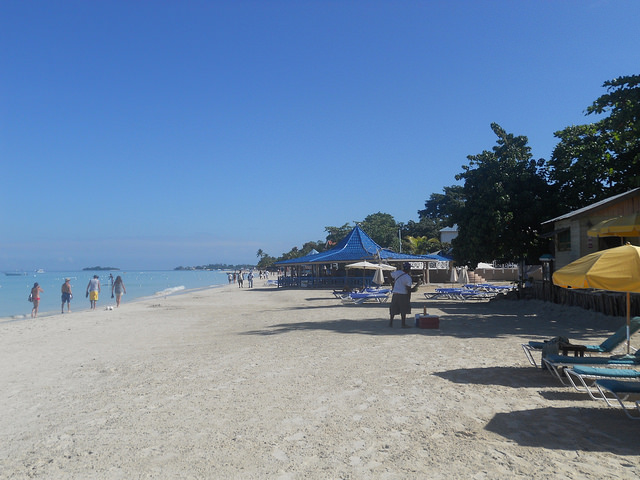
Row Erupts over Jamaica’s Bid to Slow Beach Erosion

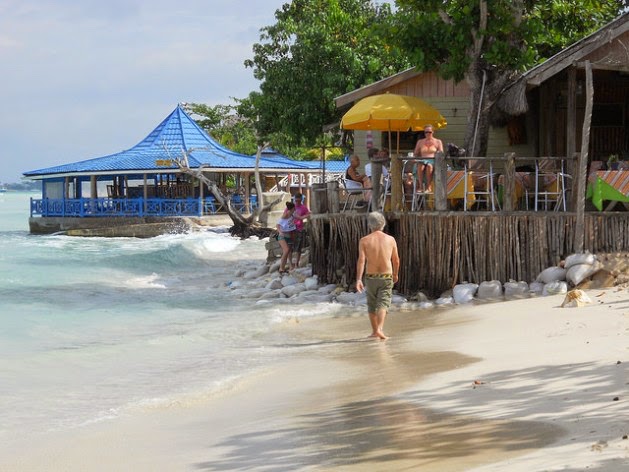
KINGSTON, Feb 2 2015 (IPS) - A plan that government says will slow the rate of erosion on Jamaica’s world-famous Negril beach is being opposed by the people whose livelihoods it is meant to protect.

Jamaica's Negril beach

Work is set to begin in March, but some in the tourist town continue to resist the planned construction of two breakwaters, which experts say is one of a series of actions aimed at protecting the beach and slowing persistent erosion. Those opposing the plan say the structures will do more damage than good.

The construction of the two breakwaters 1.2 kilometres offshore follows on previous work to strengthen the natural ecosystem protection of the coastal communities by replanting sea grass beds and mangroves in several vulnerable communities, including Negril.

“Building breakwaters is not what stakeholders here want. These hard structures cause more erosion than they prevent,” Couples Resort’s Mary Veira told IPS.

There is fear, Veira explained, that the structures will hinder the natural regeneration of the beach that currently occurs after each extreme weather event.

Government targeted the ‘Seven Mile’ stretch of Negril’s coast as its climate change adaptation project after several studies indicated that more than 55 metres of beach had been eroded in the last 40 plus years. The tourist Mecca is said to account for 25 per cent of the earnings of an industry that is responsible for about half of Jamaica’s GDP.

Veira is one of a group of hoteliers calling for a halt to the breakwater project, fearing its construction will irreparably damage Negril’s tourism industry. The environmental activist also pointed out that the structure is significantly different to that proposed by Smith Warner International (SWI) in 2008, in a consultation paid for by the community.

In addition she said, “The engineers who have been awarded the job are not coastal engineers.”

In a newspaper article dated May 2014, Veira noted: “Also of concern to stakeholders is the fact that the Environmental Engineer of National Works Agency, Dr. Mark Richards, admits such a major project of sea defense has really never been done.”

Taken Apr. 19, 2014, this photo shows a fully restored beach at Negril. The sand is taken away by storms and returns a few months later. Hoteliers fear that the breakwater will prevent the natural generation from occuring. Credit: Mary Veira/IPS

Business owners expressed concerns that boulders from the two “large rubble mound breakwaters” could break loose and destroy properties during rough weather. They also worry that it will create an eyesore as well as cause further damage to the fragile marine ecosystem, effectively killing snorkeling beds.

Both the National Environment and Planning Agency (NEPA), which overseas environment and planning on the island, and the National Works Agency (NWA), the entity overseeing the project, are adamant that the fears are unwarranted. Many hoteliers, however, continue to dig in.

The government has accused Veira and others of conducting a misinformation campaign to undermine the project’s credibility and the issue has divided the community.

The construction of the two breakwaters 1.2 kilometres off shore follows on previous work to strengthen the natural ecosystem protection of the coastal communities by replanting sea grass beds and mangroves in several vulnerable communities, including Negril. The structures are expected to break wave action and allow other remedial work to take place.

Government has said the beach nurturing option is out of the question. In May 2014, director of environment in the project’s implementing agency the Planning Institute of Jamaica (PIOJ) Clare Bernard told Negril’s business community in a meeting that the 5.4 million dollars earmarked for construction of the breakwaters could not be used for beach nourishment.

With the start date fast approaching, Sandals Resorts International (SRI) has thrown its weight behind the government’s plan. The popular hotel chain’s position was made clear in a Jan. 13 letter to the Jamaica Observer newspaper by SRI director of business processes and administration Wayne Cummings and reiterated at Friday’s meeting.

“It would be irresponsible of the agency to use government-guaranteed funds to reseed the beach for short-term gain, without treating with the known problems of wave action, only to see the beach retreat once again,” Cummings said in his statement.

Sandals operates three properties along what is said to be the most impacted section of the coastline – the Long Bay Beach also known as the Seven-Mile-Beach, as well as a ‘yet-to-be-developed’ property on the Bloody Bay Beach. The company has over the years invested in its own solutions to protect its properties.

“Let’s get this corrective phase done and commit to working with the Government to initiate a phase two for reseeding and maintaining the beach to bring Negril back to its world-class conditions,” Cummings continued.

On Jan. 23, those for and against faced off in a meeting that authorities hoped would have settled the matter once and for all. But both sides dug in and the meeting ended in a stalemate.

In addition to the fear of property damage from boulders, opponents contend that the current project bears no resemblance to that in a 2008 proposal by Smith Warner International (SWI).

In fact even more recent plans for the beach’s restoration included a comprehensive ecosystem upgrade to include sediment trend analysis, hydrological studies, artificial reefs and other “soft engineering approaches to build disaster resilience”, NEPA’s Manager of Strategic Planning and Policies Anthony McKenzie told IPS in 2012.

But authorities say the plans changed, in part because of the community’s advocacy. And the PIOJ and other government organisations have also expressed shock at the community’s apparent about-face. They have been in constant dialogue since the start, they said.

On Jan. 7, in a statement to the Parliament’s Public Administration and Appropriations Committee, NEPA’s CEO Peter Knight blamed the ongoing row on the lack of “institutional memory”, and a changing of the guard at the helm of various interest groups, such as the Negril Chamber of Commerce.

Knight told the house that as a precautionary measure, an experienced disaster mitigation expert had been contracted to review the plans, pushing the project six-months behind its original schedule.

A onetime head of the Negril Chamber of Commerce and the Jamaica Hotel and Tourist Association, Cummings implored the Negril community to remain focused. He pointed out that the solutions now being presented by government came from its own ‘cause and effect study’ that highlighted the loss of the reef due to due to natural and man-made issues.

Cummings accepted the community’s arguments that businesses will be negatively affected during the construction phase of the project and called on government to help them by providing “economic breathing room” in the form of tax breaks to keep companies afloat.

But marine biologist Andrew Ross understands why the community is upset.

“The engineering reports to which these proposed groynes are modelled only look at the current state and make no reference to the ecosystem services that accumulated sands for the grass meadows, beach and dunes over the previous thousands of years, namely the coral reef ticket,” he noted.

Ross, who specialises in the restoration of coral reefs, added that, “Any sand-targeted engineered solution can only be a band-aid, at best.”

In fact, the sea grass beds replanted two years ago in a multi-sector project funded by the European Union is all but gone, washed out by storms after only a few months. And the introduction of Shorelock, a so-called ‘sand-magnet’ chemical being used on the beach, has not rested well with folks.

Both Cummings and Ross agree on one thing: with all efforts combined, “Negril’s ecosystem can be fixed.” But as Cummings puts it, “As long as the finished product ‘plugs the holes’ identified as being the main causes of the aggressive wave actions.” More


Friday, February 6, 2015

We are building a network of Climate Change Clubs!

The Caribbean Community Climate Change Centre (CCCCC) welcomed a group of 25 students from the Belmopan Comprehensive High School today for an interactive climate change exchange.

The visit forms part of a broader engagement with young people in an effort to create a network of school-based environmental clubs with a strong climate change focus across the region. The initiative is being piloted by the Centre in five (5) schools in Belmopan, Belize with support from the Ministry of Forestry, Fisheries and Sustainable Development (MFFSD) under the "Enhancing Belize’s Resilience to Adapt to the Effects of Climate Change" project which is funded by the European Union.

The participating schools are:

Belmopan Comprehensive High School

Belize Christian Academy

Belmopan Baptist High School

Our Lady of Guadalupe High School

Belmopan Methodist High School

Through this means of youth engagement, we are using a mixture of specially designed games, discussions, music and other tools to:

  1. Increase sensitisation and awareness of climate change impacts and community vulnerability;
  2. Heighten ability to link personal actions to the broader climate change discussion;
  3. Increase capacity to conduct vulnerability assessments of communities; and
  4. Identify practical adaptation measures to reduce vulnerability.

This initiative will include 60 to 90 minute weekly meetings, experiential learning including presentations, highly interactive group exercises, discussions and outreach efforts. These clubs are intended to be student-led entities with the support of a designated staff member. More


Thursday, January 29, 2015

Caribbean Energy Summit 2015: US Announce Investments in Energy Security for Caribbean Countries During First-Ever DC Summit

The Obama administration recently hosted the first Caribbean Energy Security Summit to support the region's improved governance, access to finance and increased donor coordination for the energy sector.

Vice President Joe Biden has led the issue of Caribbean energy security and said the Obama administration considers the topic as a primary issue.

"This is extremely important to us. It's overwhelmingly in the interest of the United States of America that we get it right, and that this relationship changes for the better across the board," Biden said.

Biden added that the low oil prices have given little breathing room for governments, but there are alternatives. He mentioned renewable energy as an affordable source in addition to developing wind and solar energy.

"Meanwhile, we're in the midst of a seismic shift in the global economy: the ascendancy of the Americas as the epicenter of energy production in the world," Biden said. "We have more oil and gas rigs running in the United States, than all the rest of the world combined. Mexico, Canada and the United States is the new epicenter of energy -- not the Arabian Peninsula. It is the new epicenter of energy in the 21st century."

The vice president called for an integrated North America to promote energy security since the U.S. wants Caribbean countries to "succeed as prosperous, secure, energy-independent neighbors -- not a world apart, but an integral part of the hemisphere, where every nation is middle class, democratic and secure."

Biden further stressed the purpose of the summit is not to "put up another solar panel or sign another gas contract" but to help countries establish protocol to attract private-sector investment. The vice president, however, acknowledged that countries have to confront corruption by having clear and transparent rules.

The U.S. created the Overseas Private Investment Corporation (OPIC), which will focus on developing energy projects for the Caribbean. Biden announced $90 million from the OPIC will be funded to Jamaica for wind projects.

The Caribbean Energy Security Summit is a "key component" to Biden's Caribbean Energy Security Initiative, which he announced in June 2014.

A joint statement on Monday had participating countries and regional and international organization agreeing for the Caribbean to make "necessary and specific reforms" that include efforts for sustainable and clean energy technologies. The participants also stated their commitment to exchange data and energy information.

The Jan. 26 summit from Washington, D.C. included governments from Antigua and Barbuda, Aruba, Bahamas, Barbados, Belize, Canada, Colombia, Curacao, Dominica, Dominican Republic, France, Germany, Grenada, Guyana, Haiti, Jamaica, Mexico, New Zealand, Spain, St. Kitts and Nevis, St. Lucia, St. Vincent and the Grenadines, Suriname, Trinidad and Tobago and the United Kingdom. The Caribbean Community (CARICOM) Secretariat, Caribbean Development Bank, European Union, Inter-American Development Bank Group, International Renewable Energy Agency, Organization of American States and the World Bank Group also participated. More


Monday, January 26, 2015

Help Small Island States Win Their Battle Against Climate Change by Achim Steiner

Earth’s fate is inextricably linked to 52 nations threatened by rising sea levels – the rest of the world should not let them drown

Many of the planet’s most prized destinations, places considered exquisite and idyllic, where nature seems bountiful and people appear at ease, are under threat. In less than a decade, climate change-induced sea level rise could force thousands of people to migrate from some of the world’s 52 small island developing states (Sids).

How Sids respond to threats such as sea level rise, and the degree of support they receive, is indicative of how we, collectively, will adapt to a host of climate change impacts in the coming decades.

When we think of Sids, we may be tempted to imagine small patches of paradise scattered with lightly populated fishing villages, unfettered by the demands of modernity. In fact, almost one in every 100 of us is from a small island developing state.

Sids boast a diversity of cultures, natural resources, biodiversity, and indigenous knowledge that makes them mainstays of our planetary ecosystem. From the multi-billion dollar economy of Singapore, to Papua New Guinea, one of the least explored countries in the world where 1,000 cultural groups are thought to exist, to the very remote Niue, which is one of the world’s largest coral islands – each small island developing state is endowed with its own unique attributes.

Yet what they increasingly share in common are escalating environmental threats that are further aggravated by economic insecurities. Sea level rise is among the most daunting of these threats, which in some regions is up to four times the global average.

According to recent Intergovernmental Panel on Climate Change estimates, if average global temperatures increase by approximately 4C, sea levels could rise as much as one metre by 2100, a scenario that would see nations such as Kiribati, Maldives, Marshall Islands and Tuvalu become uninhabitable, while a large share of the population of many other Sids could be displaced or otherwise.

What makes this situation even more grievous is that the climate change threats facing many Sids are by-and-large not of their own making. Their total combined annual carbon dioxide output, although rising, accounts for less than 1% of global emissions.

A girl sits on tree root at Teaoraereke, South Tarawa

Sids are suffering disproportionately from acts of environmental negligence of which we are collectively guilty. Larger economies, until recently, have managed better than small ones to mask the impacts of exhausting their natural capital and contributing heavily to greenhouse gas emissions, but the consequences of this neglect are catching up with them too.

Many of the planet’s most prized destinations, places considered exquisite and idyllic, where nature seems bountiful and people appear at ease, are under threat. In less than a decade, climate change-induced sea level rise could force thousands of people to migrate from some of the world’s 52 small island developing states (Sids).

How Sids respond to threats such as sea level rise, and the degree of support they receive, is indicative of how we, collectively, will adapt to a host of climate change impacts in the coming decades.

When we think of Sids, we may be tempted to imagine small patches of paradise scattered with lightly populated fishing villages, unfettered by the demands of modernity. In fact, almost one in every 100 of us is from a small island developing state.

Sids boast a diversity of cultures, natural resources, biodiversity, and indigenous knowledge that makes them mainstays of our planetary ecosystem. From the multi-billion dollar economy of Singapore, to Papua New Guinea, one of the least explored countries in the world where 1,000 cultural groups are thought to exist, to the very remote Niue, which is one of the world’s largest coral islands – each small island developing state is endowed with its own unique attributes.

Yet what they increasingly share in common are escalating environmental threats that are further aggravated by economic insecurities. Sea level rise is among the most daunting of these threats, which in some regions is up to four times the global average.

According to recent Intergovernmental Panel on Climate Change estimates, if average global temperatures increase by approximately 4C, sea levels could rise as much as one metre by 2100, a scenario that would see nations such as Kiribati, Maldives, Marshall Islands and Tuvalu become uninhabitable, while a large share of the population of many other Sids could be displaced or otherwise.

What makes this situation even more grievous is that the climate change threats facing many Sids are by-and-large not of their own making. Their total combined annual carbon dioxide output, although rising, accounts for less than 1% of global emissions.

Sids are suffering disproportionately from acts of environmental negligence of which we are collectively guilty. Larger economies, until recently, have managed better than small ones to mask the impacts of exhausting their natural capital and contributing heavily to greenhouse gas emissions, but the consequences of this neglect are catching up with them too.

Responses to these threats that apply the business-as-usual economic models that have brought them to the state of economic and environmental vulnerability they are in today will be temporary at best, and catastrophic at worst. That is why Sids are beginning to take the first steps on a blue-green economy transition – a strategy that targets resource efficiency and clean technology, is carbon neutral and socially inclusive, will provide a healthy environment and help conserve resources, while integrating traditional knowledge and giving priority to island community and culture that will build their resilience to the impacts of climate change.

But we should not look at climate change threats in isolation from other influenced by human activities, because climate change is in fact exacerbating problems that we have already created, such as desertification, biodiversity loss, and food insecurity.

Take the degradation of marine ecosystems as an example. A number of studies show that it is overfishing that currently outweighs all other human impacts on marine ecosystems, including climate change. With Sids accounting for seven out of 10 of the world’s countries most dependent on fish and seafood consumption, reducing emissions alone will not be enough to ensure a sufficient supply of fish in the future.

The governments of these small island states are recognising that many policies of the past have left them ill-prepared to respond to the impacts of climate change, and it is this awareness that is motivating them to make sustainable economic growth the cornerstone of their development.

The energy sector, where they are leading the switch to renewables, is a prime example of necessity driving innovation and change. On average, Pacific island households spend approximately 20% of their household income on energy, and can often pay up to 400% more per kilowatt-hour of electricity than the United States.

As a result, many states are now developing their domestic renewable energy markets. For instance, the small South Pacific island of Tokelau is close to meeting 100% of its energy needs through renewables – even powering generators with locally produced coconut biofuel.

And Barbados, already the leading producer of solar water heaters in the Caribbean, is set to save an estimated $283.5m (£171m) through a 29% switch to renewables by 2029.

From valuing and managing their natural resources, to putting the right incentives in place to switch to renewable energy, Sids are leading the blue-green economy transition. And next week, at the third international conference on Sids in Samoa, they will reaffirm their commitment to advancing national sustainable development goals in front of a global audience. What they need from the rest of the world is the solidarity, technologies, and resources to act on that commitment on a scale that will radically change their fortunes.

It is hoped that the new international climate change agreement currently being negotiated, and which will be adopted at the Paris conference in 2015, might help to relieve some of their economic burden of adapting to the impacts of climate change, while also reducing the severity of the impacts by reducing global greenhouse gas emissions.

Supporting Sids on this journey of transition provides an unprecedented opportunity to be part of game-changing socioeconomic solutions that can be applied in broader contexts and bigger economies.

We should look upon Sids as microcosms of our larger society, and not stand back and allow them to grapple with a threat for which they are largely inculpable. More


Tuesday, January 20, 2015

Side Event: The Ocean We Need for The Future We Want

The Global Ocean Commission and the Permanent Mission of Sweden to the United Nations are happy to invite you to their side event on Wednesday 21 January, lunch time, on the margins of the UN BBNJ negotiations.

Side Event: The Ocean We Need for The Future We Want

Wednesday, 21st January 2015

Conference Room 5

13.15-14.45

(Light lunch will be provided)

David Miliband, Co-chair Global Ocean Commission, President and CEO of the International Rescue Committee (IRC) and former UK Foreign Secretary

Lisa Emelia Svensson, Ambassador for Ocean, Seas and Fresh Water, Ministry of the Environment, Government Offices of Sweden

Shorna-Kay Richards, Minister and Deputy Representative, Permanent Mission of Jamaica to the UN

Max Diener, Legal Advisor, Ministry of Foreign Affairs of Mexico

The Global Ocean Commission report (www.globaloceancommission.org) released in June 2014 contains eight proposals directly related to the governance, sustainable use and conservation of marine biodiversity in Areas Beyond National Jurisdiction. The convening of the Global Ocean Commission came from the realization that the context of modern ocean governance had changed markedly since UNCLOS was negotiated.

This side event will consider these solutions and proposals which the Global Ocean Commission has tabled for a future healthy ocean in the context of the BBNJ negotiations and the potential new implementing agreement.

The Co-chair of the Global Ocean Commission will give insights to their deliberations drawn from the diverse backgrounds of the Commissioners, and will reflect on the compelling evidence which lead them to advocate strongly in their report for a new UNCLOS Implementing Agreement for the high seas.

The other eminent speakers will focus on the intimate linkages between the BBNJ process and the potential impact the outcome of these negotiations will have on the other ocean issues.

Further information can be obtained from Lisa Emelia Svensson (lisa.svensson@gov.se) or Rémi Parmentier (remi.parmentier@globaloceancommission.org)


Sunday, January 11, 2015

GRID-Arendal Highlights Blue Forests Project Launch

December 2014: GRID-Arendal's interim marine newsletter highlights the launch of the Global Environment Facility's (GEF) Blue Forests Project, which will explore how to harness the value of carbon and other coastal ecosystem services to improve ecosystem management.

The Blue Forests Project aims to increase recognition of the role of mangroves, seagrasses and saltmarshes in climate change mitigation and adaptation. It will also address knowledge gaps on the role of blue forests in storing and sequestering carbon and sheltering towns from storms. The project will be implemented in Ecuador, Indonesia, Kenya, Madagascar, Mozambique and the United Arab Emirates (UAE) as well as in a to-be-determined location in Central America.


The newsletter also highlights: the Norwegian Blue Forests Network, an initiative that focuses on harnessing the potential of blue forests to capture and store atmospheric carbon as well as other ecosystem services; and a GRID-Arendal and Blue Climate Solutions report, ‘Fish Carbon: Exploring Marine Vertebrate Carbon Services.' The report highlights the potential of marine vertebrates to address climate change and prevent global biodiversity loss and presents eight "fish carbon" mechanisms.


GRID-Arendal also announced that it will begin producing a common newsletter for all its programmes beginning in January 2015, making this newsletter the last one focused solely on marine issues. More


[GRID-Arendal Newsletter] [GRID-Arendal News on Blue Forests Project] [Blue Forests Project Website] [GRID-Arendal News on Norwegian Blue Forests Network] [Publication: Fish Carbon: Exploring Marine Vertebrate Carbon Services]


International Dialogue on Underwater Munitions Highlighting Sea-Dumped Chemical Weapons

International Dialogue on Underwater Munitions

Deadly Depths

Underwater munitions pollute the marine environment with toxic chemicals. We have learned that there is a "need to clean" both chemical and conventional weapons based on potential human health impacts, as well as environmental implications through depleting fish stocks (CHEMSEA Findings Report 2013, Search and Assessment of Sea Dumped Chemical Weapons and Porter, JW, Barton J and Torres 2011, Ecological, Radiological and Toxicological Effects of Naval Bombardment on Coral Reefs of Isla de Vieques, Puerto Rico).

Terrence Long

Underwater Munitions are "Point Source Emitters of Pollution". This means that in most cases, if we remove the source: we remove the problem. Off-the-shelf-technology developed by private sector, oil and gas industry, and military's unmanned systems programs, already exists to detect, map, recover and dispose of underwater munitions and the toxic waste they create. The International Dialogues on Underwater Munitions (IDUM's) mission is to promote the creation of an internationally binding treaty on all classes (biological, chemical, conventional, and radiological) of underwater munitions, to lead to the cleanup of our Oceans worldwide. IDUM hosts and attends international forums to facilitate collaboration with international leaders and organizations to better understand the socio-economic impact on both human health and environment from years of decaying underwater munitions. IDUM cooperates with researchers, industry, and government to foster collaborative solutions that further the clean-up of our oceans. We believe through international diplomacy via national and international programs, dialogue, conferences, workshops, committees, senate hearings, and commissions, we can come together globally to clean our One Ocea

IDUM is considered the international group of experts in Policy, Science, Technology and Responses to Underwater Munitions. We have been extremely effective in furthering international discussion, and creating a united appeal to international governments, as well as creating an International Technology Advisory Board on Sea Dumped Munitions. In support of our efforts, IDUM has been recognized in proceedings for Organization for the Prohibition of Chemical Weapons (OPCW), Third Review Conference of State Parties, 2014 Noble Peace Prize winner and United Nations (Secretary General Report Sixty-eight session on Sustainable development) for our contributions within the Resolution on sea dumped chemical munitions.

IDUM takes action:

IDUM mobilizes working groups for policy science and technology of sea dumped munitions, and has hosted five (5) international dialogues. We have participated as an observer for Helsinki Commission Heads of Delegations for Protection of the Baltic Sea, as well as provided consultations within HELCOM MUNI Ad Hoc Working Groups on Sea Dumped Chemical Weapons. IDUM has also been a "Special Invited Guest" of the OSPAR Commission for the Protection of the North-East Atlantic Oceans, and participates as Co- Directors for CHEMSEA – Search and Assessment of Chemical Weapons, Baltic Sea and NATO Science for Peace and Security (SPS) – MODUM Project.

IDUM is on the Scientific Committee Polish Naval Academy for Marine Security Yearbook and board of directors for International Centre for Chemical Safety and Security (ICCSS). Most recently, IDUM has been invited to centralize our cooperation with global peace and security organizations at The Hague. Our Chairman, Mr. T. P. Long, will manage the office in The Hague and cooperate with the international community of The Hague (including States Parties and the United Nations) to represent your concerns in an open and transparent process.

Mission Statement

The International Dialogue on Underwater Munitions (IDUM) is a non-governmental organization/Society founded in 2004 by Mr. Terrence P. Long following his appearance at a Canadian Senate Hearing with the Senate Standing Committee on Fisheries and Oceans. The IDUM's mission is to promote the creation of an internationally binding treaty on all classes (biological, chemical, conventional, and radiological) of underwater munitions. This treaty would encourage countries to collaborate on underwater munitions policy, research, science, and responses including environmentally-friendly remediation in affected regions. The IDUM is an internationally recognized body where all stakeholders (diplomats, government departments including external affairs, environmental protection and fishery departments, industry, fishermen, salvage divers, oil and gas, militaries and others) can come together in an open and transparent forum to discuss underwater munitions, seek solutions, and promote international teamwork on their issues related to underwater munitions. The IDUM promotes constructive engagement with all stakeholders rather than disengagement so that we may learn from one another's situation and determine how we can best respond in the future with everyone's considerations. What we have learned is that off-the-shelf-technology, developed by the oil and gas industry and military's unmanned systems programs, does exist to address underwater munitions sites. And there is a "Need to clean" based on the potential human health and environmental impact on our health care systems and fish stocks. Underwater munitions in some form or another will continue to pollute the marine environment over time. It’s just a question of "When". Underwater Munitions are "Point Source Emitters of Pollution". In most cases, remove the source and you remove the problem.

Chairman's Message

"The IDUM is collaborating with international leaders and organizations to better understand the socio-economic impact on both human health and environment from years of decaying underwater munitions. The organization is facilitating this through international diplomacy via national and international programs, dialogues, conferences, workshops, committees, senate hearings, and international commissions. Most notable are the international efforts of the Government of Lithuania that resulted in the unanimous passing of the United Nations Resolution on Sea Dumped Chemical Weapons in December 2010 at the United Nations. Internationally, we must organize and continue our work together to collect, process, and provide information on underwater munitions to the Secretary General of the United Nations. Any tangible approach would require a multilateral response from all stakeholders including institutional capacity-building and the creation of an International Donor Trust Fund." Visit the IDUM Website


Saturday, January 10, 2015

On a tropical island, fossils reveal past -- and possible future -- of polar ice

The balmy islands of Seychelles couldn’t feel farther from Antarctica, but their fossil corals could reveal much about the fate of polar ice sheets.

About 125,000 years ago, the average global temperature was only slightly warmer, but sea levels rose high enough to submerge the locations of many of today’s coastal cities. Understanding what caused seas to rise then could shed light on how to protect those cities today.

The balmy islands of Seychelles couldn’t feel farther from Antarctica, but their fossil corals could reveal much about the fate of polar ice sheets.

About 125,000 years ago, the average global temperature was only slightly warmer, but sea levels rose high enough to submerge the locations of many of today’s coastal cities. Understanding what caused seas to rise then could shed light on how to protect those cities today.

By examining fossil corals found on the Indian Ocean islands, University of Florida geochemist Andrea Dutton found evidence that global mean sea level during that period peaked at 20 to 30 feet above current levels. Dutton’s team of international researchers concluded that rapid retreat of an unstable part of the Antarctic ice sheet was a major contributor to that sea-level rise.

“This occurred during a time when the average global temperature was only slightly warmer than at present,” Dutton said.

Dutton evaluated fossil corals in Seychelles because sea level in that region closely matches that of global mean sea level. Local patterns of sea-level change can differ from global trends because of variations in Earth’s surface and gravity fields that occur when ice sheets grow and shrink.

In an article published in the January 2015 issue of Quaternary Science Reviews, the researchers concluded that while sea-level rise in the Last Interglacial period was driven by the same processes active today — thermal expansion of seawater, melting mountain glaciers and melting polar ice sheets in Greenland and Antarctica — most was driven by polar ice sheet melt. Their study, partially funded by the National Science Foundation, also suggests the Antarctic ice sheet partially collapsed early in that period.

“Following a rapid transition to high sea levels when the last interglacial period began, sea level continued rising steadily,” Dutton said. “The collapse of Antarctic ice occurred when the polar regions were a few degrees warmer than they are now — temperatures that we are likely to reach within a matter of decades.”

Several recent studies by other researchers suggest that process may have already started.

“We could be poised for another partial collapse of the Antarctic ice sheet,” Dutton said. More

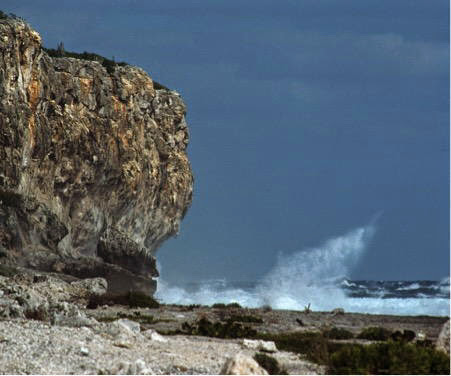
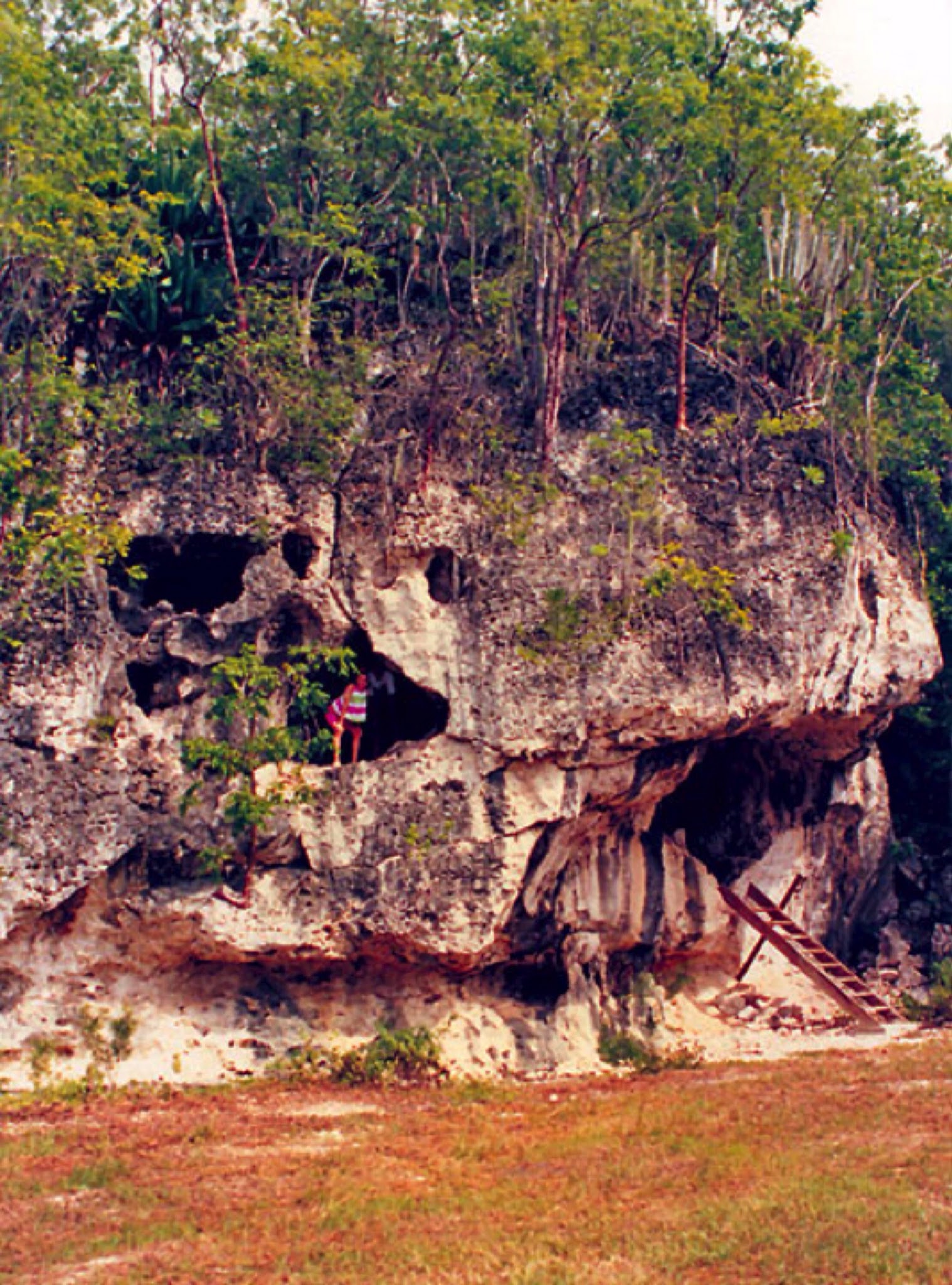
Photos above from Cayman Brac, Cayman Islands.


Tuesday, December 16, 2014

ECLAC Updates Study on Economics of Climate Change in Latin America and the Caribbean read more

5 December 2014: The UN Economic Commission for Latin America and the Caribbean (ECLAC) has published an update of its study ‘The Economics of Climate Change in Latin America and the Caribbean: Paradoxes and challenges of sustainable development,' which provides an overview of expected climate impacts in the region, as well as subregional and national figures.


The report explains that, while growth in the region has led to improved economic and social conditions, it has had negative impacts on the environment, economy and society as a whole, including through more air pollution in urban areas and a deterioration of natural assets, such as water resources and forests.


The report states that the "foundations of the region's economic buoyancy are being undermined" through the region's production structures and consumption patterns, which contribute to a large carbon footprint. The report contends that the region must transition towards a sustainable form of development that will preserve its economic, social and natural assets for future generations and leave them with “a more equal, socially inclusive, low-carbon form of economic growth.”


The report concludes that the climate change challenge is also a sustainable development challenge and recommends achieving “a global consensus that recognizes the asymmetries and paradoxes of the problem.”


ECLAC, in collaboration with the Government of Peru, has also released a document estimating the economic costs of climate change in Peru. Both reports were launched at the Lima Climate Change Conference. [ECLAC Press Release] [Publication: The Economics of Climate Change in Latin America and the Caribbean: Paradoxes and challenges of sustainable development] [IISD RS Coverage of Lima Climate Change Conference]


read more: http://larc.iisd.org/news/eclac-updates-study-on-economics-of-climate-change-in-latin-america-and-the-caribbean/


Thursday, December 11, 2014

Bahamas takes on renewable energy challenge - Missed Opportunity for Cayman?

The Bahamas has become the latest recruit to Richard Branson's green energy drive for Caribbean islands.

Branson's Carbon War Room NGO is aiming to help islands in the region transition from expensive fossil fuel imports to using their own renewable energy resources as part of its Ten Island Challenge programme.

This week the Bahamas joined the push, committing to developing 20MW of solar PV generation in the outer Family Islands, bringing energy efficiency and solar solutions to a local high school, and replacing streetlights across the nation with energy efficient LED lights.

Carbon War Room plans to support these goals by providing the country's government with a range of technical, project management, communications, and business advisory services.

The Bahamas joins the islands of Aruba, Grenada, San Andres and Providencia in Colombia, Saint Lucia, and Turks & Caicos in the challenge, which aims to generate how small states can decarbonise in a cost-effective manner.

"The Bahamas' entry into the Ten Island Challenge signals another step forward for the Caribbean region in the effort towards a clean energy future," Branson said in a statement. "The progress made in The Bahamas will help inspire other islands to work towards accomplishing their renewable energy objectives."

While the focus to date has been on Caribbean islands, earlier this year Peter Boyd, Carbon War Room's chief operating officer, told BusinessGreen the programme could expand into the Pacific and to isolated communities, military bases, or mines. "There are island energy economies even if the 'island' isn't surrounded by water," he said at the time.


Wednesday, December 10, 2014

"If we save Tuvalu, we save the world

"If we save Tuvalu, we save the world" - UN Climate Convention, Peru


9 December 2014, Lima, Peru - The Prime Minister of Tuvalu paid homage to ancestors buried in Peru at the UN Climate Convention today. Taking the floor at the High Level Segment of the 20th Conference of the Parties, he began his statement acknowledging the interesting and tragic historical connection with Peru.

During the 1860's slave traders known as blackbirders took approximately 400 people from Tuvalu to work in Peru. None of them ever returned.

"There are Tuvaluans buried here on this land and we pay our respects to our ancestors who were brought here against their will," stated Hon. Enele Sosene Sopoaga, Prime Minister of Tuvalu - remembering the history of Tuvalu before looking to the future.


"I am here at this important meeting as the highest representative of the people of Tuvalu. I carry a huge burden and responsibility. I carry their hopes that there will be a future for Tuvalu. This is an enormous burden to carry. It keeps me awake at night. No national leader in the history of humanity has ever faced this question. Will we survive or will we disappear under the sea? I ask you all to think what it is like to be in my shoes."

On the frontlines of climate change, the greatest single threat to the island atoll, Tuvalu is heartened by the progress leading to a new climate change protocol made at the UN Climate Convention in Peru yet also very clear that they will not support a new protocol without a substantive programme on loss and damage. The new agreement must be agreed upon by the end of December, 2015 in Paris, the host of the next Conference of the Parties.

"Tuvalu, and I suspect most of the world, believes that reaching a comprehensive new protocol in Paris is absolutely essential. We cannot repeat Copenhagen. We cannot suffer the frustration and humiliation of being asked to accept a half-hearted response to a critical global crisis."

"The new protocol must be comprehensive it must cover all issues in a meaningful way. It has to include effective mitigation targets for all countries. It must deliver real outcomes on adaptation and loss and damage. It must deliver the necessary finance to transform our society. And it must deliver the technology and the necessary capacity building to ensure everyone can respond to climate change. All these pillars are essential."

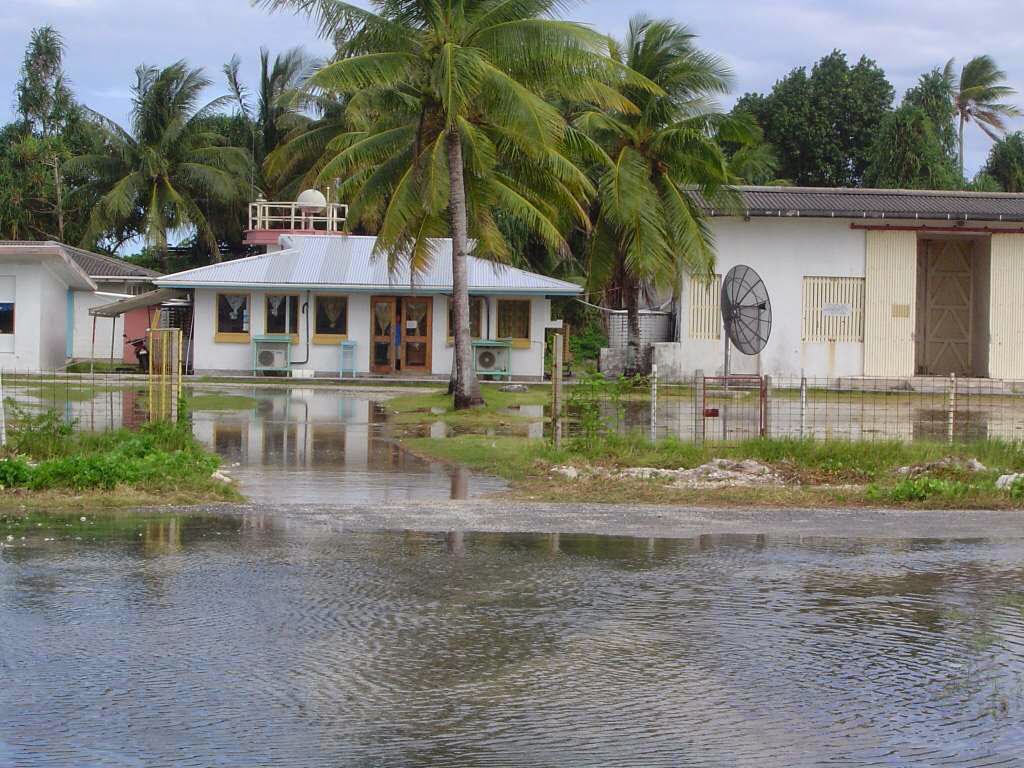
The coral atoll nation of Tuvalu consists of nine inhabited islands with the highest point above sea level being four meters. Now experiencing climate change impacts through saltwater intrusion into agricultural areas, lack of potable water and coastal erosion - the fate of Tuvalu is in the hands of the international community.

"I ask everyone who leaves this room to look into the eyes of the first child they see. I want everyone to look into the child’s eyes and imagine what those eyes will see in ten or twenty years. Will they see hell or will they see a sustainable planet."

"Let us stand proud in Paris. Let us look into the eyes of children and say, yes we have a real future for you. Let us make 2015 the year we saved the Earth! Let us make 2015 the year we saved Tuvalu. For if we save Tuvalu we save the world."

To access the full statement presented by Hon. Enele Sosene Sopoaga, Prime Minister of Tuvalu at the High Level Segment of the 20th Conference of the Parties to the United Nations Framework Convention on Climate Change please visit: http://unfccc.int/files/meetings/lima_dec_2014/statements/application/pdf/cop20_hls_tuvalu.pdf